
Home Blog Page 239

Grand Ho Tram gains massive boost from locals gaming permission, bringing the party from Saigon

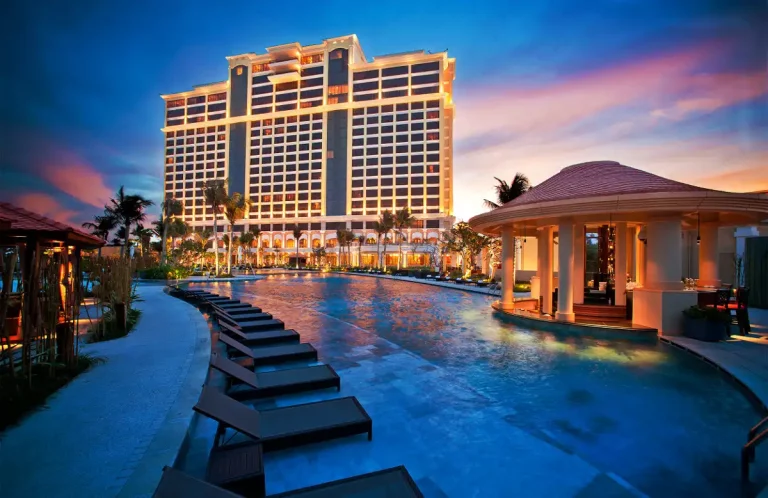
Vietnam has radically reshaped its casino gaming landscape, offering a huge opportunity to The Grand Ho Tram by allowing local gaming. While the decision was not entirely unexpected, according to an expert, the repercussions will be profound, and usher in a new wave of play to the geographically significant region.

The Grand Ho Tram has seen multiple phases of development, but its current status – bolstered by the controlling interest of Warburg Pincus and under the leadership of CEO Walt Power – has led the property to new heights.

And nothing could cement that status more than the granting (on Wednesday) of the right to allow locals to gamble at the property.

Ben Lee, IGamiX
Ben Lee

Gaming expert Ben Lee, Managing Partner of IGamiX Management and Consulting, notes that industry chatter early this year already indicated that Ho Tram would get a license, alongside Van Don (when a property eventually opens), and accompanying the now-permanent extension of the Corona Resort & Casino’s pilot local’s trial.

Previously, only Corona and Van Don had been greenlighted to allow locals to gamble. This new revelation for Ho Tram – which even CEO Walter Power told AGB he was circumspect about at the ASEAN Gaming Summit in March – is a massive boost for the property, given its close proximity to Ho Chi Minh, which houses a significant number of punters that had previously been restricted to foreigner-only slot parlors.

Expectations started to build after the first quarter of this year, with indications that the Politburo – the ultimate decider on the topic – could allow for the lapsed pilot program to continue in Phu Quoc (at Corona), but could also let worthy participants get a piece of the pie.

Ben Lee points out that, while the Grand Ho Tram had initially only fulfilled part of its expected build-out in order to get its table and machine game allocation – 90 tables and 400 machines (with a cap at 1,000), under the ownership of Warburg Pincus it has propped up its status by propelling its development and signaling its willingness to continue investing and developing the region.

Bring the party from Saigon

Lee points out that there’s a massive crowd in Ho Chi Minh that is ready and willing to place their bets. Whether it’s at the local slot parlors, which total about a dozen in the city itself and around 30 nation-wide, or – for the foreigners residing there (particularly Korean and Chinese) – venturing into the nearby casino.

This captive audience is unlikely to change, but the introduction of local gambling to Ho Tram should cause a massive shift across the whole property, with changes to the casino floor, an increased emphasis on entertainment, more comping and a push to maintain the VIP players that would previously take a jaunt to Singapore or Australia.

And Ho Tram could be the perfect place.
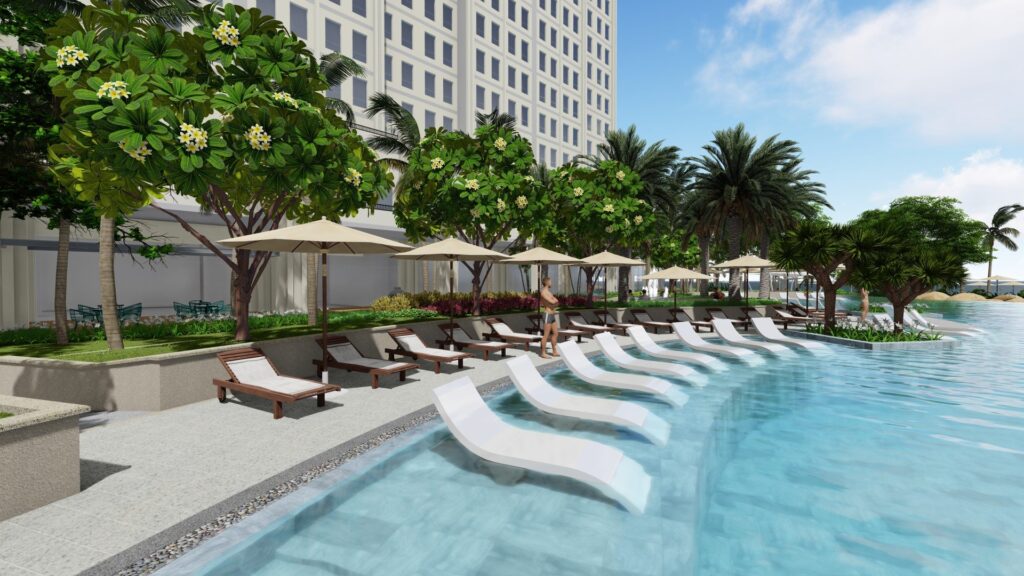
Grand Ho Tram

Lee notes that “Corona had very little GGR from the locals. Because of their remoteness and because of the constraints. So, the local market is an untested one”.

The expert highlights that previously a “handful of super VIPs” had frequented other jurisdictions – with players with up to $30 million hitting up Australia and those less flush heading to the Merlion city (Singapore).

Lee notes that pre-Covid estimates before this new revelation had the Ho Chi Minh gaming market at around $30-$50 million in GGR per month – just based upon the figures from the slot parlors. The potential upside for an IR located just a few hours away is phenomenal.

What’s next for Ho Tram?

Currently for locals to gamble at local casinos there is an entry levy of VND1 million ($38), with the possibility for a monthly rate of VND25 ($948) and a required proof of income of at least VND10 million ($380).

And The Grand Ho Tram’s total buildout cost was initially tallied at around $4.2 billion. Current expenditure is estimated around $1.5 billion, according to reports.

The smartest move, notes Ben Lee, is to inject the solid gains that can be expected from the opening up to locals into redevelopment, cementing the goodwill (given that it’s only a five-year permission) and building the IR into not only a gaming hub but an international destination.

And Ho Tram’s expansion also brings with it massive advantages.

Ho Tram Vietnam

Currently, the property operates around 90 tables and 400 gaming machines (with a cap at 1,000). According to previously disclosed information, if a third hotel tower opens – with another 1,200 rooms, casino table and machine capacity could literally double.

With the stage now set for its success, it remains to be seen how The Grand Ho Tram can capitalize off this massive opportunity, and what it will mean for Vietnam’s gaming industry as a whole.

AGB requested comments from Walt Power but he indicated that he would prefer to comment at a later date.


PAGCOR says GGR is down but stands firm on regulatory shift

0

The Philippine Amusement and Gaming Corporation (PAGCOR) has indicated that gross gaming revenue (GGR) dipped in the third quarter, but the agency insists it will maintain its course toward tighter safeguards and enhanced transparency across the country’s E-Games and E-Bingo sector.

PAGCOR says GGR is down but stands firm on regulatory shift
PAGCOR Chairman and CEO Alejandro H. Tengco

PAGCOR Chairman and CEO Alejandro H. Tengco said operators are undergoing a difficult but necessary transition as the regulator pushes for higher industry standards. This is according to press releases sent on Thursday.

Speaking at a gathering of the Association of Independent Licensed Gaming and Amusement Operators, Inc. (AILGAO) in Muntinlupa City on Wednesday, Tengco stressed that new reforms—including the mandatory de-linking of e-wallets from online gambling platforms—are intended to reinforce industry credibility and protect vulnerable players.

“The country’s E-Games and E-Bingo operators are navigating a difficult but necessary transition toward stricter safeguards and more transparent operations that help shape a more responsible industry,” indicated the official.

Tengco acknowledged the immediate pressures facing licensees. He noted that “the mandatory de-linking of e-wallets from online gaming platforms” had triggered declines in August and September, even as the broader E-Games and E-Bingo segment still recorded 17.4 percent year-on-year growth in the third quarter. “You may be interested to know that in the third quarter of 2025, we recorded an industry GGR that was a bit lower than last year,” he said. “But this reflects an industry transitioning to stronger and safer practices.”

The remarks come amid mounting evidence that regulatory tightening has begun to weigh on sector performance. In mid-September, PAGCOR reported a 40 to 50 percent drop in income after major e-wallet providers removed payment links to online gambling platforms, following a directive from the Bangko Sentral ng Pilipinas (BSP).

Industry-wide data also shows a pronounced impact on leading operators. DigiPlus Interactive, the Philippines’ largest online gaming platform and operator of BingoPlus, ArenaPlus and GameZone, recently posted a 59 percent decline in third-quarter net income to PHP1.71 billion ($29.1 million).

PAGCOR HQ Manila Philippines

Despite the downturn, Tengco urged operators to view the reforms as long-term safeguards rather than barriers. “We know that many of you were affected by this sudden development,” he said. “However, we must not look at these reforms as obstacles but as safeguards designed to protect your players, your businesses, and the entire ecosystem you operate in.”

He also warned that illegal operators continue to expand aggressively, exposing players to fraud while damaging the reputation of compliant companies. “They expose players to financial fraud and data theft,” he said. “But the worst part is, they damage the reputation of the entire industry, including the legitimate ones.”

During the event, AILGAO presented Tengco with a “Gaming Exemplary Leadership Award,” and AILGAO President Rafael Tabora expressed full support for the regulatory direction. “We welcome these reforms because they strengthen the legitimacy of our operations and create a safer environment for our players,” he said.

Alice Guo to appeal human trafficking conviction

0

Alice Guo, the ousted mayor of Bamban, Tarlac, intends to appeal her conviction for qualified human trafficking, a serious offense in the Philippines.

Guo, along with seven co-defendants, was sentenced to life imprisonment and a fine of PHP2 million ($34,042) for her involvement in human trafficking operations linked to a Philippine Offshore Gaming Operation (POGO) hub.

According to ABS-CBN, her legal counsel, Nicole Jamilla, expressed their commitment to protecting Guo’s rights as they prepare the appeal. While Guo indicated she is sad about the conviction, Jamilla affirmed that she is determined to fight the ruling.

Additionally, Guo’s camp has filed a motion to allow her to remain in the Pasig City Jail Female Dormitory rather than be transferred to the Correctional Institution for Women, citing safety concerns. The court has temporarily allowed her to stay at the Pasig facility until it decides on the motion.

Guo, 35, was arrested in Indonesia in September 2024 after fleeing the Philippines. In June 2025, a Manila court ruled that Guo, a Chinese citizen, was ineligible to serve as mayor, rendering her term void.

Macau’s ‘Concert Economy’ becomes core gaming growth engine: Citigroup 

0

Citigroup says Macau’s casino operators are increasingly capitalizing on the city’s booming live-event economy, with venue providers securing a powerful ‘home court advantage’ that directly translates into gaming market-share gains.

In its latest report, Gold Rush: Cashing In On the Budding Live Event Business in Macau, the bank outlines how control of major arenas enables operators to capture up to half of the best seats at top-tier concerts—an asset they then deploy strategically to drive Premium-mass play.

According to Citigroup, the event-hosting casino operator typically receives ‘up to 50 percent of the best seats in the house’ from promoters. These seats are then offered to Premium players, sometimes ‘free of charges’, but with a crucial condition: players must ‘show me the money’ by checking in a required amount of cash with the hosting property.

Analysts note that this system gives venue operators a significant advantage because the city’s remaining five concessionaires must split the leftover top-tier seats, reducing their ability to attract the same level of player commitments.

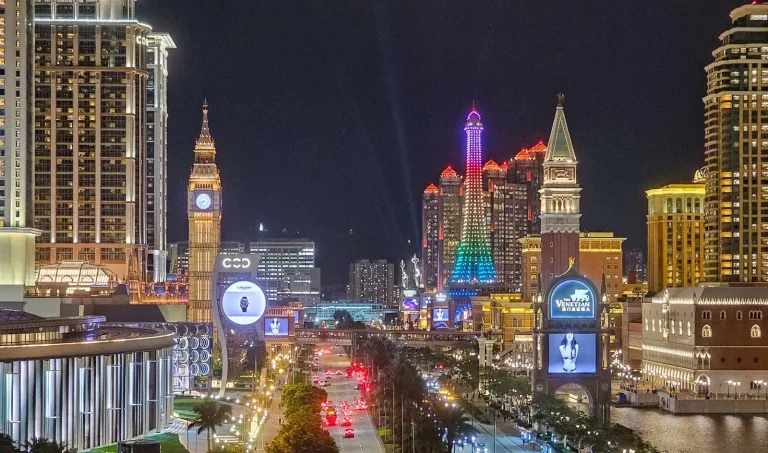
macau
Cantopop icon Jacky Cheung

Citigroup describes this dynamic as a clear driver of gaming momentum. When one operator controls the primary venue, it often secures a disproportionate volume of premium-mass play during major concert periods, which ‘translates into significant market share gain’.

The firm cites the clearest example from this summer, when Cantopop icon Jacky Cheung staged nine consecutive shows at the 15,000-seat Galaxy Arena in June and July. During the quarter, Galaxy Entertainment Group recorded post-pandemic highs: GGR market share climbed to 20.5 percent, operating EBITDA surged to HK$3.57 billion ($456 million), and its EBITDA margin improved to 29.6 percent.

The bank argues that the rise of Macau’s ‘Concert Economy’ has been essential to the city’s visitation and GGR recovery over the past three years. Casino operators have discovered that hosting large-scale events is profitable both in gaming and EBITDA accretion, prompting them to compete aggressively for top-tier content. However, Citigroup stresses that ‘it takes two to tango’, and long-term growth requires artists, promoters, and ticketing platforms to continue viewing Macau as a significant earnings market.

Analysts note that Macau’s appeal has strengthened partly because all six concessionaires committed MOP130 billion ($16.4 billion) to non-gaming investment during the 2023–2032 concession period. In this respect, it is also worth noting that the Macau government has been promoting the concept of building the city into a ‘City of Entertainment’, reinforcing that these efforts align with public-sector priorities.

For artists and promoters, this translates into six major ‘willing spenders’ capable of underwriting premium-priced productions. Despite higher ticket prices than in mainland China, most Macau shows sell out, and the city’s visitor profile remains affluent. Korean acts, in particular, have increased their presence in Macau, with concerts and fan meetings rising from nine in 2023 to 33 in 2024 and 59 so far this year.

Citigroup identifies Galaxy Entertainment, Sands China, Damai (ticketing platform), and Tencent Music Entertainment as the best-positioned companies to benefit from the continued expansion of live events in Macau, given their arena assets, ticketing infrastructure, and promoter relationships.

Macau MICE events surge 25.7% YoY in 1Q–3Q, but non-gaming revenue falls

0

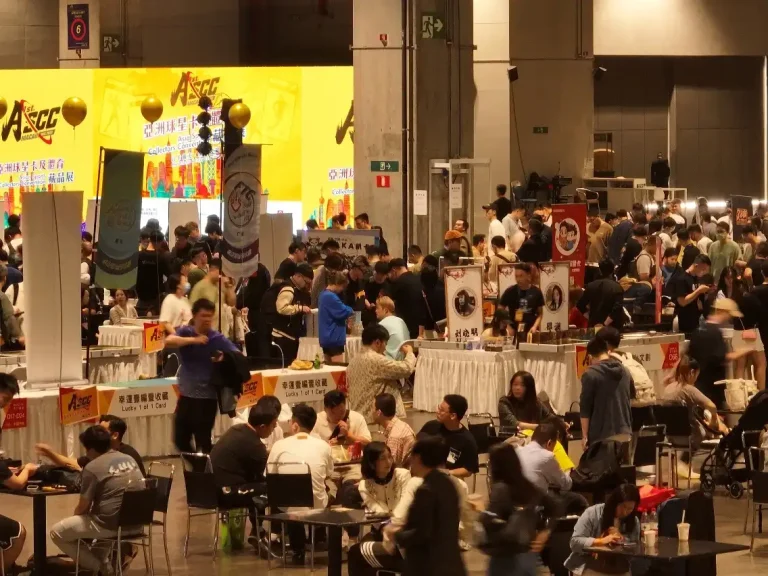
Macau’s MICE sector expanded sharply in the first three quarters of 2025, with the number of events rising 25.7 percent year-on-year to 1,331. MICE refers to meetings, incentives, conventions, and exhibitions. 

However, total MICE-driven receipts for non-gaming industries slipped 9.4 percent amid weaker non-local exhibition attendance, according to fresh data from the Statistics and Census Service (DSEC).

DSEC reported that non-gaming revenues generated by MICE activities reached an estimated MOP3.72 billion ($462 million) in the January–September period, down from the revised MOP4.1 billion ($509 million) recorded a year earlier. The decline was attributed to a reduction in the number of general exhibition visitors from outside Macau during the first two quarters.

Despite the revenue dip, activity levels remained strong. Meetings and conferences increased 26.3 percent to 1,250 events over the nine-month period, drawing 149,000 participants, up 7.3 percent year-on-year. Exhibitions climbed 12.5 percent to 45, although attendance fell 1.8 percent to 840,000. Incentive events rose 24.1 percent to 36.

The third quarter alone showed sustained momentum. Macau hosted 385 MICE events between July and September, up 10.3 percent from a year earlier, with total participants and attendees increasing 8.2 percent to 567,000. Estimated non-gaming receipts tied to these events reached MOP2.02 billion ($250 million), a 9.8 percent increase compared with the same quarter in 2024.

A total of 360 meetings and conferences were held in the quarter, up 11.1 percent year-on-year, attracting 68,000 participants. The number of exhibitions rose 28.6 percent to 18, drawing 497,000 attendees. These exhibitions featured 1,590 exhibitors and 19,813 professional visitors, with international exhibitors accounting for 6.2 percent and overseas professional visitors representing 5.2 percent of total attendance.

Commerce and management remained the dominant theme of third-quarter events, representing 42.9 percent of all MICE activity, followed by medical and health, information technology, and culture. Association meetings, corporate meetings, and government meetings continued to form the core event types.

CBF selects Genius Sports to deploy semi-automated offside technology in 2026

0

The Confederação Brasileira de Futebol (CBF), one of the most prestigious organizations in the world’s game, has selected Genius Sports to implement its world-leading semi-automated offside technology (SAOT) in 2026.

Genius Sports’ semi-automated offside technology (SAOT) has become a benchmark in global football, already deployed in the Premier League, CONMEBOL’s Copa Sudamericana and Copa Libertadores, and the Belgian Pro League. Now, the CBF will introduce this innovation across the Brasileiro Série A and Copa do Brasil, driving greater speed, efficiency, and accuracy in offside rulings.

Powered by GeniusIQGenius Sports’ SAOT will ingest rich mesh tracking data from its computer vision cameras that will be installed in all top flight Brazilian football stadiums. The ground-breaking technology then automates the kick point for every offside decision and will immediately alert CBF’s VAR operators before producing a clear 3D render showing an exact offside plane.

“We are taking another decisive step in the modernization process of Brazilian football,” said Samir Xaud, President of CBF. “The arrival of semi-automatic offside is not just a technological innovation, but a concrete measure to increase the accuracy, transparency, and credibility of refereeing decisions. It is a move aligned with the most advanced practices in the football world, and CBF will continue working to ensure that our competitions are a benchmark in quality and fairness.”

Genius Sports’ SAOT has been proven across hundreds of games in some of the biggest competitions in world football, removing the need for manually drawn offside lines while automatically producing broadcast-ready decision visuals within seconds.

“To implement our SAOT system with CBF, the most successful federation in FIFA World Cup history, is an incredible validation of Genius Sports’ world-class technology,” said Mark Locke, CEO of Genius Sports. “Brazil is a critical market across our entire business, and we’re excited to work alongside CBF to deliver technology that minimizes delays, restores the natural rhythm of the game, and empowers officials to make accurate and efficient offside decisions.”

1xBet joins industry leaders at SiGMA South Asia 2025, Colombo

0

1xBet, a leading international brand, has confirmed its participation in SiGMA South Asia 2025, scheduled for November 30 to December 2 in Colombo, a flagship iGaming exhibition that attracts thousands each year and underscores the region’s growing potential.

In 2025, organizers expect over 1,000 delegates, over 1,000 operators, over 100 speakers, and 150 exhibitors. The global betting company 1xBet will participate in the exhibition as a sponsor and present its products at Booth P10.

As part of the international summit, 1xBet was also shortlisted for the prestigious SiGMA South Asia Awards 2025 in five categories: Best Live Betting Product 2025, Best Mobile Casino Experience 2025, Best Online Sportsbook 2025, Best Online Casino 2025, and Best Affiliate Program 2025. A panel of experts will announce the award winners on November 30.

Booth visitors will be entered into a drawing to win an iPad Mini and AirPods Pro 3, and will also have the opportunity to visit a bar serving signature cocktails and coffee prepared by a brand barista. 1xBet managers will be happy to meet with existing and new partners and explain the advantages and unique opportunities of 1xPartners, one of the most reliable and popular affiliate programs in the iGaming segment.

The program has been developing for over 9 years, covers over 150 countries, has over 250 payment methods, and offers lifetime payouts of up to 50% on referred players.

The brand places a special emphasis on developing in the Asian market: localized tools, flexible analytics, personalized support, and high conversion rates allow partners to effectively monetize their traffic.

Daily Asia Gaming eBrief: Vietnam grants locals gaming option to Ho Tram

0
Good Morning. You gotta love the locals. That’s something Vietnam’s government is increasingly realizing in regards to the gaming industry. With its pilot program for local gaming now over, the country has opted to expand the initiative, not only cementing Corona’s involvement, but adding Grand Ho Tram into the equation, with a future Van Don casino to also see a five-year concession. Looking to Macau, GGR is projected to grow by 5 percent next year, amongst strong industrial and capital growth in China. And down under, investigations are gaining pace in the racing world, exposing new schemes.

What you need to know


On the radar


AGB Intelligence

Grand Ho Tram Resort, Vietnam

Grand Ho Tram gets approval for local gambling

Vietnam is expanding its pilot program for locals gambling to Grand Ho Tram, ushering in a new era for the operator which is perfectly positioned to tap the Ho Chi Min gambling market. The new directive, effective from Wednesday, also outlines a five-year concession for a future Van Don casino, once it opens. It also makes permanent the initial trial run of Corona Resort & Casino, which had been extended but lapsed.

Industry Updates


INTELLIGENCEASEAN | CAREERS | EVENTS

Macau’s former satellite casino operator Emperor sees significant decline in 3Q25 revenue

0

Macau former satellite casino operator Emperor Entertainment has reported a significant decrease in revenue during the third quarter, the last in which it was operating its satellite casino in the SAR.

According to financials released on Wednesday, the group saw revenue hit HK$335.6 million ($43.15 million), down from HK$407.9 million ($52.44 million) in 3Q24.

Gaming revenue during the period was also down, to HK$177.9 million ($22.87 million), from HK$253 million ($32.53 million) in the same quarter of last year.

However, the group indicated that its loss was narrowed to HK$73.1 million ($9.4 million), from HK$225.7 million ($29.02 million) in 3Q24.

This comes despite the closure of the group’s satellite casino operation under SJM’s concession, which ended on October 30th. This is part of the wave of closures of Macau’s satellite casino operations, whose business much terminate or be absorbed by their gaming concession holders by December 31st of this year.

Speaking of the prospects going forward, the group indicates that ‘In view of the government’s directives and the increasing convenience of transportation networks around the globe, the Group remains optimistic about the prospects for Macau’s tourism sector, and will continue enhancing its service offerings to capture the business opportunities’.

Macau gaming revenue projected to grow 5% to $32.3 billion in 2026

0

Macau’s gross gaming revenue is projected to rise 5 percent yearly to $32.3 billion in 2026, moderating from the 8.8 percent growth recorded in 2025, according to investment bank CLSA’s latest sector outlook released on Wednesday.

This forecast exceeds the Macau government’s projection, which estimates casino gross gaming revenue will reach MOP236 billion ($29.29 billion) in 2026—a 3.5 percent increase from the government’s revised full-year estimate for 2025.

CLSA attributes the anticipated growth to a ‘directionally stronger renminbi against the US dollar’ and a ‘currently positive indicator on industrial profitability in China.’ The projection implies an average daily GGR of MOP709 million ($88.4 million) next year, in line with the MOP705 million daily average recorded between July and October 2025.

Macau October GGR tops $3B, breaking record since pandemic

Analysts Jeffrey Kiang and Leo Pan noted that the acceleration in GGR momentum since June 2025 reflects improving macroeconomic conditions. They highlighted that 72 percent of Macau’s visitors in the first nine months of 2025 came from mainland China. They also pointed to the spread between China’s Producer Price Index and Purchasing Price Index—an indicator of factory margins—which stood at a positive 0.82 percentage point in September, historically leading Macau’s GGR growth by about six months.

Galaxy Entertainment and MGM China were identified as CLSA’s top picks for 2026, supported by expected gains or stability in revenue market share, strong balance sheets, and the capacity to increase dividend payout ratios.

The sector is expected to generate $4.2 billion in recurring free cash flow to equity holders in 2026, roughly flat year-on-year, while distributing $2.9 billion in dividends, representing a 68.1 percent payout ratio. ‘Galaxy and MGM China still have the deepest pocket to raise dividend payout ratios for equity investors, as downside protection,’ the analysts wrote.

Market share dynamics will remain central in 2026, with CLSA raising its assumptions for Galaxy Entertainment from 20 percent to 20.5 percent and for Sands China from roughly 24 percent to 25 percent. The analysts expect these gains to come at the expense of SJM and Melco, while projecting steady shares for MGM China at around 16.0 percent and Wynn Macau at 12.5 percent.

The report also highlighted early signs of stabilization in Sands China’s market share after the company ‘stepped up its promotion efforts since summer 2025,’ noting that reviving absolute revenue and EBITDA growth remains its key priority. Looking ahead to 2027, CLSA forecasts further GGR growth of 5.2 percent to $34 billion.

Despite the positive sector outlook, broader consumer sentiment in China remains fragile. The consumer confidence and expectation index has shown only modest improvement, while property prices—considered a leading indicator of confidence—continue to decline year-over-year, though at a slowing pace.

The analysts cautioned that revenue growth is likely to moderate in 2026, particularly in the second half. Even so, ‘GGR market share, margins and dividends will remain key for equity investors.’ Premium gaming segments are expected to support growth in the first half of 2026, helped by a low comparison base from the prior year.