


Citigroup says Macau’s casino operators are increasingly capitalizing on the city’s booming live-event economy, with venue providers securing a powerful ‘home court advantage’ that directly translates into gaming market-share gains.
In its latest report, Gold Rush: Cashing In On the Budding Live Event Business in Macau, the bank outlines how control of major arenas enables operators to capture up to half of the best seats at top-tier concerts—an asset they then deploy strategically to drive Premium-mass play.
According to Citigroup, the event-hosting casino operator typically receives ‘up to 50 percent of the best seats in the house’ from promoters. These seats are then offered to Premium players, sometimes ‘free of charges’, but with a crucial condition: players must ‘show me the money’ by checking in a required amount of cash with the hosting property.
Analysts note that this system gives venue operators a significant advantage because the city’s remaining five concessionaires must split the leftover top-tier seats, reducing their ability to attract the same level of player commitments.
Citigroup describes this dynamic as a clear driver of gaming momentum. When one operator controls the primary venue, it often secures a disproportionate volume of premium-mass play during major concert periods, which ‘translates into significant market share gain’.
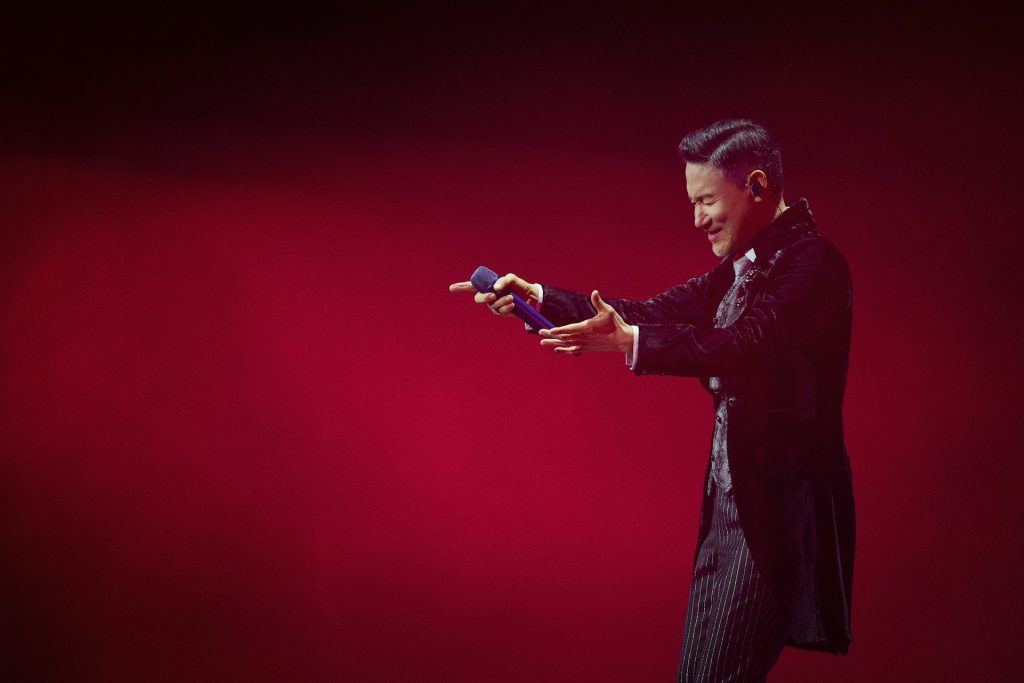
The firm cites the clearest example from this summer, when Cantopop icon Jacky Cheung staged nine consecutive shows at the 15,000-seat Galaxy Arena in June and July. During the quarter, Galaxy Entertainment Group recorded post-pandemic highs: GGR market share climbed to 20.5 percent, operating EBITDA surged to HK$3.57 billion ($456 million), and its EBITDA margin improved to 29.6 percent.
The bank argues that the rise of Macau’s ‘Concert Economy’ has been essential to the city’s visitation and GGR recovery over the past three years. Casino operators have discovered that hosting large-scale events is profitable both in gaming and EBITDA accretion, prompting them to compete aggressively for top-tier content. However, Citigroup stresses that ‘it takes two to tango’, and long-term growth requires artists, promoters, and ticketing platforms to continue viewing Macau as a significant earnings market.
Analysts note that Macau’s appeal has strengthened partly because all six concessionaires committed MOP130 billion ($16.4 billion) to non-gaming investment during the 2023–2032 concession period. In this respect, it is also worth noting that the Macau government has been promoting the concept of building the city into a ‘City of Entertainment’, reinforcing that these efforts align with public-sector priorities.
For artists and promoters, this translates into six major ‘willing spenders’ capable of underwriting premium-priced productions. Despite higher ticket prices than in mainland China, most Macau shows sell out, and the city’s visitor profile remains affluent. Korean acts, in particular, have increased their presence in Macau, with concerts and fan meetings rising from nine in 2023 to 33 in 2024 and 59 so far this year.
Citigroup identifies Galaxy Entertainment, Sands China, Damai (ticketing platform), and Tencent Music Entertainment as the best-positioned companies to benefit from the continued expansion of live events in Macau, given their arena assets, ticketing infrastructure, and promoter relationships.