
Genting Singapore‘s first-quarter net profit halved year-on-year, dragged down by elevated transformation costs and a record-low VIP contribution at its Resorts World Sentosa (RWS) integrated resort.
Maybank has flagged that 2026 is shaping up to be ‘another transitional year’ for the operator.
In a research note released following Genting Singapore’s results, analyst Samuel Yin Shao Yang said 1Q26 results came in below expectations once again, with core net profit of SG$69.7 million ($54.9 million) accounting for only 14 percent of Maybank’s full-year forecast. ‘We see no reason to buy GENS until its operations recover more meaningfully,’ Yin wrote, reiterating the brokerage’s cautious stance.
Genting Singapore reported revenue of SG$607.6 million ($478.4 million) for the three months ended March 31, down 3 percent year-on-year but up 3 percent sequentially. Adjusted EBITDA fell 24 percent year-on-year to SG$179.0 million ($140.9 million), while net profit dropped 55 percent to SG$65.2 million ($51.3 million) — a far steeper decline than the top line, reflecting the operating leverage reversal as fixed and transformation-related costs outpaced revenue trends.
Gaming revenue declined 8 percent year-on-year to SG$403.4 million ($317.6 million), though it improved 11 percent quarter-on-quarter. Non-gaming revenue grew 8 percent year-on-year to SG$204.1 million ($160.7 million), supported by higher visitation to Universal Studios Singapore and the new Singapore Oceanarium.

VIP volume hits record low
The most striking data point in the quarter was the collapse in VIP rolling volume, which fell 35 percent year-on-year and 24 percent quarter-on-quarter to SG$5.6 billion ($4.4 billion). According to Maybank, this translates into a VIP volume share of only 19 percent — a new structural low, compared with 30 percent in 4Q25.
Management attributed the weakness to poor player quality, an unusually high VIP win rate of 3.81 percent, and ongoing disruptions from asset refurbishment, rather than any tightening of credit policy. Mass market GGR, by contrast, grew 5 percent quarter-on-quarter, lifting its share of total gaming revenue by two percentage points to 26 percent.
Transformation costs to remain elevated
Maybank attributed the earnings shortfall primarily to costs linked to RWS’s ongoing transformation program, including IT infrastructure upgrades, asset refresh, new attractions ramp-up, enterprise integration, and heavier marketing and promotional spend. These costs are expected to remain elevated through 2026.
In its own quarterly overview, Genting Singapore acknowledged that the conflict in the Middle East and broader geopolitical developments have pushed up energy, freight and logistics expenses, while elevated airfares are weighing on travel demand and consumer sentiment.

Recovery pushed further out
New gaming management has begun rolling out a refreshed strategy centred on patron retention, reactivation and acquisition, with renovated gaming areas and an expanded business development team. However, Maybank noted that some key business development hires are only expected to join in the second half of the year, meaning any gaming volume recovery ‘will take time.’
Despite the earnings pressure, Genting Singapore reiterated its commitment to defend the SG$0.04 per share ($0.03) annual dividend, even after the FY25 payout ratio exceeded 100 percent.

Market share gap with MBS continues to widen
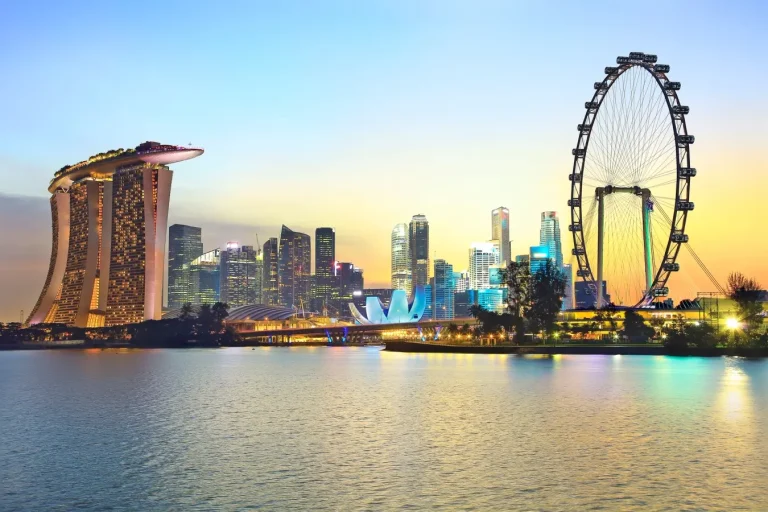
Beyond the near-term cost pressures, Maybank also pointed to a longer-term structural concern: RWS continues to cede gross gaming revenue (GGR) market share to its sole competitor in Singapore, Marina Bay Sands (MBS), operated by Las Vegas Sands.
According to Maybank’s data, RWS’s share of total Singapore GGR has trended steadily lower over the past decade — from more than 80 percent in the first half of 2010, when MBS had just opened, to roughly 25 to 30 percent in recent years.
The brokerage flagged this erosion as one of the key negative drivers behind the stock’s underperformance, listing it among the principal risks in its valuation framework. With MBS also benefiting from its own ongoing expansion program, the competitive gap could prove difficult to close in the near term, even as RWS rolls out its SG$6.8 billion ($5.4 billion) RWS 2.0 expansion.