



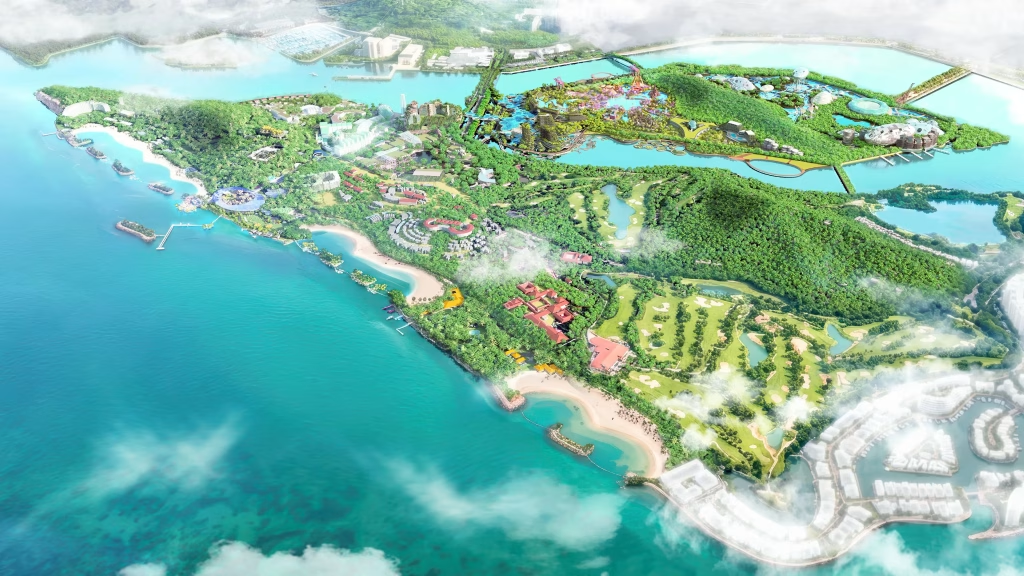
Sentosa Development Corporation (SDC) on July 3rd unveiled the next chapter of its Greater Sentosa Master Plan (GSMP), a two-decade transformation that will fold the neighboring island of Brani into Singapore’s premier resort destination.
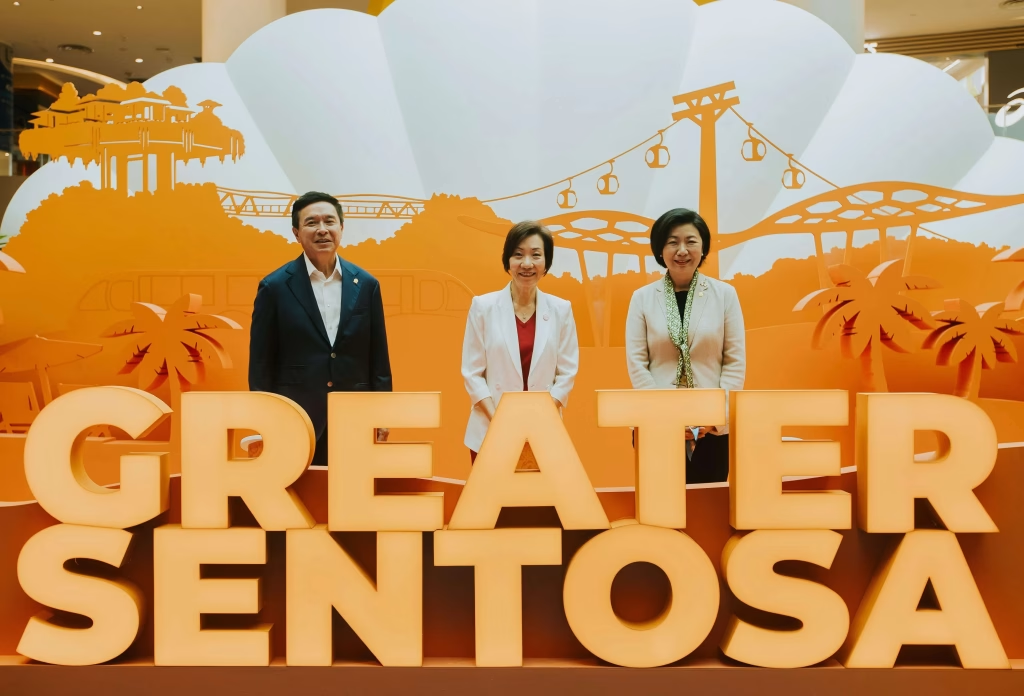
The plan is projected to double visitor numbers and expand the tourism hub that surrounds Genting Singapore’s Resorts World Sentosa (RWS) integrated resort.
The blueprint, revealed at the opening of the ‘Your Island. Reimagined.’ exhibition at VivoCity, will combine Sentosa with the 120-hectare Brani to unlock new space for hotels, attractions and experiences. Sentosa received about 16.9 million visitors between April 2024 and March 2025, of whom roughly 80 percent were international arrivals and 20 percent were locals, a local share SDC aims to lift to around 30 percent over time.
The master plan is anchored on positioning Sentosa as Singapore’s ‘Island Playground and Sanctuary in a Global City’, bringing together new landmarks, reimagined beaches, nature-centric growth and enhanced connectivity.
“The GSMP is the greatest transformation in our history,” said Thien Kwee Eng, chief executive officer of SDC. “We will stay true to the soul and identity of this island, while shaping the next generation of world-class experiences.”
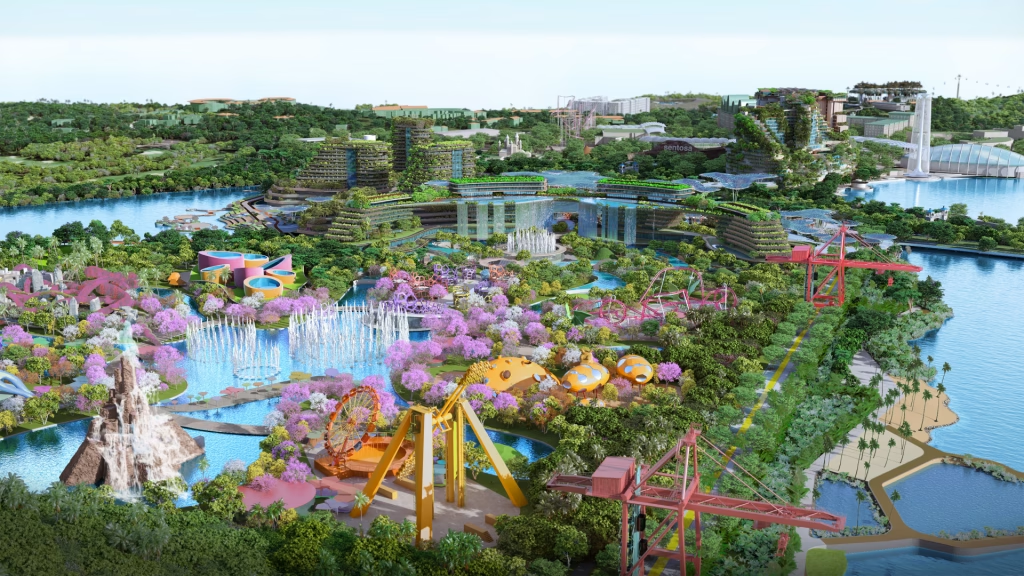
RWS 2.0 anchors the pipeline
The plan places RWS at the center of the near-term development pipeline. Lee Shi Ruh, chief executive of RWS, told The Straits Times that the GSMP benefits Singapore as a whole by attracting more visitors and broadening tourism offerings, adding that the operator saw opportunities to work more closely with the Singapore Tourism Board and precinct partners as Greater Sentosa takes shape.
Guests can look forward to further offerings at RWS through its RWS 2.0 expansion, a roughly SG$6.8 billion ($5.28 billion) redevelopment scheduled for completion in 2030. The program includes the landmark Waterfront Lifestyle Development, two new luxury hotels adding 700 rooms, and the immersive SUPER NINTENDO WORLD at Universal Studios Singapore. The expansion comes as RWS approaches a fresh regulatory evaluation, with its casino license due for renewal in February 2027.
A key part of the longer-term pipeline is Brani West, intended to be one of the largest sites for attractions under the master plan. SDC said engagements with potential partners are underway. The Brani Port Terminal, which currently occupies much of the island, is scheduled to relocate to Tuas Port by 2027.
Connectivity gains address RWS location
The connectivity upgrades carry particular weight for RWS. The resort sits on Sentosa, an offshore island linked to the mainland by causeway, monorail and cable car, giving it a locational disadvantage against city-center rival Marina Bay Sands (MBS) near the central business district. Analysts have noted that RWS must work harder to drive footfall as a result.
Under the GSMP, the Island Heart Transport Hub is envisioned as a major gateway linking Sentosa and Brani, while a new People Mover System is intended to replace the existing Sentosa Express with greater carrying capacity. Water taxi connections and additional waterfront links are under study.
The push comes as Genting Singapore cedes ground in the city-state’s two-operator market. In the first quarter of 2026, Genting Singapore’s net profit dropped by 55 percent year-on-year and revenue slipped about 3 percent, even as MBS grew its Singapore revenue by 28 percent over the same period. Full-year 2025 net profit had already fallen by 33 percent to SG$390.3 million ($288 million).
New landmarks and reimagined beaches
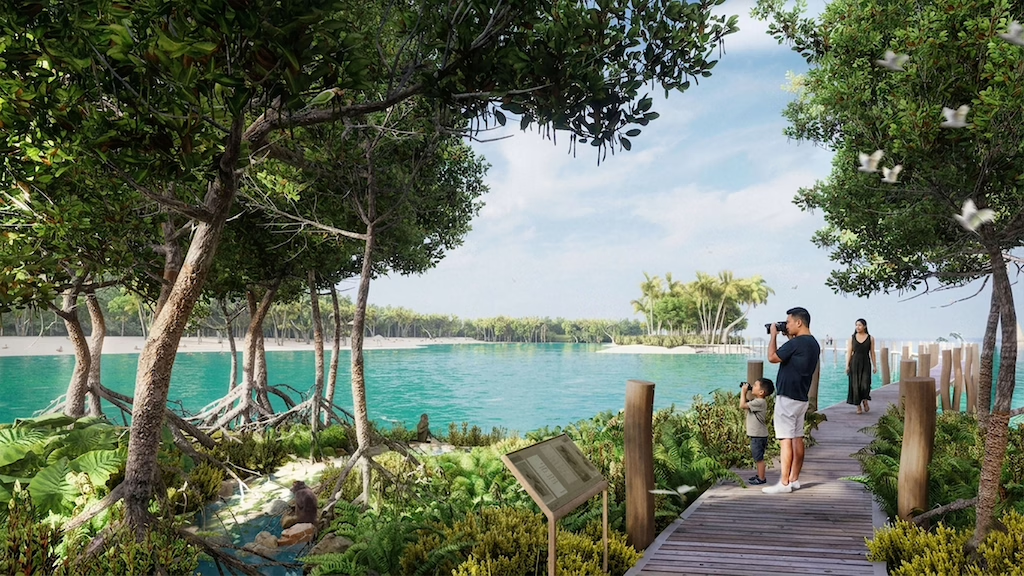
The blueprint centers on new iconic landmarks, including the Imbiah Canopy, a vantage point atop Mount Imbiah that will house attractions, food and beverage, retail and sheltered event spaces, linked by a planned tree-top skywalk to Siloso Beach. A separate Imbiah Lookout Walk, a sheltered elevated forest canopy walk, will connect Sensoryscape to Imbiah Lookout.
Along the beachfront, the Sensorium is envisioned as a new icon hosting lifestyle and indoor attractions. SDC also plans to rejuvenate Siloso, Palawan and Tanjong beaches alongside coastal protection measures, and is studying beach clubs, treetop dining and an islet-hopping experience across the 3-kilometer stretch of the island’s beaches. SDC said sustainability, climate resilience and thermal comfort would be embedded in long-term planning, with the first projects expected to come on board from the early 2030s.