



Macau casino operators face limits in rebuilding VIP gaming without the junket networks that once supplied high-end players, credit and private services, while non-gaming offerings have yet to become a stable replacement for the old VIP value chain, according to a study published in the latest issue of Macao Polytechnic University’s Global Gaming & Tourism Research
The study, by Li Qiang and Ji Chunli, says operators are trying to combine VIP services with hotels, entertainment, culture, dining, leisure and other non-gaming products to improve customer loyalty. However, it notes that high-end customers have not yet formed stable consumption habits around those experiences, limiting their ability to provide stronger support for VIP recovery.
The paper says Macau’s VIP sector has entered a new stage led by ‘direct VIP and high-end mass’ after the collapse of the traditional junket-led model. But direct VIP rooms are not a simple replacement for junkets, as concessionaires must now rebuild customer sourcing, due diligence and relationship management themselves.

Non-gaming test
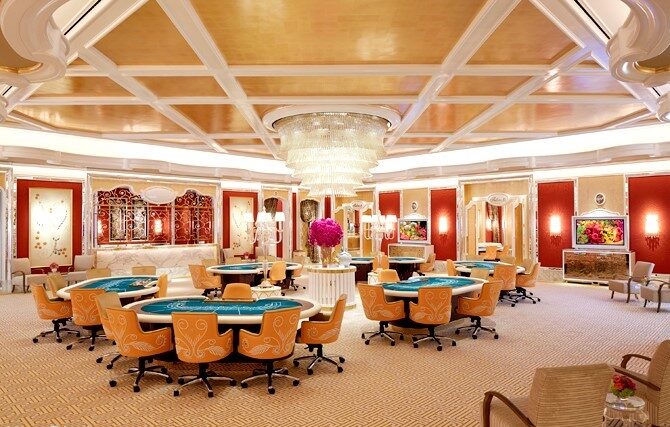
The study says non-gaming business has become an important direction for concessionaires as they restructure VIP operations under Macau’s revised gaming framework. Direct VIP rooms have sought to combine gaming with resort, hotel, entertainment and cultural experiences to strengthen customer loyalty.
However, the paper says the impact remains limited. It states that non-gaming projects are still largely concentrated in hotels, dining and retail, with limited extension value for high-end VIP customers.
Six Macau concessionaires generated about MOP70.8 billion ($8.76 billion) in non-gaming revenue in 2023 and 2024. Sands China had the highest non-gaming revenue share, at 24.5 percent of total revenue, followed by Wynn Macau at 17.8 percent and Galaxy Entertainment at 15.96 percent. MGM China and Melco Resorts each stood at 13.1 percent, while SJM Holdings was at 6.69 percent.
The study says the six operators committed more than MOP118.8 billion ($14.70 billion) under the new concession contracts, with actual investment expected to exceed MOP140.5 billion ($17.39 billion). About 93 percent is directed to non-gaming projects.
Despite that investment, operators face challenges including resource integration, limited cross-sector operating experience and uncertain short-term returns. The paper warns that Macau must avoid ‘surface diversification’ if non-gaming is to provide real support for the VIP market.
Direct VIP shift
Macau’s former VIP business was built around ‘VIP rooms, junkets and credit services,’ with junkets acting as the key link between casinos and high-net-worth players. The model supported rapid growth after the 2002 liberalization of the gaming market, with VIP baccarat revenue accounting for 73.2 percent of Macau’s gaming revenue at its 2011 peak.
The model has since been reshaped by tighter mainland enforcement against cross-border gambling, stricter capital controls, the collapse of major junket groups and Macau’s revised gaming law, which took effect in June 2022. VIP gaming’s share of Macau’s gross gaming revenue had fallen to 26.7 percent in the first half of 2025.
Under the new rules, junkets can only work with one concessionaire, cannot share gaming revenue with operators, cannot lease dedicated casino areas, and can only receive commissions for introducing gaming activity. The number of licensed junkets in Macau has fallen from 235 in 2013 to 31 in 2025.
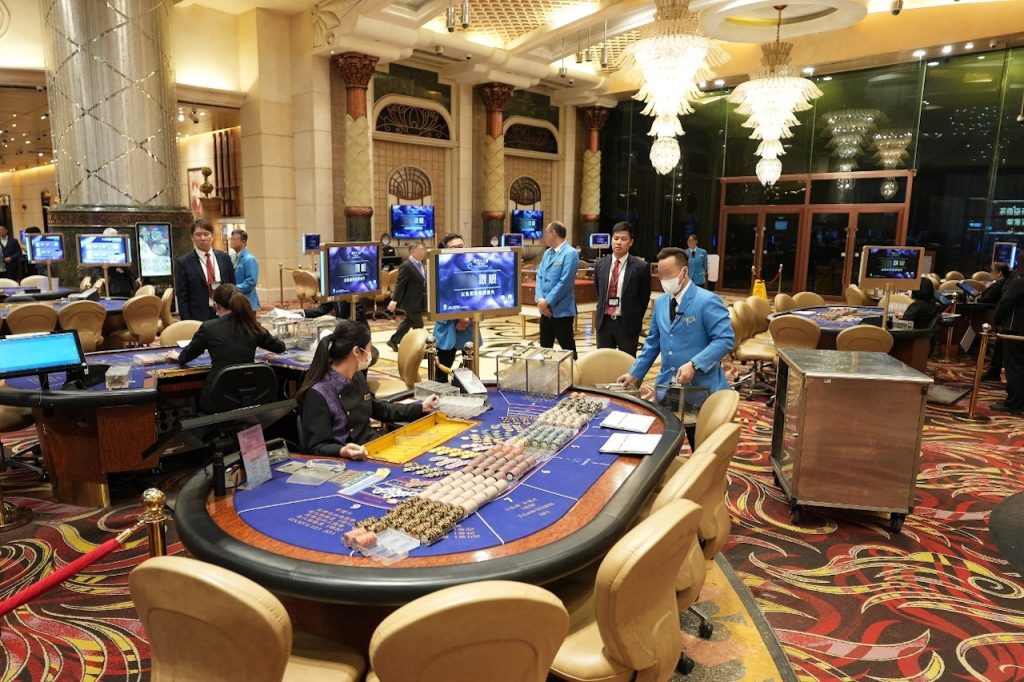
Direct VIP rooms have become the main replacement model, with casino operators taking direct control of client acquisition, screening and service design. Some company rooms set entry thresholds at MOP200,000 to MOP300,000 ($24,800 to $37,100).
However, the study says the model faces limits. Without junkets’ extensive client networks, operators may struggle to quickly build a stable base of high-net-worth customers. Some VIP players may also have doubts about the flexibility of credit, privacy protection and personalized services in the new direct system.
Compliance costs
The study says the new model improves compliance and reduces risks linked to opaque credit, money flows and third-party debt collection. But it also shifts more responsibility to concessionaires.
After the implementation of the new gaming law, operators must directly handle customer identification, source-of-funds checks, anti-money laundering controls and counter-terrorist financing obligations. The study says VIP gaming remains a high-risk area and now faces stricter audits and supervision, raising operating and compliance costs.
The paper describes the broader shift as a move from a ‘profit-driven’ model to a ‘compliance service-driven’ model.
Regional competition is another challenge. The study says some VIP customers may choose other gaming jurisdictions because they can no longer access Macau’s old model of flexible credit and private services.
For operators, the next phase will depend on their ability to source high-end customers directly, expand international VIP networks and build differentiated services within a tighter compliance framework.