



Macau’s gross gaming revenue is expected to fall between 7 and 9 percent year-on-year in July, weighed down by the World Cup, before returning to low single-digit growth in the second half of 2026, according to a Wednesday note from Seaport Research.
The brokerage forecasts a rebound of about 5 percent year-on-year in August, with third-quarter GGR estimated to rise around 2 percent and the fourth quarter around 4 percent. Full-year 2026 revenue is projected to grow approximately 4.8 percent, with growth accelerating to 6.5 percent in 2027.
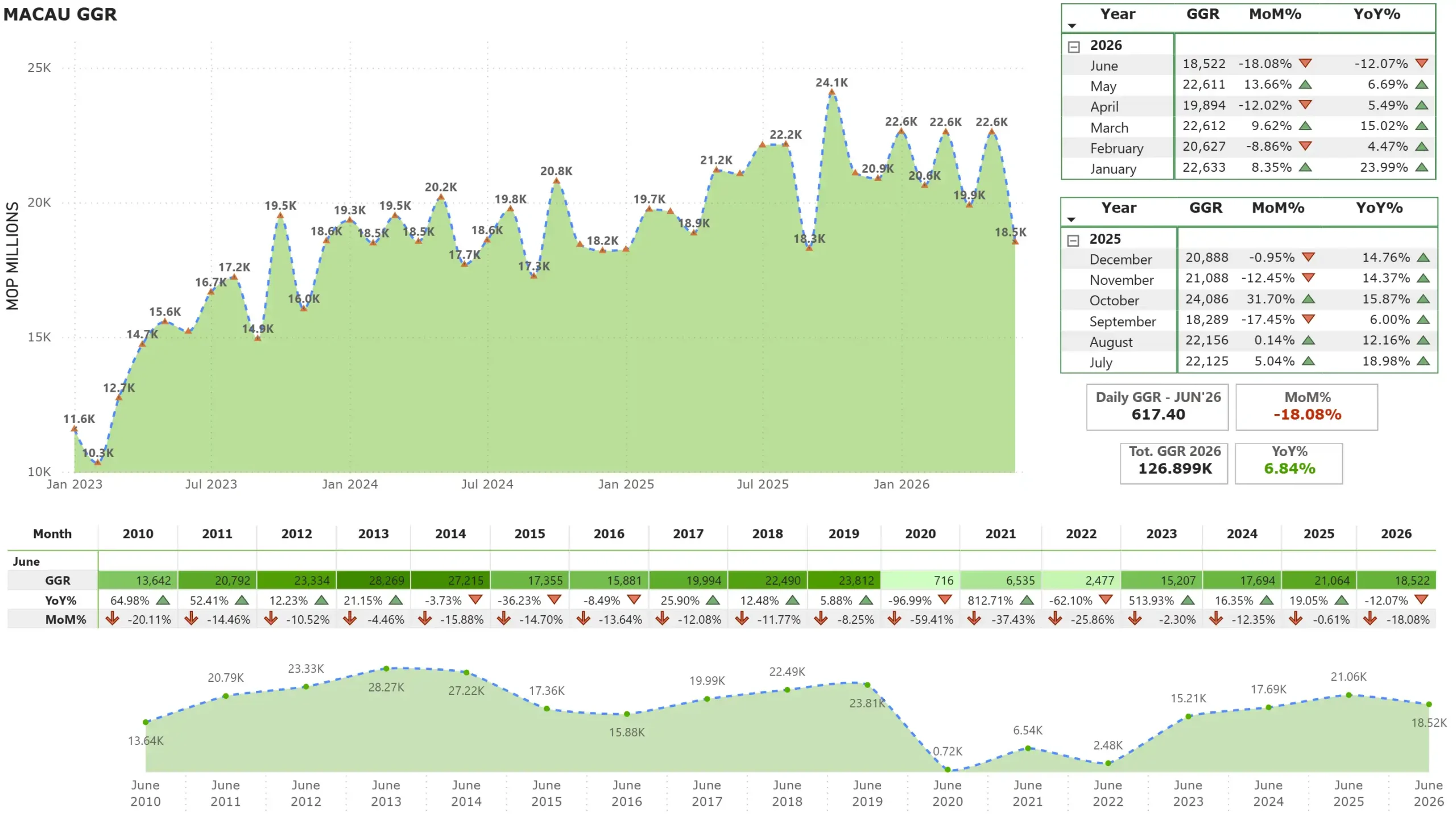
Seaport estimates average daily GGR of about MOP658 million ($81.5 million) in July, up 6 percent month-on-month but equivalent to only 83 percent of July 2019 levels.
The forecast follows a weaker-than-expected June, when GGR fell 11.9 percent year-on-year to MOP18.55 billion ($2.29 billion), the lowest monthly figure since September, which was severely affected by weather. Analyst Vitaly Umansky attributed the decline to the World Cup’s impact on visitation, adding that ‘noise around money flows may limit some player activity’.
Second quarter GGR slipped 0.1 percent year-on-year, the first quarterly decline since 2019 excluding the COVID years. The softness was partly driven by low hold, with VIP hold estimated at below 2.8 percent, compared with 3.5 percent in the same period last year and a normal level of around 3.3 percent.
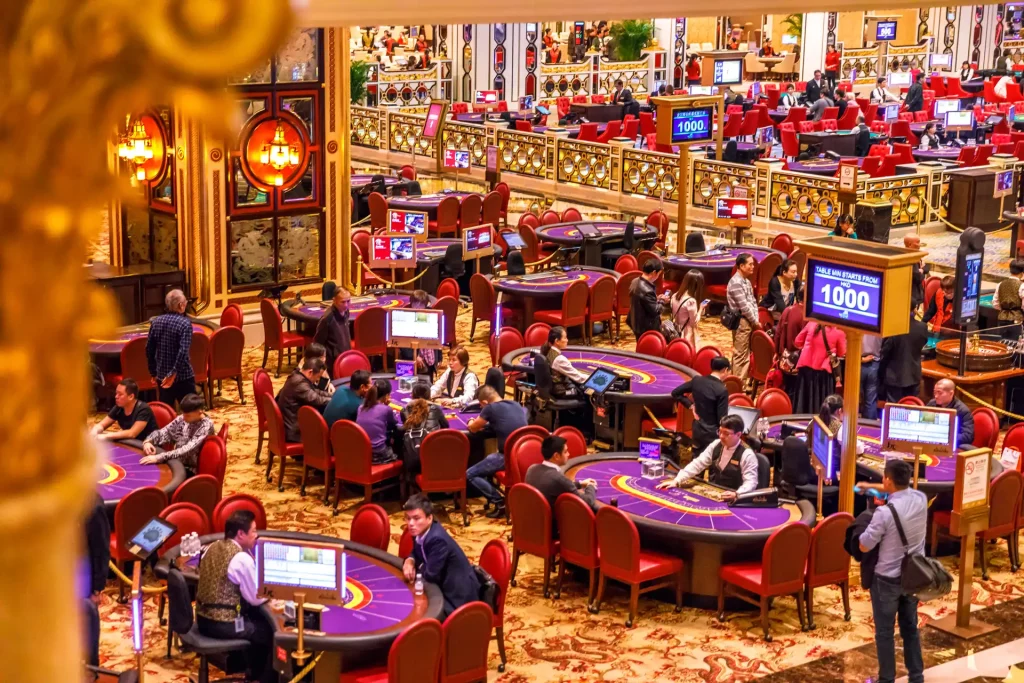
On profitability, the analyst said operators’ margins are set to remain under pressure, although cost increases in 2026 should be more muted than in 2025, with operating expense growth in the 6 percent to 7 percent range. Player reinvestment and agent commissions remain high, and Seaport does not foresee ‘any improvement in the market in the near/medium term’.
While there has been some hope that the government may step in to limit commissions or player reinvestment, the brokerage said it does not expect this to happen in the foreseeable future. ‘Margins will remain pressured while opex continues to rise, revenue growth remains tepid and player reinvestment sees no sign of retrenchment,’ Umansky wrote.
Singapore strength continues
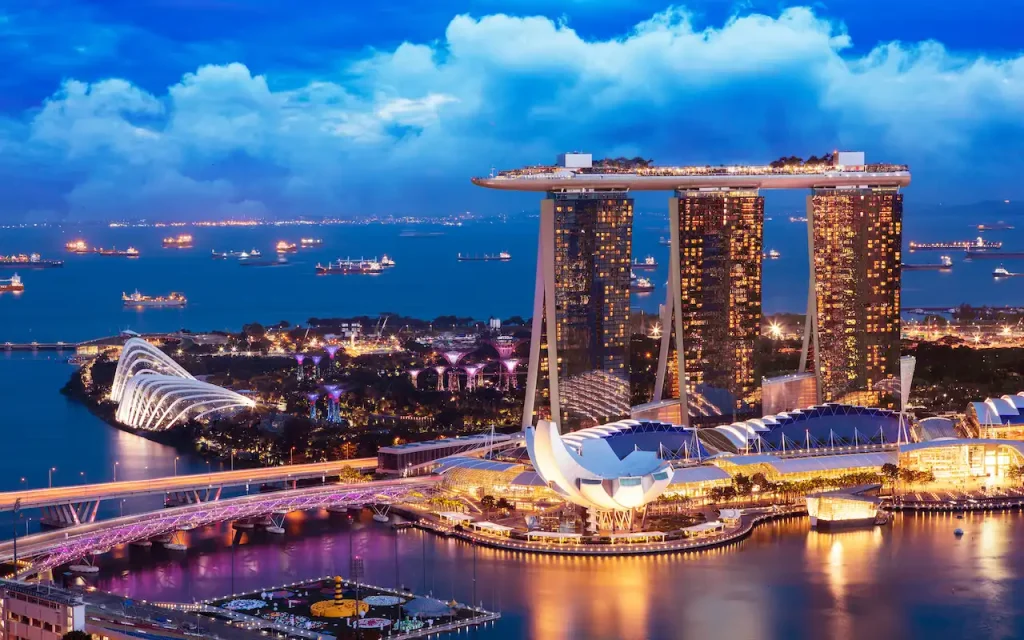
In Singapore, Seaport described Marina Bay Sands as ‘the preeminent high-end Asia gaming destination’, benefiting from liquidity inflows, ease of transport, and a high-quality product and service offering.
The brokerage cautioned that any disruption to cryptocurrency transaction capability, stablecoin impairment, or a clampdown on money flows from China would negatively impact revenues.