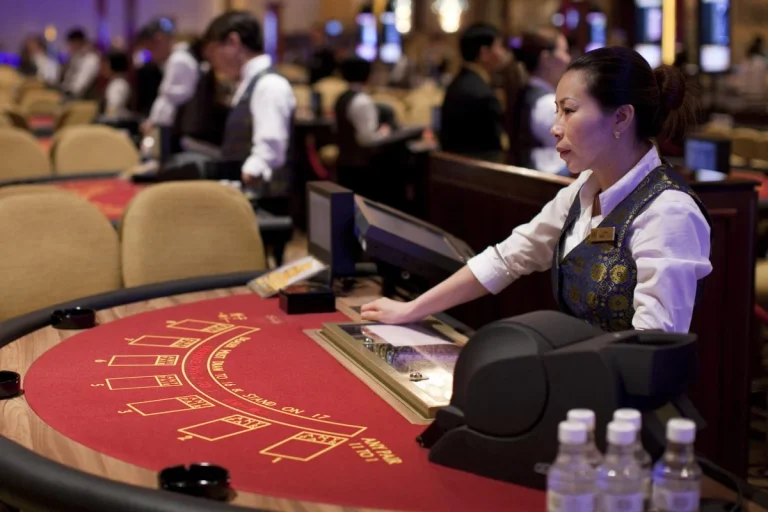
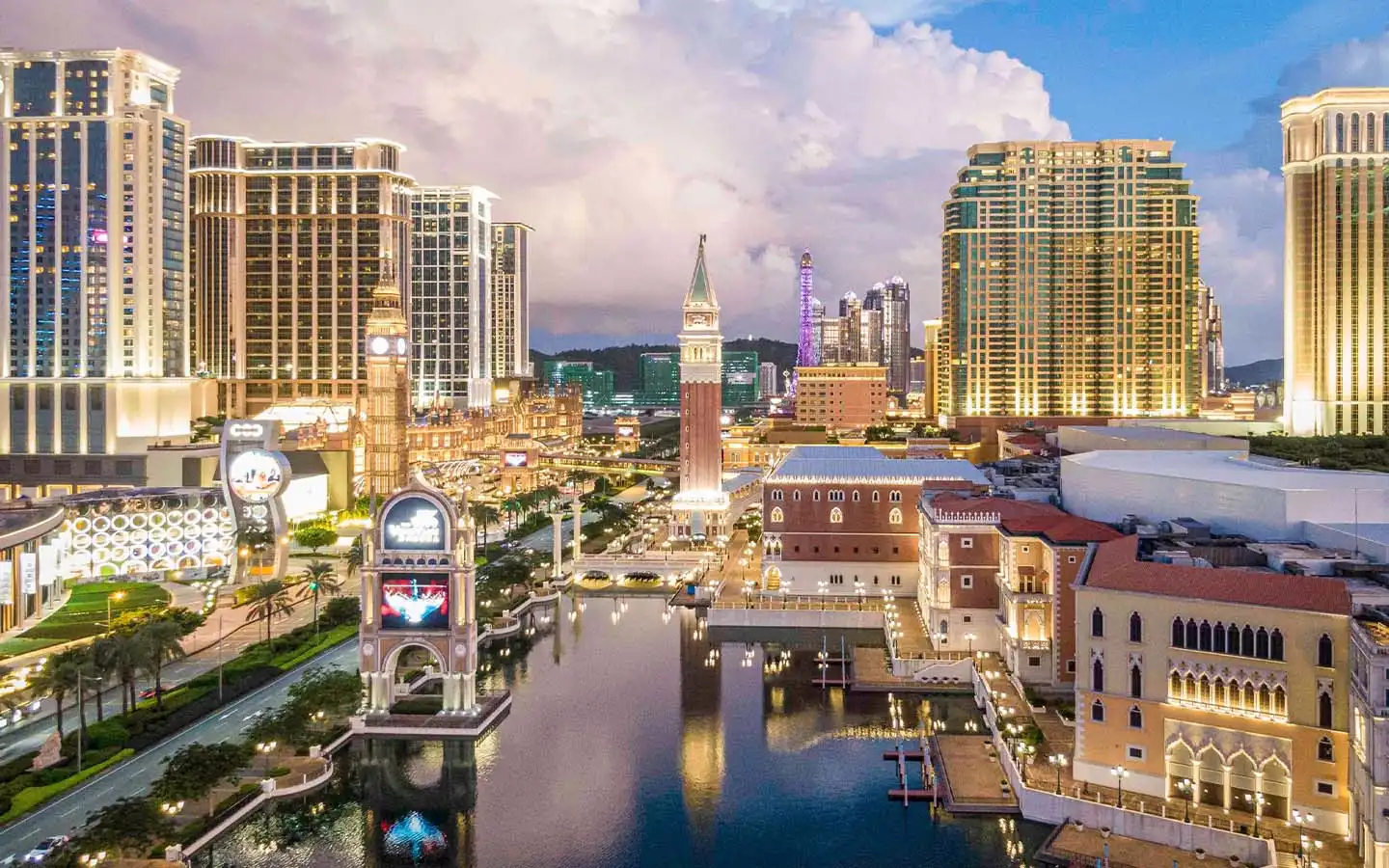
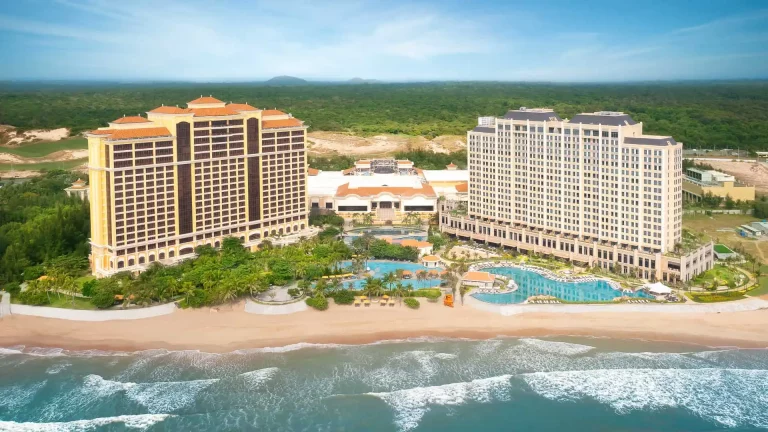
Good morning. The tide is still coming in — just not as fast. Morgan Stanley says the Asian gaming boom is entering maturity, with Singapore emerging as the region’s standout while Macau struggles with rising costs and softer returns. In Macau, analysts agree revenues are recovering but warn operators are spending more and more just to maintain growth. Sands China believes conventions and entertainment could reshape the city’s future. And in Vietnam, The Grand Ho Tram sees airports, highways, and local gaming as its next growth engine.
Yevhen Krazhan, CSO at GR8 Tech, explores how surging crypto adoption across Asia is revolutionizing iGaming payments, stating: “When I look at what’s changing fastest in Asia, it’s payment behavior,” as wallets, stablecoins, and seamless cross-border transfers become deeply ingrained in player habits.
A senior official at Taiwan’s Ministry of Justice Investigation Bureau (MJIB) has been suspended amid allegations that he helped develop software code for online gambling systems, according to local media reports.
The case centers on an ongoing investigation involving a police information technology officer in Taoyuan City, identified by the surname Hsu, who allegedly worked with two engineers to establish a shell company that secured government technology procurement contracts from the police department. Taiwanese prosecutors launched an investigation into the matter on April 17th, conducting searches at the homes of the individuals involved and seizing evidence linked to the case.
Authorities later discovered that an MJIB official surnamed Hung – previously employed as a software engineer before entering government service – was allegedly connected to the operation and may have assisted in developing online gambling-related software.
The MJIB, Taiwan’s primary investigative agency under the Ministry of Justice, said it has suspended Hung and opened an internal investigation while cooperating with prosecutors. The bureau added that it plans to convene a temporary Merit Evaluation Committee meeting and warned that Hung would face severe disciplinary action if the allegations are confirmed.
In a statement, the MJIB said its personnel are expected to uphold high ethical standards given their role in investigating criminal activity, adding that any violations of the law would be thoroughly examined. Local reports said Hung had been stationed at the MJIB’s Taoyuan office and had recently been selected for an overseas posting as a legal secretary in the Middle East.
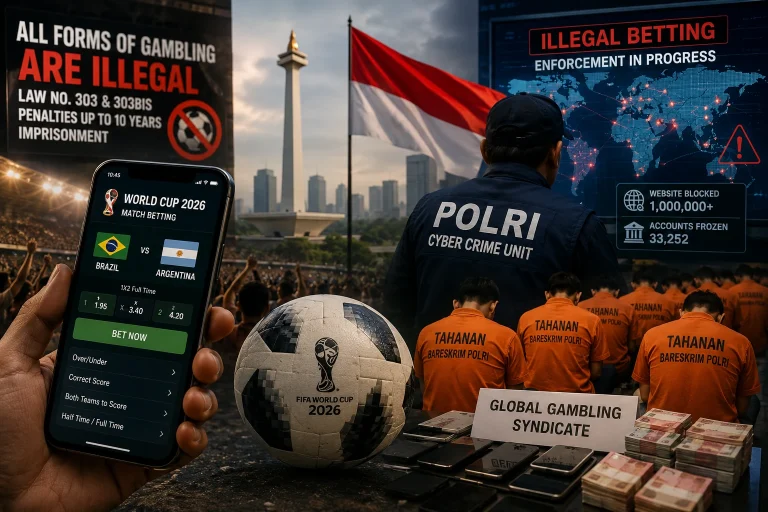
Indonesia’s National Police have put the public on notice that the 2026 FIFA World Cup will trigger a surge in illegal online gambling, as authorities brace for what they describe as one of the most challenging enforcement periods in recent memory.
Brigadier General Trunoyudo Wisnu Andiko, head of the Public Information Bureau at the National Police’s public relations division, issued the warning at a press conference held at the TVRI building in Jakarta on 7 May, the same venue where the state broadcaster was formalizing its role as official rights holder for the tournament in Indonesia. The timing was deliberate. TVRI’s coverage will reach tens of millions of viewers, and Polri is treating the broadcast footprint as both an asset and a vulnerability.
“We must anticipate the rise of football gambling,” Trunoyudo said in a written statement issued on the 8th of May. “We cannot allow this momentum to be exploited for unlawful activities that could result in public loss.”
All forms of gambling are illegal in Indonesia under Articles 303 and 303bis of the Penal Code, with penalties extending to five years imprisonment and fines of up to $66,000 for punters, and up to ten years and $660,000 for operators. The country is home to the world’s largest Muslim-majority population, and enforcement has been consistent and, at times, aggressive. Over the past eighteen months alone, authorities have blocked more than a million gambling-related websites and frozen thousands of bank accounts. The Financial Services Authority, OJK, confirmed in March that it had instructed commercial banks to block 33,252 accounts following automated detection of gambling-related transactions. Yet the grey market persists, and football has always been its busiest season.
Soccer is by far the most popular sport in Indonesia, and offshore betting platforms – many of them operating through VPNs, cryptocurrency rails and local e-wallets – have long treated World Cup years as peak acquisition windows. Polri has acknowledged the pattern explicitly. Historical data consistently shows betting volumes spike around major international tournaments, and around games involving the Indonesian national team, which, for the first time, has qualified for the World Cup, adding a layer of national fervor to an already charged environment.
The scale of the underlying market is not in dispute. A study released earlier this year by a US-based payments provider found that 19 percent of people with an interest in the 2026 World Cup intended to place their first-ever online bet during the tournament, a figure that, applied to Indonesia’s enormous and football-obsessed population, points to a significant acquisition opportunity for offshore operators willing to absorb the legal risk. Gambling turnover linked to online platforms reached an estimated 280 trillion rupiah (approximately $16 billion) last year, with an estimated 12 million Indonesians participating in illegal online gambling activity.
The enforcement environment has sharpened considerably in the lead-up to the tournament. On the 9th of May, just days after Trunoyudo’s warning, Indonesian police arrested 321 foreign nationals, predominantly Vietnamese, with significant contingents from China, Myanmar, Laos and Thailand, at a commercial building near Jakarta’s Chinatown. Authorities said the group had been operating at least 75 illegal betting websites, targeting players outside Indonesia, for approximately two months. Of those detained, 275 were formally named as suspects on gambling and money laundering charges carrying a maximum sentence of nine years. Similar operations had previously been dismantled in Surabaya, Bali and Batam, with investigators noting a discernible migration of transnational gambling syndicates from Cambodia and Myanmar, where prior crackdowns had raised operational costs, toward Indonesia.
Communications and Digital Minister Meutya Hafid took a harder line still, pledging zero tolerance for operators targeting minors and committing further government resources to digital monitoring and prosecution. “Criminals now use digital solutions and advanced technology,” she said. “We must massively strengthen the digital services we use to prosecute and monitor them.” Polri is setting up a dedicated complaint channel in cooperation with TVRI, supplementing the existing 110 hotline, and has also warned the public against fraudulent watch-party ticket schemes, a recurring side-racket that emerges around major sporting events.
The crackdown cycle Indonesia finds itself in is not new, but the 2026 World Cup represents a stress test of unusual intensity. The combination of Indonesia’s first-ever World Cup qualification, a 48-team tournament generating more matches and more betting markets than any previous edition, and a government with demonstrated appetite for enforcement creates conditions that offshore operators and their players will need to navigate carefully.
Scientific Games has announced the appointment of Ray Anderson as interim Chief Financial Officer, effective May 4, as the company begins the search for a permanent CFO.
The appointment follows the departure of current CFO Nick Negro, who will leave on May 15 after three successful years leading the company through sustained growth, as he relocates to Chicago for a new opportunity closer to family.
“Nick has been a strong member of our leadership team and an advocate for the potential of Scientific Games,” said Pat McHugh, Chief Executive Officer for Scientific Games. “During his time with the company, he significantly strengthened our financial and procurement organizations and helped position Scientific Games for continued growth. We thank Nick for his contributions and wish him all the best.”
Anderson is a seasoned finance leader and CPA with more than 30 years of global experience, including senior leadership roles at KPMG across the U.S., Europe and Asia. Most recently, he served as a Global Lead Partner, advising Fortune 500 companies on audit, capital markets, and regulatory strategy, and working closely with boards and executive teams. Immediately prior to this role, he led KPMG’s Pacific Southwest audit practice for six years.
“Ray is a highly respected finance leader with extensive global experience advising large, complex organizations,” said McHugh. “We are confident in his ability to support the business and our Finance organization during this transition.”
Serving 150 lotteries in 50 countries, Scientific Games is the world’s largest lottery games company, fastest growing lottery systems provider and a leading provider of digital lottery solutions.
The Philippines Department of Information and Communications Technology (DICT) has confirmed that pornography and online gambling websites are blocked on all connections provided through its expanding free public Wi-Fi program, as the government seeks to promote safer internet access for students and remote communities.
Speaking during the launch of new connectivity projects in Zamboanga del Sur province in the southern Philippines, DICT officials said the restrictions are part of broader safeguards built into the country’s publicly funded internet infrastructure, particularly at schools and educational facilities.
DICT Assistant Secretary June Vincent Manuel-Gaudan said the agency uses filtering technologies to prevent users from accessing “pornographic and gambling sites” through government-provided Wi-Fi services. The initiative forms part of the Philippines’ nationwide Free Wi-Fi for All program, which aims to expand internet access to underserved areas, including geographically isolated and disadvantaged communities.
Officials stressed that the program is not solely focused on connectivity, but also on responsible internet use and cybersecurity awareness. DICT said it is working closely with the Department of Education (DepEd) to encourage digital literacy and responsible online behavior among students, while also providing cybersecurity training for teachers, parents and local communities.
Regional Director Cheryl Ortega said the agency provides “complementary content, applications and orientation on the proper use” of internet services alongside infrastructure deployment. The department acknowledged that some users may still attempt to bypass restrictions through tools such as virtual private networks (VPNs), but said it continues to strengthen monitoring and filtering systems.
DICT also disclosed that its Cybersecurity Bureau blocks thousands of cyberattack attempts each day and assists other government agencies with data protection and online security measures. The latest rollout saw the launch of 324 free Wi-Fi hotspots across 108 schools in Zamboanga del Sur, many of them located in remote areas with limited internet connectivity.
The Philippines has in recent years taken a more active approach to regulating online content and digital services, including tighter scrutiny of illegal online gambling operations and cybercrime activities.
Location and accessibility remain the single most important competitive advantage in the gaming industry, and Vietnam’s infrastructure pipeline is poised to transform the catchment area of The Grand Ho Tram, CEO Walter Power said during the G2E Asia “Asia Gaming Talk: Marketplaces in Motion” panel.
A new international airport under construction in Ho Chi Minh City will sit just 40 minutes from the property, with a dedicated highway running directly from the airport to the resort. The current journey from Ho Chi Minh City takes roughly two hours.
Walt Power
“This will be a dramatic improvement when it opens next year,” Power said.
The demand-side fundamentals, Power argued, are unusually favorable. The Grand Ho Tram benefits from roughly 300,000 expatriates based in Ho Chi Minh City, alongside historical inbound flows from Korea, China, Taiwan, and the United States. Beyond that lies a structural scarcity: “It’s one casino for 20 million people — that’s the situation we face at Ho Tram.”
The accessibility story arrives alongside a separate but reinforcing development. The Grand Ho Tram was included in a five-year pilot program that opens the casino floor to Vietnamese citizens for the first time, ending a 13-year foreign-passport-only restriction. “I think this might be the first time in the industry that this has happened in Asia,” Power said.
The shift came with an operational overhaul. The property converted all chips and slot machines from US dollars to Vietnamese dong, a transition complicated by an exchange rate of roughly 27,000 to one. “The number of zeros adds additional challenges,” Power said. The mass floor and slots now run in dong, while VIP areas continue to operate in Hong Kong dollars and US dollars, and the cage still accepts USD cash — insulating the property from the dong’s depreciation against the greenback.
Together, the two developments point to a property whose addressable market is widening on multiple fronts at once — geographically through better connectivity, and demographically through expanded local access.
Launched in January 2022, BingoPlus became the Philippines’ first interactive livestreaming digital gaming platform. Now marking its fourth anniversary, it has evolved into a fully integrated entertainment ecosystem spanning both online and offline channels, engaging a broad nationwide audience.
Through Bingo Bonanza, the company became part of everyday Filipino life, creating community spaces where people gathered to play, connect, and socialise.
When the pandemic struck, DigiPlus, like many businesses, faced a defining moment: evolve its decades-old model or risk losing relevance in a rapidly changing entertainment landscape. The turning point was BingoPlus.
Scaling a fast-growing, player-favorite platform
BingoPlus, as the company’s flagship platform, reflects DigiPlus’ broader strategy of combining technology, seamless user experience, and culturally resonant content to serve a growing Filipino audience.
By translating familiar gameplay into modern, interactive formats, the company retained its legacy user base while engaging new, mobile-first audiences. This combination of innovation, strategic focus, and disciplined execution has driven BingoPlus’ next phase of growth.
By 2023, BingoPlus had established itself as a full-fledged digital entertainment platform, offering over 1,000 e-games across categories including bingo, card games, arcade, and slots.
DigiPlus invested in and expanded proprietary capabilities, including world-class livestreaming studios and in-house game development, enabling continuous innovation and creation of original, localized content.
At the core of the platform is Bingo Mega, its flagship livestreamed bingo experience, complemented by a catalogue of “Perya” games such as Color Game, showcasing digital adaptations of Filipino carnival staples.
In 2024, Pinoy Drop Ball emerged as a breakout hit and became one of the platform’s most-played titles. Launched as the Philippines’ first-ever livestreamed drop ball game, it further expanded BingoPlus’ growing suite of Perya games. The launch demonstrated DigiPlus’ strong investment in research and development to continuously deliver fresh, localized entertainment experiences for Filipino players year after year.
By 2025, BingoPlus had scaled into a comprehensive platform serving tens of millions of users, complemented by over 130 physical sites nationwide that continue to offer traditional bingo experiences while also serving as physical payments and customer support touchpoints for digital users.
The platform has since expanded into new verticals such as casual games and short-form video content, while sustaining strong performance from its homegrown livestreaming games.
Responsible Gaming at the core of growth
As the brand continued to scale, BingoPlus also deepened its investment in Responsible Gaming and player protection initiatives.
Over the years, it strengthened its pioneering Responsible Gaming platform features, including Time Control Settings and Spend & Loss Limits, empowering users to better manage and monitor their gaming activity.
Together with DigiPlus and DigiPlus Foundation (then BingoPlus Foundation), BingoPlus also championed the “Pusta de Peligro” educational campaign to promote safer and more mindful gaming to Filipino audiences through relatable storytelling, expert discussions, and community-led initiatives.
Today, BingoPlus stands as a leading digital platform and a trusted household entertainment brand in the Philippines.
Evolving with a vision of ‘Entertainment for Good’
As BingoPlus celebrates its fourth year, it stands as a true testament to DigiPlus’ transformation from a traditional operator into a digital-first entertainment company.
That very evolution finds its grandest expression in the annual BingoPlus Night. Now in its fourth year, the gala serves as the flagship celebration of a brand that has successfully ushered traditional bingo into the digital era and powered DigiPlus’ rise to unprecedented heights in recent years.
This year’s edition, happening on May 19, promises an even grander revelry that brings together the country’s brightest celebrities and artists. Carrying the theme “Step into the Next PLUS,” the event marks another milestone moment for BingoPlus as DigiPlus continues to expand its digital entertainment ecosystem.
DigiPlus Chairman Eusebio H. Tanco
“The BingoPlus transformation story was a leap of faith, but it was always driven by our strong commitment to our customers,” said DigiPlus Chairman Eusebio H. Tanco. “Over the past four years, BingoPlus has grown into a platform deeply rooted in Filipino culture, with a mission to bring traditional Pinoy entertainment into the modern age. We look forward to the forthcoming BingoPlus Night as another celebration of that journey and of the people who continue to shape the brand into what it is today.”
The May 19 festivities can be streamed live via the official BingoPlus website, the BingoPlus app, and its official social media platforms on Facebook, X, and YouTube. Special television broadcasts are also slated to air on GTV on May 22 at 8 p.m., and on GMA on May 23 at 10 a.m.
BingoPlus’ evolution from neighborhood bingo halls to a powerhouse digital entertainment platform reflects DigiPlus’ continuing commitment to champion Filipino culture and advance its vision of transforming the world of entertainment for good.
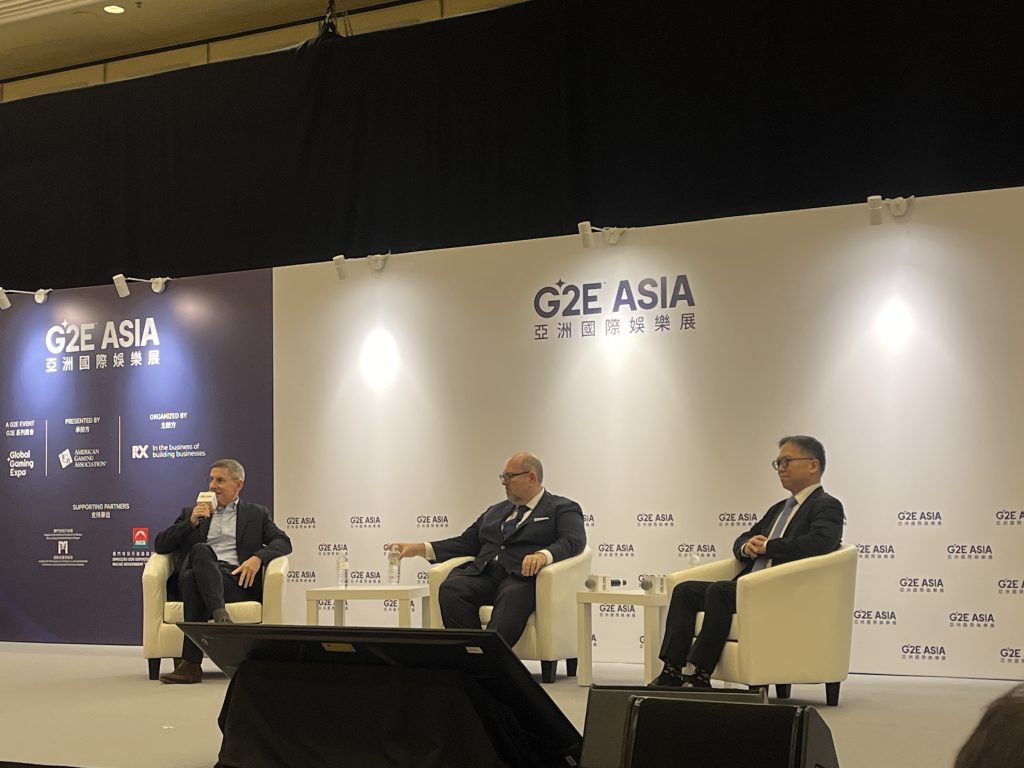
Two of the gaming industry’s most closely followed analysts offered sharply divergent readings of Macau’s trajectory at G2E Asia this week, agreeing on the top-line numbers but parting ways on whether the city’s six concessionaires are heading into a profitability squeeze or simply buying time before the next leg of growth.
Speaking on a panel about the financial outlook for Asia’s integrated resort boom, Vitaly Umansky of Seaport Research Partners and George Choi of Citigroup laid out competing frameworks for understanding a market that has recovered in revenue terms but remains structurally different from its pre-pandemic incarnation.
A mature market, or one still under-penetrated?
For Umansky, Macau has crossed into maturity. “The Macau market has changed significantly from where it was right before COVID, and profitability and return on investment has changed dramatically from where it used to be,” he said, noting that historically momentum-driven Macau stocks have lost appetite among investors now drawn to AI and technology plays.
Choi, who described himself as “the perennial bull” in the investment community, took the opposite view. Citing penetration rates of under 2 percent into the mainland Chinese population, he argued the runway remains long. Rather than tracking GDP, wine sales or property data — all of which he called backward-looking — he relies on monthly ground-level visits to Macau and a comparison of GGR against overnight visitation, which points to per-capita GGR growth of roughly 10 percent. Citigroup is forecasting 6 percent industry GGR growth and 8 percent EBITDA growth for 2026.
“Buying business”: the competitive squeeze
Where the two converged was on the cost side. Umansky warned that Macau is now in its seventh or eighth consecutive quarter of outsized year-on-year growth in operating expenses and player reinvestment ratios. “Every single operator in Macau is buying business,” he said. “And they have to do it because it’s a highly competitive market.”
His most pointed observation concerned the composition of that business. “This isn’t mass, this is VIP called mass,” he said, describing how agents have proliferated across the market and operators are paying for customers in ways that echo the old junket model. He drew a parallel to 2009, when junket commissions spiraled out of control until the Macau government imposed caps — but expressed skepticism that six concessionaires could coordinate a similar reset on their own, citing the free-rider problem.
Only MGM has surpassed its 2019 EBITDA, Umansky noted, largely because it operates 200 more tables than before the pandemic.
Side bets: lifeline or accelerant?
Choi pointed to side bets as a genuine growth lever, crediting the operators’ creativity and noting that Marina Bay Sands in Singapore has lifted its theoretical hold materially through products like Lucky 6 and Lucky 7. “If it all plays out, then that’s effectively them being able to buy some time before any corrective action can happen in Macau,” he said.
Umansky agreed side bets are beneficial but flagged limits. Roughly 45 percent of MBS’s GGR now comes from side bets, against 20 to 25 percent in Macau — a gap unlikely to close because Southeast Asian players favour high-volatility play in a way Macau’s customer base does not. He also raised a concern about player burn: a customer arriving with a $50,000 bankroll will lose it faster when betting on high-variance products, shortening length of play.
The base-mass problem
Both analysts identified the erosion of overnight base-mass visitation as Macau’s most stubborn issue. With mainland property values down significantly, discretionary gambling spend among middle-tier visitors has weakened, and operators have responded by lowering the theoretical-win threshold to qualify for premium-mass reinvestment — cannibalizing their own higher-margin business.
Hotel capacity compounds the problem. Macau is running at roughly 90 percent occupancy, with weekends frequently sold out, while operators continue converting standard rooms into suites aimed at higher-tier players. SJM’s border hotel in Hengqin, due to open later, may provide some relief on the affordable end.
Quoting Sheldon Adelson, Choi argued the industry should keep its eye on absolute returns rather than ratios: “EBITDA dollars are more important than EBITDA margin.” Whether Macau’s operators can keep growing those dollars without inviting another regulatory intervention is the question the market has yet to answer.
St8, a casino games aggregator and full-service tech provider, has partnered with ScatterKings—an emerging studio known for its handcrafted slot titles—to further enhance its content offering in regulated markets.
Through the partnership, St8 has integrated ScatterKings’ personality-led games designed with the product discipline and focus on long-term retention that operators require. This includes Coins of Cleo, Big Bob’s Gold and the Gold Lock series, each combining time-tested features with innovative twists.
ScatterKings has built its reputation on developing games with operators at the core, focusing on delivering consistent performance through tailored volatility, engaging features and high-quality visuals, ensuring broad appeal across multiple markets.
David Fall, Business Development Manager at St8, said: “Our focus is to equip operators with content that genuinely drives performance. ScatterKings brings a fresh approach to game development, combining proven mechanics with creative execution, and we’re pleased to add their portfolio to our platform as they continue to gain traction as a studio.”
The partnership with ScatterKings marks another step in St8’s ongoing strategy to expand its content offering and support operators with differentiated, high-performing games in competitive regulated environments. Over 200 suppliers are now hosted on the next-generation platform.
Steven Cross, Chief Commercial Officer at ScatterKings, added: “At ScatterKings, we are committed to building games that stand the test of time through genuine craftsmanship and disciplined execution. Our partnership with St8 is a natural fit because they value the same level of technical reliability and creative differentiation that we bake into every game. This deal provides a scalable route for our premium handcrafted portfolio to reach new audiences who appreciate games with distinct personality and proven mechanics.”
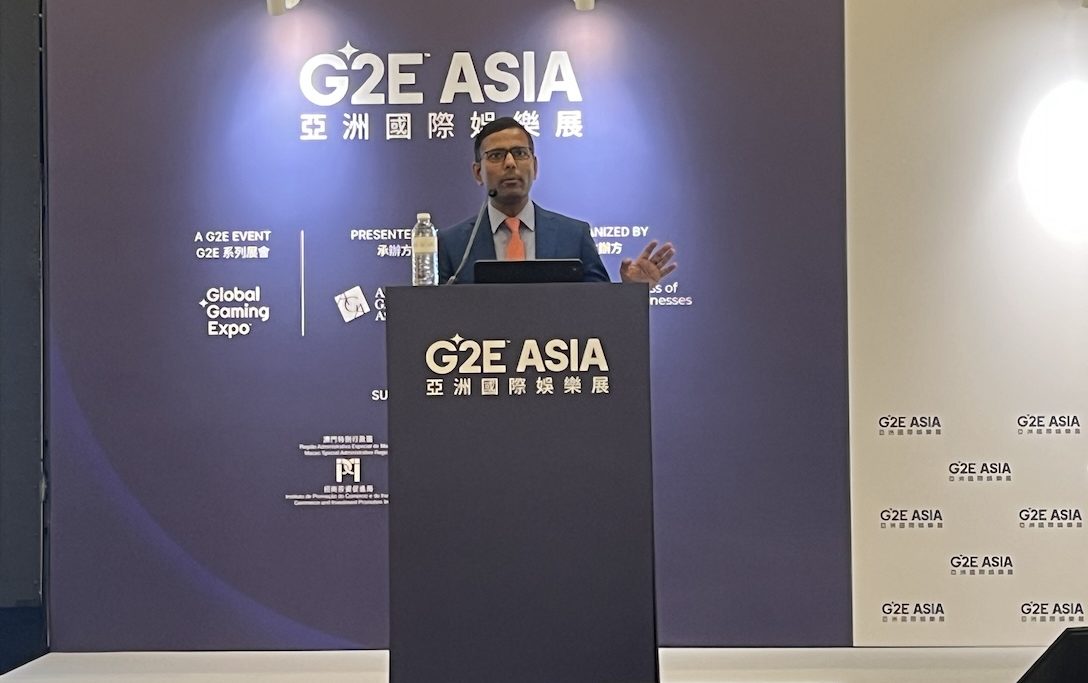
Singapore has emerged as the standout performer in Asia’s gaming industry, even as the broader regional market settles into a phase of maturity and slower growth, according to Praveen Choudhary, Managing Director and Head of Asian Gaming and Lodging at Morgan Stanley.
Praveen Choudhary, Managing Director and Head of Asian Gaming and Lodging at Morgan Stanley
Speaking on the opening day of G2E Asia 2026 at The Venetian Macao, Choudhary told delegates that the “high growth and expansion” category, which once included several Asian jurisdictions, is now effectively empty.
Singapore‘s mass-market revenue has reached 187 percent of pre-pandemic levels, with total gross gaming revenue (GGR) hitting $7.2 billion in 2025 — an all-time high — even though visitation remains 16 percent below 2019. Choudhary attributed the performance not to tourism but to local wealth accumulation. “It is not about visitors who are coming and gambling, which is what Macau is reliant on. It is wealthy people staying in Singapore,” he said, pointing to the migration of high-net-worth individuals to the city-state and to a tax regime that favours direct VIP customers, who are taxed 10 percent below the standard rate.
Unlike Macau, Singapore operates without junkets, relying entirely on a direct VIP model in which casino operators carry the credit risk under strict anti-money laundering oversight.
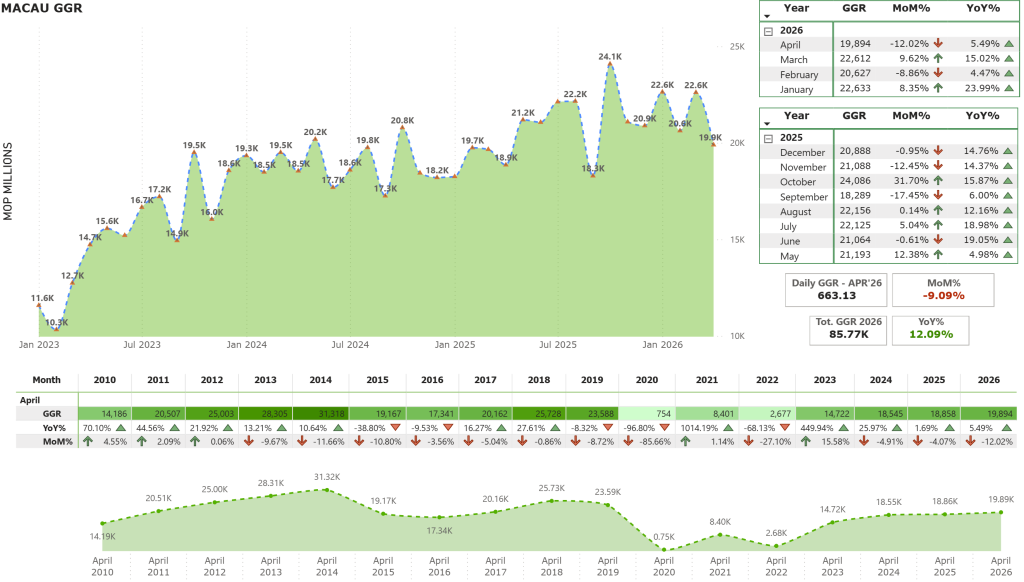
Macau, still the region’s largest market, presents a more mixed picture. GGR has grown at close to double-digit rates in the most recent months, and Morgan Stanley forecasts a further 6 to 7 percent increase for 2026.
However, sector EBITDA margins have declined for three consecutive years (24, 23 and 23 percent), and return on invested capital (ROIC) has fallen from 22 percent pre-pandemic to 14-15 percent today. Headcount across the six concessionaires is 3 percent below 2019, yet operating expenses sit at 130 percent of pre-pandemic levels, reflecting higher reinvestment costs and intensified promotional competition for premium-mass customers.
Choudhary also pushed back against the long-standing “under-penetration” narrative used to justify Macau exposure, noting that visitation rates from Guangdong have already reached 20 percent of the population — broadly in line with Las Vegas’s domestic catchment. On the VIP side, he highlighted a quiet recovery:
“A lot of people said that VIP is dead forever, and it will not grow. I want to highlight that in the last two years, VIP growth has been faster than mass.”
Philippines continues to struggle
The Philippines, by contrast, is “really struggling,” Choudhary said, with no improvement expected in 2026. Arrivals from China and South Korea fell 20 percent and 10 percent respectively in the first quarter, even after Manila eased its visa policy for mainland Chinese tourists. Land-based GGR declined 9.6 percent year-on-year in 2025 to PHP182.5 billion ($2.97 billion), as offshore and online gambling continued to erode the licensed casino business.
In Japan, Choudhary expressed skepticism that MGM Osaka, the country’s first integrated resort, will open as scheduled in 2030. He also dismissed market speculation around a potential second round of IR licensing, which the Japanese government has indicated could see applications submitted between May and November 2027, advising investors not to factor those projects into their near-term thinking given the long lead times involved in Japanese gaming development.
UAE draws investor optimism
The United Arab Emirates drew a more optimistic assessment. Wynn Al Marjan Island, being developed by Wynn Resorts with a 40-percent equity stake in the $5.1-billion project, currently holds a monopoly position in the market. “This market is great. Obviously luxury is all over UAE. UAE is about luxury,” Choudhary said, adding that he had personally visited the site, located roughly a ten-hour drive from Dubai.
The luxury positioning, he argued, aligns naturally with the broader identity of the Emirates and supports the long-term investment case, even though Wynn Resorts management indicated earlier this month that the property would face a modest delay from its original spring 2027 opening target.
Choudhary cautioned, however, that the pace at which discretionary travel returns to the region will depend on how the current Middle East tensions, including those involving the United States and Iran, evolve over the coming quarters. “Whatever is going on in the Middle East, we need to figure out when people will start traveling to that area for spending,” he said.