



Galaxy Entertainment Group (GEG) reported adjusted EBITDA of HK$3.58 billion ($457 million) for the first quarter of 2026, up 8 percent year-on-year but down 17 percent quarter-on-quarter, with the company attributing the sequential decline largely to unfavorable gaming luck rather than weakness in its underlying business.
The Macau-based casino operator said normalized adjusted EBITDA, after adjusting for luck-related factors tied to its rolling chip program, was approximately HK$3.58 billion ($457 million), up 21 percent year-on-year and flat quarter-on-quarter. GEG noted that fourth-quarter 2025 EBITDA had benefited from approximately HK$731 million ($93 million) in favorable luck, while first-quarter 2026 results reflected around HK$2 million ($255,000) in unfavorable luck.
Group net revenue for the quarter totaled HK$12.4 billion ($1.58 billion), up 11 percent year-on-year but down 10 percent sequentially. Total gross gaming revenue reached HK$12.7 billion ($1.62 billion), up 16 percent year-on-year and down 9 percent quarter-on-quarter.
Mass-market gaming remained the company’s main earnings driver. Mass GGR rose 17 percent year-on-year to HK$9.6 billion ($1.23 billion), declining only 4 percent quarter-on-quarter, while VIP GGR increased 18 percent year-on-year to HK$2.3 billion ($294 million) but fell 25 percent sequentially, reflecting continued volatility in the premium rolling segment.
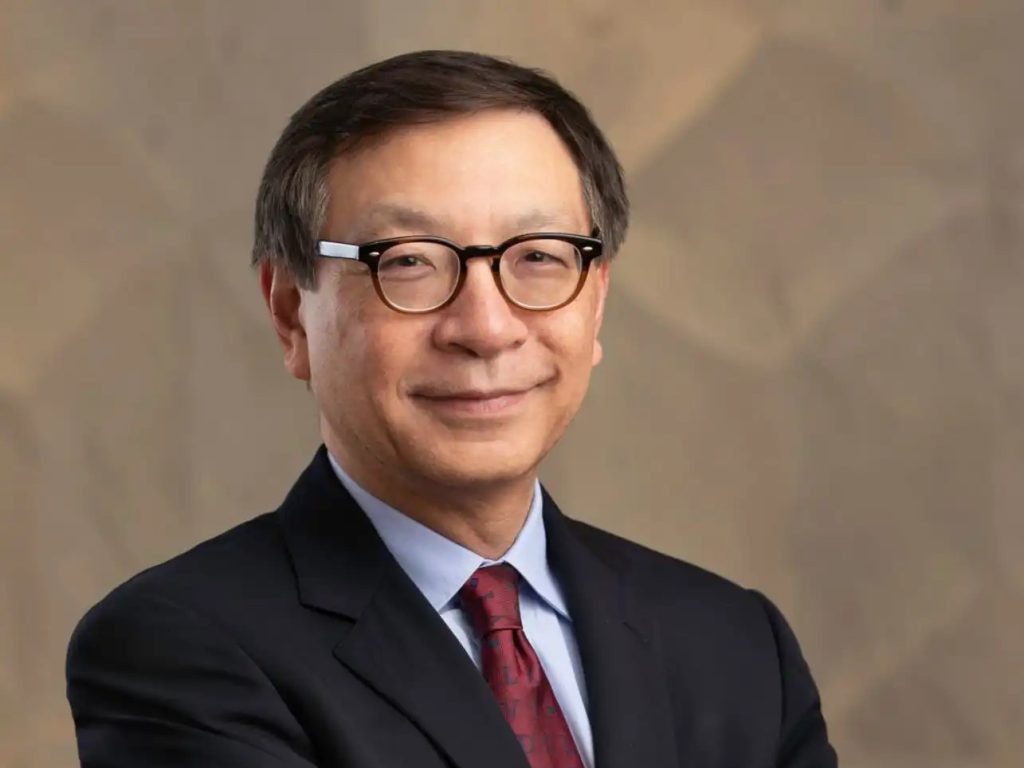
Francis Lui, Chairman of GEG, said the group’s business performance during the Chinese New Year period was “solid,” with a longer tail following the holiday period similar to last year. He also pointed to Macau’s increasingly diversified visitor mix as a key support for the market’s recovery.
‘The Macau gaming market continues to benefit from a solid recovery in tourism fundamentals, supported by the relaxation of IVS visa policies, an increasingly diversified visitor mix, and a broader range of non-gaming attractions,’ the company said.
GEG also noted that Macau’s visitor base has become increasingly diversified, with international visitor arrivals rising 11 percent year-on-year during the quarter to around 800,000 visitors. Arrivals from Thailand increased 71 percent year-on-year, while arrivals from India rose 41 percent. Visitors from South Korea and long-haul travelers from the United States both increased 7 percent.
The company said it continues promoting Macau internationally through marketing offices in Tokyo, Seoul, Bangkok and Singapore.

Premium segment supported by Capella ramp-up
GEG said Capella at Galaxy Macau, which officially opened in February, has continued ramping up successfully. The ultra-luxury property features 95 suites and penthouses targeting the super-premium mass segment.
The company also expanded its Horizon Plus premium gaming area from six private salons to ten in an effort to strengthen offerings for high-value customers.
Galaxy Macau, the group’s flagship Cotai resort, generated adjusted EBITDA of HK$3.34 billion ($427 million), up 11 percent year-on-year and down 17 percent quarter-on-quarter.
Normalized adjusted EBITDA at the property rose 25 percent year-on-year and 2 percent quarter-on-quarter. Hotel occupancy across Galaxy Macau’s nine hotels reached 99 percent during the quarter.
StarWorld Macau reported adjusted EBITDA of HK$383 million ($49 million), up 9 percent year-on-year and 8 percent quarter-on-quarter, with hotel occupancy reaching 100 percent.
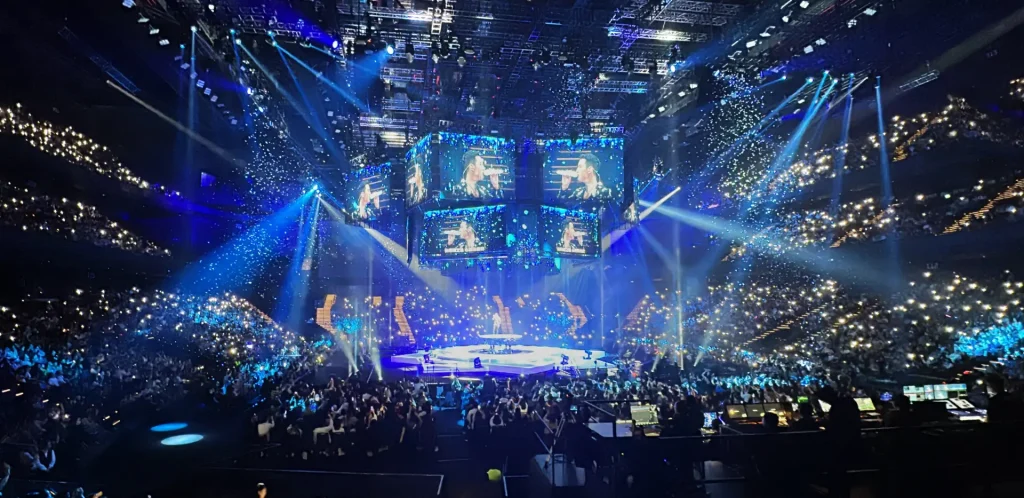
Non-gaming and events strategy remains central
GEG continued emphasizing non-gaming attractions and entertainment events as part of Macau’s diversification strategy.
“World-class entertainment shows and sporting events continued to play a key role in attracting both new and repeat customers to Macau,” Lui said.
The group hosted more than 80 concerts, entertainment shows, sporting events and other activities during the quarter, including the ITTF World Cup Macao and performances by Chinese artists Dylan Wang and Tian Zhen, Hong Kong singer Janice Vidal and comedian Jimmy O. Yang.
The company said it will host UFC Fight Night in Macau later this month, alongside additional concerts and entertainment events through June.
GEG also acknowledged broader geopolitical and macroeconomic risks, including the wars in the Middle East and Ukraine. The company said prolonged disruptions, particularly involving fuel and fertilizer supplies, could affect global economic activity and consumer sentiment, although it noted there has been no direct impact on its business to date.