



Singapore has emerged as the standout performer in Asia’s gaming industry, even as the broader regional market settles into a phase of maturity and slower growth, according to Praveen Choudhary, Managing Director and Head of Asian Gaming and Lodging at Morgan Stanley.
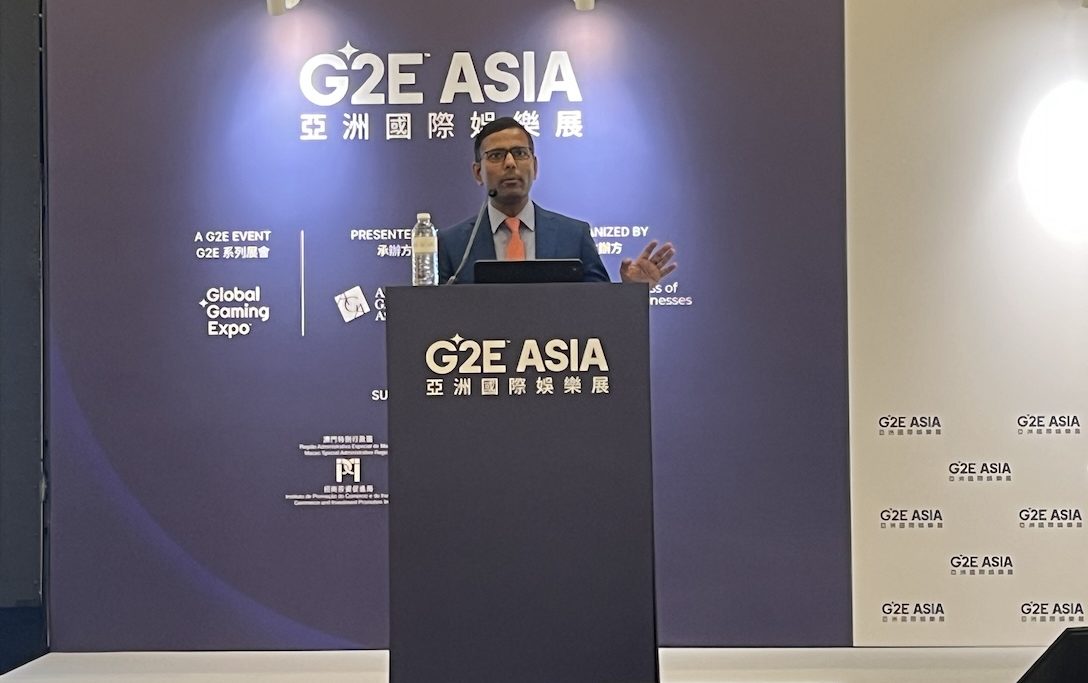
Speaking on the opening day of G2E Asia 2026 at The Venetian Macao, Choudhary told delegates that the “high growth and expansion” category, which once included several Asian jurisdictions, is now effectively empty.
Singapore‘s mass-market revenue has reached 187 percent of pre-pandemic levels, with total gross gaming revenue (GGR) hitting $7.2 billion in 2025 — an all-time high — even though visitation remains 16 percent below 2019. Choudhary attributed the performance not to tourism but to local wealth accumulation. “It is not about visitors who are coming and gambling, which is what Macau is reliant on. It is wealthy people staying in Singapore,” he said, pointing to the migration of high-net-worth individuals to the city-state and to a tax regime that favours direct VIP customers, who are taxed 10 percent below the standard rate.
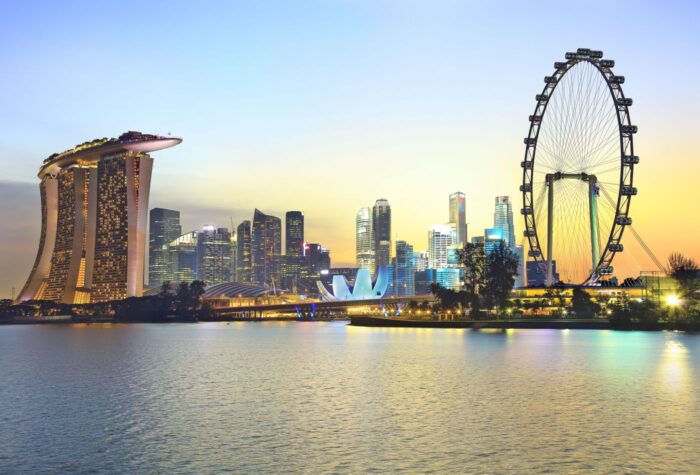
Unlike Macau, Singapore operates without junkets, relying entirely on a direct VIP model in which casino operators carry the credit risk under strict anti-money laundering oversight.
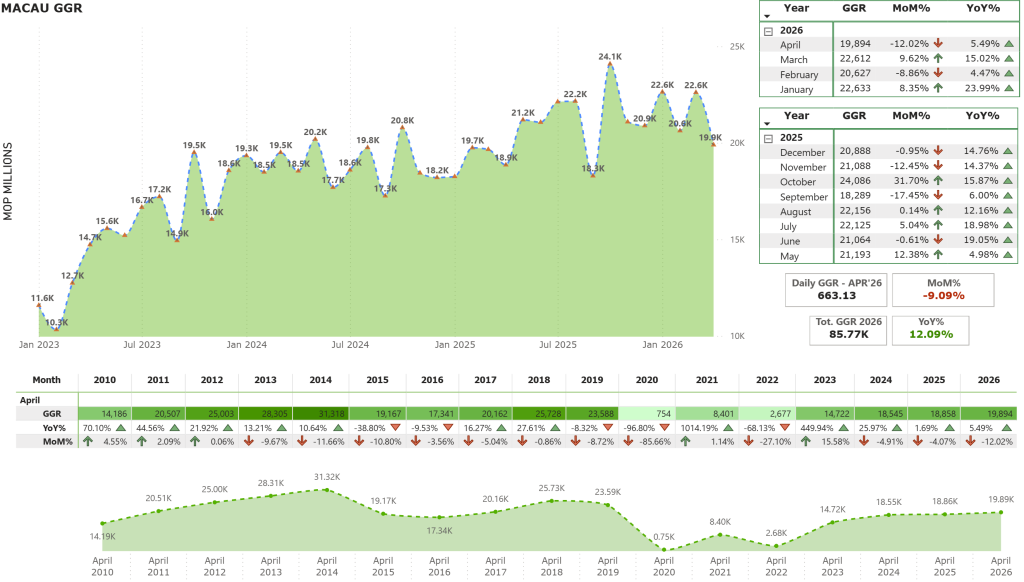
Macau, still the region’s largest market, presents a more mixed picture. GGR has grown at close to double-digit rates in the most recent months, and Morgan Stanley forecasts a further 6 to 7 percent increase for 2026.
However, sector EBITDA margins have declined for three consecutive years (24, 23 and 23 percent), and return on invested capital (ROIC) has fallen from 22 percent pre-pandemic to 14-15 percent today. Headcount across the six concessionaires is 3 percent below 2019, yet operating expenses sit at 130 percent of pre-pandemic levels, reflecting higher reinvestment costs and intensified promotional competition for premium-mass customers.
Choudhary also pushed back against the long-standing “under-penetration” narrative used to justify Macau exposure, noting that visitation rates from Guangdong have already reached 20 percent of the population — broadly in line with Las Vegas’s domestic catchment. On the VIP side, he highlighted a quiet recovery:
“A lot of people said that VIP is dead forever, and it will not grow. I want to highlight that in the last two years, VIP growth has been faster than mass.”
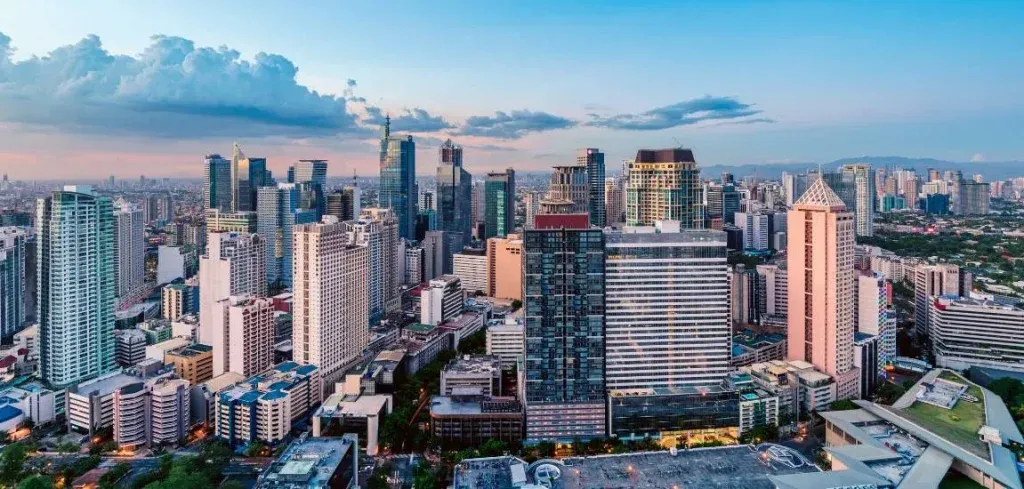
Philippines continues to struggle
The Philippines, by contrast, is “really struggling,” Choudhary said, with no improvement expected in 2026. Arrivals from China and South Korea fell 20 percent and 10 percent respectively in the first quarter, even after Manila eased its visa policy for mainland Chinese tourists. Land-based GGR declined 9.6 percent year-on-year in 2025 to PHP182.5 billion ($2.97 billion), as offshore and online gambling continued to erode the licensed casino business.
In Japan, Choudhary expressed skepticism that MGM Osaka, the country’s first integrated resort, will open as scheduled in 2030. He also dismissed market speculation around a potential second round of IR licensing, which the Japanese government has indicated could see applications submitted between May and November 2027, advising investors not to factor those projects into their near-term thinking given the long lead times involved in Japanese gaming development.
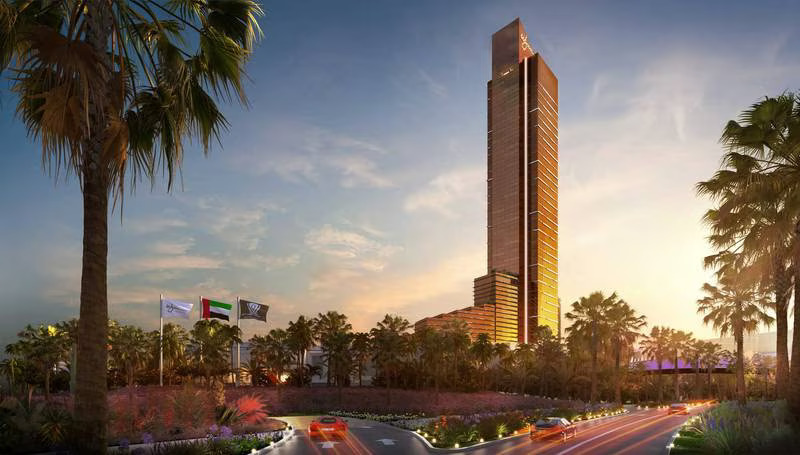
UAE draws investor optimism
The United Arab Emirates drew a more optimistic assessment. Wynn Al Marjan Island, being developed by Wynn Resorts with a 40-percent equity stake in the $5.1-billion project, currently holds a monopoly position in the market. “This market is great. Obviously luxury is all over UAE. UAE is about luxury,” Choudhary said, adding that he had personally visited the site, located roughly a ten-hour drive from Dubai.
The luxury positioning, he argued, aligns naturally with the broader identity of the Emirates and supports the long-term investment case, even though Wynn Resorts management indicated earlier this month that the property would face a modest delay from its original spring 2027 opening target.
Choudhary cautioned, however, that the pace at which discretionary travel returns to the region will depend on how the current Middle East tensions, including those involving the United States and Iran, evolve over the coming quarters. “Whatever is going on in the Middle East, we need to figure out when people will start traveling to that area for spending,” he said.