

The International Association of Gaming Advisors (IAGA) has confirmed that its 43rd International Gaming Summit will take place from Tuesday, June 2 to Thursday, June 4, 2026, at The Ritz‑Carlton Sarasota, bringing global industry leaders together on Florida’s Gulf Coast.
Recognized as a leading global forum for cross‑sector collaboration, the Summit will bring together operators, suppliers, legal and financial advisors, regulators, and sports organizations for high‑level discussions on the critical challenges and opportunities facing the worldwide gaming industry.
Harper Ko
“We are looking forward to holding our 2026 Annual International Gaming Summit in Sarasota, a beautiful city located on Florida’s Gulf Coast,” shared IAGA’s President Harper Ko. “Our 2026 agenda addresses numerous issues of critical importance to the gaming industry, including the growing issues created by prediction market contracts, the global illegal gambling and betting market, the ethics of using AI across gaming operations, the challenges facing sports betting and sports integrity, and more.”
“We are also pleased to announce that as part of the Summit, we will open each day with a combined general session that brings our Summit delegates together with attendees from the 2026 North American Gaming Regulators Association (NAGRA) Annual Conference taking place nearby at the Westin Hotel. Each combined session will be followed by networking break, enabling IAGA and NAGRA delegates to expand their relationships with other industry representatives.”
Jim Allen
“The Summit will open on Tuesday morning with a keynote address from Jim Allen, Chairman of Hard Rock International and Chief Executive Officer for Seminole Gaming. Allen is a gaming and hospitality industry veteran with over 40 years of experience and currently serves as Chief Executive Officer of Seminole Gaming, Chairman of Hard Rock International, Hard Rock Digital, and recently served as Chairman of the Board of Directors of the American Gaming Association, the gaming industry’s premier trade group with membership representing every corner of the gaming industry.”
“Responsible for all gaming, hospitality and entertainment operations at the Seminole Tribe of Florida since 2001, Allen has guided the development of Seminole Gaming into one of the world’s most successful casino and integrated resort operators, with seven casino locations throughout Florida, including the world’s first Guitar Hotel, which opened in October 2019.”
“For our Tuesday afternoon keynote, representatives from Fédération Internationale de Football Association (FIFA), will provide an insightful look into the measures they are putting in place to protect the FIFA World Cup 2026 that begins June 11. The address will provide a comprehensive overview of FIFA Integrity’s competition monitoring framework for the FIFA World Cup 2026, highlighting key integrity measures, operations and cooperative structures with internal and external stakeholders.”
“We are confident that this year’s Summit will provide an unmatched opportunity for gambling and betting industry stakeholders to broaden their knowledge of critical issues and strengthen their relationships with their counterparts.”
Harper Ko
43rd International Gaming Summit Evening Events
• Welcome to Sarasota Opening Reception: Monday, June 1 from 6:30 – 8 p.m. We’ll open our 2026 Summit with a welcome reception at The Ritz-Carlton Sarasota that features local culinary favorites and gives our delegates an opportunity to catch up with their global colleagues ahead of the Summit sessions.
• President’s Reception and Dinner: Tuesday, June 2 from 6:30 – 9 p.m. Held at the private Ritz-Carlton Beach Club located on Lido Key, our President’s Reception and Dinner will feature a variety of live action food stations in a relaxed atmosphere on and off the beach.
• Closing Reception and Dinner: Thursday, June 4 from 7 – 9 p.m. We’ll celebrate the end of our 43rd Summit and NAGRA’s Annual Conference with a combined outdoor BBQ at The Ritz-Carlton.
&The International Association of Gaming Advisors (IAGA) will hold its 43rd annual International Gaming Summit June 2 – 4, 2026 at the Ritz-Carlton in Sarasota, Florida.
As a premier event that brings together leaders from all global gaming sectors, the Summit will provide operators, suppliers, attorneys, investors, bankers, regulators and other advisor delegates with an unparalleled opportunity to meet and discuss the most important issues facing gaming.
Philippines-based online gaming operator DigiPlus Interactive Corp. has launched a bracket-based prediction campaign on its ArenaPlus sportsbook platform, introducing a PHP1 billion ($17.8 million) Prediction Giveaway aimed at expanding user engagement in the country’s online sports betting market.
The campaign, which began on March 21st, centers on a free-to-play tournament bracket format tied to professional basketball playoffs, marking ArenaPlus’ first localized rollout of a format widely used in the United States.
According to the company, the initiative is designed to support both customer acquisition and retention by encouraging participation in a ‘high-stakes prediction challenge’ without requiring financial commitment. The bracket-based system allows users to forecast outcomes across the entire playoff series, sustaining engagement from early rounds through to the finals.
ArenaPlus Head Erick Su said the format is intended to introduce a new interactive layer for local sports fans. “The bracket game is actually very common in the US… but the Philippines has never had that experience. We want to bring that here,’ he said, adding that users can ‘go along with the whole process and expect that they can win.”
The company described the campaign as a ‘free-to-play’ and ‘entertainment-led’ initiative aimed at maintaining engagement throughout the tournament cycle. ArenaPlus Marketing Head Hannah Bagui said the platform remains focused on enhancing user experience by making sports ‘more immersive’ and ‘more rewarding.’
The rollout forms part of DigiPlus’ broader strategy to expand its user base through interactive, sports-driven digital offerings, as competition intensifies in the Philippine online sportsbook segment.
DigiPlus also highlighted its compliance measures, noting that participation is supported by electronic Know Your Customer (eKYC) verification and responsible gaming tools. These include features allowing users to set time limits, customize play schedules, and establish loss thresholds.
The company said such controls are intended to ensure the campaign operates within a ‘secure, transparent, and compliant environment,’ as it continues to develop its digital sports entertainment portfolio.
Macau’s gross gaming revenue (GGR) is expected to outperform market forecasts in 2026, with analysts at CBRE projecting stronger-than-anticipated growth driven by resilient consumer demand and ongoing investment in the city’s tourism and entertainment offerings.
According to CBRE analysts John DeCree and Max Marsh, Macau GGR is forecast to expand by 8.3 percent year-over-year in FY26, surpassing consensus estimates of 6 percent.
The analysts said the current trajectory suggests that consensus expectations may be too conservative. Following a 14.2 percent year-over-year increase in the first quarter of 2026, GGR would need to slow sharply to just 3.5 percent growth for the remainder of the year to align with consensus projections—an outcome they view as unlikely.
‘Macau GGR should top FY26 consensus,’ the analysts noted, citing improving macroeconomic conditions in China and continued recovery in visitation, particularly within the base mass segment.
Despite the positive outlook, CBRE highlighted a disconnect between Macau’s operational performance and equity market valuations. U.S.-listed Macau gaming stocks have declined by an average of 14 percent year-to-date, while Hong Kong-listed peers are down 10 percent over the same period.
The analysts attributed this divergence to two key concerns among investors: uncertainty over the sustainability of growth and pressure on margins due to rising operating expenses and heightened competition.
Concerns over operating expenses intensified in late 2025, as promotional spending and costs rose across the market. Commission dollars increased 21 percent year-over-year in the fourth quarter, reaching 19.2 percent of GGR, while non-tax operating expenses climbed 8.6 percent.
CBRE noted that the increase in promotional activity has been driven by a limited number of operators seeking to regain market share, alongside concession-related investments.
However, the analysts expect these pressures to ease in 2026. ‘Promotional activity should remain elevated but stabilize,’ they said, adding that much of the recent cost inflation is now embedded within operators’ cost structures.
Recovery supported by China stimulus and tourism investment
Over the near term, CBRE expects Macau to benefit from broader economic support measures in China, where GDP growth is targeted at 4.5 percent to 5 percent. The analysts believe Macau’s gaming sector is likely to grow at a faster pace than the broader economy, supported by targeted stimulus and continued investment in non-gaming attractions.
These developments are expected to drive increased visitation, particularly from the mass market segment, which has yet to fully recover to pre-pandemic levels.
Melco seen as undervalued with deleveraging upside
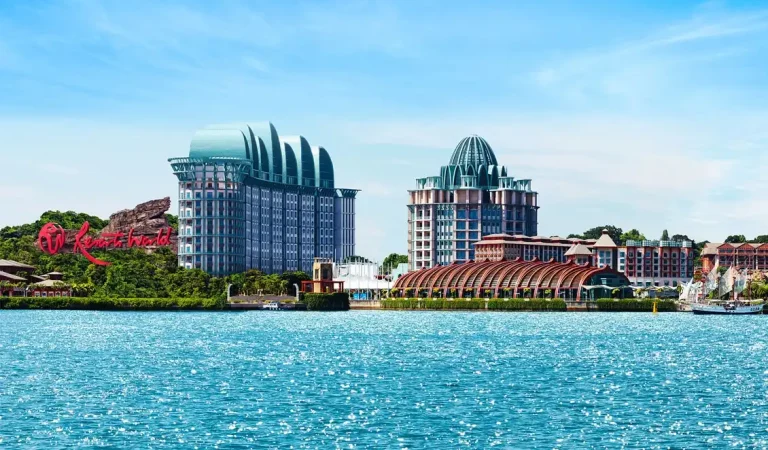
Melco Resorts & Entertainment has been identified by CBRE as a preferred pick, supported by its underlying fundamentals, valuation, and ongoing deleveraging efforts. Analysts noted that the company’s shares remain ‘oversold’ following a weaker-than-expected fourth quarter of 2025, which was impacted by higher operating expenses linked to key events and increased trademark fees at City of Dreams Macau.
Despite these headwinds, Melco outperformed the broader market in 2025, recording a 25 percent increase in Macau property EBITDA, significantly ahead of the market’s 6.5 percent growth. Its GGR also rose 11.9 percent, exceeding overall market growth.
In the period ahead, CBRE expects Melco to maintain a disciplined approach to profitable growth, with EBITDA projected to rise modestly in 2026. The analysts also see scope for valuation improvement as the company reduces leverage, potentially paving the way for dividend reinstatement and enhanced shareholder returns.
Century Entertainment has restructured its joint venture with Philippines-based Electronic Gaming System Service Provider World Platinum Technologies (WPT), replacing a previously planned equity issuance with a fixed annual licensing fee of $500,000 as it refines its technology-led gaming strategy.
The Hong Kong-listed company said the revised arrangement replaces an earlier structure under which shares would have been issued to its partner in exchange for platform rights. Instead, the JV will now operate under a straightforward licensing model, with Century retaining control of its capital structure while securing access to WPT’s platform infrastructure.
The JV, which is 51 percent owned by Century Entertainment, remains focused on the development, customization and distribution of gaming platforms across Asia-Pacific, with the Philippines now confirmed as its core initial market. Under the model, WPT provides the underlying technology stack, including servers, RNG systems and regulatory frameworks aligned with requirements of the Philippine Amusement and Gaming Corporation (PAGCOR), while the JV delivers front-end development, customization and ongoing technical support.
Century emphasized that the JV operates strictly as a B2B technology provider and does not engage in gaming operations, handle player funds or interact directly with end users. The shift to a fixed licensing fee marks a broader move toward a more predictable revenue and cost structure. The company said the change does not impact day-to-day operations, with the JV continuing to generate income through service fees and revenue-sharing arrangements linked to platform performance.
In its next phase of development, however, the model evolves further, with the JV set to take on a more central economic role. Under the updated structure, it will receive 100 percent of net gaming winnings, paying 15 percent to WPT as a runner’s fee for platform hosting, infrastructure and compliance services.
This effectively positions the JV as the “house” in economic terms, assuming exposure to game outcomes, while WPT retains responsibility for regulatory compliance as a PAGCOR-accredited gaming system administrator. The company clarified that the runner’s fee is calculated as 15 percent of net winnings, defined as gross gaming revenue less mandatory costs such as taxes and platform fees, addressing earlier questions around fee calculations.
Century also reiterated that the JV does not require a gaming license, citing legal opinions confirming that its activities fall outside PAGCOR’s regulatory scope as it provides backend technology and support services rather than operating games. To support compliance, the platform incorporates geo-blocking, IP monitoring and payment verification measures to ensure access is restricted to players within the Philippines, alongside standard KYC and AML controls.
Despite the operational updates, trading in Century Entertainment’s shares remains suspended, with the company continuing to work toward meeting resumption requirements.
Cambodia’s licensed casino sector is facing renewed scrutiny after Amnesty International linked at least 12 government-approved properties to scamming compounds where serious human rights abuses have allegedly taken place.
In a new investigation, Amnesty International said it had identified direct overlaps between casino complexes approved by the country’s Commercial Gambling Management Commission (CGMC) and sites where victims reported forced labor, human trafficking, torture and child exploitation. The findings build on its June 2025 report into Cambodia’s scamming industry, which described a network of more than 50 compounds operating as “prison-like facilities” under the control of organized criminal groups.
According to Amnesty International, all of the testimony it gathered relates to incidents from 2022 onwards, with the same companies continuing to operate the casinos in question throughout that period.
One newly identified site, Crown Bavet Casino, was linked to alleged abuses as recently as late 2025. Amnesty International said it interviewed two Kenyan nationals in January 2026 who reported being held against their will and subjected to forced labor at the complex. The individuals were able to identify specific buildings within the site, including through photographs taken during their confinement.
Survivor testimony also tied abuses to other Crown Resorts-linked properties in Poipet, where victims said they were detained for months, threatened with electric shock batons and forced to open bank accounts believed to have been used for money laundering. In one account, a victim described guards entering rooms and activating shock devices, while children present were crying.
Another case cited by Amnesty International involved a minor trafficked into Cambodia and allegedly held at multiple casino-linked sites, including the New Venetian Casino in Bavet. The individual claimed he was tortured before escaping by jumping from a building.
Amnesty International said it cross-referenced survivor testimony, satellite imagery and on-the-ground observations with official CGMC licensing documents and maps published in late 2025 and early 2026. The analysis identified at least 11 locations previously documented as scamming compounds that sit within casino complexes formally recognized by the regulator.
Among the properties named were casinos operated by a range of Cambodian companies, some with links to Chinese ownership or management structures. These include Crown-branded properties operated by Anco Brothers Co. Ltd., as well as sites such as Majestic Hotel & Casino, Golden Sea Casino and Peak Casino.
The timing of the approvals is likely to raise further questions. The CGMC reviewed and recognized several of the casino development plans in December 2025 and January 2026, during what authorities have described as a nationwide crackdown on scam operations.
Amnesty International said this apparent contradiction suggests that while enforcement actions have been taken in some cases, regulatory processes may still be legitimizing operators connected to abusive activities.
“This research establishes a clear link between Cambodia’s licensed casinos and its scamming compounds,” Amnesty International’s Co-Regional Director Montse Ferrer said in the report. “At a time when the government says it is dismantling the scamming industry, the evidence shows it is simultaneously recognizing the plans for casino properties where abusive scamming compounds are run.”
The NGO is calling for the immediate suspension of gambling licenses at the identified sites and a full, independent investigation into the alleged violations, including potential criminal liability for owners, financiers and operators.
The findings also underline the broader compliance and reputational risks facing the regional casino sector, particularly as regulators across Asia tighten oversight of AML, KYC and operational standards. Under the UN Guiding Principles on Business and Human Rights, casino operators are expected to ensure their properties are not used to facilitate detention, coercion or exploitation, regardless of direct involvement.
Cambodia has taken some enforcement steps in recent months, including the suspension of several casinos in Preah Sihanouk province in late 2025. However, Amnesty International said it has continued to verify new accounts of abuse linked to casino complexes even after its initial report.
At the time of publication, Amnesty International said it had contacted both the CGMC and the companies named in its investigation for comment, but had not received responses.
The report is likely to intensify international scrutiny on Cambodia’s gambling sector, particularly as concerns grow over the intersection between licensed casino operations and transnational scam networks. For regulators and operators alike, the issue increasingly moves beyond compliance into questions of systemic risk and accountability.
In a world first, the Isle of Man has just passed legislation that formally recognizes data as a legal asset for the first time in history.
For the land based and iGaming industries, which run on data the way engines run on fuel, this is worth paying close attention to.
The Isle of Man may be best known as a gambling licensing jurisdiction and for its annual TT motorbike races, but it has also carved out a respectable place as a dynamic and stable location for business in general. Its parliament, Tynwald, is not only the oldest continuous parliament in the world but can also pass its own laws and has given the island its own tax system. Thanks to its relatively fast-moving legislature, it was now able to pass a new law that turns data in to legal assets faster than London, Brussels, or Washington.
The Foundations (Amendment) Bill 2025 was passed by Tynwald earlier this year, and with it came a new legal structure called a Data Asset Foundation, or DAF. It is a licensed entity – not a company in the traditional sense, closer in nature to a foundation or trust – specifically designed to hold data and give it formal legal standing. Think of it as a legal wrapper for your data, with governance rules built in from the start.
Organizations that establish a DAF can place their data inside it, set enforceable rules about how that data can be used and by whom, and then treat it as a recognized capital asset: listing it on a balance sheet, using it as collateral to secure financing, or factoring it into a business valuation during a merger or acquisition. Secondary regulations are being developed now, a public consultation is open, and a pilot program is already running with early adopters ahead of full implementation later in 2026.
The Isle of Man is home to some of the world’s biggest gambling companies.
The initiative was developed by the Isle of Man government in partnership with the EDM Association, a global non-profit with over 350 member organizations across six continents that sets international standards for data management. Every DAF must embed a legal charter, a certified data governance framework, and clear, enforceable rules on permitted data use.
Land based operators and online gaming companies are among the most data-intensive businesses on the planet. Player acquisition, retention, responsible gambling monitoring, fraud detection, payment processing, odds modelling and affiliate performance all generate and depend on enormous quantities of structured data. That data is genuinely valuable, in some cases more valuable than the physical or financial assets on a company’s books. Yet until now it has existed in a kind of legal no-man’s land: real value, no formal recognition, no mechanism to leverage it as a financial instrument. DAFs change that.
An operator sitting on years of anonymized player behavior data, proprietary risk models, or unique market intelligence could register that within a DAF and unlock its balance sheet value, use it to secure lending, or structure data-sharing arrangements with suppliers or affiliates, all within a framework that protects control and defines exactly how the data may be used.
The responsible gambling dimension is worth noting too. Gambling operators hold sensitive data about player behavior that, shared appropriately with researchers or regulators, could contribute meaningfully to harm reduction, something the industry has faced growing pressure to demonstrate. A DAF provides the legal architecture to do that sharing safely, with defined purposes and enforceable governance, without surrendering control.
The main government office in the capital city of Douglas.
The Isle of Man’s legislation is explicitly designed to set a standard that other jurisdictions will recognize and eventually follow. The island moved first because it could, but the intent is to define a model for the world, not just for a small island in the Irish Sea. For businesses already operating there, DAFs are an immediate opportunity. For those considering the jurisdiction, they add a compelling new dimension to an already attractive proposition.
Miles Benham, Managing Director of MannBenham, a leading Isle of Man law firm specializing in the gaming sector, sees it as a turning point. “This is genuinely landmark legislation and we believe it will prove as significant for data-rich businesses as the original Foundations Act was for asset structuring. Gaming operators, wherever they are based, sit on extraordinarily valuable data estates that have never been formally recognized in law. Data Asset Foundations change that by giving operators the ability to structure, protect and actively leverage that value without relocating their core business.”
“What is particularly exciting is the practical application now emerging. We are already working closely with operators to develop genuinely monetizable models around their data. Through our corporate service provider, Manavia, we are designing, implementing and administering Data Asset Foundations that enable businesses to release the full value of their data in a controlled and compliant way. The valuations we are seeing for certain datasets are, in many cases, staggering and point to a significant untapped asset class. This opens up entirely new opportunities, whether that is accessing financing, structuring commercial data partnerships, or enhancing enterprise value. The Isle of Man framework is not theoretical; it is a practical, global solution that operators can begin to use now.”
The Isle of Man is situated in the Irish Sea between Scotland and Ireland.
The monetization opportunities are more concrete than they might first appear. A major online operator with a decade of player data could, under a DAF structure, formally value that dataset and use it as collateral to secure debt financing, in the same way a property company borrows against its real estate portfolio.
Data-sharing arrangements with AI developers and model trainers represent another immediate revenue stream; the global market for licensed training data is already worth billions and growing fast, and gaming datasets – rich in behavioral patterns, decision-making under risk, and real-money transaction flows – are precisely the kind of high-quality, consent-governed data that commands premium prices. Land-based casino operators, sitting on decades of loyalty program data and footfall analytics, are similarly positioned.
Looking further ahead, analysts tracking the broader data economy suggest that as more jurisdictions follow the Isle of Man’s lead and create legal frameworks for data assets, a secondary market will emerge, one where DAF-held datasets can be traded, licensed, or packaged into investment vehicles much as intellectual property portfolios are today. For gaming operators who move early, the advantage is not just financial. Establishing a certified, governed data asset now means being first in line when institutional investors, sovereign wealth funds, and strategic acquirers begin actively pricing data estates into deal valuations, something industry observers expect to become standard practice within the next five to ten years.
More than just a pretty place: The Isle of Man is a fortress for data security.
There is another dimension to this that deserves equal attention: sovereignty. Many global gaming operators currently host their data infrastructure through American cloud providers such as AWS, Google Cloud or Microsoft Azure, and may not fully appreciate the legal exposure that creates. Under the US CLOUD Act, American authorities can compel US-based technology companies to hand over data stored on their servers, regardless of where in the world that data physically sits. For operators handling sensitive player data across multiple jurisdictions, that is a meaningful and often underappreciated risk.
The Isle of Man sits entirely outside that framework. As a Crown Dependency, it is neither part of the United Kingdom nor the European Union, and it is not subject to US extraterritorial legislation. Data held within an Isle of Man DAF, administered under Manx law, is governed exclusively by the island’s own legal framework, one built around strong data protection standards and regulatory oversight. For gaming operators looking to ringfence sensitive datasets from foreign government reach, establish clear data sovereignty for their players, or simply reduce their dependence on hyperscalers whose terms and obligations can change without notice, the Isle of Man now offers something genuinely rare: a legally recognized, independently governed home for data, backed by statute.
With the Data Asset Foundation law now passed and on the way to receive Royal Assent, the focus turns to implementation. Legal, fiduciary, technology and compliance firms on the island are expected to play a central role in helping businesses structure their first DAFs, with full rollout expected later in 2026. For gambling operators the core point is simple: the Isle of Man has created a legal framework that treats your most valuable intangible asset the same way the financial world treats property or intellectual property. The question is how quickly the sector moves to take advantage of it.
Cambodia’s Minister of Justice, Koeut Rith, has confirmed that all assets belonging to alleged scam kingpin Chen Zhi will be legally confiscated and transferred to the national treasury, according to local media outlet The Cambodia China Times.
Koeut Rith, Cambodia’s Minister of Justice
Chen Zhi is one of the founders of Prince Group, which has been accused of large-scale investment fraud and money laundering. However, the report did not disclose the total value of the assets seized. In the same case, US law enforcement authorities previously seized Chen Zhi’s crypto assets, reportedly valued at as much as $15 billion. Other jurisdictions have also taken action, including Hong Kong, which seized assets worth approximately $354 million, and Singapore, which confiscated assets valued at around $111 million.
The announcement follows a major joint operation between Cambodian and Chinese authorities in January 2026, which led to the arrest and deportation of Chen Zhi and his associates to China, where they face charges related to large-scale criminal activities.
During a press briefing held earlier last week, the minister clarified the legal status of the seized properties, noting that assets identified as instruments used in crimes, proceeds of crime, or products of money laundering are subject to state seizure.
“In accordance with the law, these assets will be confiscated and incorporated into the national budget,” he said. He added that the recovered funds would be used for national development and to serve the interests of Cambodia’s 17 million citizens.
Chhay Sinarith,Senior Minister and Secretary-General of the government’s Anti-Cybercrime Commission
Warrants issued for 700 suspects
Chhay Sinarith, Senior Minister and Secretary-General of the government’s Anti-Cybercrime Commission, revealed at the same press briefing that arrest warrants have now been issued for approximately 700 individuals linked to various fraud operations nationwide.
He added that the government is coordinating with Interpol to seek Red Notices for these suspects, facilitating the global pursuit of those remaining at large.
To prevent suspects from evading justice, immigration authorities have flagged these individuals to ensure their immediate apprehension should they attempt to enter or leave the country.
The Cambodian government has established a firm timeline for the crackdown, setting late April 2026 as the deadline to eliminate all remaining fraud and scam centers in the country.
According to Prime Minister Hun Manet, the directive aims to demonstrate the administration’s commitment to restoring the nation’s international reputation and strengthening public safety.
PhilWeb Corp. has entered into a partnership with Travellers International Hotel Group Inc. to support online gaming operations linked to Newport World Resorts, marking its third such agreement in recent weeks as the company expands its business-to-business (B2B) operations.
In a disclosure to the Philippine Stock Exchange on Monday, April 6th, PhilWeb said it will provide platform technology, system support, gaming content integration, marketing, and operational services for Newport World Resorts’ GSA online gaming platform, NWPRPlay. The agreement remains subject to regulatory approvals.
The platform operates under a Gaming System Administrator (GSA) framework accredited by Philippine Amusement and Gaming Corp.(PAGCOR), positioning PhilWeb as a technology and services provider within the regulated online gaming sector.
PhilWeb said the partnership forms part of its strategy to expand its B2B segment. ‘The engagement forms part of the Company’s ongoing initiatives to expand its B2B platform and content initiatives within the regulated online gaming sector,’ it said in the filing. The company added that it ‘will provide platform technology, system support, gaming content integration, marketing and operational services.’
Travellers International, which operates Newport World Resorts in Newport City, Pasay, manages an integrated resort complex comprising hotels, gaming facilities, retail outlets, and entertainment venues.
The agreement is expected to support PhilWeb’s efforts to broaden its platform and content offerings while building recurring revenue streams through service-based operations. The company has been pursuing a shift toward a more scalable model centered on technology and backend support services.
The latest deal adds to a series of recent partnerships secured by PhilWeb as it seeks to strengthen its presence in the Philippines’ regulated online gaming market.
South Korean Paradise Co. and Grand Korea Leisure (GKL) both reported declines in casino sales for March 2026, with results driven by weaker table game performance across South Korea’s foreigner-only casino sector.
Paradise Co. posted the sharper drop, with total casino sales falling 39.6 percent year-over-year and 44.0 percent month-over-month to KRW49.50 billion ($32.8 million), according to interim figures released earlier this month. The decline was primarily driven by table games, where revenue fell 43.4 percent year-over-year and 47.5 percent compared with February to KRW44.09 billion ($29.2 million).
Slot machine revenue showed relative resilience, rising 33.1 percent year-over-year and 19.6 percent month-over-month to KRW5.42 billion ($3.6 million). The company also reported a table drop of KRW587.74 billion ($389.8 million) for March, up 9.7 percent from the previous month but marginally down 0.2 percent year-over-year.
Despite the March contraction, Paradise Co.’s cumulative casino sales for the first three months of 2026 increased 1.8 percent year-over-year to KRW229.67 billion ($152.3 million). Table game revenue rose 1.0 percent over the period, while slot machine sales grew 14.9 percent.
GKL also reported weaker performance, with March casino sales declining 22.8 percent year-over-year and 16.0 percent month-over-month to KRW31.98 billion ($21.2 million), according to its interim disclosure.
The decline was similarly driven by table games. Table sales dropped 26.0 percent year-over-year and 18.2 percent from February to KRW28.44 billion ($18.9 million). Machine sales, however, rose 17.8 percent year-over-year and 6.5 percent month-over-month to KRW3.54 billion ($2.3 million).
For the first quarter, GKL’s casino sales totaled KRW106.65 billion ($70.7 million), down 1.5 percent from the same period last year. The company operates foreigner-only casinos in South Korea under the Seven Luck brand.