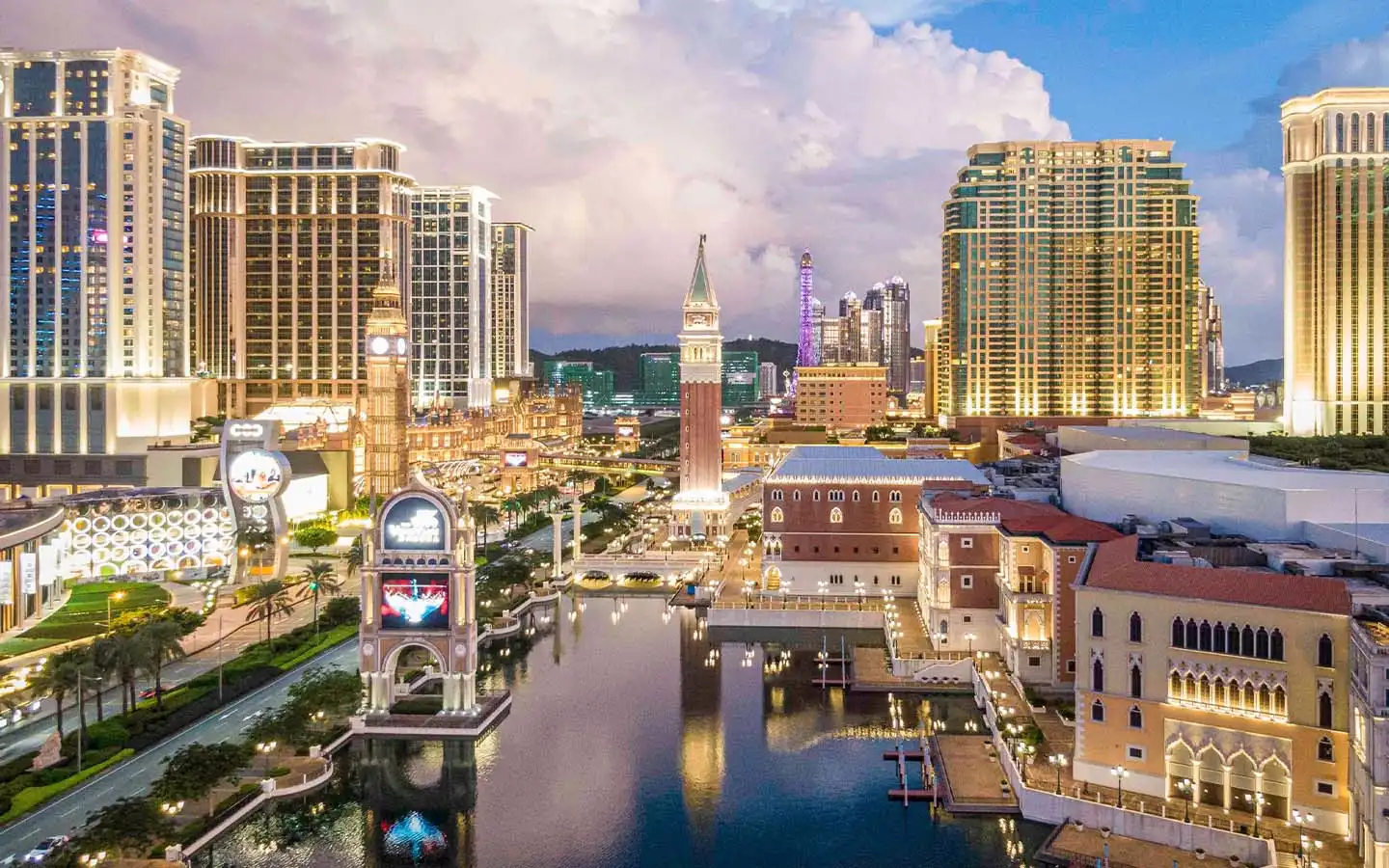
Macau police have arrested four men over a counterfeit casino chip scheme that defrauded gamblers of HK$210,000 ($26,900), the Judiciary Police said on Monday.
Three gamblers were defrauded in the case, while the casinos involved reported no financial losses. The suspects are believed to be part of the same criminal group and were detained after fake chips were found at three casinos operated by the same gaming company in Cotai and NAPE.
Police said the group targeted gamblers near casino premises, offering to exchange counterfeit chips for cash. A total of 128 fake casino chips, each with a face value of HK$10,000 ($1,280), were seized during the operation. Authorities confirmed all the seized chips belonged to the same batch as those uncovered in a similar case in January last year.
The investigation began on January 3rd after one suspect attempted to exchange seven HK$10,000 chips with a male gambler at a Cotai casino. The gambler suspected the chips were fake, triggering an argument that prompted casino staff to intervene and alert police. Officers took both individuals in for questioning.
While handling the case, police received additional reports from two other casinos under the same operator in Cotai and the New Port area, where a combined total of 18 counterfeit chips were discovered. Officers subsequently identified and detained two more suspects linked to the scheme.
Later that night, at around 10 p.m., the fourth suspect was intercepted at the Border Gate checkpoint while attempting to leave Macau.
Further investigation revealed the four suspects were recruited by a criminal syndicate in late November last year and entered Macau from the mainland via the Border Gate on the day of the offense. They admitted they had been instructed to operate at multiple casinos under the same gaming company and to approach gamblers willing to exchange chips for cash. The suspects told police they were promised a minimum payment of RMB20,000 ($2,800) each if the scam succeeded.
The four men have been transferred to the Public Prosecutions Office and face charges related to participation in a criminal organization and large-scale fraud.
Fast Track, the iGaming industry’s leading CRM technology provider, has announced that Greco, acquired in February 2025, has now been fully transitioned into a core product within its platform.
Following a successful period operating as a standalone business, Greco is now scaling fully under the Fast Track product umbrella. This marks a strategic step in expanding Fast Track’s platform beyond engagement execution into value-led optimisation, with a specific focus on helping operators scale bonus strategies with greater precision and control.
Founded in 2021 as a joint-venture with Fast Track, Greco introduced a new approach to gameplay risk modelling through its proprietary Gameplay Risk Engine (Greco). The technology enables iGaming operators to model theoretical player value, detect behavioural anomalies, and make smarter, data-driven decisions around bonus allocation and gameplay exposure. As part of Fast Track, Greco becomes a foundational component alongside Fast Track’s real-time CRM, AI-driven gamification, and natural language products.
Simon Lidzén, CEO, Fast Track
“This has always been about building something bigger than the sum of its parts,” said Simon Lidzén, CEO and Co-founder of Fast Track. “Greco adds a powerful new dimension to our platform. By bringing it fully under Fast Track, we can help operators scale their bonus strategies with the same sophistication they apply to CRM strategies – backed by real-time data, intelligence, and world-class execution.”
As part of the core Fast Track product, Greco will be delivered with the same world-class service, reliability, and pace of innovation that customers expect. The offering will be complemented by an expanded service layer designed to help operators optimise and scale both CRM strategies and bonus strategies, working from one central system.
Greco’s co-founders, Ozric Vondervelden and Ed Dickerson, remain actively involved as the technology and team transition into Fast Track’s broader product organisation.
Ozric Vondervelden, Co-Founder of GrecoEd Dickerson, Co-Founder and COO of Greco
With this move, Fast Track continues to evolve its platform to support iGaming operators in digitalising operations, delivering true 1:1 experiences, and shifting from promotion execution to scalable, value-driven player engagement.
Meet Fast Track at ICE
Fast Track will showcase the new Greco-powered product in action at ICE Barcelona 2026, from 19 to 21 January. Operators are invited to visit the Fast Track stand to see how gameplay, risk, intelligence, and CRM orchestration come together to scale smarter bonus strategies.
Melco Resorts & Entertainment has announced its support for the national rural revitalization policy with a HKD 3 million contribution toward the construction and relocation of the Hangkou Town Healthcare Center in Xiushui County, Jiangxi Province.
Through this medical and public health project, Melco Resorts is dedicated to providing quality healthcare to the local community, contributing to the rural revitalization efforts in Xiushui County, Jiangxi Province, as jointly supported by the Macao SAR Government and the Central People’s Government Liaison Office.
The donation is set to significantly enhance the local medical environment, meet the medical needs of local residents and help boost their health and wellness. The project is estimated to benefit around 100,000 people across Hangkou and its neighboring towns, with an outpatient volume of roughly 40,000 and an inpatient volume of approximately 2,500.
Mr. Lawrence Ho, Chairman & CEO of Melco Resorts & Entertainment, said, “Melco is honored to support the nation’s rural revitalization goals. We recognize that high-quality healthcare is a cornerstone of sustainable social development. By contributing toward this modernized facility, we aim to provide the local community and residents of the surrounding industrial zones with quality medical resources. Melco remains dedicated to utilizing our resources to strengthen the well-being of the community and contribute to the long-term prosperity of the country.”
The signing ceremony was hosted on December 30, 2025 in Xiushui County and attended by distinguished guests including Mr. Cheong Chok Man, Director of the Policy Research and Regional Development Bureau of the Macao SAR Government and Mr. Yang Quanzhou, Deputy Director-General of the Economic Affairs Department of the Liaison Office of the Central People’s Government in the Macao SAR.
Also in attendance from local government were: Mr. Fu Xiaopeng, Deputy Director of the Soviet District Office of Jiangxi Province; Mr. Chen Jun, Deputy Director of the Hong Kong and Macao Affairs Office of Jiangxi Province; Mr. Du Shaohua, Vice Mayor of Jiujiang Municipal Government; Mr. Zheng Qinghua, Secretary of the CPC Xiushui County Committee; and Ms. Liu Jie, Deputy Secretary of the CPC Xiushui County Committee and head of Xiushui County.
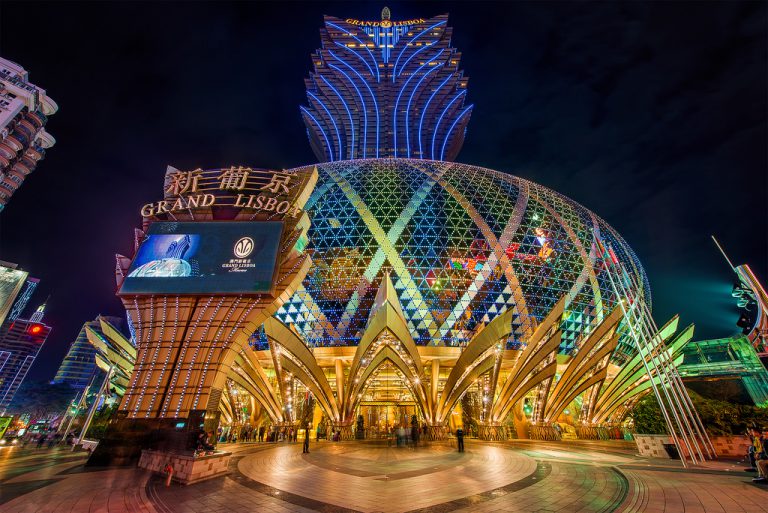
Fitch Ratings has flagged ‘heightened uncertainty around SJM’s deleveraging trajectory’ after assigning a ‘BB-’ rating to SJM Holdings Limited’s proposed senior unsecured notes, citing weak performance at the Grand Lisboa Palace resort and continued market share dilution following the closure and restructuring of satellite casinos.
Hong Kong-listed SJM Holdings Limited is the holding company of SJM Resorts, one of six casino operators in Macau. The group owns and operates five casinos in the city, including Grand Lisboa Palace, Grand Lisboa, Casino Lisboa, Casino Oceanus, and Casino L’Arc.
L’Arc Hotel & Casino, SJM Resorts
In a report issued on Monday, Fitch said its ‘Negative’ outlook is driven by concerns over the pace and reliability of SJM’s balance-sheet improvement, even though leverage metrics are expected to recover to within the ‘BB-’ threshold by 2027. The proposed notes will be issued by SJM International Limited, a wholly owned subsidiary of SJM Holdings, and will be unconditionally and irrevocably guaranteed by the parent company.
Fitch expects SJM’s EBITDA leverage to rise to above 8 times in 2025, from 7.0 times in 2024, before easing to around 5 times by 2027 under its base-case scenario. Although the agency sees the group remaining on a deleveraging path over the medium term, it cautioned that uncertainty remains around the ramp-up of Grand Lisboa Palace and the operational effects of satellite casino restructuring. Any further deterioration in operating performance could lead to negative rating action, Fitch said.
Grand Lisboa Palace, SJM Resorts
The agency also pointed to continued pressure from underperformance at Grand Lisboa Palace. Non-rolling gross gaming revenue growth at the property slowed to 1 percent quarter-on-quarter and 12 percent year-on-year in the third quarter of 2025. Fitch noted that initiatives aimed at strengthening the resort’s mass-market appeal — including improved connectivity and expanded food, beverage, retail, and event offerings — have yet to translate into a sustained recovery in market share.
Market share erosion remains another key challenge. SJM’s total gross gaming revenue declined 5 percent year-on-year in the third quarter of 2025, trailing the broader industry’s 12.5 percent growth. This resulted in the group’s market share slipping to 11.8 percent, driven by weaker results at self-owned casinos and a sharp contraction in satellite operations.
Fitch said the credit impact of satellite casino closures will largely depend on SJM’s ability to recapture displaced play through the reallocation of gaming tables to its self-owned properties, which the agency expects to generate higher margins than the previous satellite model.
The Philippines’ new minimum guaranteed fee (MGF) for online gaming operators represents a deliberate market correction aimed at eliminating inactive licensees rather than a revenue-raising exercise, according to a leading industry lawyer who has closely tracked the regulatory overhaul.
The Philippine Amusement and Gaming Corporation (PAGCOR) announced in mid-December 2025 that all licensed gaming system administrators (GSAs) – operators running online gaming platforms – must pay a fixed monthly fee starting April 1st, 2026, regardless of actual revenues.
Tonet Quiogue, CEO of Arden Consult
The policy is designed to force out what Tonet Quiogue, CEO of Arden Consult, describes as “licenses of convenience” – operators holding regulatory badges but generating minimal economic activity.
“The MGF makes chronic underreporting economically irrational,” Quiogue wrote in an analysis published last week. ‘A license that consistently produces no meaningful revenue is not merely inefficient; it is a risk – because it can become a shell, a vehicle for regulatory arbitrage, or worse, a cover for activities that regulators cannot defend in public.’
Under the two-tier scheme, monthly minimums for GSAs offering electronic casino games will start at PHP9 million ($160,000) in April 2026, increasing to PHP10.5 million ($187,000) by October 2026. Non-casino GSAs will face lower thresholds, starting at PHP3 million ($53,000) and rising to PHP4 million ($71,000).
The memorandum, issued December 15th by PAGCOR’s Electronic Gaming Licensing Division, applies to all 65 currently licensed GSAs. Industry data analyzed by Arden Consult suggests only 25 operators currently meet or exceed the PHP30 million monthly gross gaming revenue threshold that would naturally cover the minimum fee for e-casino operations.
Forcing disclosure and economic substance
The policy’s significance lies not in the revenue floor itself, but in what it compels operators to reveal. The memorandum includes what Quioque calls a ‘coming out provision’ – Section J, which allows struggling operators to request extensions from PAGCOR’s Board of Directors by citing ‘valid and justifiable grounds.’
‘A struggling operator does not get to quietly linger under the threshold while holding a regulatory badge,’ Quioque explained. ‘It must formally approach PAGCOR, explain why it cannot meet the required minimums, and place its business model and performance under Board-level scrutiny.’
This mechanism draws low-performing licensees out of invisibility – a deliberate correction aimed at avoiding the fragmentation and opacity that characterized the now-banned offshore gaming (POGO) regime.
‘It steers the industry away from the very dynamics that ultimately doomed the POGO regime: fragmentation, opacity, and licenses used as convenience rather than as a commitment to regulated operations,’ Quioque wrote.
The lawyer, who previously headed the gaming practice at one of the Philippines’ largest law firms, noted that PAGCOR Chairman Alejandro Tengco and the Board will likely face pushback. ‘But the reality is that a gaming license – like a franchise – is not an entitlement. It is a privilege,’ she stated. ‘And privileges come with conditions: economic substance, transparency, and the capacity to operate within a regime designed to be enforceable.’
Market consolidation expected
The policy is expected to trigger significant consolidation. Quiogue predicts that some operators will surrender licences as the regulatory environment no longer matches their original business model. For existing licensees, the implications are clear, she argues: scale up, form compliant partnerships, or exit the market.
In her analysis, the minimum guaranteed fee is ultimately about determining which operators deserve to remain licensed, rather than extracting higher tax payments. Operators unable to meet the minimum are required to engage transparently with PAGCOR — a safeguard designed to support market sustainability rather than allow regulatory drift. If enforcement is applied consistently, Quiogue expects the post-2026 market to be smaller, more resilient, and easier to defend from a regulatory standpoint.
Others may seek investors or partners, though she cautioned that any ownership changes require prior PAGCOR Board approval.
‘We are aware of ‘consultants’ and intermediaries attempting to broker deals involving licences, platforms, or beneficial ownership interests as if these were freely transferable assets. They are not,’ she warned. ‘There is no concept of sublicensing in the Philippine iGaming framework — and history has shown what happens when that line is blurred.’
The minimum guaranteed fee works in tandem with PAGCOR’s broader 2025 regulatory architecture, including a B2B accreditation framework implemented in October that requires all third-party gaming suppliers to be vetted and accredited by March 31st, 2026.
2025 as institutionalization, not prohibition
The MGF announcement came in the same month Congress enacted Republic Act No. 12312, the Anti-Offshore Gaming Operator Act of 2025, which codified the executive branch’s POGO ban and imposed criminal penalties.
Yet 2025 should not be remembered primarily as a year of prohibition, Quioque argues, but as the year the Philippines institutionalized onshore online gaming. While the Anti-POGO Act closed one chapter, PAGCOR’s series of measures – from advertising restrictions to supplier accreditation to the minimum fee – formed what she describes as “the opening blueprint for a regulated onshore market.”
Central to that blueprint is responsible gaming, which evolved from rhetoric into enforceable architecture. Following Senate hearings in mid-2025 that included testimony from parents of a teenager who died by suicide after accumulating gambling debts, PAGCOR Chairman Tengco made harm reduction the condition for the industry’s political survival.
‘Responsible gaming became not just the moral response, but the commercial one: the only path by which the industry remains politically sustainable, socially tolerable, and investable,’ Quiogue observed.
PAGCOR subsequently mandated stricter Know-Your-Customer (KYC) protocols, minimum deposit and bet thresholds, the removal of all out-of-home gaming advertisements, and the delinking of gaming mini-apps from e-wallet platforms. Violations have drawn substantial fines and, in at least one case, license cancellation.
‘Safeguards are no longer optional ‘best practices.’ They are enforceable obligations, backed by real consequences,’ Quiogue wrote. ‘The result is a market beginning to behave like regulated markets do: where player protection is not a public relations layer, but a compliance standard that shapes product design and operations.’
The lawyer noted that while enforcement will prove critical in 2026, the regulatory shift has already made the Philippine market ‘legible to experienced, internationally regulated gaming companies’ seeking clear rules and consistent oversight.
‘Global operators do not enter chaotic markets,” she stated. “They enter markets with clear rules, consistent enforcement, and regulators that demonstrate competence and resolve.’
Pragmatic Play has kicked off 2026 in retro style with the launch of Joker’s Jewels Hold & Spin, a vibrant neon-lit slot with 10,000x win potential.
The iconic joker returns for another nostalgic 5×3 slots spectacle, introducing an exciting money respins bonus game.
A myriad of jester-themed symbols, including lutes and juggling pins, occupy the grid, where 3-5 matching symbols on a payline can conjure up base game wins of up to 1,000x.
Landing three or more money symbols – each of which can award up to 5,000x – triggers the Hold & Spin bonus game. The feature begins with three respins and resets every time an additional money symbol lands.
When respins end, all cash prizes on the reels are collected and awarded. If the entire grid was filled with money symbols, the player wins the 10,000x maximum reward.
Joker’s Jewels Hold & Spin marks Pragmatic Play’s first release of the year and follows hit releases such as Fortune of Olympus and Big Bass Splash 1000.
Irina Cornides, Chief Operating Officer at Pragmatic Play, said: “Joker’s Jewels Hold & Spin provides a fresh take on a vintage theme, offering classic slots action enhanced by the popular Hold & Spin mechanic and a 10,000x max win.”
Ebaka Games is charting the next phase of its mission to bring chaos and soul to iGaming, following a successful November launch that broke the mold for how new studios capture industry attention.
Ebaka’s launch reached more than five million people worldwide, with attention drawn to new Plinko, Mines, Tower, Limbo and Crash titles that are live with operator Menace. Each game comes with its own unique design, mascot, signature “Ebaka modes” and big win potential.
Following the games’ extremely strong early performance with Menace, and with BMM Testlabs certification now secured, Ebaka will launch with a number of major brands in 2026.
Ebaka Games CEO, Vitalii Zalievskyi commented: “It’s only been a few weeks since we first introduced Ebaka Games to the world. The feedback has been breathtaking, and it vindicates the decision for us to take a different path to the rest of the industry. You don’t need huge marketing budgets to grab people’s attention if you are building something truly innovative, and that’s our focus here at Ebaka.”
Ebaka Games is created by players for players, and is backed by a team of industry veterans including Dmitry Belianin, co-founder of Blask and Menace as well as Managing Partner at Already Media.
Passenger traffic at Macau International Airport (MIA) reached more than 7.52 million in 2025, with flight movements exceeding 58,000, the operator said Monday, noting a surge in international routes despite a slight annual decline.
The airport reported a 26 percent rise in international routes and a 7 percent increase in international passenger traffic compared with 2024.
During the Macau SAR Establishment Day and Christmas holiday period from December 20 to 25, MIA handled over 140,000 passengers, averaging 179 flights and 24,000 travellers per day. The busiest day was December 23, when traffic peaked at more than 26,000 passengers.
Currently, 29 airlines connect Macau to 47 destinations across mainland China, Taiwan, Southeast Asia and Northeast Asia.
Despite the year-end surge, overall passenger traffic fell 1.6 percent compared with 2024, as weaker demand in the first half and summer period weighed on totals. Cargo volumes, however, rose 1.08 percent year-on-year.
The airport said new and resumed routes in the fourth quarter – including Jinan, Cebu, Haiphong, Ho Chi Minh City and Vladivostok – helped lift traffic. Talks are under way with carriers on further expansion, including potential Middle East services. Passengers can already reach Europe and the Americas via hubs in Chengdu, Chongqing and Taiwan with layovers of two to three hours.
Looking ahead, MIA plans to roll out a “Check’ N Fly” hotel check-in and baggage drop-off service before Lunar New Year 2026, allowing travellers to leave luggage at hotels and proceed directly to boarding.
Macau welcomed 40.06 million visitor arrivals in 2025, setting a new historical record and surpassing pre-pandemic levels
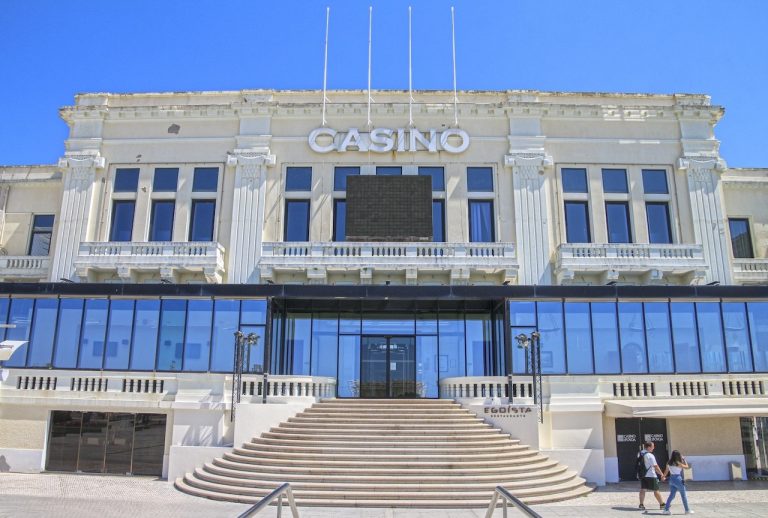
The Estoril-Sol group, Portugal’s dominant land-based casino operator, has lost its concession for the casino in Póvoa de Varzim after it declined to bid in a public tender, according to an official company statement.
The group led by Pansy Ho confirmed in a filing to the Portuguese Securities Market Commission (CMVM) that its subsidiary, Varzim Sol – Turismo, Jogo e Animação, SA, “did not submit a proposal” for the new concession.
Its current right to operate the establishment has been extended for 120 days by government addendum while the state evaluates a single known offer.
Portuguese newspaper Expresso reported on December 30 that the sole formal proposal for the Póvoa de Varzim casino came from the French gaming and hospitality group Lucien Barrière, which operates 32 casinos across France, Egypt and the Ivory Coast.
Solverde likely to keep Espinho, Algarve concessions contested
In related tenders, Expresso further reported that the Portuguese group Solverde is the only candidate for the nearby Espinho casino.
The more significant and contested concession for the Algarve region—covering casinos in Praia da Rocha, Vilamoura, and Portimão—remains open for bids until January 4. This concession is currently held by Solverde.
Estoril-Sol retains its flagship operations in Estoril and Lisbon, for which it secured new concessions in 2023. According to its first-half 2025 report, the Póvoa de Varzim casino was its smallest, generating €17.5 million ($20.4 million) in gross revenue, compared to €35.6 million ($41.4 million) for Lisbon.
The government has stated that a jury from the Gaming Regulation and Inspection Service will now analyze all submitted proposals before awarding the new contracts.
The Portuguese government has recently extended the operating concessions for casinos in three key regions by three months, as the process to award new long-term licenses remains underway.
The extensions apply to the gaming zones of the Algarve, Espinho, and Póvoa de Varzim. In a statement, the government cited the need “to comply with all required formalities” in the complex tender process, which missed the original December 31st, 2025, deadline for awarding new contracts.
Good Morning. In nature, nothing is lost. Macau’s gaming industry is undergoing a structural transformation, marked by a significant decline in commissions and rebates due to new regulations that reduce the role of junkets, while operators manage to sustain revenue levels with lower associated costs. Meanwhile, Macau’s gross gaming revenue (GGR) is projected to grow by 5–6 percent in 2026, driven by strong gains in the mass and slot segments, while industry profit growth is expected to outpace top-line expansion for the first time, reflecting improvements following a better-than-anticipated recovery in 2025.
What you need to know
Research finds Macau concessionaires now generate similar GGR despite steep declines in commissions and rebates as junkets lose influence.
JP Morgan expects Macau GGR to grow 5–6% in 2026, led by mass and slots, with profit growth slightly outpacing revenue as margins stabilize.
Macau’s gaming industry is experiencing a significant structural transformation under the new gaming concession framework, with a notable decline in commissions, incentives, and rebates, dropping to $4.94 billion in 2024 from $7.83 billion in 2019. This decline is sharper than the decrease in gross gaming revenue (GGR), which fell by a smaller margin, suggesting operators are maintaining revenue levels while significantly reducing costs associated with intermediary junkets, whose influence has been weakened by new regulations.