
Hong Kong authorities have suspended plans to introduce regulated basketball betting, citing concerns that the move could encourage greater participation in illegal gambling linked to rapidly growing “prediction markets.”
The government said it would halt the initiative and conduct further study to safeguard public interest. The decision comes as the Home and Youth Affairs Bureau said on Monday night that, under current conditions, launching basketball betting would likely attract more attention to unregulated prediction market platforms. Officials warned that such platforms, particularly those involving sports wagering, could indirectly fuel illegal gambling activities.
Officials added that the rapid development of prediction markets has introduced significant uncertainty to the gambling landscape. Data cited by the government showed global trading volume reached $64 billion in 2025, up 300 percent from $16 billion in 2024, while monthly volumes surged from less than $100 million at the start of 2024 to more than $13 billion by the end of 2025.
In the coming years, monthly trading volumes are projected to increase fivefold by 2030, with more than 40 percent of activity expected to be linked to sports-related events. Authorities said that, given these trends, introducing basketball betting at this stage could draw more users toward illegal prediction market platforms and indirectly support unregulated activity.
[Read more: When a wager is not a wager: inside the prediction market revolution
“Given the latest developments, there is a need to further study the operation of prediction markets and related platforms,” a spokesperson said. “To protect public interest, new gambling initiatives should not proceed until the necessary conditions are in place.”

Legislative groundwork for basketball betting
Hong Kong had previously moved toward legalizing basketball betting through legislative changes aimed at channeling demand into a regulated framework. In September 2025, the Legislative Council passed the Betting Duty (Amendment) Bill 2025, introducing a 50 percent tax on net stake receipts, in line with the existing rate for soccer wagering.
The bill cleared its third reading with 77 votes in favor, two against, and two abstentions among 83 lawmakers present. The legislation empowers the Secretary for Home and Youth Affairs to issue licenses for basketball betting, with the Hong Kong Jockey Club widely expected to serve as the sole licensed operator under a model similar to horse racing and football betting.
Authorities said the proposal was not primarily intended to generate government revenue, but to establish a regulated channel to curb illegal gambling. Estimates cited during the legislative process suggested that unauthorized basketball betting turnover could reach as much as HK$90 billion ($11.47 billion) annually.
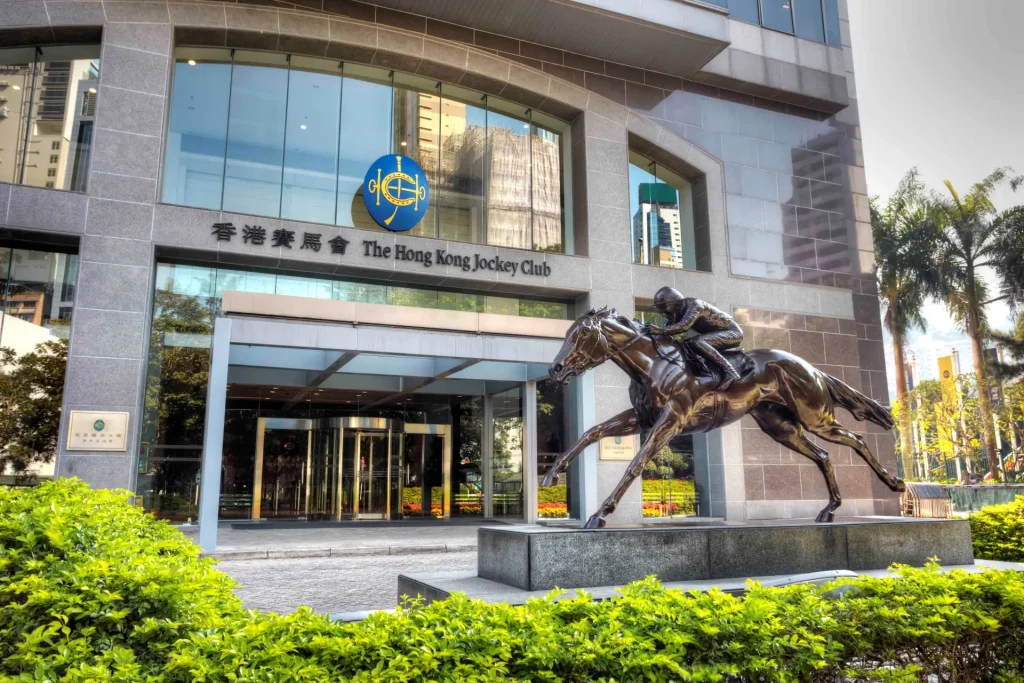
According to projections by the Hong Kong Jockey Club (HKJC), the introduction of legal basketball betting could generate annual turnover of around HK$28 billion ($3.57 billion) once fully implemented. This would translate into approximately HK$1.5 billion ($191 million) in annual betting duty for the government under the proposed tax structure.
In response to media inquiries, the Hong Kong Jockey Club said it acknowledged the government’s decision and would cooperate with the review. The operator added it would await further instructions regarding any future licensing arrangements.
How prediction markets work
Prediction markets are platforms that allow users to trade on the likelihood of future events, effectively turning forecasts into financial positions. Participants can bet on a wide range of outcomes, including political developments, economic indicators, and sports results such as match winners or championship outcomes.
Unlike traditional sports betting, where odds are set by an operator, prediction markets function more like exchanges. Prices are driven by supply and demand, reflecting the collective view of participants on the probability of an event. Contracts are typically priced from zero to 100, indicating the perceived percentage chance of an outcome.
For example, a contract on whether a team will win a major tournament may trade at 75, implying a 75 percent probability. If the outcome occurs, the contract settles at 100; if not, it falls to zero. Prices can shift rapidly in response to new information, such as injuries or match performance, allowing users to adjust positions in real time.
Most platforms enable continuous trading and often operate using blockchain technology, facilitating cross-border participation and, in some cases, anonymous transactions. Widely used platforms such as Polymarket and Kalshi have gained prominence in recent years, with similar structures increasingly applied to sports outcomes, raising regulatory concerns over potential unlicensed betting activity. The structure of such platforms has also raised concerns over regulatory gaps, particularly in jurisdictions where existing gambling laws may not fully apply.