


As online gambling continues to entrench itself in the daily lives of many Filipinos, particularly in the country’s urban centers, new research suggests that most players are not calling for a ban—but rather for smarter, stricter regulation to ensure a safer gambling environment.
A comprehensive study by sociocultural research firm The Fourth Wall reveals that Filipino online gamblers overwhelmingly prefer regulated platforms over illegal or informal betting channels, driven by concerns over safety, legitimacy, and consumer protection.
Surveying over 1,000 active players across Mega Manila, Metro Cebu, Metro Davao, and other key cities, the research paints a nuanced picture of today’s typical online gambler: predominantly low-stakes, low-income, casual players who migrated from traditional street-based games like sabong and perya, or unregulated online spaces such as social media betting groups. Surprisingly, only 7 percent of respondents came from land-based casinos.
“Filipino online gamblers are not reckless risk-takers. They’re often cautious, budget-conscious, and drawn to platforms that feel safe and legitimate,” said John Brylle L. Bae, research director at The Fourth Wall. “Our data shows that regulation—not prohibition—is what players are asking for.”
The country’s government is currently assessing the broader implications of a complete ban on all forms of online gambling, as pressure mounts from lawmakers calling for decisive action against what they describe as a growing epidemic affecting Filipino citizens.
The push for a complete ban has prompted a coordinated response from the gaming industry, with 14 licensed online gaming operators recently issuing a joint statement opposing an outright prohibition on July 17th, instead advocating for enhanced regulatory frameworks to protect consumers while maintaining the industry.
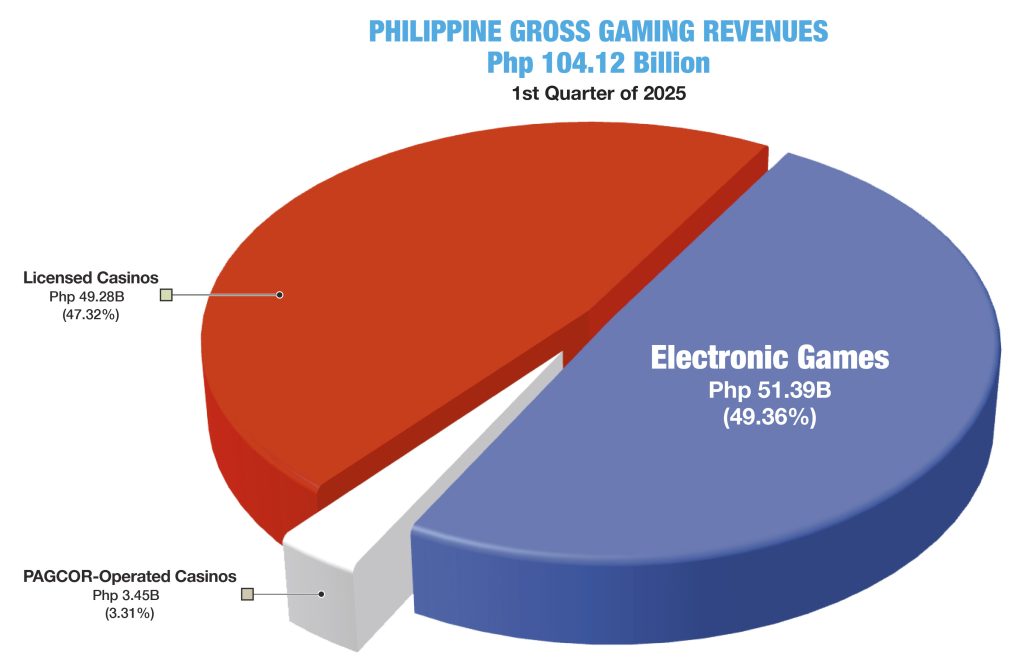
The study’s release comes as gross gaming revenue from online gambling in the Philippines reached PHP410 billion ($7.2 billion) in 2024, with projections estimating it could hit PHP480 billion ($8.4 billion) this year. Growth has been driven by increased digital adoption during and after the pandemic, along with more visible advertising and social exposure.
In light of this rapid growth, The Fourth Wall recommends differentiated safeguards based on player behavior. For instance, platforms could explore optional spending limits, pop-up reminders, or cooling-off periods for higher-risk users.
“We’re not advocating for or against gambling,” Bae emphasized. “We’re urging a more research-informed conversation that recognizes the cultural and economic realities of online gambling in the Philippines. The focus should be on creating environments that are safe, transparent, and fair.”
The study categorizes players based on their habits and financial behavior. Around 36 percent identify as “break-even optimists,” who believe they neither win nor lose significantly, gamble moderately, and avoid borrowing money. Only 12 percent fall into the high-risk category of frequent bettors who borrow funds to play.
While curiosity, boredom, and peer influence were the most common reasons for trying online gambling, just 8 percent cited bonuses or convenience as key motivations—suggesting gambling is often viewed more as social or recreational than purely transactional.
Most gamblers surveyed (85 percent) say they do not borrow money to place bets. Many spend under PHP5,000 ($87.8) a month, treating it as an affordable form of entertainment rather than a high-stakes activity.
Safety trumps perks

Safety concerns dominate players’ decision-making. Respondents said they actively seek out regulated platforms to avoid scams, especially as online gambling scams—often found on social media—have surged by 76 percent in recent years. Facebook, in particular, has become a hotspot for unregulated and often predatory gambling content.
Even among regulated platforms, users cite frustrating experiences such as delayed withdrawals, betting errors, login failures, and app crashes—issues that researchers say should be addressed in future regulation frameworks.
“There’s a growing demand for minimum service standards alongside consumer protection,” Bae said. “Trust isn’t just about legitimacy, but also reliability and performance.”
When asked about the idea of banning regulated online gambling entirely, a clear majority of respondents (53 percent) said they were against it. Only 18 percent supported a full ban, while 16 percent expressed conditional support.
A striking 75 percent of players believe that banning regulated options would simply drive users to illegal or offshore platforms—making the landscape even riskier.
Conversely, 80 percent supported a crackdown on unregulated gambling channels to prevent scams and protect vulnerable groups like youth and low-income earners.
This sentiment reflects concerns already voiced in Congress, where lawmakers have warned that a sweeping ban could backfire and worsen the very problems it seeks to solve.
Role of regulation and public trust
The Philippine Amusement and Gaming Corporation (PAGCOR), the main regulatory body overseeing gambling, appears to enjoy moderate trust. Some 73 percent of respondents said government oversight is important, with 61 percent saying PAGCOR is doing its job adequately. Still, 34 percent admitted they were unsure of what exactly the agency does—pointing to a gap in public communication.
“Players need to understand not just that regulation exists, but how it works, what their rights are, and where to report concerns,” Bae said. “We see a real opportunity for better public education around gambling regulation.”
Digital wallets are emerging as unlikely allies in the push for responsible gambling. A staggering 92 percent of respondents use GCash for transactions, followed by Maya (6 percent), and only 2 percent use over-the-counter methods.
These platforms are credited not just for convenience, but also for enforcing age verification, identity checks, and spending controls—tools that players themselves recognize as safeguards against overspending or underage gambling.
About 64 percent of respondents believe these features help them gamble more responsibly, hinting at a broader role for fintech in shaping safer online gambling habits.