
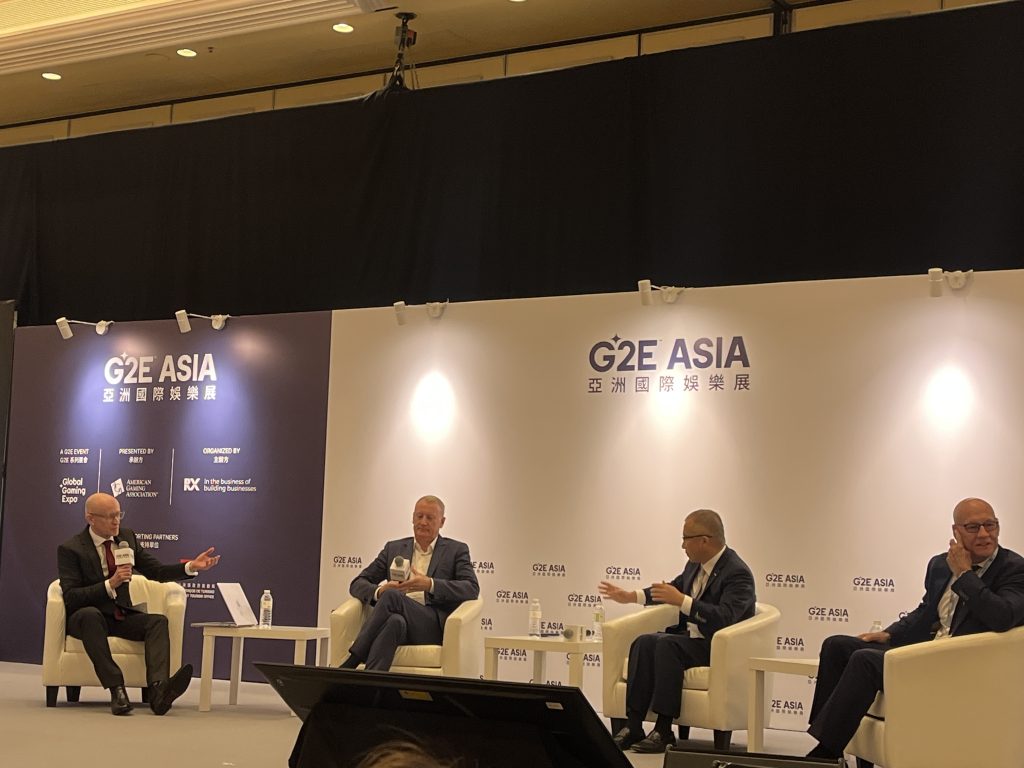
The wave of room-to-suite conversions sweeping Macau’s integrated resorts is less about hospitality and more about gaming yield, according to MGM China President and Executive Director Kenneth Feng, who shared the underlying economics at the G2E Asia “Asia Gaming Talk: Marketplaces in Motion” panel.
“The yield on a two-bay suite is about five times compared to a regular room,” Feng said. “Why? Because the customers who utilise these rooms are gaming customers. We do calculations on who gets the suite based on their performance.”
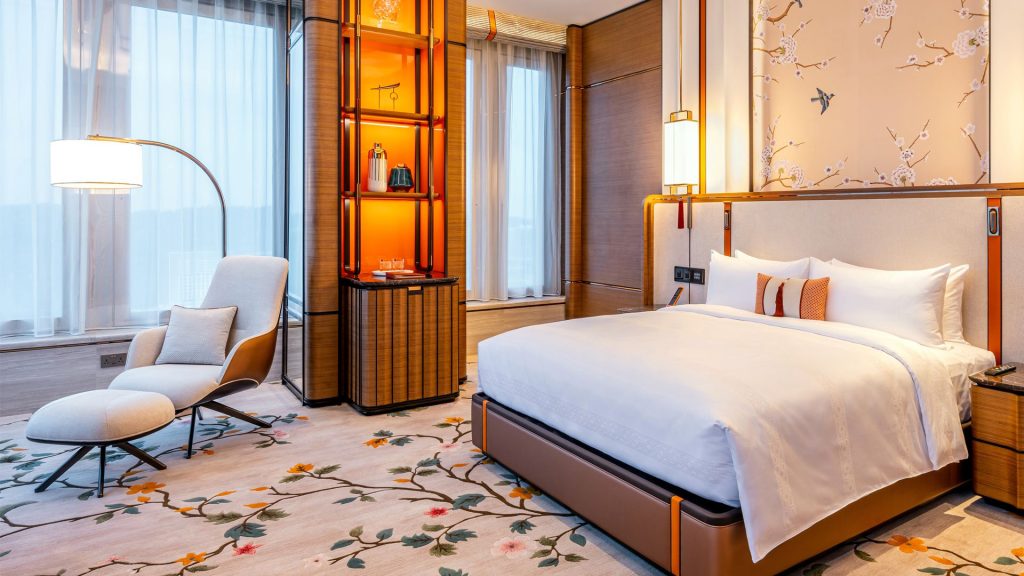
A two-bay suite — a unit built from the combined footprint of two standard rooms — illustrates the underlying maths driving the conversion trend. Operators give up one rentable room, but the remaining suite generates roughly five times the yield of a standard room, effectively doubling revenue per equivalent floor area while shifting the inventory mix towards premium mass players.
MGM has been among the most active in pursuing this strategy. The operator completed the conversion of standard rooms at MGM Cotai into 63 new suites in the first quarter of 2026, and has flagged plans to renovate around 100 more suites at MGM Macau. The peninsula property has also recently added 28 villa-style units known as “Alpha Villas”.
The five-fold yield differential helps explain why concessionaires across Macau have been reconfiguring inventory, even at the cost of total room count. But Feng stressed that the strategy is not simply about adding more suites — it is about designing the right kind. “These are not typical business hotel suites; they are designed for the premium mass market,” he said. “We want to ensure the customer’s experience flows — from check-in to the room to the casino floor. Everything serves the purpose of having them play more.”
The suite question sits at the heart of a broader pivot. Macau’s gaming market is increasingly defined by the mass segment, and particularly premium mass, a customer base whose preferences are evolving rapidly. Feng said MGM has spent the past four to six years building what he described as a customer-centric operation that extends from senior management to frontline staff. He personally speaks with frontline employees and gaming customers on a regular basis, he added, allowing the company to make decisions quickly when tastes shift.
Technology and data analytics play a role, but Feng framed customer understanding as a broader ecosystem. “We understand the region, not only this industry. We even know what industries our customers work in and how they make money, so we can better issue credit,” he said.
The strategy appears to be flowing through to results. MGM China has delivered EBITDA margins in the mid-to-high 20s over the past several years — a metric Feng argued is a more meaningful gauge of operational effectiveness than the player reinvestment rate calculations that often dominate analyst commentary. The operator has been the standout performer of Macau’s post-pandemic recovery, lifting its market share from below 10 percent before COVID to 18 percent in March 2026 — the highest among the six concessionaires.
“Typically, people do quick calculations on our earnings, but that doesn’t reflect the whole picture,” he said. “It’s not just a reinvestment game; it depends on your products, services, and whether you follow the trends.”
Asked whether the conversion of smaller hotel rooms into larger suites reflected a tacit understanding with the authorities — operators supporting Macau’s non-gaming diversification mandate in exchange for room to premiumise the gaming floor — Feng described the dynamic as a balancing act. “As long as we continue to do our non-gaming efforts, all six of us, meanwhile, in order to do more non-gaming efforts, of course, we need to be more profitable,” he said. “It’s becoming like a balance game. I think everyone understands that.”
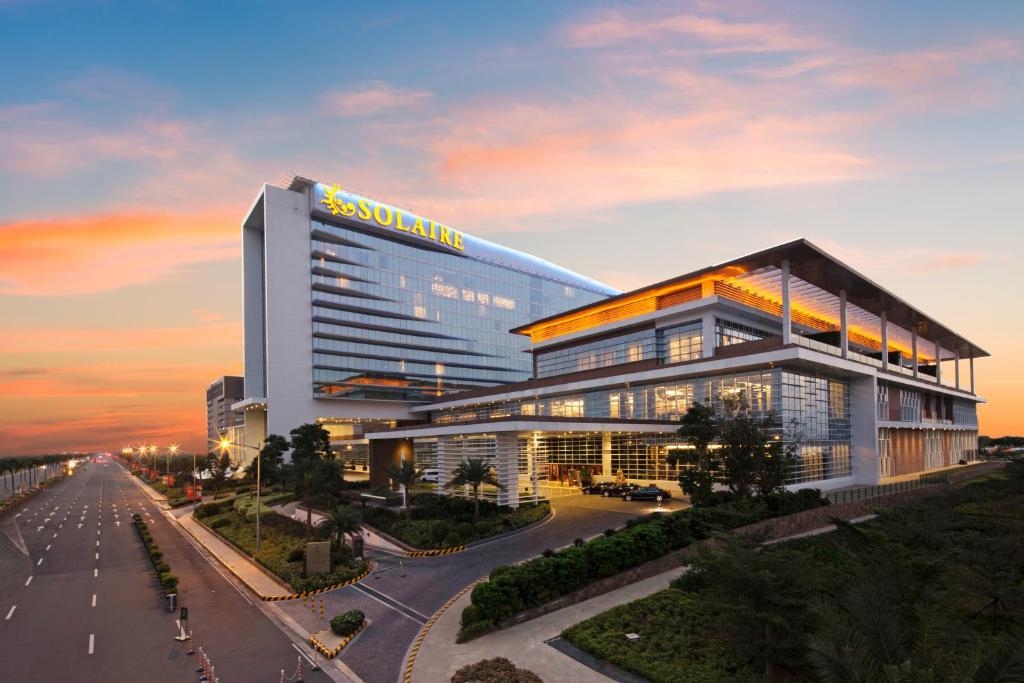
Solaire’s balancing act: VIP vs premium mass
The premium mass shift is not confined to Macau. In Manila, Solaire President and COO Greg Hawkins said his team is actively re-evaluating how to allocate floor space between VIP and premium mass, with the VIP segment having come under pressure in the Philippines in recent years. “We are looking at the optimal use of square footage — should we allocate more to VIP or to premium mass?” Hawkins said. “We’re adapting both properties to find that mix.”
Hawkins added that Solaire’s premium positioning — including villas for high-end players and an emphasis on service — has underpinned earnings growth over the past decade, but warned that innovation remains essential. “You must keep thinking of the most innovative ways to stay ahead of an increasingly competitive pack.”