Premium slots and table games provider Habanero has gone live with Favbet Romania, bringing its catalogue of slots and table games to one of the market’s most established operator brands.
The agreement sees Favbet Romania players gain access to Habanero’s entire portfolio, which continues to boost engagement and retention across regulated markets throughout Europe and beyond.
The partnership also reflects continued demand for Habanero’s content across markets worldwide, with its games recognised for combining strong mathematics, proven mechanics and immersive themes.
Toni Karapetrov, Head of Corporate Communications at Habanero, commented: “Favbet Romania is a well-respected brand in Europe and exactly the kind of partner we look to work with as we deepen our presence in the market. Romania players have a strong appetite for our content and we are confident our games will resonate well with their audience. Romania is an important market for us, and going live with this operator is another strong step in our continued European expansion across high-growth regulated markets.”
This latest tie-up with Favbet Romania follows a sustained period of European growth for Habanero, with the provider now live in 22 European regulated markets and counting some of the industry’s biggest operator names among its partners, including Entain, Sisal and Betway.
“The collaboration between Favbet Romania and Habanero has been strong from the very beginning, and this co-branded collaboration agreement marks an important step in strengthening our strategic partnership,” said Cristian Sapovici, Head of Casino, Favbet Romania. “Our shared objective is to deliver a more integrated gaming experience for players in Romania, supported by consistent visibility, dedicated campaigns, and a stronger presence of Habanero content within the Favbet.ro ecosystem.”
1xBet has once again underlined its leadership in the sports betting and gambling industry, earning three final shortlist nominations at the SiGMA Europe Awards 2026 in the Multi-Market Sportsbook, Sports Betting Operator, and Affiliate Program categories.
SiGMA summits are rightfully considered the most prestigious in the iGaming industry, and the SiGMA Awards are a clear testament to the brand’s international recognition. 1xBet has previously won multiple SiGMA Europe accolades, including Best Casino Operator 2025, Best Mobile Sports Betting App 2024, Best Sportsbook Operator 2023, and others.
During the selection process, 1xBet successfully passed a highly competitive evaluation against some of the strongest representatives in the iGaming industry. As a result, the brand is nominated for the following three awards:
Best Multi-Market Sportsbook Operator 2026 (1xBet) – awarded to the best multinational bookmaker successfully operating across major global markets.
Best Sports Betting Operator 2026 (1xBet) – granted to the top sports betting operator offering excellent conditions for predicting the world’s most popular sports, along with guaranteed payouts.
Best Affiliate Program 2026 (1xAffiliates) – recognized as the best affiliate program consistently attracting new users into the brand ecosystem while allowing affiliates to earn substantial commissions.
The final shortlist for the 2026 SiGMA Europe Awards was announced on May 11. Voting by both the jury and the public will continue until May 18, while the awards ceremony will be held on May 27 at the luxurious Casino Maltese in Valletta.
To support 1xBet and its partner program 1xAffiliates, head over to the official SiGMA voting page and cast your vote. Be sure to follow the results of the SiGMA Europe Awards 2026 ceremony on May 27, 2026!
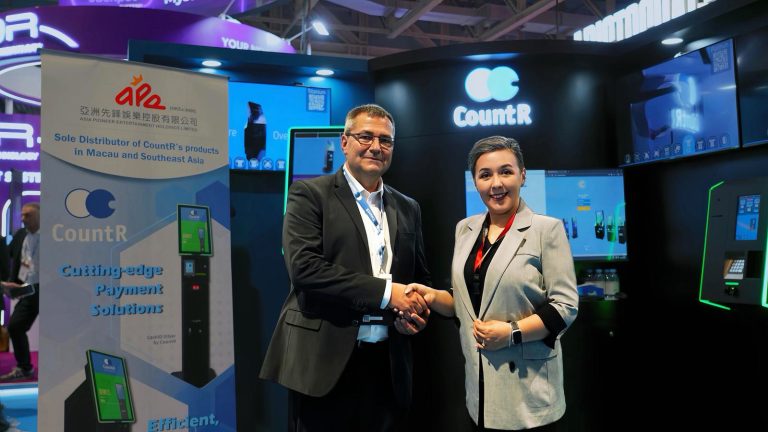
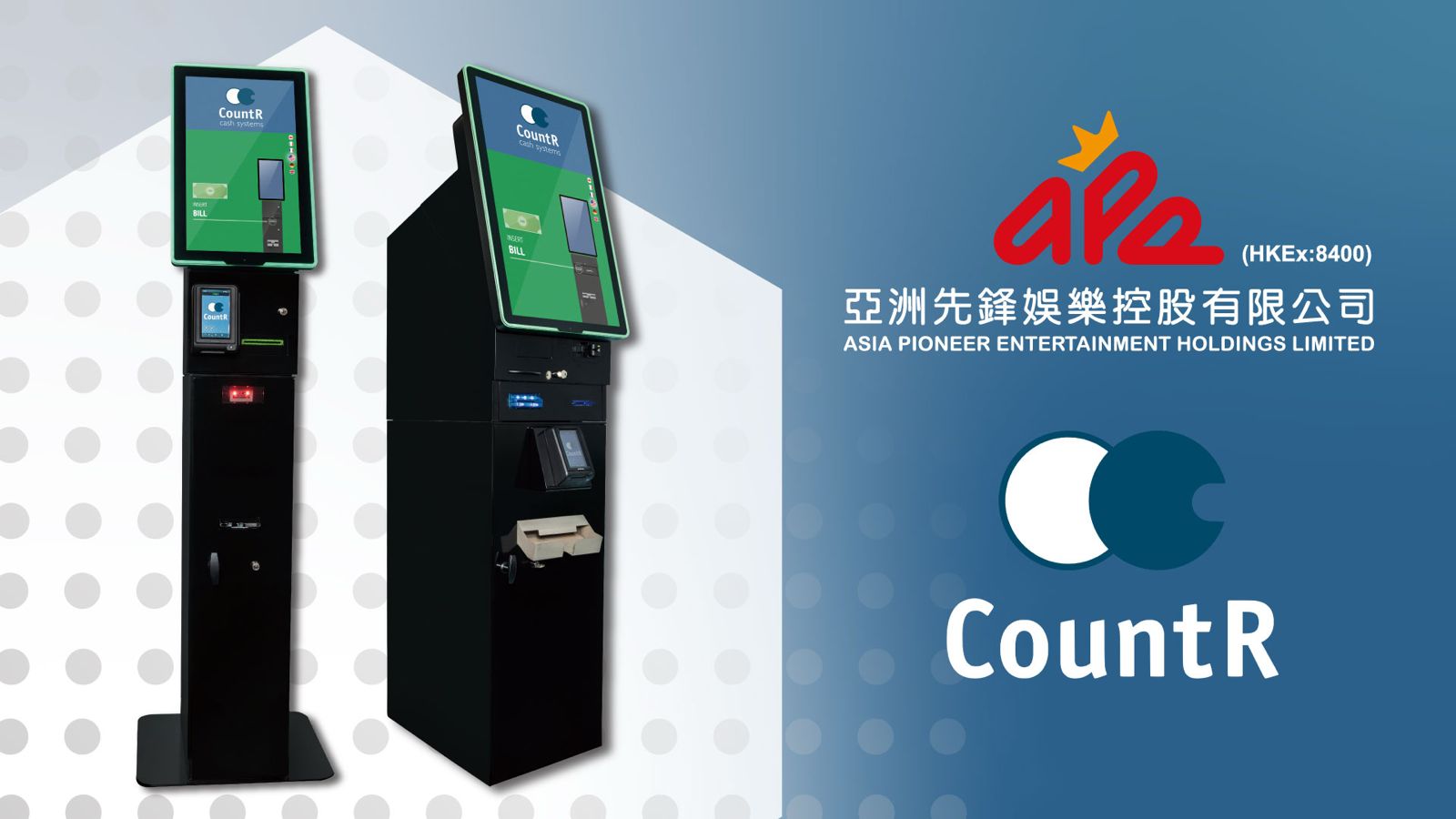
Asia Pioneer Entertainment Holdings (APE) has signed a distribution agreement with Germany-based CountR GmbH to bring the latter’s automated cash-handling kiosks to casino operators across Asia.
Under the agreement, APE will distribute CountR’s cash redemption kiosks throughout Asia, with Southeast Asia identified as a planned rollout market. The kiosks enable players to redeem credits from tickets, chips, and cash, offering operators a more efficient way to manage cash operations on the gaming floor. The partnership was unveiled at the G2E Asia expo, held at Cotai Arena in Macau, where both companies showcased their integrated solutions.
Founded in 2003, CountR brings more than 20 years of expertise to the agreement and has deployed over 10,000 machines across integrated resorts, cruise ships, and gaming floors worldwide. The company specializes in integrated systems connecting retail, gaming, and entertainment operations.
Maria Garcia, Executive Director and Sales Director of APE, said: “We are truly honored and excited to be the distributor for CountR across Asia. CountR is widely recognized for its versatile, innovative, and reliable payment solutions in global markets. Through this collaboration and our existing product offerings, we can now provide a broader range of products and services that address most casino operational needs.”
Tamara Sawyer, Regional Sales Manager of CountR, added: “Partnering with APE opens the door to Asia’s fast-growing casino market. Together, we’re ready to bring proven innovation to the region and unlock new opportunities for growth.”
The CountR deal follows the launch earlier in May of BEE Macau, the city’s first playing card factory. APE’s expanded portfolio now combines electronic gaming equipment such as slot machines and electronic table games, table game solutions including playing cards, dealing shoes, and smart trend boards, and cash management solutions powered by CountR kiosks.
APE CEO and Executive Director Herman Ng commented: “APE’s strategy is shifting from being primarily a supplier of electronic gaming equipment to delivering comprehensive gaming operation solutions. The new model focuses on integration, cost efficiency, and flexibility, allowing APE to serve both large integrated resort casinos and smaller niche casino floors effectively.”
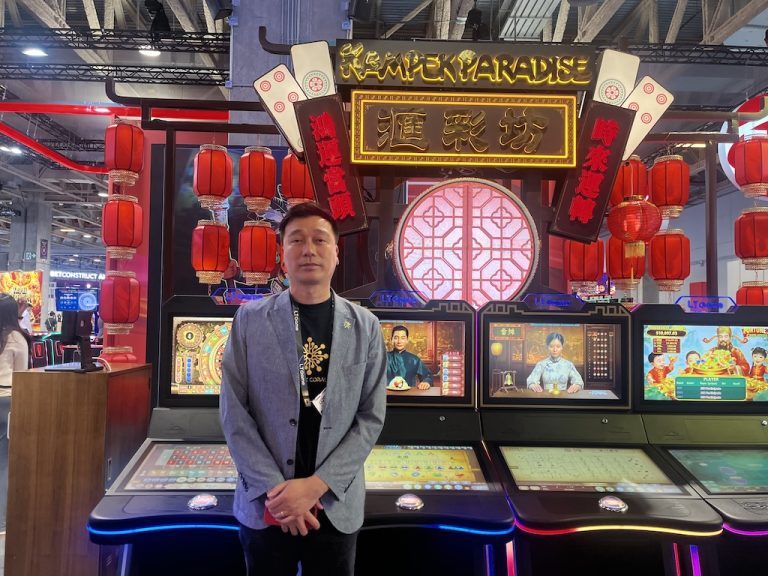
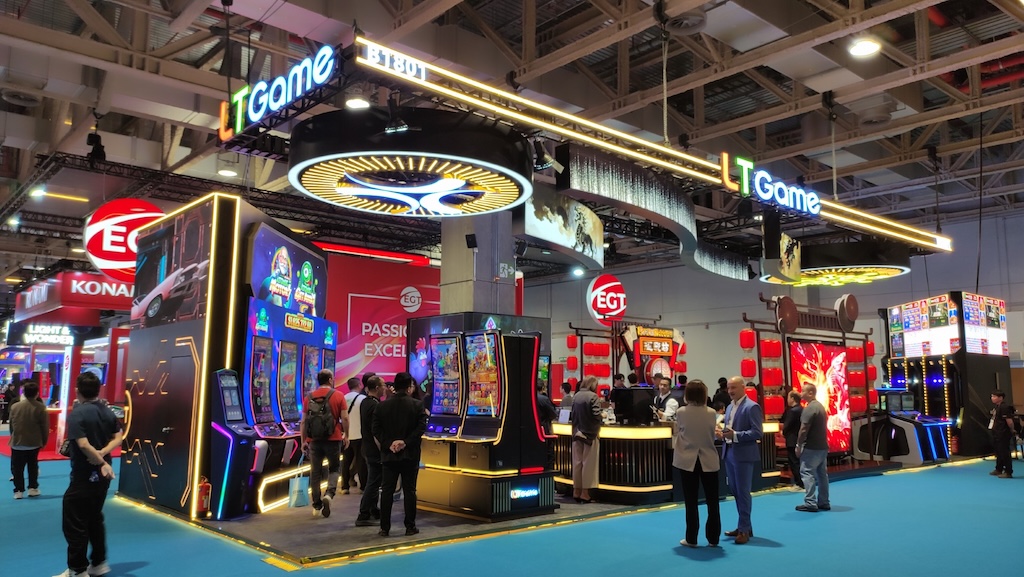
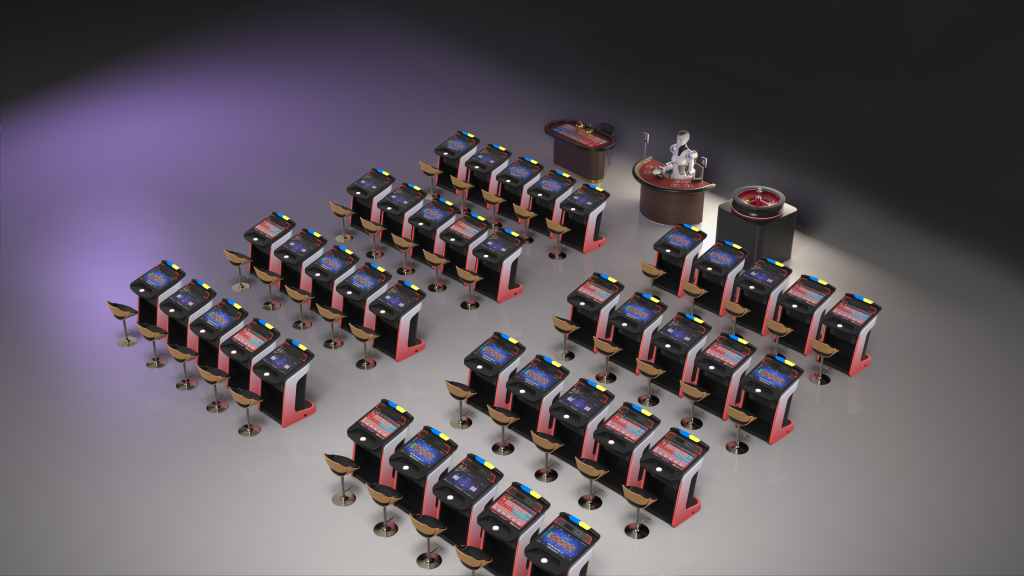
Macau-based casino technology firm LT Game Ltd is targeting June for the BMM Testlabs certification of ‘Black Coral‘, its new live multi-game (LMG) software platform, as the company prepares for the expiration of a key patent that has underpinned its position in Macau’s live-dealer electronic table game (ETG) segment.
The certification will be followed by submission to Macau’s Gaming Inspection and Coordination Bureau (DICJ) for regulatory approval before the product can go live.
LT Game is a brand under Hong Kong-listed Paradise Entertainment, a former Macau satellite casino operator. The group ran Casino Kam Pek Paradise under the license of SJM Resorts Ltd until December last year, when the operation ceased as part of Macau’s transition away from the satellite-casino system.
Chief Operating Officer Eddie Au disclosed the ’Black Coral‘ timeline in an interview with AGB on the sidelines of G2E Asia 2026, held at The Venetian Macao from May 12th to May 14th.
Au said ’Black Coral‘ was “nearly ready” at the start of this year, but the firm decided to delay the release after collecting feedback from casino operators during roadshow demonstrations. “We thought, let’s revise it before we release it. So we gathered their input and then proceeded,” Au said. The software is now in the testing laboratory stage, with BMM certification expected in June.
Black Coral has been in development for more than two years and represents a full overhaul of the back-end software for LT Game’s LMG product, Au explained. The previous platform has been in the market for more than a decade and has received at least two to three version updates per year. Black Coral consolidates those incremental changes into a single rebuilt platform.
“The gameplay is the same, but we have rebuilt many things behind the scenes,” Au said. “Because we kept modifying it, those changes might not have been consistent with the original design. So we consolidated everything and built a new system.”
He compared the generational gap to mobile operating systems, saying LT Game had effectively “jumped over a decade” with the new platform. The result, he said, is improved stability and smoother operation.
Black Coral will be paired with the Speedwave cabinet, which has already received hardware certification. The full product is expected to go live by the end of the year.
Preparing for the post-patent era
The timing comes at an inflection point for LT Game in Macau. The patent underpinning the firm’s LMG product, known as I/380, was filed in October 2006 and is due to expire in October this year under Macau’s 20-year patent protection.
The Macau Court of First Instance ruled last year that the patent must be declared null and void, effectively ending LT Game’s exclusive position earlier than scheduled, a decision the company is appealing. International suppliers Light & Wonder Inc and Spintec d.o.o have both confirmed plans to enter Macau’s live-dealer ETG market.
Au said the company had anticipated the patent’s expiration and had been preparing for new entrants. “We started developing ’Black Coral’ two years ago. We also have the new cabinet Speedwave,” he said.
Speedwave cabinet
He argued, however, that LT Game’s advantage extends beyond the new product itself. “Our advantage lies in the intangibles, our experience and our customers’ familiarity with us. Over more than a decade, we have learned what works, what does not, and what customers complain about. That cannot be replicated overnight,” Au said. He added that as an Asian company, LT Game is closer to the tastes of the Asian market than its European and American competitors.
LT Game also introduced a second-generation robot dealer this year, following the deployment of its first-generation model at Lotus Tower casino in Sri Lanka.
Overseas push as Macau approaches saturation
Beyond Macau, LT Game has been expanding overseas over the past two years as the home market approaches saturation, Au said. “We sold many machines two years ago, and at that time we saw that the market was nearing saturation. To sustain the development of so many games and products, we must expand overseas.”
Asia remains the priority. The company’s Philippines office has been operating for one to two years, with all required licenses recently obtained. Au said demand in the Philippines remains present despite a slowdown that began last year, while the Vietnamese market has become noticeably more active. Laos was also identified as a market with potential, though development there will take more time.
In Europe, LT Game is working with a partner to release its games alongside the partner’s titles, supported by one staff member dedicated to the region. The company also expects to enter the United States this year through a partner, with sales discussions already underway.
Au noted that even though the LMG segment is not subject to Macau’s gaming machine cap, replacement cycles for existing terminals are gradual, reinforcing the need for overseas growth. “Macau remains our core, but we cannot focus on a single market.”
On the online side, LT Game’s iGaming brand “Infernoplay” is preparing to add casual games aimed at younger players, expanding beyond its existing slot-dominated portfolio. Au said the new titles, which include digital adaptations of formats such as high-low and minesweeper, are “designed to be gamble or not gamble” and intended to make the games more accessible to younger demographics.
The Infernoplay project, which began late last year, remains at an early stage and is awaiting regulatory approval in the Philippines.
Continent 8 Technologies, a leading powerhouse of managed IT solutions for the iGaming industry, has announced the launch of its fully managed CockroachDB service.
The offering expands Continent 8’s portfolio across AWS Outposts, hybrid cloud, and Kubernetes environments, including AWS EKS – enabling operators and suppliers to deploy distributed, highly resilient data infrastructure.
As the iGaming industry enters a new phase driven by rapid scalability, real-time player engagement, and complex regulatory demands, operators must navigate high-throughput workloads across multiple jurisdictions while overcoming the limitations of legacy monolithic databases in increasingly distributed environments.
CockroachDB’s cloud-agnostic and PostgreSQL-compatible distributed architecture directly addresses these challenges by enabling strongly consistent transactions across regions and hybrid deployments. This allows operators to operate across markets while maintaining strict control over where data resides and how it is managed.
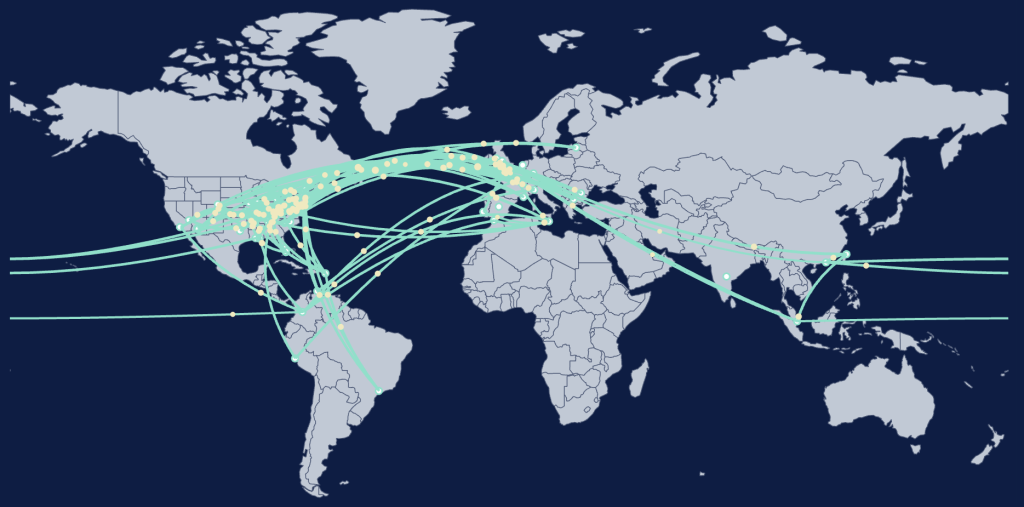
Combined with Continent 8’s global footprint – spanning more than 100 locations across the globe in regulated jurisdictions – the service provides a foundation for deploying infrastructure closer to players without compromising compliance or performance.
“Continent 8 has always focused on delivering infrastructure that meets the unique demands of the iGaming industry – where performance, compliance, and uptime are non-negotiable,” said David Brace, Chief Alliance & Partnership Officer, AWS, at Continent 8 Technologies. “As our customers grow across regulated markets, the database becomes a critical component. Our managed CockroachDB service provides the consistency, resilience, and deployment flexibility required to support that growth.”
As operators scale into new markets and adopt hybrid deployment models spanning on-premises, cloud, and edge environments, the need for integrated, multi-region infrastructure continues to grow. By incorporating CockroachDB into its portfolio of hosting, cloud, connectivity, and cybersecurity solutions, Continent 8 delivers a unified platform designed to simplify operations while supporting massive scale in regulated environments.
“Partnerships like this are critical as operators move toward more integrated, ecosystem-driven infrastructure models,” shared Allen Terleto, VP Global Partners and Ecosystem at Cockroach Labs. “By combining Continent 8’s managed services and AWS expertise with CockroachDB’s distributed SQL capabilities, we’re enabling customers to build and operate modern applications across hybrid environments with greater flexibility and control. It also strengthens the broader ISV ecosystem supporting iGaming, making it easier to bring new services to market on a data platform that can scale with the evolving demands of the industry.”
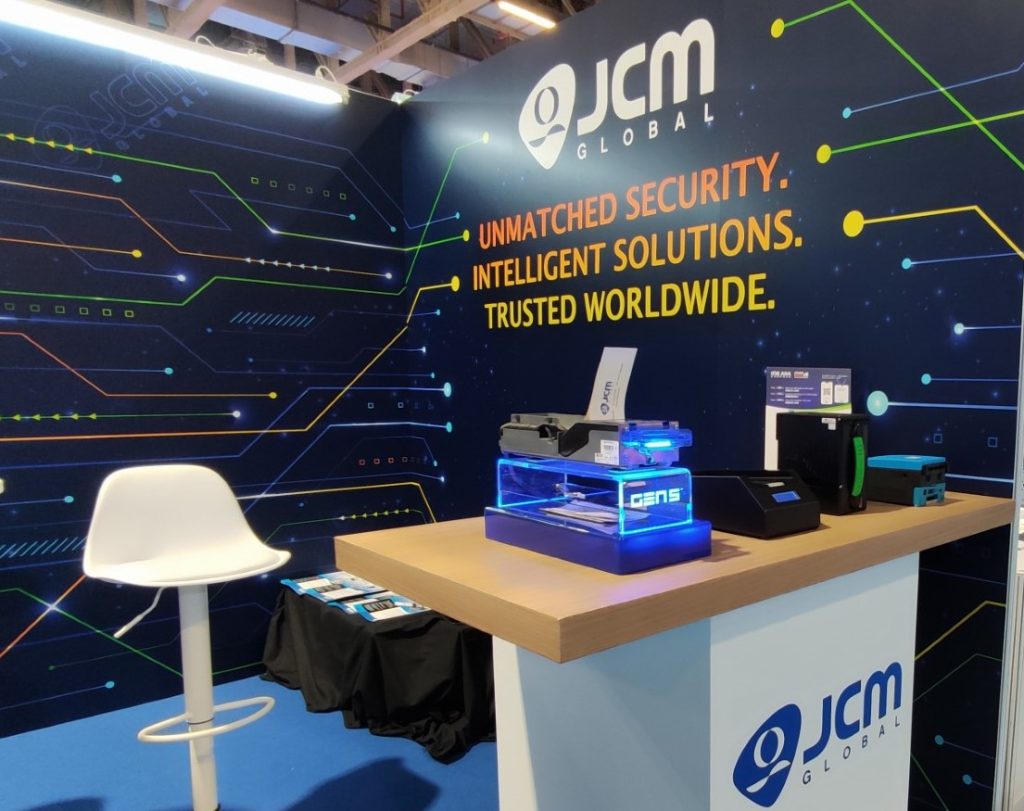
JCM Global (JCM) is elevating the arrival experience for poker enthusiasts at FireKeepers Casino Hotel in Battle Creek, Michigan, where its cutting-edge DSS CLEAR display delivers a striking first impression and sets the tone for a premium, immersive poker environment.
Poker News named the FireKeepers poker room one of the best poker rooms in the U.S., and the new CLEAR wall display outside of the poker room ups the ante on fun.
The CLEAR installation raises the stakes and acts as a window, wall, and advertisement between the poker room and the casino floor, allowing players to see the action on both sides of the visual divider. The expansive CLEAR wall stretches an impressive 16.5 feet wide by 9 feet high and has a pixel pitch of 8mm for crystal clear visibility that captivates guests from every angle.
The content on the CLEAR wall at FireKeepers is as engaging as the technology itself, ranging from the classic dogs playing poker scene to current poker promotions, including daily tournament action, the $1,000,000 Guaranteed MSPT (Mid-States Poker Tour) tournaments, and casino promotions and branding.
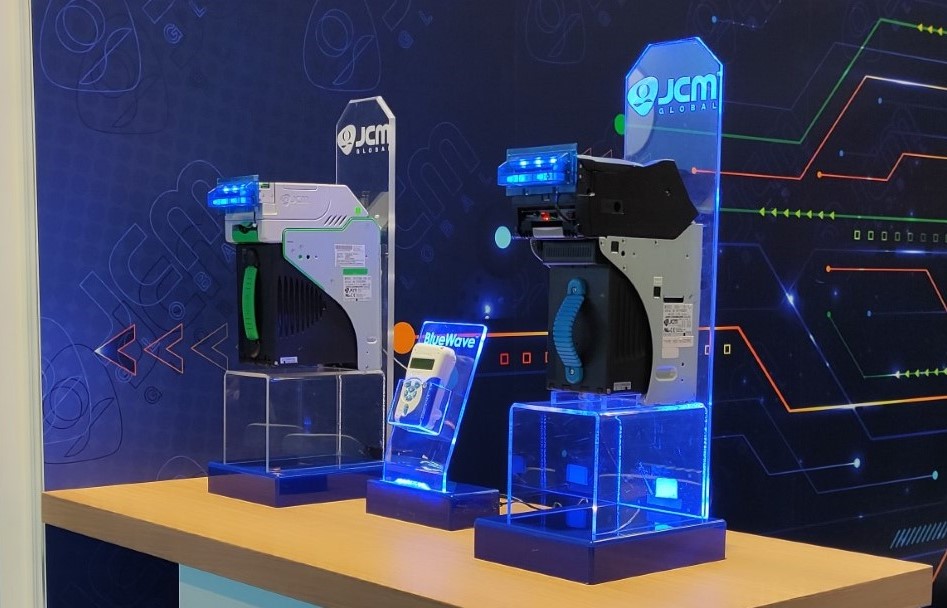
The installation is the latest milestone in a long-standing technology relationship between JCM and FireKeepers. Currently, JCM’s iVIZION bill validator, GEN5 thermal printer, ICB Intelligent Cash Box system, and FUZION system are exclusively deployed across the casino floor, reinforcing FireKeepers’ commitment to innovation and guest experience.
“FireKeepers has been an outstanding partner to JCM Global, and we’re proud to support their continued growth by adding our transformative digital signage to their technology road map,” said Dave Kubajak, JCM SVP – Sales, Marketing & Operations. “We work closely with each customer to understand their needs and their goals, so that we can provide industry-leading solutions that help achieve them, and our collaboration with FireKeepers is a great example of that philosophy in action.”
Yevhen Krazhan, CSO at GR8 Tech, explores how surging crypto adoption across Asia is revolutionizing iGaming payments, stating: “When I look at what’s changing fastest in Asia, it’s payment behavior,” as wallets, stablecoins, and seamless cross-border transfers become deeply ingrained in player habits. The winning operators will be those that offer fast, reliable, and local deposits and withdrawals. To make sense of it, Yevhen breaks Asia into two crypto realities.
The International Betting Integrity Association (IBIA) and the Chilean Association of Online Betting Platforms (aPAL) have signed a Memorandum of Understanding to support the development of effective, sustainable online betting regulation in Chile.
The agreement combines IBIA’s international expertise in betting integrity with aPAL’s local industry knowledge at a key moment for the Chilean market, as discussions continue regarding the future regulatory framework for online betting and gaming.
As part of this collaboration, IBIA and aPAL will cooperate in sharing information related to regulatory, political and social developments affecting the sector, while also exchanging international experiences and best practices from established regulated markets.
Both associations will work together to promote regulatory approaches and industry standards that contribute to a viable and efficient model for Chile, balancing consumer protection, market sustainability and sports integrity.
Carlos Baeza, lawyer and representative of the Chilean Association of Online Betting Platforms, said: “Chile is at a crucial moment in the discussion on how to regulate an activity that already exists and requires a clear and modern framework. In this context, our partnership with IBIA provides valuable information, comparative evidence, and technical expertise that will be key to enriching the debate across multiple dimensions, from betting integrity and operational traceability to user protection and, of course, supervisory standards.”
Khalid Ali, CEO, IBIA
“As more countries move towards regulating online betting, there is growing recognition that it is essential to design the regulatory framework correctly from the outset,” shared Khalid Ali, CEO of IBIA. “Effective regulation should protect consumers, support integrity measures and create a sustainable market environment. We are pleased to collaborate with aPAL to share international expertise and contribute to the ongoing discussions in Chile.”
IBIA works with betting operators, regulators, sports organisations and policymakers across multiple jurisdictions worldwide to promote betting integrity and responsible market development. Through its Global Monitoring and Alert Platform (Global MAP) the association helps strengthen integrity and confidence in regulated sports betting markets. IBIA’s Global MAP monitors more than 1.5 million matches across over 80 sports offered by its members, generating more than US$300 billion in annual sports betting turnover for those operators.
The agreement with aPAL reflects a shared commitment to supporting thoughtful and effective regulation in Chile through collaboration, expertise and evidence-based policy making.
Philippine-listed gaming and technology firm DFNN Inc. reported a sharp decline in first-quarter 2026 revenue, posting PHP53.6 million ($870,575) for the three months ended March 31st, down 48.6 percent from PHP104.4 million ($1.7 million) in the same period last year, according to the company’s filing.
The PHP50.7 million ($823,157) decline in top-line revenue was primarily driven by a steep fall in commission income from its licensed gaming operations. Commission income dropped 68.4 percent to PHP17.3 million ($280,936) during the quarter from PHP54.8 million ($889,899) a year earlier. DFNN attributed the decline to the delinking of its online gaming platform from e-wallet providers.
Net loss for the period widened to PHP155 million ($2.5 million), compared with a PHP99.8 million ($1.6 million) loss in the first quarter of 2025. EBITDA loss also widened to PHP95.2 million from PHP56.6 million a year earlier.
Service fee income, generated from software development and maintenance, declined 22.5 percent to PHP28.2 million ($457,941), while revenue from the company’s LottoMatik contract with the Philippine Charity Sweepstakes Office fell 30.9 percent to PHP5.7 million ($92,562).
Despite the revenue contraction, DFNN said it continued expanding its InPlay.ph ecosystem with new sub-brands, additional gaming content, and payment integrations. The group also broadened its land-based gaming network and enhanced its InstaWin terminals during the quarter.
Malaysia’s consumer groups and legal experts are warning that social media influencers who promote online gambling platforms could face criminal liability, amid growing concerns that gambling-related content is increasingly reaching younger audiences online.
Datuk Indrani Thuraisingham, vice-president of the Federation of Malaysian Consumers Associations, said influencers risk becoming “active accomplices” to illegal gambling syndicates by leveraging their online followings to promote betting platforms. “Influencers hold immense social capital; using that capital to monetise addiction is an ethical failure and a legal ticking time bomb,” Indrani said, warning that some content creators may not fully understand the potential legal consequences of accepting sponsorships linked to gambling promotions.
She added that gambling-related material was no longer limited to obscure online spaces, but was increasingly appearing in mainstream social media feeds disguised as entertainment, gaming content or “easy money” opportunities. According to Indrani, the trend was particularly concerning for younger users and those with limited financial literacy, with repeated exposure potentially normalising gambling behaviour among minors and vulnerable individuals.
Malaysia maintains strict controls on gambling activity, with enforcement historically governed under the Common Gaming Houses Act 1953 and Betting Act 1953. However, legal observers say those laws were drafted decades before the emergence of social media and online gambling platforms. Indrani noted that authorities have increasingly relied on provisions under the Communications and Multimedia Act 1998 to address online gambling-related content and digital promotions. She also welcomed ongoing efforts to introduce more comprehensive legislation specifically targeting online gambling and related cyber-enabled activities.
The consumer advocate called on social media companies to take a more proactive approach toward removing gambling-related content, rather than relying primarily on user complaints and reactive enforcement. Lawyer Joshua Kong said updated legislation would provide authorities with stronger tools to tackle online gambling advertising and promotional activity.
“If we use 1953 laws to police 2026 crimes, criminals may end up getting away with their crimes,” Kong said, arguing that regulators and courts were currently forced to apply outdated legislation to modern digital gambling operations. Meanwhile, Teo Nie Ching recently warned that promoting online gambling platforms could already constitute an offence under existing Malaysian laws.
In a recent Facebook video addressing online gambling promotions, Teo cited provisions under the Common Gaming Houses Act that prohibit not only gambling activities themselves, but also the promotion or solicitation of gambling. “If you publicise or promote a gambling place or in any way encourage people to gamble, then you could have committed an offense,” she said.
Teo also pointed to recent enforcement actions involving influencers and gambling-related content, adding that cooperation between the Malaysian Communications and Multimedia Commission and police had intensified in efforts to remove such material from online platforms. “Combating online gambling is everyone’s responsibility,” she said, while urging social media companies to strengthen monitoring systems to limit the spread of gambling-related content online.