



Prediction market platforms Kalshi Inc. and Polymarket are still accepting users from India even after the country’s technology ministry warned that their services are illegal under a new online gaming law that took effect on May 1st, according to a report published on Monday by Bloomberg.
India’s Ministry of Electronics and Information Technology said in an advisory posted on its website that users are accessing “illegal and blocked prediction market and online betting platforms” despite domestic prohibitions, naming Polymarket and “a few other similar sites.” In a separate letter dated April 25th, the ministry warned virtual private network providers that they would face “exposure to consequential legal action” if they continued to allow access to the platforms.
Although at least some Indian internet providers are blocking access to Polymarket’s website, users have continued to reach the platform by using VPNs to mask their location. On Polymarket’s official Discord channel, users have shared tips in recent months on how to circumvent the block by changing their DNS server to a generic Cloudflare service, obfuscating their true location. Polymarket operates entirely on a cryptocurrency-based network and does not perform identity checks on its customers, making enforcement more difficult.
The crackdown stems from the Promotion and Regulation of Online Gaming Rules (PROGA), a national law passed last August that imposes a broad ban on what authorities define as “online money games.” Indian regulatory specialists told Bloomberg that prediction markets clearly fall within the law’s scope. “Polymarket, Kalshi, and other prediction markets would obviously fall under online money games under PROGA, and therefore, there is a blanket ban,” said Jay Sayta, a Mumbai-based technology and gaming lawyer.
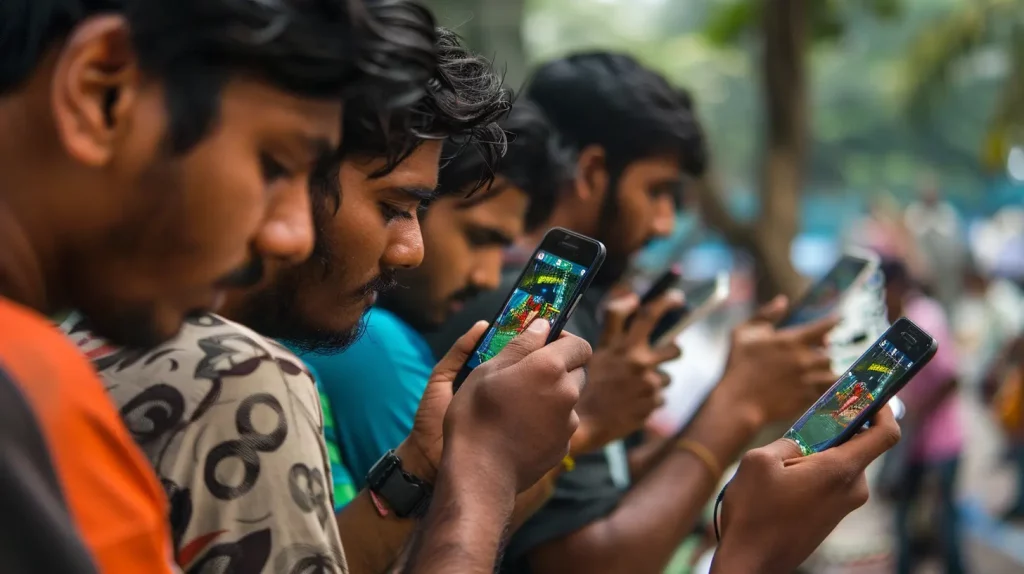
The new framework has already reshaped India’s domestic gaming industry. Major operators including Dream11, Mobile Premier League, WinZO, Zupee, PokerBaazi and Games24x7 suspended their real-money operations, triggering significant revenue declines, asset write-downs and widespread layoffs across a sector that previously accounted for nearly 86 percent of the country’s gaming revenues.
Prediction markets, by contrast, have continued to grow rapidly. The sector, dominated worldwide by Kalshi and Polymarket, generated more than $63 billion in trading volume during 2025 and reached monthly peaks of approximately $25.7 billion in early 2026, according to industry data cited in recent market reports.
Kalshi’s legal counsel, Valeria Vouterakou, told Bloomberg that the company has been in contact with the Indian government and had not been instructed to cease operations. New customers are still being onboarded and must complete identity verification. “We will comply with the government’s requests should they make them,” Vouterakou said.
A Polymarket spokesperson said the company is “committed to complying with applicable laws and regulations across all jurisdictions in which it operates” and maintains geoblocking measures where its services are not permitted. India is not currently on Polymarket’s restricted-country list.
Cricket has emerged as a key driver of Indian-linked activity. Wagering on Indian Premier League matches has approached half the weekly trading volume of US Major League Baseball contracts on Kalshi since the current season began in March. A May 7th match between Lucknow Super Giants and Royal Challengers Bengaluru attracted $27.7 million in combined trading on Kalshi and Polymarket.
Even before PROGA took effect, the Securities and Exchange Board of India had warned investors that “opinion trading” products offered “no investor protection mechanism” and fell outside its supervision.