


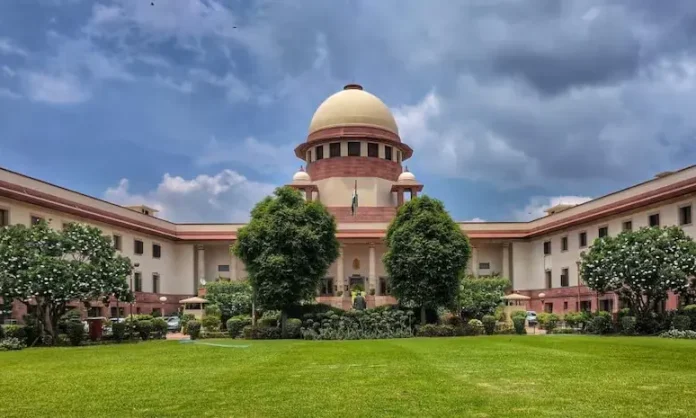
India’s Supreme Court has issued one of its most consequential rulings on online gaming, upholding state-level bans on real-money wagering and warning that technological change has turned the mobile phone into a “virtual common gambling house” with significant implications for public health.
The judgment, handed down on 27th May and formally cited as State of Tamil Nadu & Ors. v. Junglee Games India Pvt. Ltd. & Ors. (2026 INSC 594), was delivered by a bench of Justice JB Pardiwala and Justice R Mahadevan. It resolves a long-running legal dispute over the constitutional validity of amendments enacted by Tamil Nadu and Karnataka that criminalise online games played for money or stakes, including rummy, poker, and fantasy sports.
The central legal question before the court was whether state governments could use their legislative powers over “betting and gambling” under Entry 34 of List II of the Seventh Schedule of the Constitution to ban wagering on games that require skill. The gaming companies argued that skill-based games were protected commercial activity under Article 19(1)(g) and fell outside the state’s gambling jurisdiction. Both the Madras High Court and Karnataka courts had previously sided with the industry, striking down the amendments on the basis that “betting” under Entry 34 could not be divorced from games of pure chance.
The Supreme Court reversed those findings entirely. It held that staking money on the uncertain outcome of any game – regardless of the skill involved in playing it, amounts to “betting” within the meaning of Entry 34, and that no constitutional protection exists for such activity. Playing a game of skill is protected under Article 19(1)(g), the bench held, but wagering on its outcome is res extra commercium – outside the domain of protected trade – and therefore subject to state prohibition.
Beyond the constitutional ruling, the bench made observations about the broader social consequences of online gaming that are likely to influence regulation and litigation well beyond Tamil Nadu and Karnataka. The court described the widespread accessibility of online betting as a serious threat to public order, public tranquillity, and public health, and found that technological developments had transformed every mobile phone into a “virtual common gambling house.” Online money gaming, the court observed, has a documented impact in terms of addiction, financial losses, and resultant suicides.
The judgment comes against a rapidly shifting regulatory backdrop. India’s parliament passed the Promotion and Regulation of Online Gaming Act in 2025, which imposed a nationwide prohibition on real-money online games and related advertising and financial transactions, legislation that prompted several of the country’s largest platforms, including Dream11 and Mobile Premier League, to suspend their wagering-based features. The 2025 Act itself faces legal challenges from the industry, which has argued it was rushed through without adequate consultation and sweeps up legitimate skill-based games in its prohibition.
The Supreme Court’s ruling strengthens the legal foundation for both the central legislation and the state-level bans, making a successful constitutional challenge from the industry considerably harder. The bench’s framing of online money gaming as a public health and public order concern – not merely a gambling regulation question – opens additional legislative pathways for states and the centre alike.
Junglee Games India, which operates India’s largest rummy platform, was the primary respondent in the Tamil Nadu appeals. The case had been working through courts since 2021, when the Madras High Court first struck down an amendment to the Tamil Nadu Gaming Act on the same skill-versus-chance distinction the Supreme Court has now firmly rejected. The full judgment is indexed as Civil Appeal Nos. 6124-6131 of 2023 and connected matters.