


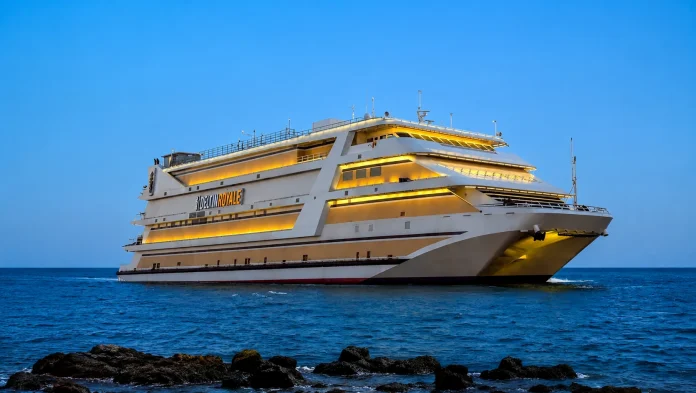
On May 6th, the Goa bench of the Bombay High Court issued an interim order barring the MV Deltin Royale, a 112-meter, seven-story casino vessel with a capacity of 2,000 passengers, from entering Panaji Port on the Mandovi River.
Justices Valmiki Menezes and Amit Jamsandekar ruled that the ship cannot sail into port without a valid certificate of survey confirming its seaworthiness, and that even if it obtains the necessary certifications, it must still seek the court’s express permission before doing so.
The vessel, owned by Delta Pleasure Cruise Company Limited, was intended to replace the aging MV Royale Flotel, a 70-passenger boat currently licensed to operate on the river. The size differential is not subtle. Petitioners from the civil society group Enough is Enough told the court that the new ship’s passenger capacity exceeds the combined total of all six offshore casino vessels currently moored on the Mandovi.
That particular point landed. So did the concerns raised by the captain and secretary of ports, who had flagged as early as 2021 that new vessels of this scale “may create further navigational hazards and create a bottleneck at mooring positions”, warnings that were on record before the NOC for the new ship was granted anyway.
The legal challenge also takes aim at the regulatory mechanics of the deal itself. Activists and counsel for the petitioners argue that the Goa Gambling Act contains no provision for the “replacement” of one vessel with another under the same licence, particularly where the size and capacity differ so dramatically. The state government, for its part, gave the court an assurance it would not amend the MV Royale Flotel’s licence in favour of the MV Deltin Royale without first informing the bench. A follow-up hearing has been scheduled for July 6th.
The timing has an added layer. The next hearing falls after the monsoon season begins, meaning the ship – currently sitting at Mormugao Port – is not expected to enter the Mandovi before the rains clear. Petitioners have also filed a caveat before the Supreme Court of India, a precautionary move to ensure no ex-parte order can be obtained by the casino company at the apex level without first hearing their objections.
For Goa’s offshore gaming sector, the ruling is a setback with broader implications. The state is one of only three Indian jurisdictions where gambling is legal, and its six floating casinos have long occupied an uncomfortable space between major revenue contributor and persistent environmental controversy.
The government earned INR6,03 billion ($72 million) from casinos in the 2023-24 financial year – a figure that fell back to INR4.6 billion ($55 million) the following year. Chief Minister Pramod Sawant said as recently as March that the government has no plans to issue licenses for new offshore casinos, a position this ruling does nothing to contradict. For now, the Mandovi stays as it is.