PrizeFlex continues its rapid global growth following a new partnership with Wunderino in Sweden, bringing PrizeFlex’s market-leading player retention program to players across the Swedish igaming space and marking a key point of global expansion for the tool.
The new partnership follows a strong year for PrizeFlex including a milestone jackpot win of R$9.363.768,85 in Brazil.
Daniel Kevan, Head of Business Development at PrizeFlex, said that partnering again with Wunderino represents a significant step forward in expanding the global reach and recognition of PrizeFlex as a leading player retention solution.
He noted that the collaboration was seamless and highlighted the team’s enthusiasm in delivering a service designed with Wunderino’s players in mind, and that he looks forward to maintaining and strengthening the relationship as PrizeFlex continues to scale with new features and cutting-edge functionalities that set it apart in the market.
“Providing the most engaging experience for our players is at the centre of every decision we make at Wunderino, and PrizeFlex is the latest example of that mission statement,” shared Susanne Forsman, Group Chief Gaming Officer at Wunderino. “Implementing PrizeFlex gives us a whole new way to engage with our players, allowing them to experience their favourite games across the site with a fully flexible jackpots programme unlike any other; which blends perfectly with our stance to always offer boosted RTP on our games.
“We look forward to redefining our player retention strategy alongside PrizeFlex and giving our players plenty of new and exciting jackpot rewards, with the best possible returns to go with them,” added Susanne.
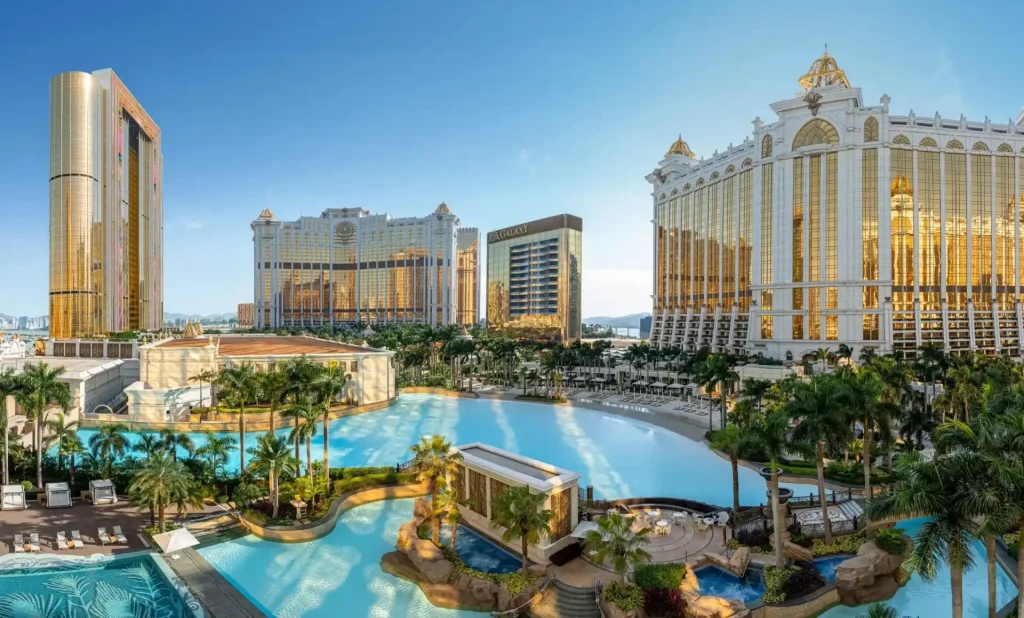
Galaxy Entertainment Group (GEG) received two awards at the Global Gaming Awards Asia‑Pacific 2026, held in Manila, Philippines. These included “Integrated Resort of the Year” for its flagship Galaxy Macau™ integrated resort for the second consecutive year, and “Casino Operator of the Year” for the third consecutive year.
These accolades reflect GEG’s internationally recognized leadership and outstanding performance in advancing the high-quality development of the integrated tourism and leisure industry.
Guided by its “World Class, Asian Heart” service philosophy, GEG continues to drive innovation across Macau’s integrated tourism and leisure sector, enriching the city’s positioning as a “World Center of Tourism and Leisure.” Its flagship Galaxy Macau integrated resort is globally renowned for delivering a one-stop, diversified, world-class leisure experience. The property earned a record-breaking 12 Forbes Travel Guide Five-Star Awards across 2025 and 2026, making it the integrated resort with the highest number of such accolades worldwide.
Galaxy Macau brings together nine premier international hotel brands, including Capella at Galaxy Macau, which officially opened this year. The resort also features a wide range of top-tier leisure offerings, including the Grand Resort Deck — the world’s leading skytop water oasis — award-winning five-star spas, Galaxy Promenade with more than 200 international brands, and over 120 dining options, many recognized by the Michelin Guide and the Black Pearl Restaurant Guide.
In addition, through its world-class facilities — including the Galaxy International Convention Center and Galaxy Arena — GEG has hosted more than 1,200 large-scale sports, entertainment, MICE, and cultural events since 2023, while securing landmark partnerships with global brands such as UFC. These initiatives support the diversified development of “tourism+” and contribute to Macau’s growth as a “City of Performing Arts” and a “City of Sports.”
The Global Gaming Awards Asia‑Pacific are organized by Global Gaming Insider and judged by a panel of nearly 30 senior industry executives from across the Asia‑Pacific region. The awards recognize companies and individuals that have made outstanding contributions to the sustainable development of the industry.
Opening its doors in Chandler, Oklahoma, the new casino features over 1,000 advanced slot machines, each protected by JCM Global’s iVIZION® bill validator.
Additionally, the casino floor and count room benefit from a more efficient drop process with JCM’s pioneering ICB® Intelligent Cash Box system.
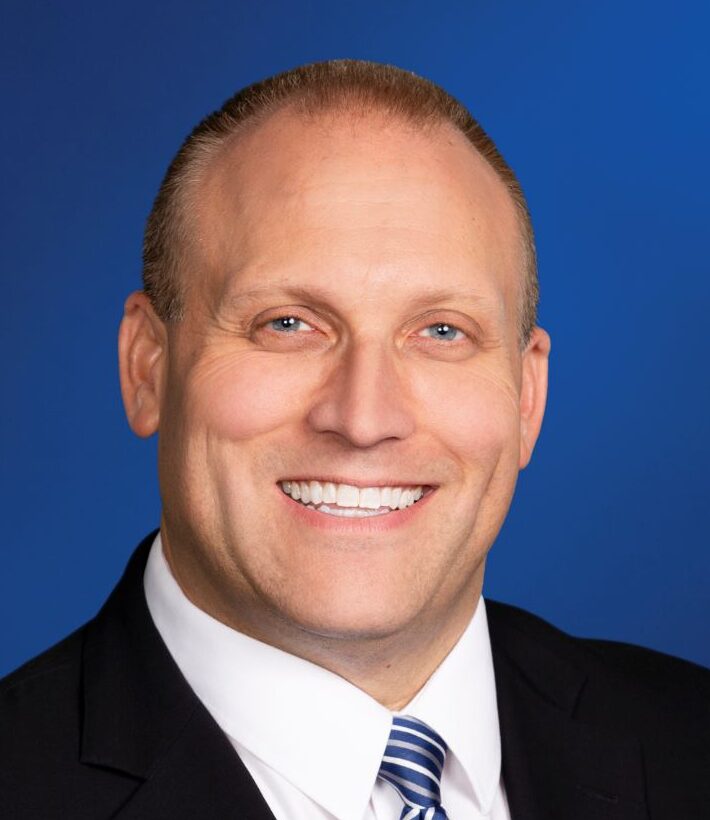
Dave Kubajak
“We are thrilled to have been exclusively chosen to supply iVIZON bill validators and the ICB Intelligent Cash Box system at another new Oklahoma casino,” said Dave Kubajak, SVP – Sales, Marketing & Operations at JCM Global. “Tribal and commercial casino operators around the world recognize that iVIZION and ICB are the most advanced solutions available, offering the highest levels of security and efficiency, on the casino floor and in the count room.”
JCM’s iVIZION is the leading bill validator in its class, unmatched in protection and performance. Its advanced Contact Image Sensor (CIS) technology enhances security by scanning 75 times more data points than any bill validator, capturing the full image of both sides of a banknote or ticket, all while maintaining the fastest and highest acceptance rate.
JCM’s ICB Intelligent Cash Box system speeds the entire drop process while also eliminating human error, increasing accuracy, and increasing compliance. Because it drives efficiencies, ICB is proven to reduce annual operating costs for operators.
It provides increased visibility and efficiency for the drop and count processes, such as monitoring of bill validator metrics, customizable web reports, and maintenance planning to dramatically increase operational efficiency.
Request Network, a major Web3 payment protocol since 2017, announced new features that the iGaming sector has needed for a long time. iGaming was the first to embrace crypto payments at scale, and yet the sector could not rely on decentralized technology at scale.
It relied on multiple crypto processors with limited reach, with friction on all flows, and counterparty risks due to the funds’ custody.
Request Network is launching a set of technologies that breaks this pattern.
Reaching 95% of the global stablecoin supply
iGaming operators need to accept crypto deposits from any player globally, but players’ holdings are fragmented across chains and tokens. Accepting any token meant setting up and managing wallets on every chain, or delegating to payment service providers, leaving the players captive to those providers.
Operators now have the ability to own only one wallet and collect globally with one integration. Thanks to Request Network’s decentralized, permissionless, and cross-chain technologies, players can now pay with whatever they own, while the operators receive what they want on the chain they choose. Neither side needs to know which chain the other side is using.
With Request Network, operators now reach 95% of the global stablecoin supply and active users through a single integration, across seven chains (Ethereum, BNB, Tron, Base, Polygon, Arbitrum and Optimism).
One-click secure deposits for the players
iGaming players just want to deposit and play. But paying in crypto usually meant bridging, swapping and holding gas before executing a deposit, and sometimes even running penny tests to make sure the address was correct. The process is intimidating, creating friction and ultimately causing drop-offs.
Request Network provides the players with a decentralized secure payment page, where they can just choose the chain and token they want to pay with in a single gasless transaction, where bridging and swapping happen behind the scenes.
Additionally, this decentralized page is equipped with security features protecting payers from interacting with malicious smart contracts.
The result is an intuitive and secure one-click deposit experience with one of the highest completion rates in crypto.
Wallet screening on deposits to protect the recipients
iGaming operators accepting crypto are exposed to asset freezing and wallet blacklisting. Most screenings happen after the transaction, only flagging the risk once the funds have reached the operator’s wallets, exposing them to long legal procedures to release the frozen funds.
To mitigate that, Request Network allows the recipient to screen the sending wallet before the funds move. The protocol connects natively with Hypernative, which provides market-standard policies to identify and restrict high-risk funds from reaching the recipient. The player will only be able to deposit funds if their wallet complies with the screening policy in place.
If a recipient needs to defend the provenance of its funds, Request Network allows the recipient to store all the screening results for later use.
The result is that operators can now confidently accept funds from on-chain wallets, reducing the risk of frozen assets and better protecting their operations.
Built for the long run, governed by a foundation
iGaming operators, white label providers and PSPs today have two options to accept and disburse crypto payments at scale, and neither is perfect. The first relied on a globally fragmented crypto processing market, with multiple integrations to maintain, whereas the second one relied on larger providers, with changing risk appetites and regulatory coverage; both options carried important continuity risks.
By being decentralized, permissionless and accessible to anyone, Request Network is becoming the only integration you’ll need to collect or disburse stablecoins globally. The protocol has been developed by a community-owned Swiss foundation since 2017 and funded through its REQ token, providing it with neutrality and resilience.
Tristan Wallaert, CEO at Request Network
The result is a single crypto acceptance technology that can be relied upon across geographies, while offering the most competitive costs on the market.
“Crypto was supposed to replace traditional payment methods, but the reality is that a few components were missing to make it a reality,” said Tristan Wallaert, CEO of the Request Network Foundation. “It was still too complex, with too many risks on both sides for money to move freely as intended. At Request Network, we went back to the drawing board to redefine what crypto payments should look like: something simple, scalable, reliable and safe. We now believe that crypto is ready for a fresh start.”
Gal Sagie, CEO and Co-Founder, Hypernative, added: “iGaming was one of the earliest and most natural fits for crypto payments, and yet the compliance infrastructure needed to make it work at scale has lagged. What Request Network has built here closes a real gap. Pre-transaction wallet screening means operators can accept funds with confidence, not just optimism. That’s the kind of security layer that turns promise into a functioning market.”
Former Macau Secretary for Economy and Finance Tai Kin Ip has been appointed as a member of the Macau International Airport Company’s Board of Directors and Executive Committee, according to an executive order published in the Official Gazette on Wednesday.
Tai resigned on April 16th for ‘personal reasons’, just 16 months after taking office, and was later formally removed from the post by the State Council.
No successor has yet been appointed to the role of Secretary for Economy and Finance, which oversees Macau’s gaming industry through the Gaming Inspection and Coordination Bureau (DICJ).
The appointment was part of a broader reshuffle of the airport operator’s governing bodies.
The Macau International Airport Company also named former Legislative Assembly vice president Chui Sai Cheong as chairman of the Board of Directors, succeeding Ma Iao Hang.
Zhang Yun replaced Simon Chan as chairman of the company’s Executive Committee, although Chan remains a committee member. Pun Weng Kun, the former Sports Bureau president who coordinated Macau’s participation in the 15th National Games, has also joined the Executive Committee.
Macau’s Transport Bureau has launched a public tender for 14 ordinary taxi operation licenses, each valid for eight years and covering up to 700 vehicles in total, according to a notice published in the Official Gazette.
The bureau will accept bids until 5 p.m. on July 8th.
The government said the tender responds to the gradual expiry of fixed-term taxi licenses and continued public demand for taxi services. It is being conducted under Macau’s legal regime for light passenger transport vehicles and the administrative regulation governing public tender procedures for such licenses.
Each successful company may apply to operate up to 50 taxis under its license, bringing the combined fleet covered by the tender to 700 ordinary cabs.
Only companies registered in Macau and engaged solely in taxi passenger operations are eligible to bid. Each company may compete for one license only, and no bidder may hold more than 300 taxi permits.
The tender is the main component of a wider taxi fleet expansion outlined by the government in late 2025. Secretary for Transport and Public Works Raymond Tam said at the time that Macau would add 800 taxis to its existing fleet of more than 1,400, raising the total to over 2,000. Of those, 100 were to be deployed in the short term, while the remaining 700 would be awarded through the tender now under way.
The plan also comes as the government moves to establish a legal framework for ride-hailing services. Authorities have said they will amend the taxi law to provide a legal basis for such services, presenting them as a way to supplement existing transport capacity as Macau faces rising demand from mainland Chinese visitors.
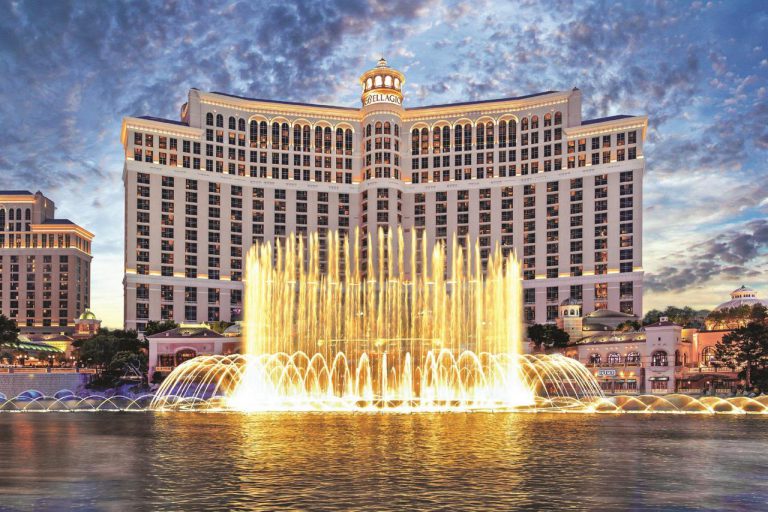
People Inc.’s proposed takeover of MGM Resorts International is expected to have limited immediate operational impact on MGM China, but the deal’s funding structure has emerged as a key uncertainty, according to CreditSights, a credit research firm under Fitch Group.
The main issue is whether the transaction will rely heavily on debt, which could pressure MGM Resorts’ credit metrics and increase downgrade risk. That, in turn, could affect MGM China’s dollar bonds and revolving credit facility, both of which include change-of-control provisions.
MGM Resorts said on June 1st that it had received a takeover bid from People Inc., formerly IAC, which currently owns 26.1 percent of the US casino operator. The offer is priced at $48.30 per share and would increase People Inc.’s ownership of MGM Resorts to just over 50.1 percent.
CreditSights said People Inc. expects to fund the transaction through a combination of cash and additional debt and equity funding commitments. However, MGM Resorts has not disclosed how much debt would be used or provided a possible timetable for the transaction.
CreditSights analysts Nicholas Chen and David Bussey said the lack of detail on debt funding is the more relevant concern. ‘We think the former is more pertinent,’ they wrote, referring to the amount of acquisition debt. They said a largely debt-funded acquisition would likely stretch MGM Resorts’ credit metrics and could create rating downgrade pressure, although the limited transaction details make it difficult to assess the likelihood of a downgrade at this stage.
For MGM China, CreditSights said the direct operational impact should remain limited for now, as any incremental debt would likely be raised at the MGM Resorts level. However, MGM China’s dollar bonds differ from MGM Resorts’ dollar bonds because they include change-of-control protection.
Under the bond terms cited by CreditSights, a change-of-control event would require two conditions: a change in control and a ratings event. The ratings event would occur if Moody’s, S&P or Fitch downgraded MGM China by one notch or withdrew its rating.
CreditSights said People Inc.’s acquisition of more than 50 percent of MGM Resorts’ voting power would likely indirectly make it a beneficial owner of MGM China, given MGM Resorts’ 56 percent stake in the Macau operator. If this were combined with a ratings downgrade or withdrawal, it could trigger a $101 put for MGM China bondholders.
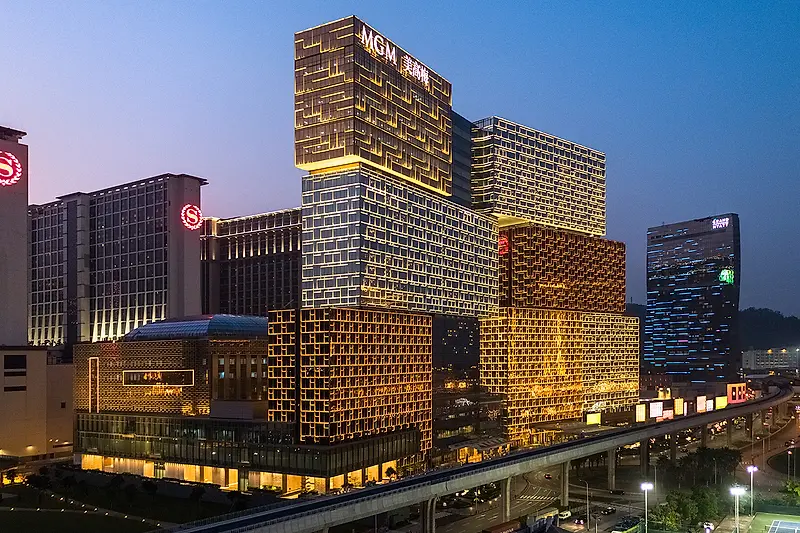
MGM Cotai, MGM China, Macau
MGM China’s revolving credit facility could also be affected. CreditSights said the company had about $663.3 million outstanding under the facility, which has a total size of HK$23.4 billion ($3 billion). If MGM Resorts ceases to directly or indirectly own more than 50 percent of MGM China, the outstanding loan amount would become immediately due and payable, while the entire facility would be canceled.
The report also noted that MGM China recently refinanced its $750 million 5.875 percent May 2026 bond with a new $750 million 6.25 percent May 2033 bond. As of March 31st, 2026, MGM China had about $918 million in unrestricted cash and about $2.7 billion in total debt, including $2 billion in dollar bonds and $663 million under the revolving credit facility.
CreditSights said MGM China’s liquidity would be insufficient to service the full debt stack, meaning People Inc. would need to put in place a refinancing plan, through debt or other means, to address MGM China’s obligations. The firm maintained its ‘Outperform’ recommendation on MGM China.
Good morning. The plot thickens. People Inc.’s proposed MGM takeover has cracked open a bigger question: what happens to MGM China and Osaka if Barry Diller’s group takes control? Analysts say both assets could come under review, with Seaport pointing to MGM China and the Osaka project as potential divestment candidates, while CBRE sees the bid as likely to move forward, possibly at a higher price. Meanwhile, International Entertainment closed its second $102 million tranche of DigiPlus convertible notes, a deal that could eventually hand DigiPlus a 53.89 percent stake. And in South Korea, Paradise Co.’s casino sales jumped 21.2 percent in May to $65.2 million.
Media group People Incorporated, led by Barry Diller, has launched an $18 billion bid to take MGM Resorts International private, offering $48.30 per share for the stock it does not already own and seeking control of the company. People said the offer reflects its view that MGM’s assets and digital growth prospects remain undervalued. MGM said its board would review the bid but cautioned there was no assurance it would lead to an agreement.
Yevhen Krazhan, CSO at GR8 Tech, explores how surging crypto adoption across Asia is revolutionizing iGaming payments, stating: “When I look at what’s changing fastest in Asia, it’s payment behavior,” as wallets, stablecoins, and seamless cross-border transfers become deeply ingrained in player habits. The winning operators will be those that offer fast, reliable, and local deposits and withdrawals. To make sense of it, Yevhen breaks Asia into two crypto realities.
Illegal offshore gambling operators are increasingly using social media platforms to target young people in Hong Kong, with lawmakers and support groups warning that deceptive online advertising campaigns are pushing vulnerable users into severe gambling debt.
The warnings come as the 2026 FIFA World Cup approaches, with illegal betting networks expected to increase promotional activity targeting football fans across Asia. According to sources familiar with illicit gambling operations, offshore syndicates are exploiting major social media platforms, including Facebook and Instagram, through short-lived advertising campaigns designed to bypass moderation systems.
The strategy, known as “flash advertising”, involves creating temporary accounts that promote gambling products disguised as investment advice, lifestyle content, health information, or free entertainment offers. Once detected, the accounts are shut down and replaced with new ones. The operators, many of which are reportedly based in Southeast Asian countries including Cambodia and the Philippines, use sign-up bonuses, free credit offers, and other incentives to attract younger users before drawing them into continued gambling activity.
Local reports highlighted several cases of young Hong Kong residents accumulating significant debts through illegal betting platforms. One family said their son, who is in his early twenties, built up debts through illegal baccarat, football, and horse racing betting, eventually forcing his parents to use their savings to cover repayments. After repeated borrowing from finance companies and harassment from debt collectors, the family said bankruptcy became the only option.
Another case involved a 29-year-old man who accumulated HK$3 million ($385,500) in gambling-related debt through illegal basketball betting. The man reportedly shifted from football wagering to NBA betting because live matches were broadcast during convenient morning hours in Hong Kong. His gambling escalated into losses of hundreds of thousands of dollars per session before he sought professional counseling and applied for bankruptcy protection.
The spread of illegal gambling advertising has also reached university campuses, where students searching for free sports streams are frequently exposed to embedded betting promotions. Students have reported classmates suffering financial and mental stress after becoming involved with illegal platforms, with some forced to take on additional part-time work to repay gambling-related debts.
Social service organizations have also reported a sharp increase in gambling-related problems among younger users. The Sunshine Lutheran Center said requests for assistance from people under the age of 30 had risen by around 10 percent compared with pre-pandemic levels. The organization said online gambling cases among young help-seekers had increased significantly, rising from 6 percent in 2019 to 49 percent.
Support workers said gambling syndicates continue to adapt their marketing strategies, using social media and messaging platforms to distribute promotions, betting rebates, and incentives aimed at retaining players. The rise in online gambling content has prompted calls for stronger regulation of digital platforms and influencers.
Hong Kong lawmaker Nixie Lam Lam has urged authorities to increase scrutiny of influencers promoting illegal gambling through content presented as gaming, investment advice, or entertainment.
Meanwhile, lawmaker Duncan Chiu Tat-kun has pointed to gaps in Hong Kong’s legal framework regarding platform responsibility, suggesting that authorities consider stronger cybersecurity and digital content rules similar to approaches adopted in mainland China and the United Kingdom. Meta has said its Community Standards and Advertising Standards prohibit unauthorized gambling promotions and that violating content is removed when detected.
The company has also responded to previous reports regarding revenue from non-compliant advertising, stating that internal estimates cited publicly were broad preliminary assessments rather than confirmed figures, and that later reviews found many flagged advertisements did not breach its policies.
Meta said it continues to invest in fraud prevention, advertising review systems, and cooperation with external stakeholders to combat illegal gambling and scam-related activity.
Everi has announced the latest rollout of its Vi® mobile gaming solution at Prairie Band Casino & Resort, strengthening its footprint in the U.S. market.
The Everi Vi platform is delivered through Everi BeOn™ mobile services and combines Everi Digital games, CashClub Wallet® technology, the Everi Compliance Anti-Money Laundering (AML) solution, and Trilogy™ loyalty platform in one seamless experience.
Backed by proven omnichannel content, Everi’s Vi extends gaming beyond the casino floor, enabling play across Prairie Band Casino & Resort, from hotel rooms and the RV park to pools and conference spaces. As a result, Vi stands out as the only turnkey Class II on‑property mobile gaming solution on the market.
Hector Fernandez
Commenting on the launch, Hector Fernandez, IGT CEO, shared: “Deploying Everi Vi with Prairie Band Casino & Resort reflects our continued focus on delivering differentiated Class II gaming experiences that entertain unique player audiences with compelling content and technology to enhance the integrated resort experience. By combining mobile gaming, payments, loyalty, and compliance in a single solution, Everi Vi delivers a seamless on-property mobile experience unlike anything else available in the Class II market.”
With built-in mobile enrolment, Vi integrates smoothly into existing casino systems and drives additional engagement via loyalty programmes and, where available, self-service kiosks for funding, rewards, and promotions.
“The launch of Prairie Band Mobile Casino is a testament to our team’s dedication and forward-thinking approach to gaming technology,” added Chris Garrow, Director of Gaming at Prairie Band Casino & Resort. “We put an incredible amount of hard work into implementing Everi Vi to deliver this modern experience. This mobile solution allows us to look ahead and expand entertainment beyond the traditional tribal casino floor to our entire resort, providing an innovative avenue to elevate the guest experience and drive revenue property-wide.”
Players can now download the Prairie Band Mobile Casino app on the Apple App Store and Google Play, giving them access to 30 popular Everi Class II titles, including Cash Machine Jackpots™, Atomic Meltdown™, and innovative non‑reel experiences like Lightning Zap™.