Home Blog Page 47

Key operative linked to Chen Zhi extradited from Cambodia to China

0

Liu Ren, described by Chinese authorities as a central figure in a criminal group led by Chinese businessman Chen Zhi, has been extradited from Cambodia to China, according to information released by Chinese public security authorities.

China’s Ministry of Public Security said on Wednesday that Chinese police recently escorted Liu back from Cambodia as part of an ongoing crackdown on transnational gambling, telecom fraud and online fraud networks targeting Chinese citizens.

According to the ministry, Chen directed Liu and others in 2016 to establish Jinbei Group in Cambodia. Authorities said the group operated multiple online gambling platforms and aggressively lured Chinese citizens into gambling.

The ministry also said that since 2020, Jinbei Group had operated telecom fraud compounds in Cambodia and carried out large-scale telecom and online fraud involving “extremely large amounts” of money.

Liu is also suspected of involvement in serious violent crimes, including illegal detention and intentional injury. He has been placed under criminal compulsory measures, with further investigations underway.

The ministry said Liu’s return follows the repatriation in April of Li Xiong, a former senior figure in a company affiliated with Chen’s syndicate. Li is suspected of operating casinos, fraud, illegal business operations and concealing criminal proceeds.

Chinese authorities said Cambodia has repatriated more than 20,000 suspects involved in telecom fraud cases to China so far, as the two countries expand joint enforcement against fraud compounds and related criminal networks.

Korean casino operators urge regulatory relief to counter MGM Osaka threat

Korean casino operators and tourism academics have called for lighter administrative burdens and an industry-wide rebranding to withstand competition from Japan’s planned integrated resort in Osaka, according to a report by The Korea Times.

The appeals came at a roundtable the newspaper hosted in Seoul recently, where participants warned that the MGM Resorts International-backed integrated resort, scheduled to open in 2030, could pull tourists and capital away from Korea. Forecasts have suggested that the resort could draw as many as 7.6 million South Korean visitors a year once it opens, with their overseas spending reaching around $1.9 billion.

casino

Domestic operators voiced concern that the competition would hurt the entire sector. Kim Eom-kwon, a team leader at the state-run Grand Korea Leisure (GKL), said the company felt “a strong sense of crisis” and hoped for a regulatory environment that fostered growth rather than relying strictly on rules. 

The company operates three foreigner-only casinos under its Seven Luck brand — two in Seoul and one in the port city of Busan — and is majority-owned by the Korea Tourism Organization, a body under the Ministry of Culture, Sports and Tourism.

Lee Dae-shin, head of the casino strategy team at Kangwon Land, the country’s only resort open to local citizens, said public enterprises must complete lengthy preliminary feasibility studies that can delay urgent upgrades. “To effectively compete with the upcoming Japanese resort, we need more streamlined administrative procedures,” he said.

Participants also agreed that Korea must shed the stigma attached to casinos and present them as family-friendly entertainment destinations. Kim Jae-kyoung, vice president of The Korea Times, pointed to Singapore’s Marina Bay Sands as a model. “When people think of Marina Bay Sands, they envision a sophisticated convention and entertainment hub, not just a gambling venue,” he said. “We urgently need a similar strategic rebranding effort in Korea.”

MGM Osaka ranks among the most expensive casino resorts being built anywhere in the world. The development on Yumeshima, a man-made island in Osaka Bay, will cost nearly $10 billion. 

Its backers anticipate roughly 20 million visitors a year once the resort reaches full capacity, while MGM Resorts International expects the casino alone to generate about $6 billion in annual gaming revenue — enough to overtake Macau’s top earner and rank as Asia’s highest-grossing property.

Kang Sung-sook, a professor at Tezukayama University in Japan, told the meeting that the resort was designed to be far more than a gaming venue. “The Osaka integrated resort is not merely a facility to attract tourists,” she said. “It aims to become an innovation hub for international conferences, exhibitions and corporate activities.”

Xi Jinping presses Myanmar to maintain action against illegal gambling networks

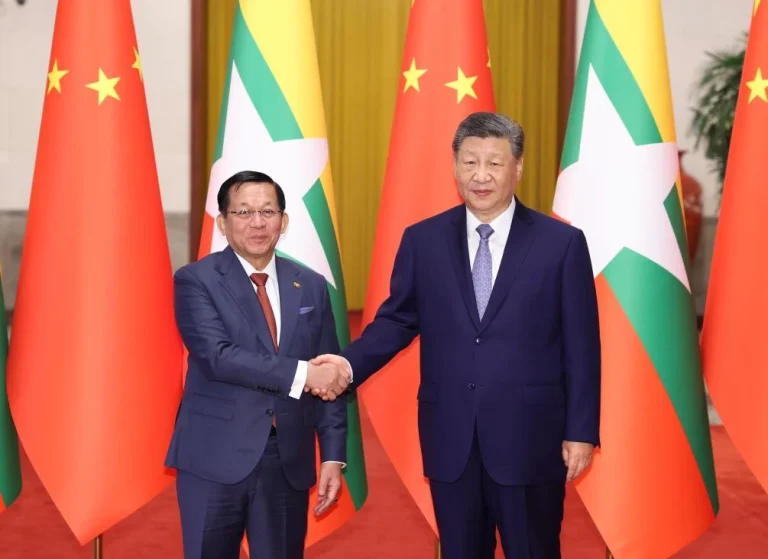
Chinese President Xi Jinping has urged Myanmar to continue its efforts against illegal online gambling and related criminal activities, as Beijing maintains pressure on Southeast Asian nations to dismantle cross-border scam operations targeting Chinese nationals.

The comments came during a meeting between Xi and Myanmar President Min Aung Hlaing in Beijing on Tuesday, where both sides reaffirmed their commitment to tackling online gambling, telecom fraud and security issues along their shared border. According to state-run outlet China Daily, Xi called on Myanmar to “continue to combat criminal activities including online gambling,” while stressing the need for further cooperation between the two countries.

Min Aung Hlaing said Myanmar was “willing to work closely with China to resolutely crack down on online gambling and telecom fraud and safeguard border security and stability,” according to the report. The renewed commitment comes as China continues a wider regional campaign against online scam compounds, many of which have operated from Myanmar’s border regions and combined illegal gambling, investment fraud and forced labor operations.

Earlier this year, Chinese authorities executed 11 people linked to scam centers in Myanmar after they were convicted of crimes including intentional homicide, fraud and operating illegal casinos. At the time, China’s Ministry of Foreign Affairs said Beijing was working with Southeast Asian countries to eliminate what it described as the “scourges” of online gambling and telecom fraud. However, the continued focus on Myanmar highlights the challenges faced by authorities in fully dismantling these networks. The executions came nearly a year after Chinese Foreign Minister Wang Yi stated that scam compounds near the Myanmar border had been “completely eradicated,” with later developments showing that criminal groups had adapted and relocated rather than disappeared entirely.

China’s concern over the operations extends beyond illegal gambling targeting its citizens. Many scam compounds have relied heavily on trafficking victims from China and other countries, with workers lured by promises of legitimate employment before being forced into online fraud operations. The issue has caused diplomatic pressure across the region, with several governments calling for the rescue and repatriation of their nationals trapped in such facilities.

During Tuesday’s meeting, Min Aung Hlaing also sought to reassure Beijing over the safety of Chinese interests in Myanmar, stating that the country “attaches great importance to the safety of Chinese enterprises and personnel in Myanmar and will make every effort to ensure their security,” according to China Daily.

The crackdown on scam networks in Myanmar and Cambodia has also triggered a shift in criminal activity across Asia. Authorities have reported that many operators have moved to other jurisdictions, including Sri Lanka, Thailand and Laos, adopting more mobile structures and increasingly sophisticated methods to avoid detection.

Macau Slot 2025 profit slips 3% to $15.7M

0

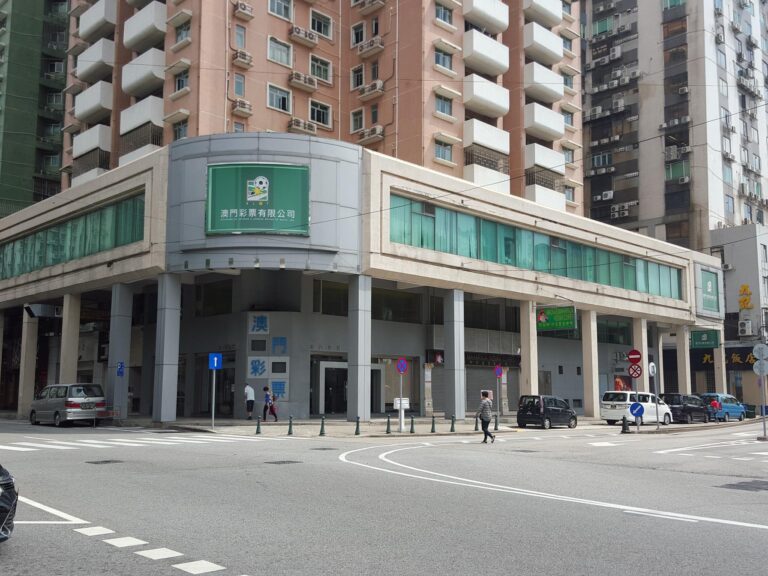
Macau Slot, the operator of Macau’s sports lottery, reported a net profit of MOP126.94 million ($15.7 million) for 2025, down about 3 percent from the previous year, according to the company’s annual business management report published in the Official Gazette on Wednesday.

The result compares with a profit of MOP130.88 million ($16.2 million) in 2024.

The report, signed by Managing Director Ng Chi Seng on March 31st, 2026, attributed the year’s performance to a continuously changing operating environment and economic challenges in neighboring regions, while crediting Macau SAR government policy for keeping local conditions relatively stable. The company said it expanded its range of sports betting products during the year and retained the ISO/IEC 27001:2022 information security certification audited by the British Standards Institution.

The auditor, Chui Sai Cheong, issued a qualified opinion on the 2025 statements, citing its inability to confirm a related party’s year-end accounts payable balance. Apart from that matter, it found the statements complied with International Financial Reporting Standards.

Macau Slot, the city’s sole sports lottery operator, has run football betting since 1998 and basketball betting since 2000. It is a subsidiary of Sociedade de Turismo e Diversões de Macau (STDM), the parent company of gaming concessionaire SJM Holdings.

US gaming coalition urges Senate to bar prediction markets from sports betting

A coalition of US casino operators, tribal groups and labor unions has urged the Senate to use pending cryptocurrency legislation to bar prediction markets, including Kalshi, from offering sports wagers, according to a report by Semafor, citing a June 16th letter coordinated by the American Gaming Association.

The signatories — including the Indian Gaming Association, the AFL-CIO’s Hotel and Gaming Trades Council and UNITE HERE — argued that event contracts have driven the largest expansion of gambling in US history over the past 18 months, without voter approval or state and tribal licensing.

The AGA has estimated that states have lost $1 billion because of the platforms since the start of 2025, a figure prediction-market operators dispute.

The push follows a proposed rule by the Commodity Futures Trading Commission (CFTC), published June 10th, that would permit most sports event contracts while banning those considered vulnerable to manipulation.

For Asia-Pacific regulators, the central question — whether event contracts should be treated as financial products or unlicensed gambling — is already active. Hong Kong earlier this year suspended a planned September launch of legal basketball betting, citing the rapid rise of prediction markets, and warned residents that trading on such platforms could breach gambling laws. Singapore’s Gambling Regulatory Authority blocked access to Polymarket as early as January 2025.

The sector also has an Asia-linked contender. Opinion, a BNB Chain-based platform with Asian roots and backing from Binance founder Changpeng Zhao’s venture arm, drew heavy volumes from South Korean users after its October 2025 debut, though analysts have questioned the scale of its reported activity.

How Manila, Singapore and other jurisdictions classify these products will determine whether the model gains a foothold across the region.

PAGCOR orders gaming ads replaced with problem gambling helpline materials

The Philippine Amusement and Gaming Corporation (PAGCOR) has directed all gaming operators and related stakeholders to replace existing responsible gaming advertisements with materials promoting its newly launched 24/7 National Problem Gambling Helpline (NPGH), according to a memorandum issued on June 9th by the regulator’s Gaming Licensing and Development Department (GLDD).

casino

The directive applies to all licensees, suppliers, gaming system administrators, gaming venue operators, and other concerned entities, which must adopt the NPGH advertising template. PAGCOR Chairman and CEO Alejandro H. Tengco said the order covers billboards, wallscapes, digital displays, and other out-of-home advertising platforms currently carrying responsible gaming messages.

“Responsible gaming goes beyond awareness. It also means ensuring that help is readily available to those who need it most,” Tengco said. He added that promoting the helpline allows the regulator to offer professional support for individuals and families affected by gambling-related harm, describing the initiative as part of PAGCOR’s commitment to a safer and more responsible gaming environment.

All ad replacements must be completed on or before July 15th, 2026 and remain in place until September 15th, 2026. The NPGH advertisements will not require approval from the Ad Standards Council (ASC), though the council will issue an Exemption Certificate.

Concerned parties must also submit a status report using the prescribed template. The accomplishment report is due to the GLDD on or before July 16th, 2026, with non-compliance subject to regulatory sanctions and other penalties that may be imposed by the ASC.

Launched on May 26th, 2026 in partnership with the Seagulls Flock Organization Inc., the NPGH operates as a 24/7 support platform staffed by trained para-counselors and mental health professionals who provide confidential assistance and counseling.

The directive marks the latest step in PAGCOR’s progressive tightening of responsible gaming requirements. In July last year, the regulator ordered the immediate removal of all gambling-related billboards and other out-of-home advertisements, and on July 16th signed a memorandum of understanding with the Ad Standards Council to bring gambling ads under mandatory pre-screening across all media platforms. 

The current order takes that effort a step further, shifting from restricting promotional content to requiring operators to actively promote support services for those affected by gambling-related harm.

Asia Gaming eBrief: Macau casino equipment imports raise security concerns

0
Good morning. Control is part of security. That’s the thread running through Macau lawmaker José Pereira Coutinho’s latest interpellation, which presses the government to confront how heavily the city’s casinos still lean on imported equipment — and to start building the supply chain at home. He warned that supply interruptions, security gaps or misused information could spill into data breaches, reputational damage and wider instability. Meanwhile in Australia, Star Entertainment is forging ahead with its leadership reset, naming Ameet Patel dual CEO of its Brisbane and Gold Coast resorts.

What you need to know

On the radar


AGB Intelligence

Cotai Strip,Macau, Macau GGR

Macau casino equipment import reliance raises concerns

Macau legislator José Pereira Coutinho has raised concerns over the gaming industry’s dependence on imported equipment, saying it could expose the city to supply interruptions, security vulnerabilities and reputational damage. He called for a more self-sufficient and controllable supply chain, asking the government to detail its national security risk-assessment mechanisms and its strategy to encourage local companies to participate in casino-related production.

Industry Updates


Corporate Spotlight

How Crypto Adoption in Asia is Changing iGaming Payments

Yevhen Krazhan, CSO for GR8 Tech

Yevhen Krazhan, CSO at GR8 Tech, explores how surging crypto adoption across Asia is revolutionizing iGaming payments, stating: “When I look at what’s changing fastest in Asia, it’s payment behavior,” as wallets, stablecoins, and seamless cross-border transfers become deeply ingrained in player habits. The winning operators will be those that offer fast, reliable, and local deposits and withdrawals. To make sense of it, Yevhen breaks Asia into two crypto realities.


INTELLIGENCEASEAN | AWARDSCAREERS | EVENTS

Zhuhai border authority expects Dragon Boat Festival traffic up 10%

0

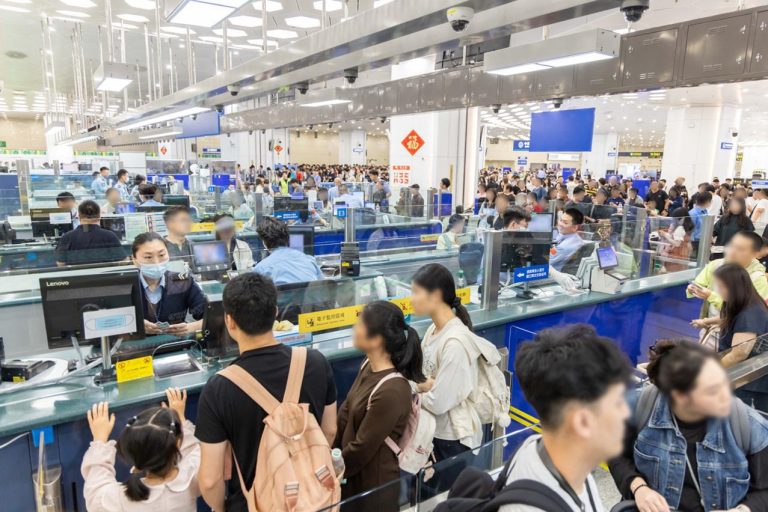
Zhuhai’s border inspection authority expects 2.16 million border crossings through its ports during the upcoming Dragon Boat Festival holiday, a year-on-year increase of more than 10 percent, as reported by Macau local media outlet Macao Daily.

Zhuhai borders Macau directly, and its checkpoints — including the Gongbei, Qingmao and Hengqin ports and the Hong Kong-Zhuhai-Macau Bridge — handle most land and bridge crossings between the mainland and the city.

This year, the festival falls on June 19th, with the weekend extending the break to three days through June 21st in both mainland China and Macau. The authority said daily cross-border traffic to Hong Kong and Macau through these ports could exceed 720,000 crossings.

It attributed the projected rise to large-scale dragon boat races and cultural tourism events across Guangdong, combined with cross-border vehicle schemes and smart clearance measures. Peaks of Hong Kong and Macau residents and mainland tourists are expected during the holiday’s first two days.

Estimated daily holiday traffic is 370,000 crossings at Gongbei, 120,000 at the Hong Kong-Zhuhai-Macau Bridge, 110,000 at Qingmao and 100,000 at Hengqin.

On June 20th, Macau will host several concerts and sporting events, with the Hengqin port expected to see an inbound peak after 10 p.m.

Following the end of the national college entrance examination in mainland China, graduation and family trips have increased. Daily traffic at Zhuhai’s Hong Kong and Macau ports averaged 648,000 crossings on June 13th and 14th, up more than 11 percent year-on-year.

TxODDS releases TxLINE ahead of the FIFA World Cup 2026

TxODDS has announced the launch of TxLINE, a high-throughput data platform built on Solana, transitioning its institutional-grade odds and scores feeds into a modular, consumption-based distribution layer ahead of the World Cup 2026.

The platform eliminates traditional enterprise procurement friction, offering immediate access to tier-one data for high-velocity operators, platforms, and developers worldwide.

Modernizing Data Distribution for Agile Operators

TxODDS releases TxLINE ahead of the FIFA World Cup 2026

Enterprise sports data procurement has long meant rigid annual commitments, volume minimums, and weeks-long onboarding. TxLINE changes that model. Using USDT payments paired with TxL token-gated authentication, operators can select their latency and volume tier and go live within minutes.

Subscriptions operate on a flexible four-week minimum cycle, denominated and settled in USDT, ensuring that data costs scale smoothly alongside operational demand. Service tiers are structured around two core dimensions:

  • Latency Tiers: Real-Time feeds for live risk management and algorithmic market-making, or 60-second Stable Price snapshots for continuous market monitoring.
  • Volume Tiers: Calibrated by the number of league tiers required, keeping cost tightly aligned with consumption.

“TxLINE introduces a structural evolution to data distribution. By deploying an on-chain delivery layer, we give market participants direct access and complete cost transparency. In a mature market, transparent pricing should be a baseline expectation. TxLINE establishes that standard,” said Einar Knobel, CEO at TxODDS.

Cryptographic Verification as Infrastructure

Every data packet routed through TxLINE is permanently timestamped and anchored on-chain. Each record carries an immutable cryptographic proof of integrity, creating a tamper-evident audit trail built for backtesting, compliance, and independent verification.

This cryptographic architecture is built directly into the core delivery layer, not bolted on as an afterthought.

World Cup 2026: Institutional Access for All 104 Matches

To anchor the global launch, TxODDS is providing comprehensive, zero-cost sports data coverage via TxLINE for all pre-tournament International Friendlies and all 104 FIFA World Cup 2026 matches.

Operators can access both Real-Time feeds and 60-Second Delay options entirely for free, spanning both the StablePrice snapshots and Tx Scores modules. This data coverage covers essential betting markets—including full- and half-time match odds, over/unders, and Asian handicaps—across two distinct product dimensions:

  • StablePrice Snapshots: Continuous, consolidated market monitoring via stable pricing blocks to protect trading margins.
  • Tx Scores: Live, ultra-reliable match state and scoring updates engineered directly for sportsbooks.

“Our objective is frictionless access to enterprise data. The World Cup is the definitive proving ground. Teams can scale operations in minutes using the same data infrastructure that powers the world’s tier-one sportsbooks,” added Einar Knobel.

Aidan Rolfe, Blockchain Systems Engineer, shared: “We built TxLINE specifically to eliminate the weeks of legal and technical back-and-forth that used to define enterprise data onboarding. Now an operator can activate elite-tier odds streams in minutes.”

TxLINE is live. World Cup access and developer documentation are available at TxLINE-docs.txodds.com/documentation/quickstart.

RedNote removes 65,000 gambling posts amid World Cup enforcement push

0

Chinese social media platform Xiaohongshu, also known internationally as RedNote, has suspended more than 40,000 accounts as part of an intensified crackdown on illegal sports betting promotions linked to the 2026 FIFA World Cup.

The platform announced on Tuesday that it had stepped up enforcement efforts since issuing a notice on World Cup-related illegal sports betting activity in early June. The campaign is aimed at limiting gambling-related promotions, traffic redirection schemes, and other illegal betting content during the tournament period.

According to Xiaohongshu, the World Cup traditionally represents a peak period for organized online gambling activity, with illegal operators attempting to use major sporting events to attract new users through social platforms. Since the beginning of June, the company said it has carried out more than 12 enforcement actions against organized traffic-diversion networks. These actions resulted in the suspension of over 40,000 associated accounts, the removal of around 65,000 gambling-related posts, and the deletion of more than 450,000 comments promoting or directing users toward illegal betting services.

The platform added that it has also proactively shared information with law enforcement authorities, submitting 12 intelligence leads to public security agencies. Xiaohongshu said it assisted investigations in several regions, including Guangxi, Beijing, and Zhejiang, contributing to enforcement actions against five traffic-diversion groups. Chinese authorities have maintained strict controls on gambling activity, with online betting, unauthorized prediction markets, and related promotional services considered illegal. Social media platforms have increasingly become a focus for enforcement due to their role in directing users toward offshore gambling operators.

Xiaohongshu said accounts found promoting illegal sports betting could face a range of penalties under its platform rules, including content removal, restrictions on private messaging and group chat functions, and permanent account bans. The company urged users to watch World Cup matches responsibly, participate in discussions in a “civilized” manner, and remain cautious of illegal betting promotions. It also encouraged users to report suspicious gambling-related content through its internal reporting channels.

The move comes as authorities across Asia have increased scrutiny of illegal betting operations surrounding the World Cup. Regulators and enforcement agencies in several jurisdictions have warned that major international sporting events continue to be used by offshore operators to target local audiences through social media advertising, influencer promotions, and encrypted messaging channels.