
Home Blog Page 48

OpenBet and Veikkaus advance responsible gambling efforts with Neccton AI integration

0

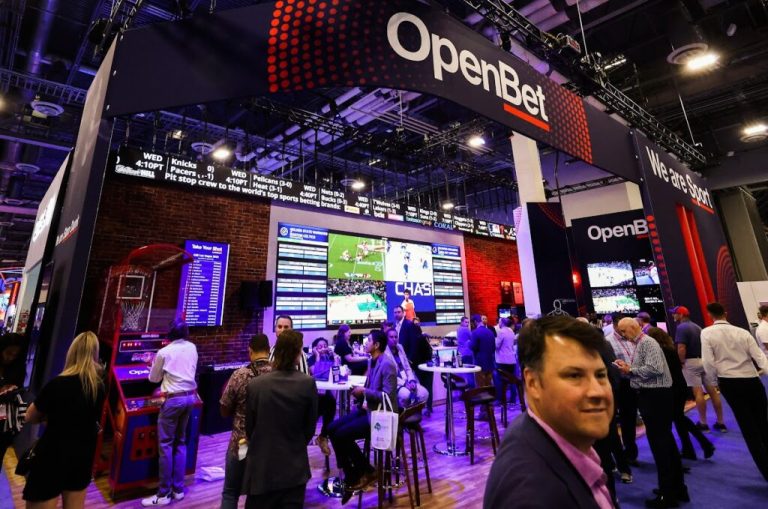
Veikkaus, Finland’s national operator, will deploy OpenBet’s latest Neccton AI-driven responsible gambling solution to enhance player protection across digital and retail channels.

The move comes as Finland’s newly approved Gambling Act places greater responsibility on operators to identify and address signs of risky gambling behaviour at an early stage, requiring active intervention where risk indicators emerge.

OpenBet’s latest Neccton AI-driven responsible gambling solution

The Neccton platform enables real-time identification of potentially risky gambling behaviour, automated alerts, and tailored player interventions. Designed to enhance rather than replace human decision-making, it summarises complex behavioural data, risk markers and historical context in plain language, thereby enabling faster, clearer and more defensible player interventions.

Neccton delivers AI-assisted explanations that clearly articulate why a player may be at risk, improving efficiency and supporting earlier action while ensuring compliance teams retain full oversight.

Susanna Saikkonen, Vice President for Sustainability at Veikkaus, said: “Veikkaus’ individual gambling safety net model is based on identifying risky gambling as early as possible and offering players both support and concrete limitations. The Neccton platform provides us with an ISO-certified, extensively security tested and scientifically validated tool that strengthens our ability to identify risk and support our customers in gambling responsibly.”

“In today’s regulatory environment, operators must demonstrate how they actively prevent gambling-related harm,” said Dr Michael Auer, Managing Director of Neccton at OpenBet. “The latest version of the Neccton platform enables real-time, data-driven intervention and measurable duty of care. We are proud to expand our partnership with Veikkaus to strengthen its responsible gambling framework further.”

The Neccton deployment builds on an established long-term partnership between Veikkaus and OpenBet, which has been powering Veikkaus’ next-generation sportsbook platform and providing Managed Trading Services across digital and retail channels since May 2025.

The addition of Neccton further demonstrates Veikkaus’ commitment to working with world-leading technology providers to enhance its player protection standards as it prepares for Finland’s market liberalisation expected in 2027.


Tequity names Alex Scott as CPO to drive global product expansion

Tequity has announced the hiring of Alex Scott as Chief Product Officer, as the supplier aims to turbo-charge its global content delivery.

Scott, who has over 20 years of experience in the iGaming industry, is a former Managing Director of Poker at Microgaming, who subsequently led WPT Global as President to help it become the second-largest online poker room in the world.

In taking responsibility for Tequity’s product vision, Scott will oversee the entire lifecycle from conception to market launch, as the company aims to build on its strong recent progress.

Tequity recently launched its newest vertical for custom-built games, Tequity Exclusives, which sits alongside its other three divisions: RGS, Originals and Publishing.

The supplier has also successfully completed BMM Testlabs certification for its RNG and first batch of Tequity Originals titles, as it sets its sight on making an impact in regulated markets.

Alex Scott, Chief Product Officer at Tequity, said: “Tequity is pushing the boundaries of what is possible in iGaming by harnessing the power of technology to streamline and elevate game development. It is an incredibly exciting time to join the team. I look forward to leading the product vision across our expanding divisions to deliver next-generation casino content to operators worldwide.”

Krzysztof Opałka, CEO at Tequity, added: “We are thrilled to welcome Alex to the team as we continue to move the business forward at pace. His two decades of industry leadership and hands-on experience with AI-driven casino games make him a strong fit to lead our product strategy. With our rapid recent progress across all of our divisions, his expertise will be invaluable in maximising the impact of our portfolio.”

Pragmatic Play introduces Lucky Card multipliers to Amazing Baccarat

Pragmatic Play has enhanced its live casino portfolio with the release of Amazing Baccarat, a multiplier-driven take on the classic Speed Baccarat experience.

Retaining the familiar rules and fast-paced gameplay of traditional baccarat, each round in Amazing Baccarat sees five Lucky Cards randomly selected, which are assigned multipliers of up to 200x. If the winning hand contains one or more Lucky Cards, their multipliers are added together and applied to the standard payout, awarding wins of up to 6,600:1 on main bets. 

The title also debuts a brand-new side bet, Amazing 8s, joining the classic Player Pair and Banker Pair betting options. Players win the Amazing 8s side bet when both the Player and Banker hands tie with a score of eight, awarding a 55:1 payout before any Lucky Card multipliers are applied, unlocking a huge 66,000:1 win potential. 

Blending familiar baccarat gameplay with an immersive deep-sea digital backdrop and multiplier-filled wins, Amazing Baccarat by Pragmatic Play delivers a premium live casino experience tailored for both seasoned baccarat players and newcomers alike. 

Sharon McHugh, Director of Public Relations at Pragmatic Play, said: “Amazing Baccarat takes the fast-paced gameplay players love from Speed Baccarat and enhances it with thrilling multipliers and exciting new side bet opportunities. The addition of Lucky Cards and the Amazing 8s feature creates extra anticipation in every round, delivering a dynamic experience that stands out in live casino lobbies.”  

SBC Summit targets key regulatory changes with dedicated Global Regulations track

0

As gambling markets worldwide reach critical turning points, from new market entries to shifting regulations and political pressures—SBC Summit will introduce a dedicated Global Regulations track to guide attendees through the evolving landscape.

Taking place on Tuesday, 29 September 2026, the track will bring together operators, regulators, policymakers, legal experts, and compliance leaders to examine the latest regulatory developments across established and emerging markets.

The track forms part of the Regulation & Compliance Stage, one of six dedicated conference stages at SBC Summit, alongside technologyglobal & emerging marketsPayment Expert Summit, product innovation showcase, and the Super Stage located at Lisbon’s MEO Arena.

“Every market operates under its own unique set of rules, challenges and opportunities. That’s what makes this industry so fascinating and dynamic, but it also makes navigating the global regulatory landscape increasingly complex,” said Rasmus Sojmark, Founder and CEO of SBC.

“With delegates joining us from every major gaming jurisdiction, SBC Summit provides a unique platform for meaningful regulatory dialogue. Attendees won’t just hear from experts who understand these markets; they’ll engage with the policymakers, regulators and industry leaders actively shaping their future.”

Europe

The session ‘Can Poland’s Economic Surge Unlock Gambling Reform?’ will examine whether economic growth and mounting industry pressure can lead to meaningful regulatory change in Poland.

Experts Justyna Grusza-Głębicka (Director, Institute for Gambling Regulation Foundation in Poland), Adam Lamentowicz (Chief Commercial Officer, Superbet), Ed Birkin (Managing Director, H2 Gambling Capital), Maarten Haijer (Secretary General, EGBA), and Marek Plota (Attorney-at-Law, RM Legal Firm) will debate whether concerns over illegal gambling and market restrictions could finally push policymakers toward reform in 2026.

The conversation will then shift from markets seeking reform to those actively preparing for it with the session Finland’s Waiting: The Start of a New European Market. 

Panellists Jaakko Soininen (Managing Director, Finnplay), Antii Koivula (Chief Compliance Officer, Hippos ATG), Sverker Skogberg (Senior Vice President, Public Affairs, PAF), Ivana Pejiic (Head of Compliance, Betsson Europe), and Jari Vahanen (Co-Founder & Partner, Finnish Gambling Consultants) will discuss the early challenges emerging from Finland’s transition to a new licensing regime and how regulators are responding.

Sessions across the day will also explore Romania’s ongoing debate around gambling reform, Estonia’s efforts to maintain long-term competitiveness within a mature regulated market, and how the 2026 World Cup has heightened regulatory scrutiny of betting markets and sports integrity.

Canada

The focus will then turn to Canada’s fragmented regulatory landscape with the session Canada: Province by Province Progress, which explores how regulatory reviews in Alberta and Ontario could shape the next phase of Canadian gaming. Experts Jared Beber (CEO, Bet99), Ohad Narkis (CEO, PlayOJO), Paul Burns (CEO, Canadian Gaming Association), and Martin Lycka (Vice President Institutional Affairs, Oddin) will debate what these reviews are trying to achieve and how they could influence the future direction of the country’s gaming sector.

Attendees looking to dive deeper into the regulatory issues discussed on stage can also take part in the Regulatory Meet-ups, a new networking initiative for 2026 organised in partnership with the International Association of Gaming Regulators (IAGR) and the International Masters of Gaming Law (IMGL).

Covering regions including AsiaAfricaLATAMEurasia, and the Balkans, alongside market-specific sessions focused on the UKUAEFinlandCuraçaoItalyGreece, and Portugal, these meet-ups allow delegates to connect directly with the regulators, legal experts, and industry leaders shaping gaming markets worldwide.

Scheduled for 29 September to 1 October 2026, SBC Summit will host 40,000 industry professionals at the Feira Internacional de Lisboa and MEO Arena for a three-day programme of networking, exhibitions, and learning.

Access to conference content is available with ConferenceBusiness, and VIP Passes, with Business or VIP Passes required for sessions and Regulatory Meet-ups.

Star Entertainment names Ameet Patel dual CEO of Brisbane, Gold Coast resorts

0

Australia’s Star Entertainment Group has appointed former Bally’s Corporation executive Ameet Patel as dual chief executive officer of its two Queensland integrated resorts, The Star Brisbane and The Star Gold Coast, subject to regulatory approvals.

In a post on LinkedIn, the company said Patel is a senior executive with experience spanning gaming, hospitality, and operations leadership across multiple regions, and that he specializes in strategic planning, process redesign, financial analysis, talent development, and operational efficiency.

Star said Patel’s career includes senior roles at Bally’s Corporation, Penn National and Sun International, with a focus on growth, stakeholder relations and team building in highly regulated markets. The company added that he has held extensive senior casino management positions and has overseen all aspects of group gaming operations across several US markets, including strategic initiatives, operational standards and day-to-day performance.

“We look forward to working with Ameet as we continue to strengthen our leadership capability across The Star,” Group CEO and Managing Director Bruce Mathieson Jr said in the post.

The appointment extends a leadership overhaul tied to the change of control at Star. In late November 2025, Bally’s Corporation and the Mathieson family’s Investment Holdings Pty Ltd converted a AU$300 million ($196 million) rescue package into equity, giving them a combined 61 percent stake and installing Mathieson Jr as chairman.

Star has spent the past year working to stabilize its finances and restore its suspended casino licences in New South Wales and Queensland amid regulatory scrutiny and going-concern warnings. The Queensland appointment follows the recent naming of John Koster as CEO of The Star Sydney.

DigiPlus rises to No. 215 on Fortune Southeast Asia 500 list

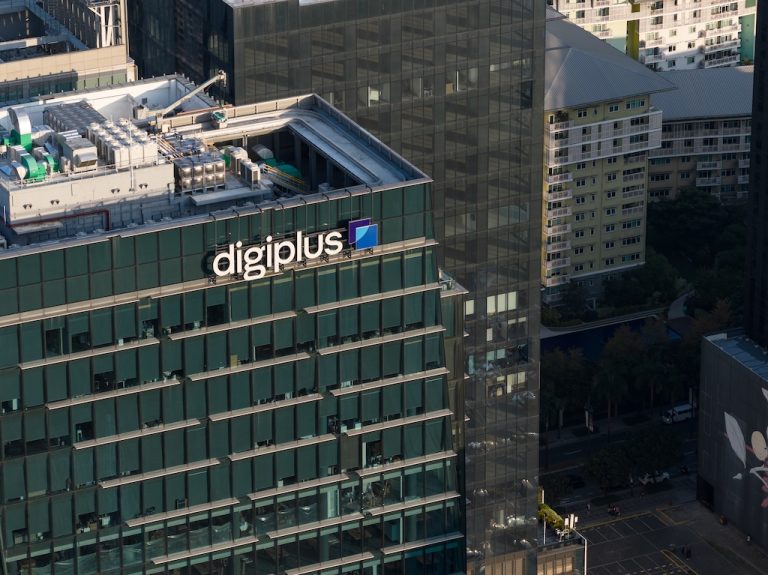
DigiPlus Interactive Corp. has moved up eight places in the Fortune Southeast Asia 500, ranking No. 215 in this year’s list, the Philippine digital gaming operator said in a June 16th statement.

The company, which operates BingoPlus, ArenaPlus and GameZone, was ranked No. 223 last year. This marks its third consecutive year on the Fortune Southeast Asia 500.

The Fortune Southeast Asia 500 ranks the largest companies in Southeast Asia by annual revenue, covering major markets including Indonesia, Thailand, Malaysia, Singapore, Vietnam, the Philippines and Cambodia.

DigiPlus said its higher ranking followed a year of revenue growth and continued expansion in the Philippine online gaming market. The company reported 2025 revenue of $1.46 billion, or PHP84.2 billion, up 12 percent year-on-year.

The company attributed the performance to execution across its business segments and product development, including the rollout of more than 500 new e-games and self-developed livestreaming games across its platforms.

DigiPlus also said it had strengthened responsible gaming and compliance measures during the year. These included the launch of a surety bond program for players, expanded in-app player protection tools, and additional customer service channels both online and offline.

“Making the list for the third straight year and moving up the ranks reflects the scale we have built and the consistency of our performance,” DigiPlus Chairman Eusebio H. Tanco said.

The company is also pursuing expansion beyond its core online gaming operations. DigiPlus recently completed a HK$1.6 billion ($205 million) subscription to convertible bonds issued by International Entertainment Corp., which it said could support a potential offline platform to complement its digital network.

Cambodian interior minister hires US law firms to counter scam allegations

0

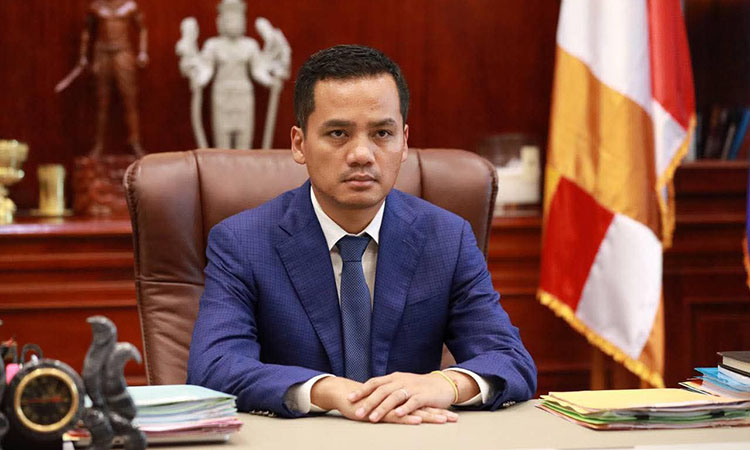
Cambodia’s Deputy Prime Minister and Interior Minister Sar Sokha has retained two US law firms as he seeks to challenge his inclusion in proposed US legislation targeting transnational online scam networks, according to US Department of Justice filings under the Foreign Agents Registration Act.

The agreements with Seiden Law LLP and Nelson Mullins Riley & Scarborough LLP were filed between late May and early June. The contracts are worth a combined $285,000, excluding possible expenses.

Seiden Law said its work would focus on Sokha’s potential inclusion in H.R. 5490, the Dismantle Foreign Scam Syndicates Act. The firm said it would communicate with the US Treasury’s Office of Foreign Assets Control and relevant US congressional officials over the matter.

The proposed legislation would require the US president to determine whether listed foreign persons meet sanctions criteria and impose applicable sanctions on those who do. The bill lists Sar Sokha, Hun To and several other Cambodian-linked individuals and entities. Hun To has been described in media reports as a cousin of Cambodian Prime Minister Hun Manet.

Allegations linking Sokha to fraud networks have been tied in media reports to his former role as co-director of Jinbei Investment alongside Chen Zhi, founder of Prince Group, citing Cambodian Ministry of Commerce records. Jin Bei Group was among entities later targeted by US sanctions linked to alleged transnational scam operations.

Sokha has denied any links to such operations. Interior Ministry spokesperson Touch Sokhak said the minister had engaged lawyers to protect himself, the ministry and Cambodia’s reputation from what he described as slanderous accusations.

Macau casinos too reliant on imported gaming equipment, lawmaker says

A Macau legislator has questioned whether the city’s casino sector has sufficient safeguards against supply-chain risks. He warned that its heavy reliance on imported gaming equipment leaves a key pillar of the local economy exposed and called for greater local participation in casino-related supply chains.

macau
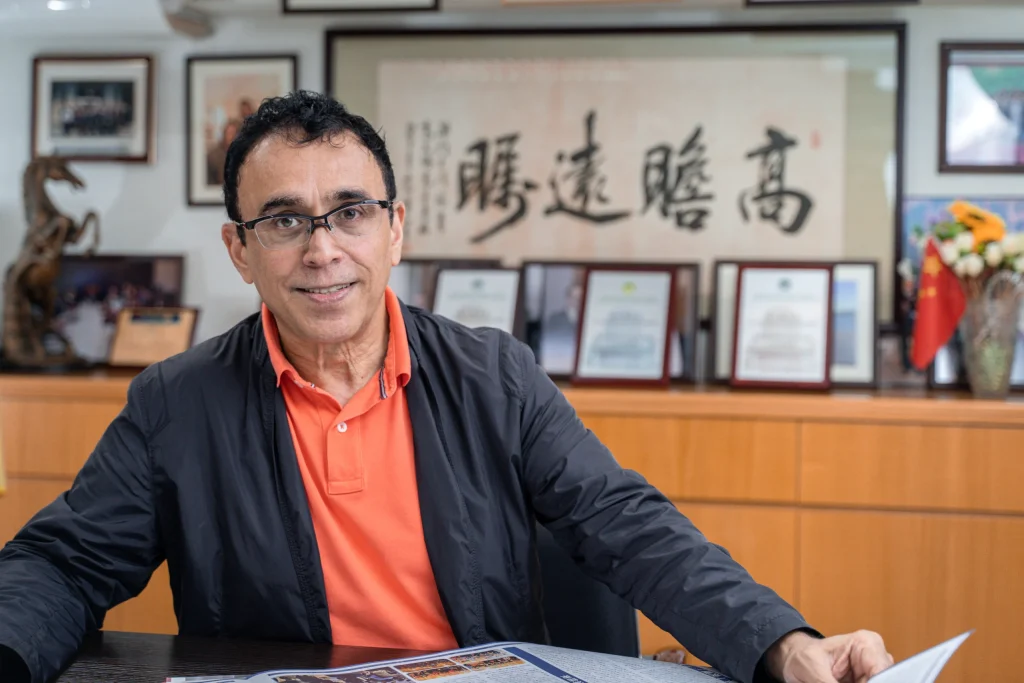
José Pereira Coutinho

In a written interpellation dated June 8th, Legislative Assembly member José Pereira Coutinho asked the government to explain how it identifies and responds to national security risks in the gaming industry, and to set out how it plans to promote the localization of the sector’s supply chain.

Coutinho noted that the main equipment used by Macau’s large casinos — including playing cards, chips, gaming machines, shuffling machines, software systems and data centers — depends almost entirely on foreign procurement, which he described as a source of high vulnerability in the supply chain. Research, design, production and maintenance of essential gaming equipment within Macau remain insufficient, he added.

He warned that such dependence carries broad risks. ‘If suppliers suffer supply interruptions, if security vulnerabilities arise, or if information is deliberately exploited, this could lead to data breaches, damage to the gaming industry’s reputation and Macau’s image, and even a loss of control over social safety,’ the interpellation stated.

macau

Reliance on imported equipment

To illustrate the scale of consumption, Coutinho cited data indicating that Macau uses nearly 500,000 decks of playing cards each day. He noted that production of such items has long depended on imports, and that Macau’s first playing card factory built for gaming use only recently began large-scale production.

The lawmaker framed the issue within national policy. He said the 15th Five-Year Plan calls for establishing and improving a supply-chain security mechanism and strengthening self-control over industrial chains. He also pointed to regulations on supply-chain security promulgated by the State Council in March 2026, which identify the security and controllability of supply chains as important measures for safeguarding economic and social stability and national security.

Gaming has been the main pillar of Macau’s economy for decades and accounts for a significant share of public revenue, Coutinho said. He noted that the special gaming tax funds much of the government’s recurrent spending and public investment, including large infrastructure projects such as the Light Rapid Transit system, bridges, hospitals, schools and urban renewal works, making the industry’s stability directly relevant to the city’s economic and social development.

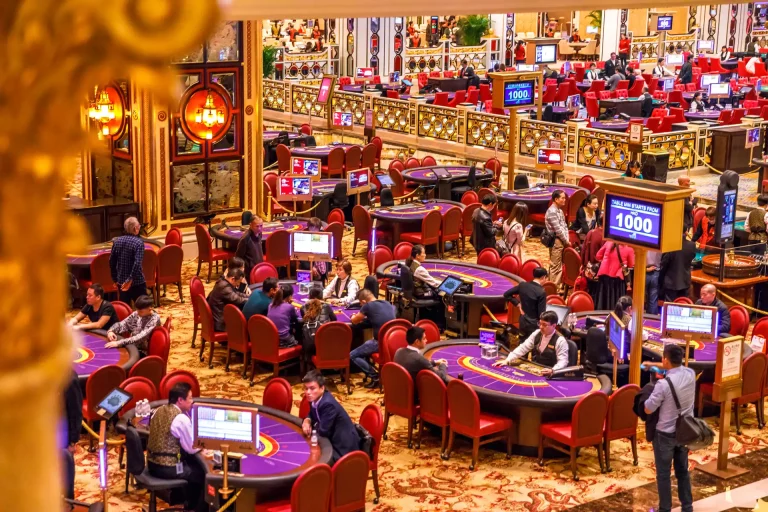
Cotai Strip, Macau 2025

Calls for local production

Coutinho argued that promoting a self-sufficient and controllable supply chain could strengthen the sector’s security, help safeguard national security, and incubate local gaming-related companies. He said this could support economic diversification and create jobs for young university graduates.

Coutinho put three questions to the government: what mechanisms and guidelines currently exist to assess national security risks in the sector, particularly on supply-chain security under the Gaming Law; how authorities plan to localize the supply chain and bring existing local firms in; and what studies have been carried out on supply-chain security and industrial self-control.

The interpellation follows the recent opening of Bee Macau, described as the city’s first casino-grade playing card factory. The joint venture between Belgium’s Cartamundi Group and Hong Kong-listed Asia Pioneer Entertainment Holdings entered full-scale production in May following an investment of about HK$500 million ($64 million), and aims to supply Macau’s six gaming operators while reducing import reliance. 

A small number of other local firms also manufacture gaming equipment in the city, though such production remains limited in scale and is geared largely toward export.

Asia Gaming eBrief: World Cup weighs on Macau GGR run-rate in first half of June

0
Good morning. Distraction has a price tag. Macau’s GGR run-rate dropped about 20 percent from May in the first 14 days of June, as the World Cup likely diverted some player budgets away from gaming floors, according to Citigroup. GGR reached about $1.12 billion over the period, while the daily pace slowed to $72.6 million. Meanwhile, gaming watchdog chief Ng Wai Han has taken over Macau’s economy and finance portfolio, a role that also oversees the gaming sector. She pledged to strengthen economic resilience, push diversification, and align policy work with China’s broader national development planning.

What you need to know

On the radar


AGB Intelligence

Cotai Strip, Macau, Gaming Operators, Casino Operators

Macau GGR weakens in June as World Cup draws player spend

Macau’s gaming revenue run-rate fell about 20 percent month-on-month in the first 14 days of June, as the FIFA World Cup likely diverted betting budgets away from casinos, Citigroup said in a June 15th note. GGR reached roughly $1.12 billion, or about $72.6 million daily. VIP volume dropped 15 to 18 percent. The brokerage held its June forecast at $2.35 billion, implying a 10 percent annual decline.

Industry Updates


Corporate Spotlight

How Crypto Adoption in Asia is Changing iGaming Payments

Yevhen Krazhan, CSO for GR8 Tech

Yevhen Krazhan, CSO at GR8 Tech, explores how surging crypto adoption across Asia is revolutionizing iGaming payments, stating: “When I look at what’s changing fastest in Asia, it’s payment behavior,” as wallets, stablecoins, and seamless cross-border transfers become deeply ingrained in player habits. The winning operators will be those that offer fast, reliable, and local deposits and withdrawals. To make sense of it, Yevhen breaks Asia into two crypto realities.


INTELLIGENCEASEAN | AWARDSCAREERS | EVENTS

Japan’s Bitbank warns users over Polymarket transactions amid gambling concerns

0

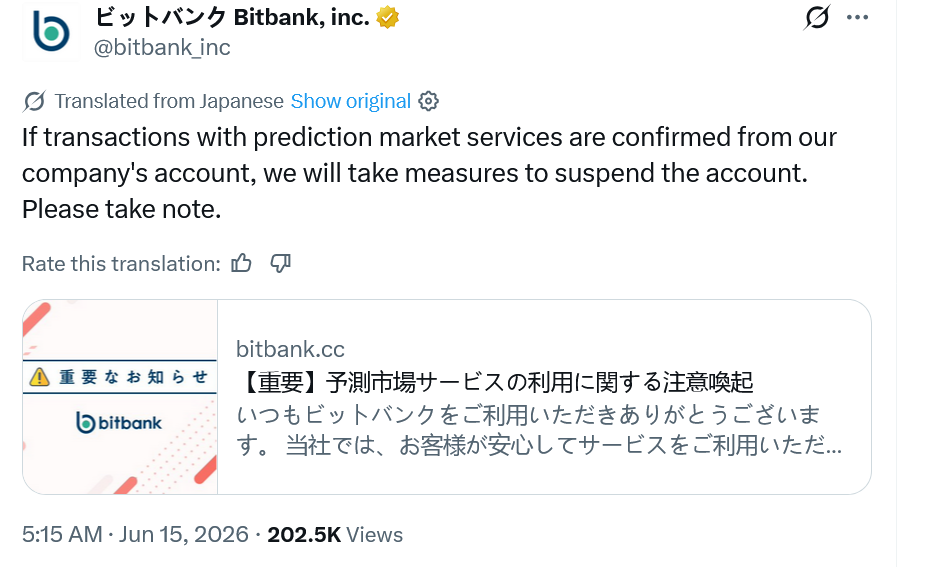
Japanese cryptocurrency exchange Bitbank has warned customers that transactions linked to prediction market platforms such as Polymarket could lead to account restrictions, citing concerns that such services may conflict with Japan’s gambling regulations.

In a notice issued on Monday, the exchange said it may suspend or restrict accounts found to be conducting deposits or withdrawals connected to prediction market services, where users place financial stakes on the outcome of future events. The warning adds to growing regulatory uncertainty surrounding prediction markets in Japan and comes as Polymarket has previously indicated interest in entering the country despite potential legal challenges.

Bitbank stated that customers subject to account suspension measures could lose access to a broad range of services, including account login functions, cryptocurrency deposits and withdrawals, and trading activities. “We will not be liable for any damages incurred by our customers as a result of the account suspension measures,” the company noted in its announcement.

The exchange urged users to exercise caution when interacting with external platforms and warned customers against becoming involved in activities that could expose them to criminal liability or legal disputes. Bitbank did not indicate that its decision followed any specific instruction from Japanese regulators or a government enforcement action. However, the company said prediction market services that allow users to wager on outcomes such as elections, sporting events, and other future developments could potentially fall under gambling regulations if participants use them for financial gain.

macau

The move comes as prediction markets continue to face increased scrutiny worldwide, with regulators in several jurisdictions examining whether platforms such as Polymarket and Kalshi should be treated as gambling operators. Polymarket, which allows users to trade event-based contracts based on future outcomes, has attracted significant attention due to markets covering political elections, sports, cryptocurrency developments, and global events. However, the platform currently lists Japan among 35 restricted jurisdictions under its access policy, meaning users from the country are not permitted to access its services.

Despite this restriction, Polymarket indicated in May that it was exploring possible expansion opportunities in Japan, raising questions about how the company could structure its offering while complying with local gambling laws. Japan maintains strict regulations on gambling activities, with most forms of wagering prohibited unless specifically authorized under limited exceptions such as government-approved betting activities. While Japanese authorities have not yet issued specific regulatory guidance addressing blockchain-based prediction markets, Bitbank’s warning suggests that domestic cryptocurrency companies are adopting a cautious position toward services that could potentially be classified as gambling.

The development follows similar regulatory questions in other markets, as the distinction between financial prediction products, event-based trading, and gambling continues to attract attention from regulators globally.