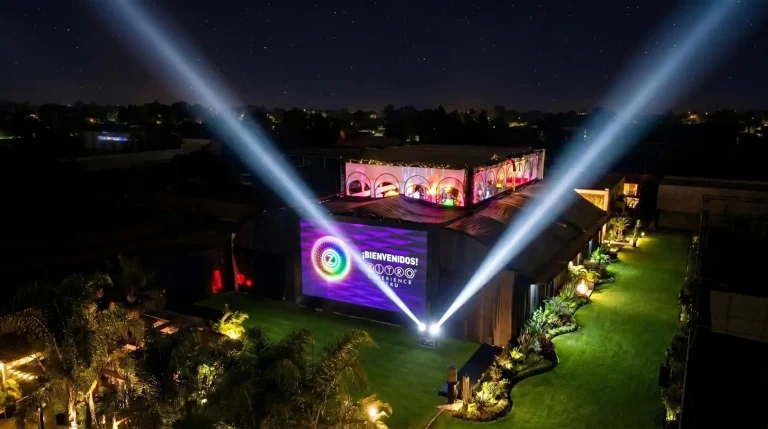


IDX Games, an innovator in advanced casino display technology, has announced that it has entered into an agreement to supply its premium X-Trend and display systems to INSPIRE Entertainment Resort in support of the property’s new casino extension.
Following the successful deployment of the X-Trend system across the resort’s existing 110 casino tables, INSPIRE has renewed its partnership with IDX. The new casino extension will be equipped with IDX’s advanced X-Trend software and high-quality displays, increasing the installation footprint by a further 30%.
Will Donghyung Lee, AVP of Casino Operations at INSPIRE, expressed his satisfaction with the continued partnership, noting that IDX has consistently provided a superior trendboard product and excellent service for the casino floor. For this expansion, INSPIRE has chosen to install the new IDX Halo table displays to add further enhancements to the original setup.
“Being selected for the new table extension at INSPIRE Casino is a testament to their satisfaction with our products and software,” said Peter Johns, Chief Commercial Officer at IDX Games Ltd. “As we expand our offerings in digital displays and signage, we are seeing increased demand for our high-quality displays, which perfectly complement the X-Trend solution. We not only cover all game trendboards, but we now also offer a range of bonus and jackpot games for casino operations.”
This marks another major step for IDX and its X-Trend gaming systems solution, following last month’s announcement that Westside Resort will deploy the X-Trend display system across 250 gaming tables when it opens later this year in Manila’s Entertainment City.
In February, the company announced the appointment of Steven Wolstenholme as its new Chief Casino Officer (CCO), a move INSPIRE CEO Gyubum Ko described as a way to “further accelerate its growth as a world-class integrated resort delivering the ultimate ‘Playcation’ experience.”
The Australian Transaction Reports and Analysis Center (AUSTRAC) has commenced an enforcement investigation into wagering operator Tabcorp Holdings over concerns relating to the company’s compliance with anti-money laundering and counter-terrorism financing obligations, the company disclosed on May 7th.
According to an ASX announcement issued by Tabcorp, Australia’s financial crimes regulator informed the company it had “a number of serious concerns” regarding Tabcorp’s ability to effectively identify, mitigate and manage money laundering and terrorism financing risks. The investigation will initially focus on whether the company maintained a compliant AML/CTF program, complied with that program and appropriately monitored customers.
Tabcorp said AUSTRAC had advised that the investigation remains at an early stage and that all possible outcomes remain open, including the possibility that no further enforcement action may be taken.
In commentary issued following the announcement, Fitch Ratings said the investigation was not expected to have an immediate impact on Tabcorp’s BBB- credit rating with a stable outlook. However, Fitch noted that any enforcement action could result in civil penalties, remediation costs, legal expenses or other measures that may affect the company’s financial profile and potentially raise governance concerns.
Fitch also said the development adds to broader regulatory scrutiny of Australia’s gaming and wagering sector. The agency referenced AUSTRAC’s civil penalty proceedings against Entain plc, operator of Ladbrokes and Neds in Australia, as well as ongoing cases involving Sportsbet and Star Entertainment entities.
Tabcorp Chairman Brett Chenoweth said the company took its AML and counter-terrorism financing obligations “very seriously” and that management remained committed to collaborating with AUSTRAC. Chief Executive Officer Gillon McLachlan added that strengthening the company’s risk capabilities had been an ongoing part of Tabcorp’s transformation efforts.
Orix Corporation announced on May 1st, 2026 that Nobuki Watanabe has been appointed as Representative Director and Chairman of MGM Osaka Corporation, the joint venture developing Japan’s first integrated resort (IR).
The appointment took effect on the same date.
Watanabe will retain his role as Managing Executive Officer of Orix’s Infrastructure Business Unit, where he is responsible for the Osaka IR Business. He has been overseeing Orix’s involvement in the project since April 2025, when he was assigned to lead the company’s Osaka IR Project Office, before being promoted to Managing Executive Officer in January 2026.
A 25-year veteran of Orix, Watanabe joined the group in August 2001 after starting his career at Daiwa Securities. He has previously served as President of Orix Capital Corporation and held senior roles in the company’s Group Strategy Business Unit and CEO’s Office.
MGM Osaka Corporation is a joint venture between MGM Resorts International and Orix, each holding approximately 40 percent equity stakes, alongside 22 minority domestic shareholders. The integrated resort is being developed on Yumeshima Island in Osaka Bay at an estimated cost of JPY1.27 trillion ($8.8 billion), with completion targeted for autumn 2030.
Construction officially began on April 24th, 2025. According to MGM Resorts’ most recent update, more than 40 percent of the foundation piling has been completed, the first concrete floor has been finished, and initial steel structures are now in place. The property will feature a 23,293-square-meter casino with around 470 gaming tables and 6,400 electronic gaming machines, three hotels with approximately 2,500 rooms, and a 3,500-seat theater.
Wynn Resorts’ Macau operations posted double-digit revenue and EBITDA growth in the first quarter of 2026, but profitability was held back by higher player reinvestment as the city’s premium-mass segment grew increasingly competitive, according to analysts at Seaport Research Partners and CBRE in investment memos.
Seaport Research Partners senior analyst Vitaly Umansky noted that player reinvestment as a percentage of mass volume increased at both Wynn Macau and Wynn Palace during the quarter. ‘All operators to have already reported experienced increase in player reinvestment in Mass,’ Umansky wrote, adding that managements across the sector ‘continue to speak about potential stabilization.’ The level of reinvestment at Wynn Macau came in higher than Seaport had modeled, although operating expense growth was lighter than expected.
Wynn’s gross gaming revenue in Macau rose 20 percent year-on-year, outpacing the broader market’s 14 percent expansion, with market share climbing roughly 70 basis points quarter-on-quarter to 13.8 percent. Net revenue increased 14.2 percent and property EBITDA grew 10.9 percent, although unfavorable VIP hold cost the company approximately $17 million.
According to Umansky, Wynn’s biggest challenge going forward will be defending its position at the top end of the market: ‘The key for Wynn will be to remain an operator of choice for the luxury end of the market in light of increased competition,’ he wrote, as rival operators continue to upgrade product quality and service offerings.
Wynn Enclave to drive Macau capex surge
On the investment front, Seaport projects Macau capital expenditure, excluding maintenance, will jump to between $400 million and $450 million in 2026, and to between $700 million and $750 million in 2027.
The increase reflects the recently announced Wynn Enclave, a 432 all-suite luxury hotel tower at Wynn Palace, estimated to cost between $900 million and $950 million and scheduled to open in 2029. The project will lift Wynn Palace’s room capacity by 25 percent and suite capacity by 50 percent.
CBRE described the move as Wynn ‘doubling down on Macau,’ reinforcing its premium strategy by capturing unmet demand at a property currently running at near-full occupancy.
Main hotel lobby at dusk at Wynn Al Marjan Island
Modest delay to Wynn Al Marjan opening
On Wynn Al Marjan Island in the United Arab Emirates, CBRE reported that construction has continued to progress despite regional conflict, with most issues so far related to logistical and shipping challenges that are expected to be manageable. Wynn is forecasting only a modest delay to the opening, which it intends to quantify at a later date.
Wynn Al Marjan Island construction site
CBRE has pushed its opening assumption from the first quarter of 2027 to the third quarter of 2027, reducing modeled management fees from the project in fiscal 2027 to $47 million from $72 million.
SJM Holdings is the Macau gaming operator most exposed to Sands China’s more aggressive player reinvestment program, brokerage CLSA said in a research note published on Thursday.
Analyst Jeffrey Kiang said SJM’s gross gaming revenue market share slipped to 9.6 percent in the first quarter of 2026, slightly below CLSA’s forecast of 9.8 percent, and pointed to continued pressure on the operator’s top line.
SJM also recorded an 8 percent year-on-year decline in gaming revenue during the May Golden Week, which the brokerage attributed to the discontinuation of satellite casinos, even though the total number of gaming tables remained unchanged.
CLSA said player reinvestment costs appeared to be rising structurally, even as SJM maintained a disciplined approach to operating expenses. ‘Commissions and incentives’ as a percentage of gross gaming revenue jumped to 12.6 percent in the first quarter of 2026, up from 8 percent in the same period a year earlier and 9.3 percent in the fourth quarter of 2025.
SJM’s first-quarter adjusted EBITDA fell 4 percent year-on-year to HK$917 million ($117.1 million), 1 percent above consensus but 2 percent below CLSA’s forecast. The adjusted EBITDA margin reached 15.5 percent, the highest level since the first quarter of 2017, following the full closure of satellite casinos. The company posted an attributable loss of HK$62 million ($7.9 million) in the quarter, compared with a profit of HK$31 million a year earlier. The interest coverage ratio stood at roughly two times as of the first quarter of 2026.
Despite the cost discipline, CLSA flagged that profit headwinds remain. SJM has guided for capital expenditure of HK$2 billion ($255.4 million) in 2026 and HK$1 billion ($127.7 million) in 2027, including HK$1 billion earmarked for the conversion of its Hengqin project into a hotel. The aggregate capex of HK$3 billion ($383.1 million) over the two-year period is above CLSA’s forecast.
The company expects its net debt to EBITDA ratio to fall below seven times by the end of 2027, while CLSA forecasts a ratio of 6.1 times. The brokerage warned that elevated capex could pose downside risk to projected dividends in 2027.
Resorts World New York City’s (RWNYC) newly launched table games generated lower-than-expected gross gaming revenue (GGR) in their first six days of operation, although slot machine revenue surged during the same period, according to a Sunday research note from Maybank.
Maybank analyst Samuel Yin Shao Yang said the casino’s 242 new gaming tables produced $4.9 million in GGR between April 28th and May 3rd, equivalent to around $3,400 per table per day, below the bank’s estimate of $7,500 per table per day.
The analyst said part of the underperformance was linked to a ‘low win rate’ of 14 percent. Maybank estimated that, normalized to a 20 percent win rate, the new tables would have generated around $6.9 million in GGR, or roughly $4,759 per table per day.
Resorts World New York City, operated by Genting Malaysia Bhd, became the first casino to introduce table games in New York City when operations began on April 28th.
Despite the softer-than-expected table games performance, slot machine GGR at the property rose sharply to $23.5 million during the week ended May 3rd, compared with Maybank’s estimate of approximately $19.5 million for the comparable week a year earlier.
Yin said the ‘fanfare’ surrounding the table games launch may have directed more gamblers toward existing slot machines rather than the new tables.
The research note also indicated that Resorts World Catskills appeared ‘more resilient than we expected,’ with total GGR declining 11.1 percent year-on-year to $3.3 million.
Maybank maintained its BUY call on Genting Malaysia, stating that it remains ‘early days yet’ for the New York City operation.
The investment bank noted that Resorts World New York City plans to progressively expand its facilities through 2030, including additional gaming tables, slot machines, hotel rooms, convention space and an arena.
Hong Kong is moving to tighten oversight of claw machine arcades after a rapid expansion of the sector raised concerns around gambling-like behavior, youth participation and unlicensed prize redemption schemes.
The Home and Youth Affairs Bureau on the 5th of May submitted proposals to the Legislative Council that would bring claw machines and other prize-based amusement devices more firmly under the Amusements with Prizes License (AWPL) framework. The proposed measures include device-by-device licensing, mandatory display of licenses at venue entrances, addiction warning signage and a review of licensing fees that have remained unchanged since 2000.
The move follows years of regulatory uncertainty after a 2022 High Court ruling determined that standard claw machines did not fall under the definition of “entertainment” within the Places of Public Entertainment Ordinance. Because operators previously required a Places of Public Entertainment License in order to obtain an AWPL, the ruling effectively removed licensing requirements for many claw machine venues.
The market subsequently expanded rapidly. According to Midland IC&I data cited in local media, the number of claw machine shops across Hong Kong’s four major shopping districts (Central, Tsim Sha Tsui, Mong Kok and Causeway Bay) rose from nine in the first quarter of 2021 to 58 by the third quarter of 2025. Low staffing requirements, remote management systems and short-term leasing flexibility helped drive growth, particularly as landlords sought tenants to fill vacant retail spaces following the pandemic downturn.
While claw machines have traditionally been viewed as low-stakes entertainment, authorities and gambling experts have raised concerns over the increasing value of prizes and the emergence of secondary resale markets. Players have reportedly spent substantial sums pursuing collectible anime merchandise, limited-edition cards and rare character goods that can later be resold at a profit. Local media quoted one regular player as saying he spent around HK$1,000 ($128) per week attempting to win items that could be resold for HK$300 ($38) to HK$400 ($51) each, while certain rare collectibles could command significantly higher prices.
Hong Kong authorities are also scrutinizing “pinball machine” style venues and claw machine operators accused of offering cash-equivalent rewards through gift redemption systems or private buy-back arrangements. Under Hong Kong’s Gambling Ordinance, prize games that effectively allow players to win money or property can fall within the definition of illegal gambling activity.
In November 2024, Hong Kong’s Organized Crime and Triad Bureau carried out what local reports described as its first operation targeting a suspected unlawful gambling establishment using claw machines for cash winnings in Mong Kok. Seventeen people were arrested, including operators, staff and players. Legal commentators have also noted that prize credits or points may still constitute gambling winnings under Hong Kong law even where no direct cash payout is offered.
The government has expressed particular concern regarding younger players. There is currently no minimum age requirement for entry into claw machine venues, while the Consumer Council warned earlier this year that existing gambling legislation does not explicitly prohibit minors from participating in simulated gambling-style games. Under the proposed framework, Hong Kong would cap play fees at HK$5 ($0.64) per attempt and prize values at HK$300 ($38). Comparable restrictions already exist in several Asian jurisdictions. Singapore caps prize values at SGD100 ($74), while South Korea limits prizes to KRW5,000 ($3.60). Japan also restricts certain prize categories entirely.
Taiwan, often viewed as one of the region’s most mature claw machine markets, tightened controls again in October 2024 after years of rapid sector growth. Taiwan’s number of claw machine arcades reportedly expanded from 920 in 2016 to more than 10,000 by 2019 before regulators introduced stricter operational requirements.
Elsewhere in the region, Brunei moved in the opposite direction entirely. In 2024, authorities banned claw machines nationwide over concerns that the machines contained gambling elements and could negatively influence younger players.
Macao currently maintains a more permissive approach. Billy Song, president of the Macau Responsible Gaming Association, told local media that claw machines in Macao are treated primarily as skill-based electronic amusement devices, provided prizes cannot be redeemed for cash.
Hong Kong lawmakers are now debating whether the proposed licensing regime will adequately address the sector’s growth without creating excessive compliance burdens for operators. The Office of the Licensing Authority had already received 53 AWPL applications from pinball machine shop operators by late March.
Some industry observers have also raised concerns regarding existing player credits and prize vouchers if operators are forced to alter or close businesses under the new rules. The Legislative Council is expected to continue discussions on the proposed framework later this year.
The Australian Football League (AFL) integrity unit is investigating a Gold Coast Suns team manager over alleged links to a gambling firm that was previously sanctioned by Victoria’s gambling regulator for unlawful inducement practices involving community football clubs.
According to multiple media reports, Gold Coast Suns staff member Mark Opie, a longtime Richmond team manager and Richmond life member, was connected to bookmaker partnership Okebet, which was fined AU$100,000 ($75,500) by the Victorian Gambling and Casino Control Commission (VGCCC) in 2024.
The regulator found that Okebet had entered into arrangements with local football clubs in 2023 that encouraged players to open betting accounts, conduct deemed to breach Victoria’s gambling laws relating to prohibited inducements. Okebet challenged the penalty before the Victorian Civil and Administrative Tribunal (VCAT), however the decision was upheld earlier this year. The matter remains formally unresolved, with payment of the penalty currently paused pending final determination.
VGCCC CEO Suzy Neilan previously said the case highlighted the need to protect local sporting communities from harmful gambling practices. “Local footy clubs are often the heart of their communities, places where people come together to support one another. They should not be used as vehicles to promote gambling, particularly where those promotions include inducements that are prohibited by law,” she said.
Media outlet Crikey reported on Friday that Opie, who joined the Gold Coast Suns in 2024, remained associated with Okebet. AFL media reports indicate the league’s integrity unit has now opened an investigation into the matter. The Gold Coast Suns declined to confirm Opie’s employment status directly, but said all staff comply with AFL industry rules and governance requirements.
“All of our people adhere by the rules and regulations of employment with the football club and abide by the training, education and requirements of working within the AFL industry,” a club spokesperson said. The AFL, Opie and Okebet have reportedly been contacted for comment.
Opie has regularly been seen alongside Suns coach Damien Hardwick during the current AFL season, having previously worked with Hardwick throughout Richmond’s premiership-winning era between 2017 and 2020.
According to VGCCC records, an individual identified as Mark Bradley Opie, alongside three others, received approval to operate Okebet in 2021. While the other partners are no longer involved, Opie reportedly remains registered as a bookmaker in Victoria.
Indonesian authorities have detained more than 300 foreign nationals in Jakarta as part of a major crackdown on illegal online gambling operations, underscoring the country’s intensifying efforts against illicit gambling and related financial crimes.
Police said the arrests followed a raid on a building in the Indonesian capital on May 7th, where authorities allegedly uncovered an active online gambling operation targeting players outside Indonesia.
A total of 321 foreign nationals were detained during the operation, according to police official Wira Satya Triputra. Those arrested included 228 Vietnamese nationals, 57 Chinese nationals, 11 Laotians, five Thai nationals, and three each from Cambodia and Malaysia. Authorities also seized mobile phones, passports, laptops and computer equipment during the raid.
Police stated that 275 of those detained are facing charges linked to gambling and money laundering offenses, while investigations into the remaining individuals are ongoing. “We caught the perpetrators red-handed, meaning they were conducting an online gambling operation,” Wira said during a press conference.
Preliminary investigations suggest the operation had only been active for around two months and was targeting customers outside Indonesia, although authorities did not specify which jurisdictions were involved. Indonesia maintains strict anti-gambling laws, with penalties extending not only to operators and bettors, but also to individuals promoting gambling-related content online. Despite the prohibition, authorities continue to battle widespread illegal online gambling activity across the country.
Official data cited by authorities indicated that turnover linked to online gambling exceeded IDR280 trillion ($16.1 billion) in 2025, with more than 12 million Indonesians estimated to have participated in illegal gambling activities.
The Jakarta arrests come amid broader regional enforcement efforts targeting cross-border cybercrime and illicit online operations. Indonesian authorities have previously warned that criminal groups displaced by crackdowns elsewhere in Asia have increasingly shifted operations into Indonesia and neighboring Southeast Asian jurisdictions.
Separately this week, immigration authorities in Batam, located in Indonesia’s Riau Islands province, detained 210 foreign nationals suspected of involvement in an investment scam operation. Earlier this year, Indonesian police also raided two villas in Bali and arrested 39 Indian nationals allegedly connected to an illegal online gambling operation.
Three individuals have been convicted in what authorities described as Hong Kong’s largest football match-fixing case in recent years, following a scheme involving bribery and manipulated match outcomes across the city’s top football leagues.
West Kowloon Court on Friday convicted former Hong Kong Under-23 player Brian Fok on five charges, including three counts of offering an advantage to an agent under Hong Kong’s Prevention of Bribery Ordinance. Fok, a 32-year-old Nigerian-born defender, was also found guilty of two counts of conspiracy to cheat at gambling alongside fellow footballer Luciano Silva da Silva, 38, and betting agent Waheed Mohammad, 29.
The case centered on allegations that players were bribed to manipulate football matches between 2021 and 2023 across Hong Kong’s top two football divisions. All three defendants were remanded in custody following the verdict. Sentencing has been scheduled for May 29 pending background reports ordered by the court.
A fourth defendant, footballer To Chun-kiu, 31, was acquitted of one count of conspiracy to cheat at gambling. The convictions come amid increasing scrutiny across Asia over sports integrity and illegal betting-related activities, particularly involving football competitions vulnerable to manipulation due to lower player salaries and limited oversight compared to major international leagues.