Research from the Australian National University linking poker machine density to family and domestic violence rates in New South Wales has become a recurring reference point for advocacy groups pushing for tougher gambling reform, as separate federal and state-level regulatory processes move forward in parallel.
The ANU study, commissioned by the NSW Responsible Gambling Fund and published in March 2026, analyzed longitudinal data from 2017 to 2023 across NSW local government areas, tracking changes in gaming machine numbers against police-recorded domestic violence rates over time rather than comparing different areas at a single point. The researchers found a statistically significant, though small, association between rising machine numbers and rising family and domestic violence incidents, with the effect strongest in metropolitan Sydney and the state’s north and north-west. A second stage of the research involved interviews with 33 service providers across gambling support, domestic violence, mental health and child and family services. The report’s authors noted limitations, including that police-reported data likely understates true incident rates and that the analysis did not control for some relevant variables, such as proximity to alcohol outlets.
The findings have been cited repeatedly by Australian harm-reduction advocates over the following months. Wesley Mission used the study to call for a mandatory overnight shutdown of poker machines in NSW between midnight and 10am. The same research underpinned a private member’s bill introduced by independent MP Dr Monique Ryan in March, with crossbench support including Senator David Pocock, seeking to formally classify gambling harm as a public health issue under the Australian Centre for Disease Control. St Vincent de Paul Society has also referenced the study in recent commentary linking gambling losses to homelessness presentations.
The advocacy push runs alongside, but separately from, the federal government’s online gambling advertising reforms. The Commonwealth’s reform package stems from a 2023 parliamentary inquiry led by the late Peta Murphy, which made 31 recommendations including a full phased ban on gambling advertising. The government’s formal response, released on 12 May 2026, adopted a more limited package — restrictions on wagering ads during live sport and on broadcast radio during school pick-up hours, a cap on television ad frequency, and an opt-out model for online platforms — while referring several of the Murphy Review’s recommendations to state and territory governments. Exposure draft legislation is currently in a targeted consultation process with broadcasters, sports codes and harm-reduction groups, ahead of an intended 1 January 2027 commencement. St Vincent de Paul’s national president described the package as a partial regime that leaves children exposed to continued advertising.
The distinction between the two tracks is relevant to how the research has been used in public commentary. The federal package addresses online wagering advertising under the Interactive Gambling Act, a Commonwealth responsibility. Poker machines remain a state regulatory matter, and the ANU research speaks specifically to gaming machine density rather than online wagering. Advocacy commentary in the Australian press has at times blended the two issues into a single gambling harm narrative, using the NSW findings to argue both that the federal advertising reforms do not go far enough and that NSW should introduce machine-specific restrictions the federal package does not contemplate.
Alternative dispute resolution (ADR) has long sat quietly in the background of iGaming compliance. A clause in the terms and conditions, a line item in a licensing application, rarely discussed outside of regulatory filings. That is changing.
A wave of regulatory reform across several licensing jurisdictions, paired with a series of complaint-handling failures that have made headlines over the past two years, has pushed ADR into the foreground as a genuine measure of how seriously an operator takes player protection.
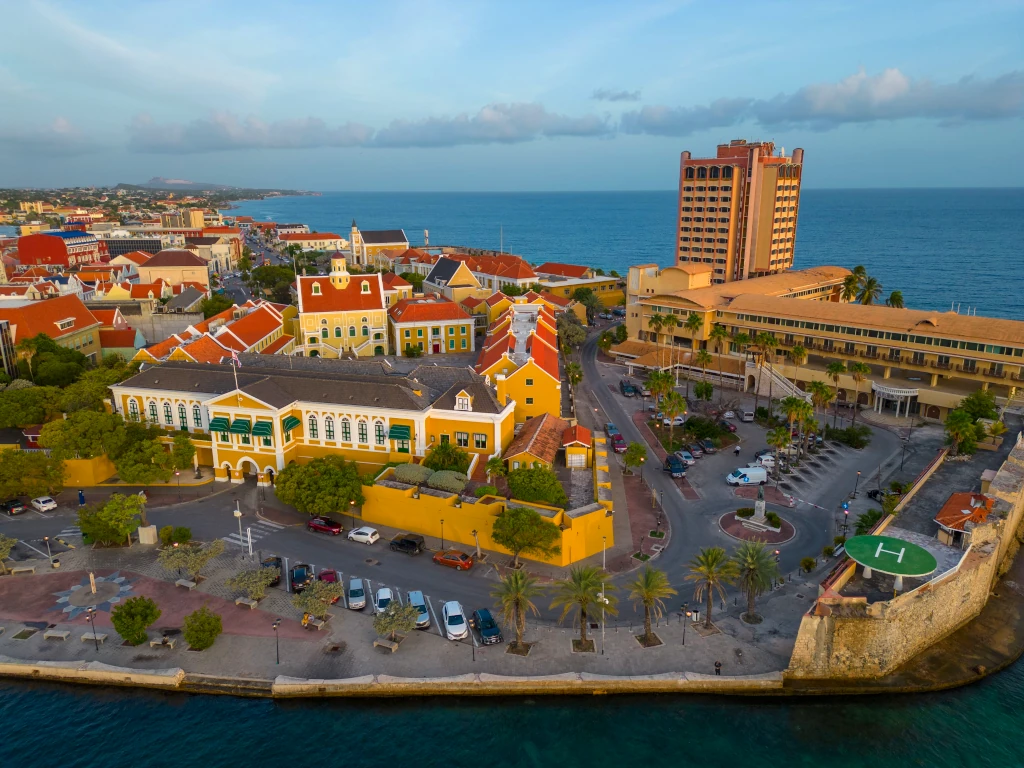
The shift is most visible in Curacao, where the introduction of the National Ordinance on Games of Chance (LOK) has turned what was once a voluntary good-practice recommendation into a binding licensing requirement. But the underlying trend extends well beyond any single jurisdiction, and it raises a broader question for the industry: what does good dispute resolution actually look like, and why does it matter so much now?
Alternative dispute resolution refers to any structured, independent process for resolving a complaint between a player and an operator outside the court system. It typically takes one of three forms: mediation, where a neutral third party facilitates negotiation; conciliation, where that third party takes a more active role in proposing a resolution; and adjudication or arbitration, where a binding decision is issued.
What separates a credible ADR provider from a nominal one is independence. The entity handling the dispute cannot be financially or structurally tied to the operator in a way that compromises its neutrality, and it must follow procedurally sound steps: gathering evidence, hearing both sides, and issuing a reasoned decision.
It is worth distinguishing ADR from a regulatory complaint. Gaming regulators, whether in Europe, Asia, or elsewhere, are primarily concerned with licensing compliance and conduct in aggregate. They are not typically in the business of securing individual payouts for players. That is the role ADR plays, and in many cases it is a faster and more direct route to resolution than a regulatory complaint, particularly where the core issue is a disputed payment.
The most significant recent development in this space is the move, in several jurisdictions, from ADR-as-recommendation to ADR-as-requirement. Under Curacao’s LOK framework, licensed operators must now have a formal agreement with at least one ADR provider certified by the Curacao Gaming Authority (CGA). Complaints that are not resolved internally within set timeframes – weeks for standard disputes, days for matters touching on responsible gambling – must be escalated to that provider at no cost to the player, with a decision typically due within ninety days and all costs borne by the operator. Operators must also disclose their ADR partner in their terms and report complaint and referral data to the regulator on a regular basis.
This did not emerge from nowhere. Over the past two years, the Curacao market has seen a small number of cases – widely discussed in player forums and industry press – where operators facing large-scale payment disputes had no independent complaint mechanism that players could turn to. In at least one widely reported instance, a player protection foundation pursued formal insolvency proceedings against an operator’s parent entity over unpaid winnings running into the millions of dollars, after informal attempts at resolution went nowhere. Cases like this, where the absence of any independent dispute mechanism left players with no realistic recourse short of litigation, were a significant part of the impetus behind Curacao’s reform process.
Curacao is not unique in moving in this direction. Malta has long required licensed operators to offer ADR through providers approved by its consumer affairs authority, and the UK’s framework similarly makes ADR provision a condition of licensing, even as the precise legislative basis has evolved. Among offshore jurisdictions, both Anjouan and Nevis have moved in the same direction. Anjouan’s licensing authority has formalised its ADR framework, making a designated ADR provider a binding licence condition for every operator on its books – with the regulator reserving the right to assign a provider to operators who fail to select one themselves.
Nevis, which only introduced its comprehensive iGaming regulatory framework under the Nevis Online Gaming Ordinance in April 2025, built mandatory ADR in from the outset: operators must contract with a NOGA-approved provider and maintain that agreement throughout the licence term, with all costs borne by the operator. The direction of travel across both regulated and offshore markets is unmistakably toward ADR being treated as core infrastructure rather than an optional extra.
A natural question follows: if ADR provision is now a licensing requirement in a growing number of jurisdictions, does it matter which provider is used, so long as the requirement is technically met? The evidence suggests it does, for a few reasons.
The first is that a nominal arrangement satisfies a license condition but does not necessarily protect against the consequences of poor complaint handling. Where an ADR process is slow, inconsistent, or insufficiently independent, the resulting decisions can themselves generate further disputes, including, in some markets, the ability for a player to escalate an unfavorable ADR outcome back to the regulator if the process itself is seen as flawed.
The second is that disputes which are not resolved effectively through ADR do not disappear – they simply tend to migrate elsewhere. In several European markets over the past two years, courts have seen a rise in player-initiated litigation seeking refunds of historic losses, in cases where existing dispute mechanisms were seen as inadequate or unavailable. A single court ruling of this kind can shift expectations across an entire market, well beyond the individual case.
The third is regulatory attention. Complaint data is increasingly used by regulators as a supervisory signal. A pattern of unresolved or poorly handled disputes – visible through ADR referral rates or forum activity – can attract scrutiny that extends well beyond the original complaint. Several large fines issued by European regulators over the past year, in the tens of millions in some cases, have stemmed from broader patterns of customer treatment failures that better complaint-handling infrastructure might have surfaced much earlier.
One detail in Curacao’s new ADR certification framework is worth dwelling on: certified providers are required to have a qualified lawyer involved in their case-handling process, not simply trained complaint handlers. The reasoning is straightforward once you look at what these disputes actually involve. Many of the most contentious cases – bonus forfeitures, account closures, withdrawal refusals, responsible gambling interventions – ultimately turn on a legal question: are the operator’s terms and conditions, as written and as applied, actually enforceable?
A dispute handler without legal training can establish what happened. Whether the relevant clause would survive scrutiny under applicable consumer protection law is a different question entirely, and one that shapes whether a decision is durable or simply the first step toward further escalation.
There is also a jurisdictional dimension. Players, operators, and payment flows in iGaming routinely span multiple legal systems, and a dispute that looks straightforward on its face can raise questions about which framework actually governs. Assessing that accurately is, again, a legal exercise rather than a purely procedural one. The direction Curacao has taken – building legal competence directly into ADR certification – reflects a broader recognition across the industry that these disputes sit closer to quasi-legal proceedings than to ordinary customer service escalations, and that the quality of the underlying legal reasoning materially affects whether a resolution actually holds.
There is a tendency to frame ADR purely in terms of cost and obligation. But the experience of operators in markets where ADR has matured suggests the relationship can generate value that goes beyond ticking a regulatory box. A visibly independent, functioning complaints process is, for players, a trust signal. Markets where players have confidence that a credible third party will examine their case if an operator’s own process fails them tend to see fewer disputes escalate into reputational flashpoints like forum campaigns, social media pile-ons, the kind of episodes that can do lasting damage to a brand regardless of how the underlying complaint is ultimately resolved.
There is also an information dimension. Complaint data, properly analyzed, tends to reveal patterns, which product features generate friction, which terms are most commonly disputed, which processes create the most confusion. Operators that treat this data as feedback rather than noise are, in effect, getting a steady stream of product and policy insight from their dispute history.
And for operators with an eye on expansion into newly regulating markets – several of which are emerging across Asia and Latin America – a clean, independently verifiable track record on complaint resolution is increasingly part of what regulators look at when assessing new license applications. In that sense, how a dispute is handled today can have consequences for market access years down the line.
Curacao’s reforms are the most visible recent example of a broader pattern: jurisdictions that have historically left dispute resolution to the market are increasingly building it into the licensing framework itself, often in response to specific cases that exposed what happens when no credible mechanism exists.
For an industry that has spent years managing its reputation amid scrutiny over responsible gambling, AML compliance, and player protection more broadly, ADR is emerging as one of the more concrete, measurable signals of how seriously those commitments are being taken in practice – not just in policy documents, but in what happens when something actually goes wrong.
The Chinese Embassy in Cambodia has urged Chinese nationals in the country to stay away from gambling and to avoid online betting, telecom fraud and other illegal activities, in an advisory issued as a four-month visa-free entry arrangement for Chinese passport holders took effect.
In the notice, the embassy said Cambodian authorities have continued to step up their crackdown on telecom and internet fraud, online gambling and unlawful detention. It called on Chinese citizens to refrain from taking part in online gaming and telecom scams, and not to place trust in false “high-salary recruitment” advertisements that can lead to illegal employment.
The advisory accompanies a visa-free policy running from June 15th to October 15th, 2026, allowing holders of ordinary Chinese passports to enter Cambodia from China or a third country without a prior visa. The arrangement permits multiple entries, with each stay capped at 14 days, and requires travelers to complete an electronic arrival card (E-Arrival Card).
The advisory echoes similar reminders issued by Chinese missions elsewhere in Asia. In February, around the Lunar New Year travel period, embassies in Singapore, South Korea and the Philippines urged Chinese nationals to avoid gambling, noting that Chinese law bars citizens from gambling overseas even at legally operated casinos. The Chinese Embassy in Singapore has issued repeated warnings since 2024.
Cambodia banned the issuance of online gambling licenses in 2019, with the prohibition taking full effect in 2020. The country’s casino sector, which legally serves only foreign patrons, has faced renewed scrutiny: authorities say they have closed 91 casinos and raided more than 250 suspected scam centers since mid-2025.
Macau’s cumulative inbound visitor arrivals surpassed 20 million for 2026 as of 4 p.m. on June 20th, the Public Security Police Force said, reaching the milestone 18 days earlier than a year ago.
The total represents a daily average of 116,000 arrivals, up 10.2 percent from the same period last year. The city also set an all-time single-day record on May 2nd, recording 248,000 entries.
Mainland China remained the largest source market, accounting for 14.64 million arrivals. Visitors from Hong Kong, Taiwan and foreign markets totaled 3.46 million, 541,000 and 1.36 million, respectively. Among mainland travelers, 1.36 million entered under the “one-trip-per-week” scheme, 790,000 under the “multiple-entry” arrangement and 140,000 using Hengqin-Macau permits.
South Korea led foreign arrivals with more than 270,000, followed by the Philippines at 260,000 and Thailand at over 110,000. Malaysia and Indonesia each contributed more than 80,000.
The Border Gate remained the busiest entry point, handling 43.5 percent of all arrivals. The Hong Kong-Zhuhai-Macau Bridge Macau Port, Hengqin Port and Macau International Airport followed with 20.9 percent, 16.1 percent and 7.5 percent, respectively.
The pace keeps Macau on course for a record year. Maria Helena de Senna Fernandes, director of the Macao Government Tourism Office (MGTO), has forecast total arrivals of 41 million in 2026, including 3 million international visitors, after last year‘s high of 40.07 million.
To manage the approaching summer peak season, the Public Security Police said it would maintain close coordination with mainland and Hong Kong authorities, flexibly open inspection lanes as traffic warrants, and deploy additional officers across major tourist areas.
CreedRoomz, a leading player in the live casino industry, recently hosted football legend Ronaldinho at its Yerevan headquarters to celebrate his role as global ambassador for its upcoming live casino titles, Marble Cup and Kickoff Roulette.
During his exclusive visit, Ronaldinho explored the cutting-edge studio environment, met with the team, and shared his excitement for this groundbreaking fusion of sports culture and live gaming entertainment.
Below is the full transcript of the exclusive interview with Ronaldinho live from the home of CreedRoomz:
Q: Ronaldinho, welcome to Yerevan and the home of CreedRoomz! You have played in the biggest stadiums in the world. How does it feel to step onto the digital pitch today as the global ambassador for the Marble Cup and Kickoff Roulette games?
Ronaldinho: For me, it’s a great joy to be a part of this partnership. Since arriving here at the office, everyone has treated me with great affection. I already feel at home, very happy.
Q: Both Marble Cup and Kickoff Roulette bring something completely fresh to live casinos. If you had to choose, which game fits your style more: the high-speed strategy of the Marble Cup race, or the pure stadium thrill of Kickoff Roulette?
Ronaldinho: Honestly, it’s difficult to choose one, both are wonderful, I loved them, so it’s very difficult to choose one, I think everyone will really like them, I think the whole world will really enjoy them.
Q: These games take a classic concept and turn it into a massive live game show. When you first saw the Marble Cup and Kickoff Roulette studio design and the gameplay, what was your reaction?
Ronaldinho: I was surprised and very happy, everything is very beautiful, everything is very innovative, so I believe that’s why everyone will really like them, so I’m looking forward to everyone starting to enjoy them a lot.
Q: Why do you think these two games are going to be the absolute biggest hits of the year for live casinos?
Ronaldinho: These are different games. I think that will attract attention, the fact that football is a global passion also helps, so I believe everyone will like it for those reasons.. and for the innovation of everything that is happening.
Q: To finish off, give a message to your millions of fans and the CreedRoomz players who are waiting to join the upcoming World Cup and R10 Tournaments!
Ronaldinho: A message of gratitude for the continued affection. I’m very happy and excited. for the next competitions for the next games, the games are all ready, I hope everyone enjoys them and everyone be very happy and have good times together.
By channeling the global, unifying passion of football into cutting-edge igaming technology, CreedRoomz is set to redefine live casino entertainment. Kickoff Roulette translates the electric energy of a packed football stadium directly to the screen, while Marble Cup introduces a high-speed, strategic racing dynamic into a spectacular live game show format.
With Ronaldinho’s legendary flair and global appeal anchoring these major releases, CreedRoomz is positioned to deliver an unmatched gaming experience ahead of the highly anticipated World Cup and R10 Tournaments.
EvenBet Gaming will showcase its latest online poker and expanded casino solutions, including One Click Poker, at iGB Live 2026 in London (stand N40), highlighting innovations designed to enhance multiplayer engagement and cross-vertical play.
With the removal of complex lobbies, tournaments and long onboarding flows, One Click Poker delivers a poker experience as intuitive as a slot or table game but with real players, retaining the player-versus-player structure. Players can instantly join live tables against real players within a single click.
Designed specifically for casino operators, One-Click Poker offers simplified management tools, reduced fraud risk through the absence of tournaments, and the ability to share liquidity across networked cash tables from day one.
In addition to the provider’s flagship poker solution, EvenBet Gaming’s team of experts are also on hand at iGB Live to highlight their expanded casino vertical portfolio.
Its new turnkey casino platform houses over 15,000 online casino games from more than 230 providers, alongside a bonus and promotional toolkit, payment infrastructure, KYC tools, a revenue share affiliate module and external CPA service integrations.
Dmitry Starostenkov, CEO at EvenBet Gaming, said: “Poker holds immense retention power, but it has long remained an isolated product due to its perceived complexity for casual players. With One Click Poker, we are removing that barrier. By combining it with our expanded casino portfolio, we are giving operators a complete, multi-vertical toolset that embeds dynamic gameplay right into the heart of their offering. We invite all partners to visit Stand N40 at iGB Live in London to see firsthand how our solutions can maximize their platform’s potential.”
BetMakers Technology Group, a global pari-mutuel and racing technology company, has entered into an agreement with Drayton International, a diversified gaming technology and content platform, to supply content from Drayton’s five studios, including its flagship Boomerang Studios.
At the same time, BetMakers has formed a strategic partnership with Drayton’s content aggregation platform ARC for delivery of the suite of pari-mutuel powered products to the global gaming industry with a particular focus on the US market for launch.
The content supply agreement will provide BetMakers’ operator partners with access to Drayton’s portfolio of content titles, powered by Global Tote’s GTX technology creating a new revenue stream for the racing industry and broadening the wagering product mix available to racing operators seeking to diversify their digital offering.
The ARC partnership is centred on the delivery of pari-mutuel powered games, a product category that leverages BetMakers’ industry-leading GTX API and Global Tote infrastructure to bring a uniquely racing-driven mechanic to reveal games content. BetMakers and Drayton have worked collaboratively to integrate Drayton’s studio capabilities with BetMakers’ pari-mutuel technology, resulting in a distinctive and innovative product set for the market.
The announcement comes as Drayton International is undergoing a binding acquisition by Bragg Gaming Group, with closing expected in Q3 2026 pending regulatory approvals.
Upon completion, Bragg will hold contractual rights providing a path to full ownership of all five of Drayton’s portfolio studios. BetMakers notes that the proposed acquisition, if completed, will substantially increase the distribution reach of pari-mutuel powered products through Bragg’s established operator network in the US and Europe.
Commenting on the deal, Jake Henson, CEO of BetMakers Technology Group, said: “The potential of a new revenue stream and mix of customers to the racing industry is an exciting and important one, that BetMakers has put a lot of time into. We are committed to ensuring the product and broader opportunity of pari-mutuel powered games operates within the right framework that ensures racing industry stakeholders are rewarded.”
Speaking specifically on the partnership with Drayton International, Henson added: “The Drayton team have been instrumental in working closely with our GTX API to build out a truly unique and innovative offering for the industry. We are excited about the finalisation of their transaction with Bragg Gaming Group that will substantially increase the potential distribution of the pari-mutuel powered products.”
Scott Dawson, CEO of Drayton International, shared: “Partnering with BetMakers, whose tote technology powers some of the world’s leading wagering operations, and our premier game studio partners, ARC and BetMakers are bringing a new generation of ADW content to the U.S. market. By delivering a more intuitive and engaging player experience, we believe we are setting a new benchmark for the category and unlocking significant growth opportunities for operators and industry alike.”
The African iGaming Alliance (AiA), the leading pan-African industry association representing licensed betting and gaming operators, has announced a strategic partnership with SPRIBE, one of the world’s fastest-growing iGaming technology companies and creator of the globally renowned Aviator game.
Under the partnership, SPRIBE has joined the African iGaming Alliance as a Platinum Supplier Member, reflecting the company’s commitment to supporting the development of sustainable, responsible, and commercially viable regulated gaming markets across Africa.
The partnership will see AiA and SPRIBE collaborate on regulatory engagement, industry research, responsible gaming initiatives, policy advocacy, and stakeholder engagement aimed at strengthening Africa’s rapidly evolving gaming ecosystem.
The collaboration will also support efforts to promote effective regulation, combat illegal gambling, improve market channelisation, and encourage evidence-based policymaking across African jurisdictions.
Founded in 2018, SPRIBE has become one of the most innovative and influential companies in the global gaming industry, with its products enjoyed by millions of players worldwide. Through its Platinum Supplier Membership, SPRIBE will actively support AiA’s mission to create a sustainable and well-regulated gaming environment that delivers long-term benefits for governments, operators, suppliers, and consumers alike.
Commenting on the partnership, Peter Emolemo Kesitilwe, Chief Executive Officer of the African iGaming Alliance (AiA), said: “SPRIBE’s decision to join the African iGaming Alliance as a Platinum Supplier Member represents a significant endorsement of our vision for a sustainable and well-regulated African gaming industry. As one of the industry’s leading technology innovators, SPRIBE brings valuable expertise, insight, and global experience that will strengthen our efforts to support regulators, governments, operators, and other stakeholders across the continent. We look forward to working closely together to promote responsible gaming, regulatory best practice, and long-term industry sustainability.”
Giorgi Tsutskiridze, Chief Operating Officer of SPRIBE, added: “Africa represents one of the most exciting growth opportunities for the global gaming industry, with increasing regulatory maturity, innovation, and consumer adoption across many markets. We are delighted to partner with the African iGaming Alliance and support its important work in fostering sustainable, responsible, and well-regulated gaming markets. Through this partnership, we look forward to contributing our experience and collaborating with stakeholders across the continent to help shape the future of the African gaming industry.”
The partnership comes at a time when African gaming markets are experiencing significant growth and attracting increasing global investment. As governments and regulators continue to modernise regulatory frameworks, collaboration between industry stakeholders has become increasingly important in ensuring that gaming delivers economic, technological, and social benefits while maintaining high standards of consumer protection and responsible gaming.
HockeyAllsvenskan has confirmed DBET as its official main partner in a three-year partnership beginning in 2026/27 and extending to the 2028/29 season.
DBET, which operates under Immense Group and focuses on the Nordic sport’s betting market, already works across basketball, handball, and other sports, and sees HockeyAllsvenskan as a natural next step in that growth.
The partnership gives DBET visibility across HockeyAllsvenskan’s TV broadcasts, arenas and digital platforms, alongside joint activation opportunities throughout the league. DBET will also take a central role in Super Friday, the league’s highest-profile match day, with both parties committed to developing new formats built around matches, statistics and the wider league experience.
For DBET, the partnership brings the brand into one of Sweden’s strongest community-supported sports. The brand already works across Nordic basketball and handball. At the same time, HockeyAllsvenskan’s links to local clubs, towns, and supporters reflect the type of competitions DBET has continued to support in the region.
Marcus Adler, Nordic Head of DBET, said: “HockeyAllsvenskan is one of Sweden’s most engaging and supporter-connected leagues, with strong local roots that we at DBET truly value. Sport that brings local communities together sits at the heart of our strategy, and ice hockey is a natural and welcome addition to a portfolio where we already work across basketball, handball and several other sports.”
Gabriel Monidelle, CEO of HockeyAllsvenskan, added: “We are very pleased to welcome DBET as the main partner of HockeyAllsvenskan. Together, we want to create an even stronger experience for our supporters and continue developing the league. Our ambition is to continue developing Super Friday together with DBET and the clubs through new activations around some of our biggest match days.”
Linnea Leijonklo, Commercial Manager at HockeyAllsvenskan, shared: “There is a mutual ambition in this partnership to build on the commercial opportunities while also developing the collaboration responsibly together with the league and the clubs.”
Metaspins announces the launch of the Mines game, the first in a lineup of in-house games for modern crypto players. The fast-paced title offers a provably fair experience that delivers high-frequency sessions, risk control, and a near 99% RTP.
As part of the Originals series, Mines follows a simplified yet highly engaging format. Players discover hidden gems underneath tiles while navigating the dangerous minefield to accumulate multipliers. The game is now live and available for all registered users to try.
Quick Sessions for High-Frequency Players
Mines plays on a layout with 5×5, 6×6, or 8×8 cells, each representing a difficulty level and risk exposure. Every round starts with players selecting a bet amount and then choosing a number of cells between the three options.
As tiles are being uncovered, each gem that’s successfully revealed increases the multiplier. Players can then choose to cash out or keep uncovering tiles. The consequence to this, however, is that there’s an increased possibility of uncovering a mine.
Manual and automatic betting are both supported, so players can either control every move or play multiple rounds using preset conditions.
Risk and Volatility
One of the defining features of Mines is its adaptable risk structure. Adjusting the number of mines in each round directly influences the difficulty and potential payout. When the mines are fewer, rounds become safer but the multipliers are low. With higher mine counts, however, the risk profile increases significantly and this subsequently increases the possibility of higher rewards.
This flexible system accommodates different gameplay styles. Those who prefer consistency and low-risk play and those who don’t mind high-risk approaches all enjoy a taste of the action.
Provably Fair and Transparent
Mines is a fully provably fair game that lets players independently verify the outcome of every round. Integrity is a cornerstone of the Metaspins platform, and with this built-in verification system, reviewing and confirming results is possible. Such transparency indeed reinforces Metaspins’ commitment to offering secure and verifiable experiences to players within the crypto ecosystem.
Near 99% RTP and Crypto Support
With a theoretical return-to-player rate approaching 99%, Mines positions itself comfortably among the more competitive titles in crypto gaming. It already received attention from early players, who often wager a combined $1M+ every month.
With full crypto integration on the Metaspins platform, these players are also onboarded faster. Up to 12 cryptocurrencies are currently accepted for payments, including options like Bitcoin, Ethereum, and Tether USDT.
Mobile Optimization, Flexible Controls, and HotKeys
Mines can be played on mobile browsers like Chrome and Safari, or even Opera. The software is lighter and doesn’t require a downloaded client or native application. On the interface, there are settings that can help customize the gameplay speed, animations, and sound.
Hotkey functionality can also be activated for rapid bet placements, faster cash-outs, and real-time adjustments. For players who want increased speed and efficiency, this is an interesting feature to look forward to.
Promotions and Social Features
To give new players a good head start, Metaspins offers a 100% deposit match of up to 1 BTC. These funds can be used to play many games in the library, including Mines.
For existing players, community-driven promotions are regularly featured on social media. Players can follow Metaspins on Instagram, X, and Discord, to enjoy exclusive offers and participate in events to win prizes.
Strategy-Focused Gameplay
While Mines is built on simple mechanics, it still supports strategic gameplay approaches. Players can either incorporate low-risk progression strategies for consistent wins or go all in using a high-risk approach that targets bigger multipliers. Other commonly applied strategies are progressive betting systems like Martingale, D’Alembert, and anti-Martingale variations. Structured play methods like fixed clicks and bankroll control are also often used by players.