With just two weeks remaining before the 19th Congress concludes, Philippine Senator Sherwin Gatchalian is ramping up efforts to pass legislation that would permanently ban Philippine offshore gaming operators (POGOs) in the country.
According to local media outlet PhilStar, the senator emphasized that the measure already enjoys strong support within the Senate.
While an executive order currently prohibits POGOs, Gatchalian stressed that codifying the ban into law is essential to eliminate enforcement ambiguities. He has been one of the most vocal critics of POGOs in the chamber, consistently highlighting their links to criminal activity, corruption, and regulatory challenges.
Senate inquiries have revealed connections between POGO operations and serious crimes, including money laundering and human trafficking.
Gatchalian first introduced Senate Bill 2868, known as the proposed Anti-POGO Act of 2024, which was brought to the Senate plenary in December last year. The bill aims to ensure the prohibition remains effective beyond the current administration, providing a permanent legislative framework ceasing any future POGO operations in the Philippines.
BMM Testlabs, the world’s original gaming test lab, has announced that Marzia Turrini, President of iGaming and Cybersecurity, has been honored as ‘Leader of the Year (LATAM)’ at the SBC Awards Americas.
Turrini was selected for this award by a 94-person judging panel representing the industry’s best. This award comes just a few months after BMM was awarded the prestigious Vixio Global Regulatory Award for ‘Testing Service or Solution Provider of the Year’.
Marzia Turrini said, “This award is a testament to the incredible work of our teams across Latin America, with great support from our Spanish colleagues, who are committed to raising industry standards and supporting regulators, suppliers, and operators with integrity and innovation. I am deeply honored to be recognized among such inspiring leaders and grateful to represent BMM Testlabs in our mission to transform gaming industry performance and protect all who gamble.”
With over two decades of gaming industry experience, Turrini was recognized for her key role in driving BMM Testlabs’ growth across Latin America. Since joining BMM in 2013, she has strategically expanded BMM’s presence, successfully navigating complex regulatory landscapes and building strong partnerships with suppliers, operators, and regulators. Her leadership has been pivotal in establishing BMM as the trusted partner for compliance, cybersecurity, and responsible gaming education in emerging markets such as Brazil and Peru.
Under Turrini’s guidance, BMM recently opened a new test laboratory in Brazil, enhancing the Company’s capacity to deliver world-class product compliance testing and certification. Turrini’s commitment to fostering education and supporting industry standards has also led to the expansion of BMM’s iGaming Center of Excellence in Barcelona, Spain, growing it to 120 professionals focused on compliance, security services, and quality assurance for the LATAM and European markets.
Martin Storm, CEO, Testlabs
BMM Testlabs CEO Martin Storm added, “Marzia’s leadership and vision have been transformative not only for BMM but for the entire global gaming market. Her dedication to compliance, cybersecurity, and responsible gaming has set new benchmarks for excellence. We are incredibly proud of her well-deserved recognition.”
The SBC Awards Americas honored the outstanding companies representing the gaming and betting industry in North America and Latin America. In addition to Turrini being recognized as Leader of the Year, BMM Testlabs was shortlisted for Compliance Solution of the Year, and RG24seven Virtual Training was shortlisted for Socially Responsible Initiative of the Year.
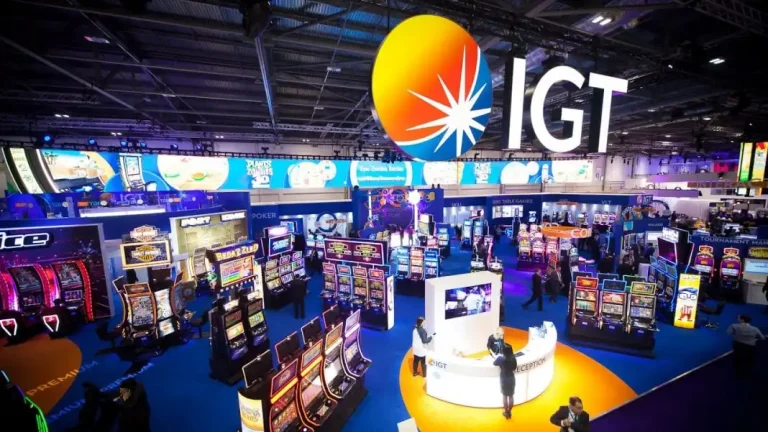
International Game Technology (IGT) has announced that the Judging Commission has completed its analysis of the technical and economic offers for the Italy Lotto License.
The commission will propose LottoItalia—a consortium led by IGT and comprising Allwyn, Arianna 2001, and Novomatic Italia—to the Agenzia delle Dogane e dei Monopoli (ADM), which is expected to issue the award notice within the next 35 days.
“The Italian Lotto concession is one of the world’s most important lottery contracts. IGT and its predecessor companies have successfully managed the license for 30+ years through constant innovation and the introduction of cutting-edge technology,” said Marco Sala, IGT Executive Chair of the Board. “The award is very gratifying, and we are honored and excited to continue working with the ADM for nine more years.”
“The €2,230 million investments in upfront fees reflect the significant value of the new license and IGT is confident that the investment will enhance our revenue and profit potential,” said Vince Sadusky, IGT CEO. “The exciting innovation pipeline with fresh launches planned for commencement of the new license will drive Lotto wager growth. In addition, we plan to significantly grow our iLottery sales and leverage that momentum to expand into the Italian B2C iCasino, sports betting, and other digital gaming business.”
The consortium’s bid was comprised of a €2,230 million upfront license fee payable in three installments between the time of award and April 2026. IGT currently expects the first two installments of €500 million and €300 million to be made in 2025, with the balance made in 2026.
The 9-year license term secures the business until November 2034. The concession rate collected from total wagers is 6 percent, and an additional 8 percent gross fee is collected through the digital channel as a distributor fee. IGT maintains operational control of the business. Allwyn Entertainment is committed to the consortium and contributes a pro-rata share of license fees and capital expenditure.
Conference call registration: Participants are encouraged to pre-register for the conference call by clicking this link. Upon registering, participants will receive a dial-in number and unique PIN.
Webcast registration: A live, listen-only webcast is available under “Events Calendar” on IGT’s Investor Relations website. A replay will also be available on the website following the call.
Macau gaming operator Sands China has announced the return of the Sands Shopping Carnival at The Venetian Macao from July 17-20, 2025, marking its sixth consecutive year.
Kicking off with an invitation-only preview session on the first day, the free-admission carnival will be open from 12 pm to 10 pm daily. Complimentary shuttle buses and free parking are available for attendees.
The Sands Shopping Carnival is Macau’s largest sale event, transforming Cotai Expo into a four-day summer shopping and leisure destination. This year’s event features over 580 booths across nine exhibition zones, including a Play and Fun Zone for children.
Organised by Sands China Ltd. and co-organised by the Macao Chamber of Commerce, the carnival aims to create synergy between local small and medium-sized enterprises (SMEs), Sands retailers, local NGOs, and the arts and culture community, in a bid to attract local residents and consumers from the Greater Bay Area and Hong Kong.
Dr. Wilfred Wong, executive vice chairman of Sands China Ltd., said: “Since we debuted the Sands Shopping Carnival in 2020, it has attracted more than 540,000 visits and generated substantial praise, becoming one of Macau’s signature summertime events. We are pleased to once again offer a free business platform for local SMEs and Sands retailers, while injecting fresh elements into the carnival to cater to the latest spending patterns of local residents and tourists, providing them with exclusive shopping and leisure experiences.”
“This year, we have also included a diverse series of free activities and competitions for people in the Greater Bay Area to join, making the carnival a significant event for cities in the region. We hope that the carnival helps create synergy between local SMEs and Sands retailers, generating spending while boosting Macau’s diversified economic development in support of the Macau government’s ‘tourism+’ initiative.:
The family-friendly Sands Shopping Carnival offers enormous discounts of up to 90 percent for a wide array of goods, and includes an international-cuisine food court area, activities and exciting games for children, competitions, and other attractions.
More information about the carnival and its attractions will be announced in due course, including sneak peeks of activities such as the Little Master Chef Workshop, as well as the Karaoke King Singing Competition and the new Kids Top Model Contest, both open to contestants from the Greater Bay Area.
Sands China believes in prioritising local procurement and actively supports the development of local SMEs. The company’s support to local SMEs has remained consistent since the launch of Sands China’s Local Small, Medium and Micro Suppliers Support Programme with the Macao Chamber of Commerce in July 2015.
The programme is in line with the Macau SAR government’s initiative to “buy local” and demonstrates Sands China’s commitment to supporting local enterprises as part of the company’s corporate social responsibility efforts.
Fast Track has announced the launch of its proprietary machine learning platform, FTML, designed to significantly simplify the process of deploying AI models into live production.
FTML marks a major step forward in applying artificial intelligence within CRM, addressing the operational challenges that often slow data science teams. By automating complex processes such as data availability, data transformation, model training, deployment, and retraining, the platform enables AI models to go live exponentially faster than anything else on the market.
This acceleration makes data science more agile and impactful, reducing the time and resources traditionally needed to implement AI models and allowing partners to access AI-driven insights faster.
FTML has been in development for several years and has undergone rigorous testing and iteration through internal use. The release of the latest version marks a significant milestone in Fast Track’s vision for achieving Singularity. Now in full production, FTML operates behind the scenes to support all Fast Track partners as part of the supplier’s core infrastructure.
Simon Lidzén, CEO, Fast Track
“Behavioural AI models demand not only a huge degree of creativity and subject matter expertise to be developed, but they also need to be deeply contextual, tailored, and trained on each partner’s data to be truly performant. Scaling this process is extremely challenging. From data availability and quality issues, domain-specific expertise, algorithm selection, and delivering actionable outcomes, to the added complexities of information security, explainability, and continuous model monitoring,” said Simon Lidzén, Co-Founder & CEO of Fast Track.
“Traditionally, solving these problems at scale is slow and resource-intensive. However, with the IP we have just released, we have cut the time to market to a fraction of what it used to be. It solves almost all of the complexity around scalability, enabling us to move many times faster than anyone else in the market, and empowering our partners to benefit from truly personalised behavioural AI without the typical barriers.”
Submissions are now officially open for the prestigious Ortak x B.F.T.H. Arena Awards 2025, set to take center stage at Harmony Meetup 7. Featuring Fasttoken and the highly anticipated awards ceremony, this grand event is scheduled to unfold from July 8 to 11 in Yerevan, Armenia.
This year’s edition promises heightened excitement with 21 award categories, exclusive sponsorship opportunities, substantial prize pools, and a landmark gathering of the brightest minds in iGaming.
Key Dates and Deadlines
Submission Open: 15 May 2025, 18:00 (GMT+4);
Submission Close: 21 May 2025, 18:00 (GMT+4);
Voting: 11–25 June 2025, 18:00 (GMT+4);
Winner Announcement: 10 July 2025.
Voting will commence on 11 June to determine winners in select categories. The Ortak Committee will also select recipients for designated awards.
All winners will be announced during the official ceremony on 10 July as part of Harmony Meetup 7 featuring Fasttoken and the Ortak x B.F.T.H. Arena Awards. No shortlists will be released in advance. All outcomes will be revealed at the ceremony.
This is an opportunity to spotlight creativity, reward innovation, and participate in a pioneering event shaping the future of digital gaming.
The Australasian Gaming Expo-AGE 2025 brings the best of innovation, networking, and business opportunities to ICC Sydney from 12–14 August.
The AGE 2025 is the place to see new products and services, network, attend thought-provoking seminars, seek business partners, and generate sales. The AGE is where gaming, technology, and hospitality meet.
The Philippine Amusement and Gaming Corporation (PAGCOR) has warned of fake gaming certifications allegedly linked to a company that legitimately operates as a licensed e-Games venue.
In a release on Monday, PAGCOR noted that it had received reports that ‘Lucky 7 Bingo Corporation has been engaging in contract agreements with individuals under the guise of offering “guidance and support to potentially earn PHP50,000 ($900) through the Lucky 7 Bet Lottery Platform”.’
The fake agreement encouraged bettors to make an upfront cash deposit of PHP3,000 ($54).
The head of PAGCOR’s Offshore Gaming and Licensing Department noted that “While Lucky 7 Bingo Corporation is a legitimate licensee for E-Games venue operations as of April 30, 2025, it does not hold any valid offshore gaming license”.
PAGCOR stated that the license referenced in the agreements ‘is a fake offshore gaming license since all offshore gaming operations have been officially banned in the Philippines since December 31st, 2024’.
“Any engagement based on [the license] is fake, and any engagement based on it is fraudulent,” indicated the official.
“We urge the public to remain vigilant and always verify the legitimacy of a PAGCOR-licensed gaming entity before entering into any agreements or making any form of payment,” stated Jessa Fernandez.
Lucky 7 Bingo Corporation was, however licensed with the Anti-Money Laundering Council as a PAGCOR-supervised entity as of 2023, it was not registered as a Philippine Offshore Gaming Operator (POGO) the same year.
The April 30th, 2025 register does list it as an e-Games operator
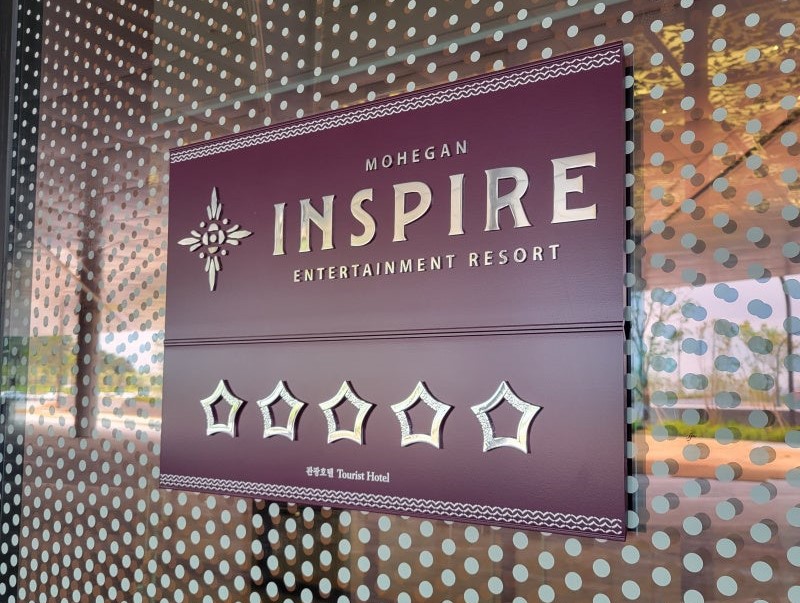
Good Morning. Inspire new buyers. INSPIRE Entertainment Resort, Korea’s largest foreigner-only casino complex, is up for sale as Bain Capital, which assumed management control after the previous operator defaulted on loan conditions, initiated an open market bidding process. Meanwhile, the Thai government held talks with Wynn Resorts to explore potential investments in integrated entertainment complexes, highlighting Thailand’s appeal as a major tourism and investment hub.
What you need to know
South Korea’s INSPIRE Resort, its largest foreigner-only casino, is up for sale after financial woes and a change in management control.
Wynn Resorts meets Thai officials to explore integrated entertainment investments amid Thailand’s push for legal resort-based gaming.
INSPIRE Entertainment Resort, Korea’s largest foreigner-only casino complex, is now for sale as Bain Capital, which took over management after the previous operator defaulted on loan obligations, launches an open market bidding process. Situated in Incheon, the resort boasts three five-star hotel towers, the largest foreigner-only casino in the country, a convention center, and Korea’s first 15,000-seat multipurpose arena. Despite generating substantial revenue of KRW219 billion ($157 million) for its 2024 fiscal year, the resort faced an operating loss of KRW156.4 billion ($112 million).
With over 30% of global gaming revenue projected to come from Asia soon, the window of opportunity is wide open. Bettorify’s white-label and turnkey solutions deliver what most platforms miss: sharp execution backed by real local expertise.
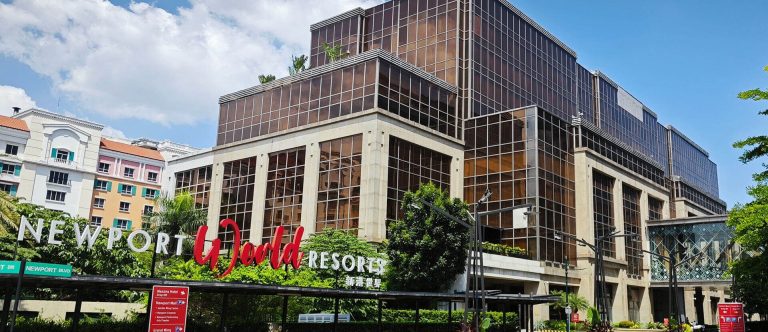
Newport World Resorts, operated by the Travellers group, saw a strong start to 2025, with gross gaming revenues increasing by 6 percent yearly to PHP7.9 billion ($141.6 million).
The group attributed the higher GGR to ‘higher win rates in both the Cash tables and VIP segments’.
Overall the Travellers segment saw an 8 percent yearly increase in revenues, reaching PHP7.69 billion ($138 million), supported by stable non-gaming revenue of PHP1.8 billion ($32.26 million). The group highlighted that ‘hotel operations continued to benefit from the recovery in both domestic and international tourism’, with occupancy rates across the five hotels in Newport World Resorts ranging from 85 percent to 95 percent.
Travellers saw segment profit of some PHP101.4 million ($1.82 million) during the quarter, up nearly 700 percent yearly.
Travellers accounted to 14 percent of parent company Alliance Global Group (AGI)’s consolidated revenues and income during the quarter.