PH Resorts, behind the stalled Emerald Bay project in Cebu (now up for sale), says that the revocation of a provisional license in Clark by the gaming regulator is not linked to its Cebu project.
In a filing with the Philippine Stock Exchange on Friday, the group addressed a recent article by Bilyonaryo.com claiming that PH Resorts head Dennis Uy had not surrendered the original copy of the license for the planned Clark casino project.
PH Resorts indicates that its subsidiary Clark Grand Leisure Cop ‘confirm that CGLC received correspondence from PAGCOR on 19September, 2024 regarding the PAGCOR Board’s approval of the revocation of its Provisional License.’
The group further indicates that ‘PAGCOR also required CGLC to surrender the original signed copy of the PL to finalize the matter’.
The Bilyonaryo article claimed that Uy ‘has yet to surrender the original copy’ of the Clark casino project license.
PH Resorts initially had high hopes for the Clark IR, called ‘The Base’, set to be located on Udenna Group’s Clark Global City. The company requested a voluntary suspension of the license in October of 2021 ‘due to lingering uncertainties surrounding the project’, despite initially hoping to open the property in 2022.
The company clarified that the projects in Clark and Cebu are separate, noting that the ‘license issued to Lapulapu Leisure, Inc. and Lapulapu Land Corp.’ is distinct.
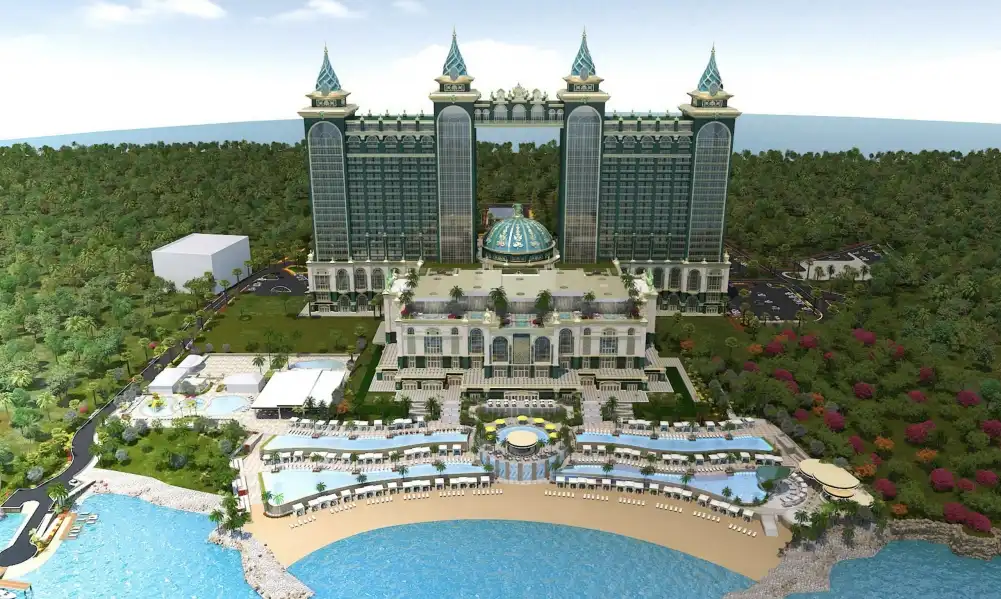
Emerald Bay concept
The group furthered that ‘the voluntary suspension of CGLC’s license does not have any material effect on current financial numbers of PHR considering the CGLC has not begun operations’, noting ‘PL revocation has little to no impact on PHR’s current business and financial numbers’.
The property where the planned Cebu IR, Emerald Bay, is currently up for sale by Chinabank, which bought it in 2023 in order to help the company cover a bridge loan.
The Philippines Department of Justice (DOJ) has announced potential actions against former presidential spokesperson Harry Roque and Cassandra Ong, including a hold departure order for Ong and an Interpol arrest for Roque, following the issuance of arrest warrants by a Pampanga court.
According to The Philippine News Agency, these warrants stem from non-bailable charges of human trafficking related to the operations of Lucky South 99 Corp., a Philippine Offshore Gaming Operator (POGO) hub recently raided in Porac.
DOJ spokesperson Mico Clavano confirmed that the prosecution may seek a hold departure order to prevent the accused from leaving the country and to ensure they face charges of Qualified Human Trafficking.
Clavano explained that since Roque is currently abroad, the DOJ will utilize diplomatic channels, including Interpol, to facilitate his arrest. “We want to clarify that this is a matter of prosecution for a crime in the Philippines,” he stated, emphasizing that Roque is among many accused and not being singled out.
The Angeles City Regional Trial Court issued the arrest warrants on May 8th after finding probable cause for violations under the Expanded Anti-Trafficking in Persons Act of 2022.
This law penalizes various forms of human trafficking, including forced labor and involuntary servitude. Roque is accused of involvement not only as a lawyer for Whirlwind, the company leasing its compound to Lucky South 99, but also in organizing the POGO firm.
Workers rescued from the raided operation, including Chinese nationals, reported being kidnapped and forced to work in online scams. Roque has consistently maintained his innocence and is prepared to pursue legal remedies.
Senator Risa Hontiveros has urged him to return to the Philippines and face the charges, stating that evading the law is unbecoming of a lawyer. “Harry Roque must be compelled to return to the Philippines. If he doesn’t, he would be evading an arrest order from Congress,” she asserted.
Hontiveros also raised concerns about Roque’s connections to individuals involved in the scandal, highlighting the arrest of Duanren Wu, linked to Ong and investigated for attempting to acquire Filipino citizenship through questionable means. She warned that these dubious connections need to be scrutinized, emphasizing the importance of accountability for those found guilty.
As the DOJ moves forward with its legal actions, the case highlights the ongoing issues of human trafficking and exploitation within the POGO industry in the Philippines, prompting calls for greater oversight and stricter enforcement of laws designed to protect vulnerable individuals.
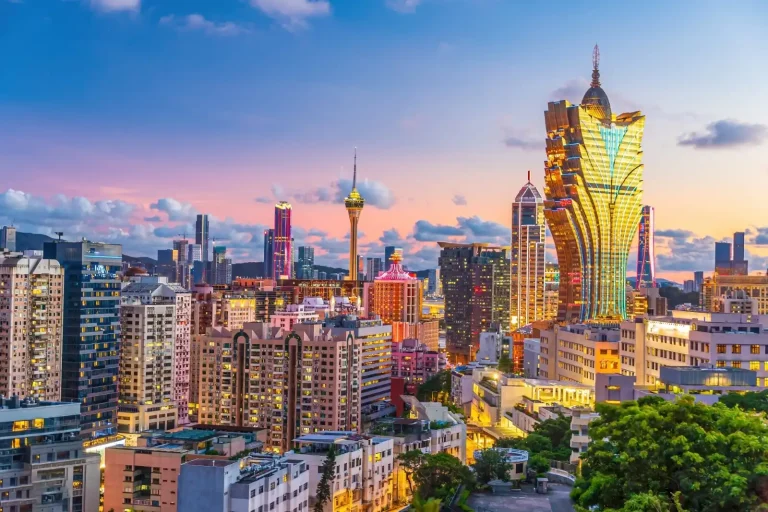
Macau’s economy contracted by 1.3 percent year-on-year in the first quarter of 2025, with gross domestic product declining to MOP99.76 billion ($12.5 billion) in real terms, according to revised figures released by the Statistics and Census Service (DSEC).
The economic downturn followed a period of strong recovery that began in 2023, when the territory’s growth rate gradually slowed from 23.0 percent in the first quarter of 2024 to 3.4 percent in the fourth quarter. The first quarter output represented 85.2 percent of pre-pandemic levels from the same period in 2019.
Despite the overall decline, exports of gaming services showed resilience with a 1.6 percent year-on-year increase. This positive development contrasted with the broader services sector, where total exports fell by 3.4 percent due to changing visitor consumption patterns and a high comparison base from the previous year.
The tourism sector faced particular challenges as exports of other tourism services dropped by 11.7 percent year-on-year, though they remained 12.7 percent higher than 2019 levels. Visitor arrivals increased by 11.1 percent, but changes in spending patterns and preferences weakened overall visitor expenditure, putting pressure on the local tourism industry.
Merchandise trade also declined, with exports and imports of goods falling by 9.2 percent and 5.1 percent respectively compared to the same quarter last year. The implicit GDP deflator, which measures overall price changes, decreased by 0.5 percent to 99.6.
The Statistics and Census Service attributed the economic contraction to several factors including the relatively high comparison base from the first quarter of 2024, evolving visitor consumption patterns, and broader external challenges. Global economic volatility and uncertainties in China-United States relations have created additional headwinds.
Despite the first-quarter decline, Macau officials maintain a cautiously optimistic outlook. The territory’s public finances remain stable, and the economy continues to show an overall recovery trend. Barring major changes in external and internal conditions, authorities expect Macau to avoid a cyclical economic downturn and sustain its recovery momentum throughout the year.
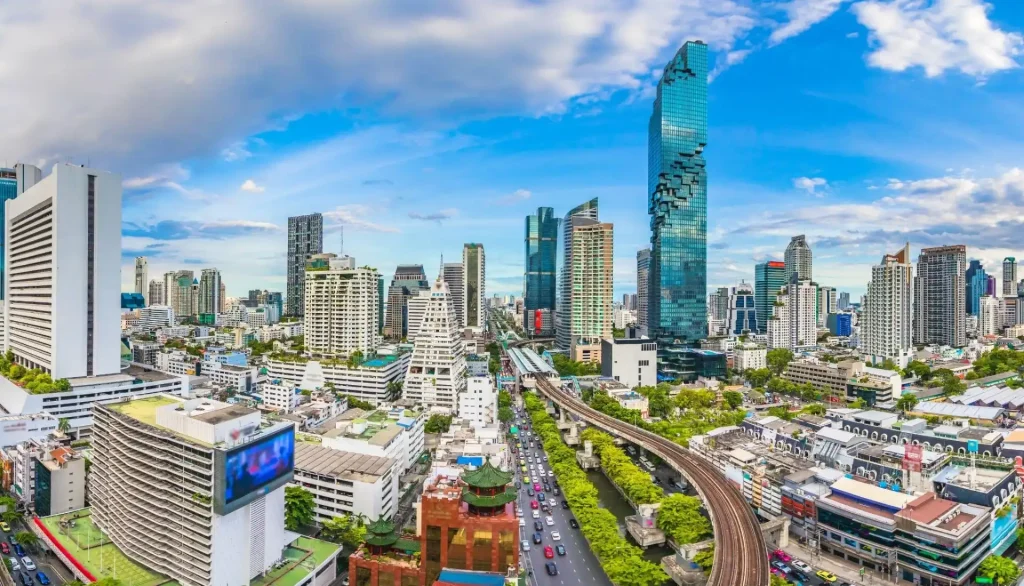
The Thai government held discussions with executives from Las Vegas-based Wynn Resorts regarding potential investment in entertainment complexes, according to a report from local media outlet The Nation.
Julapun Amornvivat
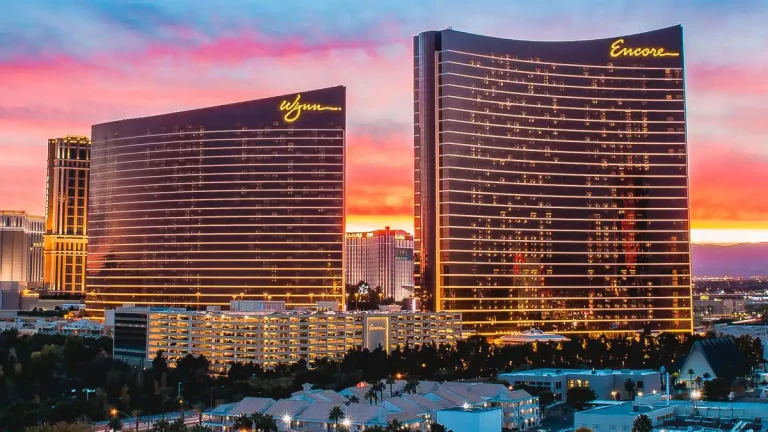
Deputy Finance Minister Julapun Amornvivat revealed on Friday that representatives from Wynn Development Ltd., the development arm of Wynn Resorts, recently met with Thai officials to discuss details and progress of Thailand’s integrated entertainment complex project. The American gaming giant expressed keen interest in investing in the Southeast Asian nation’s emerging entertainment sector.
Wynn Resorts views Thailand as having strong potential due to its appeal as a world-class tourism destination and major investment hub, citing the country’s natural beauty, rich culture, and historical heritage as key attractions for the project.
“The Thai government is pleased that a leading company like Wynn Resorts sees investment potential in Thailand,” Julapun stated. “This reflects global confidence in Thailand—not just as a tourism hotspot, but as a major investment destination in the region. We are committed to moving forward carefully to ensure economic growth, job creation, and social security for all Thais.”
Chris Gordon, President of Wynn Development, emphasized that Wynn Resorts’ integrated resort operations adhere to strict international standards, particularly in anti-money laundering measures and gambling addiction prevention. He affirmed the company’s willingness to share global best practices in risk management, supported by advanced technologies utilized in the United States and other markets.
During the meeting, Thai authorities provided Wynn Resorts with updates on the draft Entertainment Complex Business Act, which is scheduled for parliamentary consideration in July 2025. The proposed legislation includes comprehensive regulations covering financial controls, social safeguards, and preventive measures against gambling addiction.
The legislation received in-principle approval on January 13 and aims to legalize casinos and other gambling forms through integrated resorts. Under the proposed framework, casinos would be required to operate through Thai-registered corporations, with amendments restricting Thai citizen entry to individuals possessing at least THB50 million ($1.5 million).
Beyond Wynn Resorts, other international entertainment operators—including companies involved in concerts, shows, and sports—have also expressed interest in exploring investment opportunities within Thailand’s entertainment complex project. This signals growing global attention to the country’s emerging entertainment and tourism sector, according to Julapun.
As reported by AGB previously, Prommin Lertsuridej, Secretary-General to the Prime Minister, disclosed that six to seven major international investors have already expressed interest in developing full-service entertainment complexes in Thailand. According to the report, the Thai government has mentioned Las Vegas Sands, Wynn Resorts, Caesars Entertainment, MGM China, Hard Rock Group, and Melco Resorts & Entertainment.
Besides the operators mentioned above, Macau’s Galaxy Entertainment Group has publicly expressed interest in Thailand’s entertainment complex.
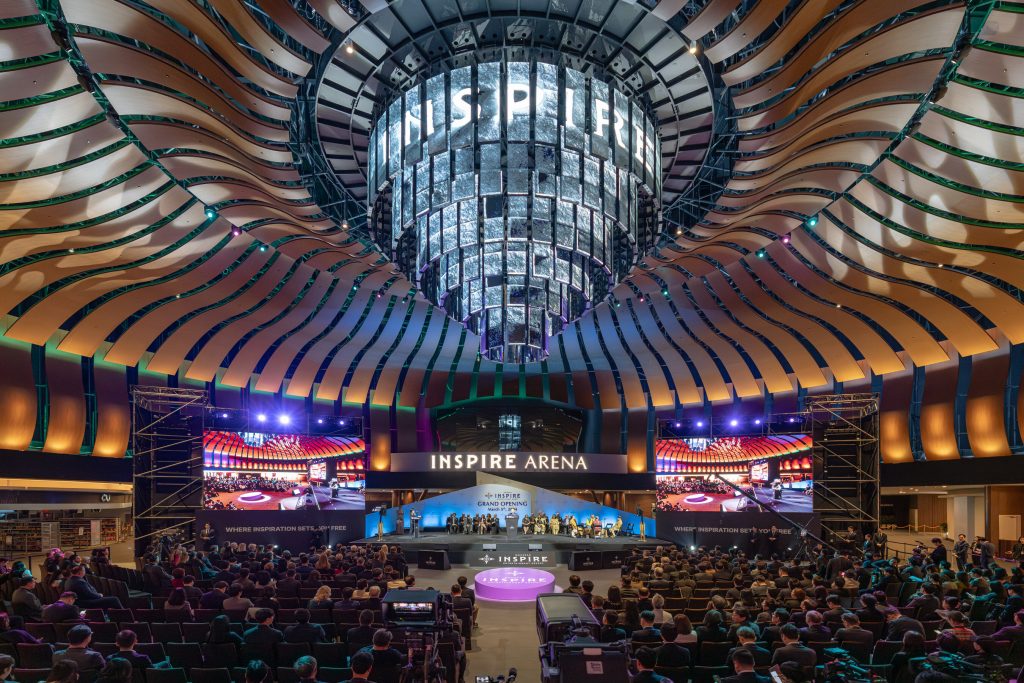
INSPIRE Entertainment Resort, Korea’s largest foreigner-only casino complex, has been put up for sale, according to The Korea Times.
Private equity firm Bain Capital initiated the sale process for the sprawling resort located in Incheon’s port city. The firm assumed management control of the resort’s holding company, MGE Korea Limited, in February after the previous operator failed to meet loan conditions.
The Korea Times obtained an official notice confirming the sale, which describes the opportunity as acquiring a newly built, high-end resort complex with a fully approved casino license. The notice indicates the sale follows an open market bidding process intended to establish the property’s fair market value and complete legal ownership procedures.
The integrated resort opened last year near Incheon International Airport. The complex features three five-star hotel towers totaling 1,275 rooms, the nation’s largest foreigner-only casino, and a convention center. Additional amenities include Korea’s first 15,000-seat multipurpose arena for live entertainment and a glass-domed indoor water park.
Despite generating KRW219 billion ($157 million) in revenue during its 2024 fiscal year from October 2023 to September 2024, INSPIRE posted an operating loss of KRW156.4 billion ($112 million). The resort was originally developed by Mohegan Gaming & Entertainment, which operates eight integrated resorts worldwide.
Mohegan INSPIRE celebrated its grand opening, themed “Invitation to INSPIRE: The Joining of Two Cultures,” at the Rotunda, a versatile hub at the heart of INSPIRE, with the attendance of approximately 500 national and international key figures.
Ownership transfer process
In 2021, a Mohegan subsidiary secured a $275 million loan from Bain Capital, using shares in the Korean unit as collateral. When Mohegan failed to meet loan terms, management control transferred to Bain Capital earlier this year.
According to industry sources, while Bain Capital gained effective management control, it has not obtained full ownership and must complete additional procedures to secure legal title. The open bidding process serves both as a formal sale mechanism and as a way to enable independent valuation by third-party accounting firms.
Bain Capital initially planned to take full ownership through a credit bid, receiving equivalent value in shares based on fair market value rather than cash compensation. However, the firm stated it would seriously consider any offers submitted through the open bidding process.
In a recent interview with AGB, Wade Howk, Chief Operating Officer of INSPIRE, emphasized that in practical terms, there were no significant changes. The management team remained in place, as did the employees, vendors, and regulatory relationships, with operations continuing as usual. Looking ahead, the team is maintaining a strong focus on the Chinese and Japanese markets while also showing growing interest in medical tourism.
Regulatory considerations
The Ministry of Culture, Sports and Tourism, which issued INSPIRE’s casino license, declined to comment until more details are confirmed. Two possible outcomes could emerge from the bidding process: Bain Capital securing full legal ownership or a third-party company acquiring control.
If a third party takes over, the casino license status remains uncertain. While share transfers alone do not require separate approval, changes in company leadership would require ministry reapproval under license terms.
When Mohegan was selected as the operator in 2015, it entered a conditional agreement to run a foreigner-only casino while maintaining all necessary permits. The government required meaningful public benefit and contributions to cultural development, positioning the resort as part of a national strategy to develop a global tourism hub centered on Korean culture.
Expansion plans and regulatory framework
After taking control, Bain Capital submitted a new business plan outlining investment attraction strategies and phased expansion, including a theme park, shopping mall, and golf course. Any ownership change could raise questions about plan continuity.
A ministry official stated that regardless of ownership changes, INSPIRE remains obligated to meet specific investment and construction requirements. The ministry will continue monitoring compliance with license terms.
Korea maintains strict gambling regulations for citizens due to addiction concerns and community impact considerations. Among the country’s seventeen casinos, only Kangwon Land in Gangwon Province serves Korean nationals, while others cater exclusively to foreign visitors.
INSPIRE’s financial struggles stem primarily from underperforming core attractions, particularly the foreigner-only casino. Despite its strategic airport location, which was expected to attract steady international tourist flows, actual turnout has fallen significantly short of projections. Chinese visitor numbers, a key target demographic, have particularly disappointed expectations.
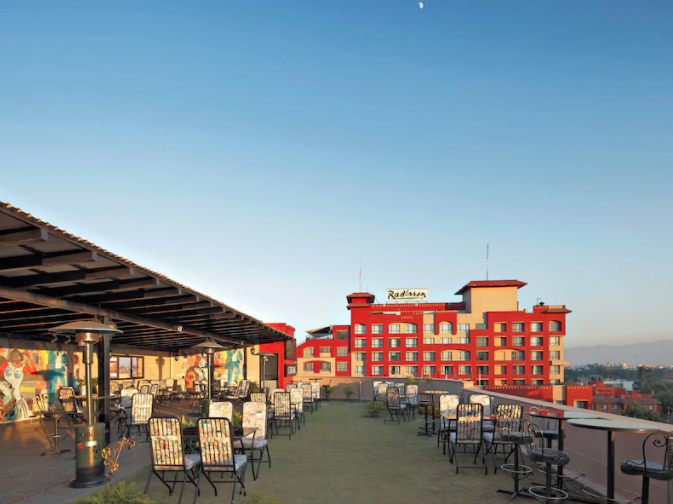
The Nepali government has proposed a new casino law aimed at tightening regulations and reducing foreign investment in the gaming sector.
This legislation forms part of the Integrated Tourism Act and introduces measures such as ownership caps, stricter licensing requirements, and enhanced compliance protocols.
According to The Katmandu Post, the proposed changes include allowing foreign investors to hold only 49 percent equity in joint ventures, a significant reduction from the current allowance of 90 percent, with concerns existing that these provisions may deter global operators rather than attract them.
Historically, the casino industry in Nepal has been governed by the Casino Regulation of 2013, but recent developments have prompted a reevaluation of these laws. The original plan to create a standalone Casino Act has shifted to embedding the regulations within a broader tourism framework.
This change reflects the government’s response to the rapid growth in hotel infrastructure, with an increase in five-star and four-star hotels across the country, which are seen as vital for boosting tourism.
The proposed law also addresses issues related to the location of casinos, reinstating a 5-kilometer distance requirement from international borders while allowing existing casinos within 3 kilometers to continue operations.
This inconsistency has drawn criticism from industry stakeholders who argue that arbitrary location rules can hinder business growth. Additionally, the bill stipulates that potential casino operators must establish separate companies and secure agreements with hotels, which complicates the licensing process.
ProgressPlay has firmly positioned itself at the forefront of the fast-moving iGaming industry, earning a prestigious shortlist spot for “Industry Innovation of the Year” at the SBC Awards Europe 2025.
The story behind this recognition begins with a simple but radical idea: what if operators weren’t constrained by their platform? While many providers offered rigid solutions, ProgressPlay bet on flexibility, building a standalone system that hands operators the keys to their own destiny; customisable branding, agile market entry, and tools to adapt to regulations in real time.
The industry took notice. From the moment the platform launched, partners reported 40% faster deployment in new regions and unprecedented control over player experiences, proving that innovation isn’t about flashy features, but real-world empowerment.
But the SBC nomination speaks to something deeper: impact. This year, ProgressPlay’s technology became the backbone for operators navigating Europe, Latin America and Asia’s most complex markets. Meanwhile, the multi-brand deployment toolkit turned what was once a logistical nightmare into a seamless process, letting partners launch tailored experiences for diverse audiences, all from a single, unified system.
Marina Nahhas, Head of B2B Sales and Marketing, explains: “What sets this nomination apart is its timing. The iGaming industry stands at a crossroads, where scaling responsibly is no longer optional. ProgressPlay’s recognition by SBC underscores that the future belongs to platforms that marry innovation with integrity, where cutting-edge tech serves not just profits, but sustainability.”
At the heart of ProgressPlay’s standalone technology is its unparalleled flexibility. Unlike traditional white-label offerings, this standalone platform is a true turnkey solution, allowing operators to craft their own brand identity, select their preferred gaming content, and integrate the most effective payment methods suited to their target audience.
With full autonomy over the gaming portfolio, operators can curate a mix of casino games, live dealer experiences, and sportsbook markets tailored to the preferences of players in their chosen markets. This ability to fine-tune every aspect of the standalone platform ensures that businesses remain ahead of the curve, delivering experiences that resonate deeply with local players while maintaining a globally competitive edge.
ProgressPlay CEO Itai Lowenstein added: “As the awards night approaches, this shortlist is more than a milestone, it’s validation for every partner who took a chance on reimagining what an iGaming platform could be. For the ProgressPlay team, it’s a reminder that the boldest ideas often start as whispers before they become benchmarks.”
PopOK Gaming is thrilled to unveil its latest slot release—Rico DJ! This high-energy game puts a fresh spin on the popular Rico Series, featuring everyone’s favorite party-loving lizard stepping up as a DJ. Rico drops beats, lights up the reels, and brings serious club vibes to the game.
With a unique 3-4-3 layout and 10 fixed paylines, Rico DJ offers a colorful, fast-paced experience. Think neon lights, pulsing music, and non-stop action that keeps players on their toes.
What makes Rico DJ a total crowd-pleaser
Wild Symbols – Wilds can land anywhere and help complete winning combinations. More chances to win, more reason to celebrate.
Random Respin Feature – Reels 1 and 3 can suddenly match up with the same symbols, triggering respins that keep going until a win lands. It’s like a surprise drop in the middle of the set.
Wild Multiplier Feature – Land 4 Wilds on Reel 2, and you unlock a 10x win multiplier, turning up both the heat and the payouts.
Rico DJ brings together PopOK Gaming’s signature style – fun visuals, smooth gameplay, and a story that keeps players coming back for more. With its fresh theme and exciting features, it’s already making waves. Rico DJ is now live across all PopOK Gaming platforms.
The renowned global betting brand 1xBet reveals how it achieved a significant surge in customer activity in India. The figures speak for themselves—monthly active users (MAU) in the first quarter of 2025 skyrocketed by 68% compared to the previous quarter.
What’s the secret to this success? A series of well-planned strategic moves in content, product, and marketing.
“We are proud of this quarter’s results, proving that investments in high-quality content and innovative entertainment truly create value for our players. Developing promotions tailored to the preferences of Indian users and expanding our portfolio is just the beginning of our large-scale efforts in 2025,” said a 1xBet brand representative.
New hits were added to game library
Throughout the last quarter, 1xBet signed new agreements with several leading developers and gambling entertainment providers. These partnerships enabled the platform to add more than 50 new games, including such hits as:
Ocean Legacy, Lucky Forest, and Croco El Loco from Mancala Gaming;
Snow Beast from Winspinity;
Gems of Olympus x5000 from Gambit.
The carefully selected slots package from Mancala Gaming features the latest technical solutions and a unique Trigger Bonus System. Trigger Bonus System is a flexible tool that allows operators to activate bonuses automatically when a player meets predefined conditions. The system works in real time and can be customized based on a wide range of parameters, such as player activity, deposit amount, betting frequency, preferred games, and more.
A decisive factor in 1xBet’s success has been the addition of new hits that have become rabidly popular in India, including crash games and dynamic slots from new partners:
Chicken Road, Hamster Run from Inout;
Money Coming, Fortune Gems 2 from Jili;
Hot Balloon from Macaw Gaming;
Astro, Stellar from Orbital Gaming.
The wide selection of these and other new 1xBet slots actively and continually attracts new users to the platform.
Live Casino fans are happy with interactive innovations
Winfinity, a premium live gaming provider, holds a leading position in the Live Casino category. Its products elevate the classic casino experience to a new level through meticulous attention to visual, gameplay, and interactive details.
As part of a partnership with Winfinity, the 1xBet brand launched two exclusive Shangri-la Baccarat tables with live dealers, specifically tailored to the premium player segment. The move proved highly effective in practice, as the premium tables quickly gained popularity and consistently attracted users to the Live Casino section.
One of the biggest sensations in the gambling industry was the launch of Agent Spinity — India’s first interactive game show that blends real and virtual gaming experiences.
Tournaments and competitions sparked excitement in tens of thousands of customers
For the Casino section users, the 1xBet platform regularly holds tournaments with guaranteed prize pools, helping to strengthen the community and increase player engagement.
For instance, over 14,000 participants from India joined the Indian Casino League tournament, dedicated to the new IPL 2025 season, competing for a prize pool of ₹363,500.
Meanwhile, the 1x Grand Cruise tournament featured a special selection of games from top providers, where players collected ranking points and competed for a prize pool of 100,000 EUR!
1xPartners members joined the promo for these tournaments and earned generous commissions for it. To make good money, all they had to do was use special promo materials and bring in players.
Promos for every taste — even for the most demanding clients
1xGames especially attracts players because of its wide selection and lucrative bonus offers.
To all new clients, 1xBet offers a generous casino welcome bonus of up to ₹1,50,000 + 150 FS for the first four deposits. Additionally, for all 1xBet users, there is a Casino VIP Cashback loyalty program of 8 levels, where players receive cashback for their activity. The higher the level in the loyalty program, the higher the percentage of cashback from the amount of lost bets: from 5% for the first Copper level to 11% for the seventh Diamond level. The players who have reached the highest eighth level of VIP status receive cashback from all bets, as well as exclusive offers and VIP level support.
1xBet offers a variety of promos aimed at players with different demands. For example, Friday entertainment fans choose the Weekend Booster, while those who enjoy Sunday fun prefer the Big Play Day. Meanwhile, Daily Tournament is specially designed for active clients who get bonus points to win Samsung, iPhone, Apple Watch, and FS.
1xPartners participants understood players’ interest in good promos. Their well-earned reward for bringing in customers was the commissions from the affiliate program.
Wide range of payment methods
The 1xBet platform offers Indian players over 30 payment methods to choose from, including:
Bank transfer – Neft, IMPS, BHIM, CentPay, Freecharge, etc;
Payment systems – UPI Fast, UPI Collect, UPI Multi Pay;
Money transfers and mobile phone shops – Cash on delivery.
For account replenishments with the Jeton Wallet promotion, players receive 20% cashback from the deposit amount, and bonus points with the Crypto Miracle promo. Both promotions also offer the chance to win top electronics from Apple and Samsung.
Thus, the record growth in the number of active 1xBet users in India is directly linked to the integration of new providers, the expansion of the gambling catalog, a wide range of promos and tournaments, and support for all popular payment methods in the country.
The Ortak x B.F.T.H. Arena Awards 2025 returns on July 10th to celebrate groundbreaking achievements, visionary ideas, and exceptional talents.
This year’s FTN categories will honour the most thrilling games, daring innovations, standout operators, and the next generation of industry leaders.
With select categories offering a 10,000 FTN prize pool supported by leading sponsors, the awards provide a unique platform to showcase excellence, spark innovation, and gain well-deserved recognition on a global stage. Participants are invited to explore the categories, prepare their standout submissions, and seize the opportunity to make their mark at one of the year’s most anticipated events.