
Home Blog Page 442

Weak spending, aging tourists weigh on Macau GGR outlook, warns expert 

Shifting visitor demographics and sustained economic headwinds from mainland China are significantly undermining the potential for Macau’s gross gaming revenue (GGR) to return to pre-pandemic levels, according to Professor Zeng Zhonglu of the Center for Gaming and Tourism Studies at Macao Polytechnic University.

Speaking to AGB during the G2E Asia conference held in Macau, Professor Zeng highlighted alarming trends that point to long-term challenges for the SAR’s gaming industry, suggesting that GGR may not return to pre-COVID levels in the foreseeable future.

macau
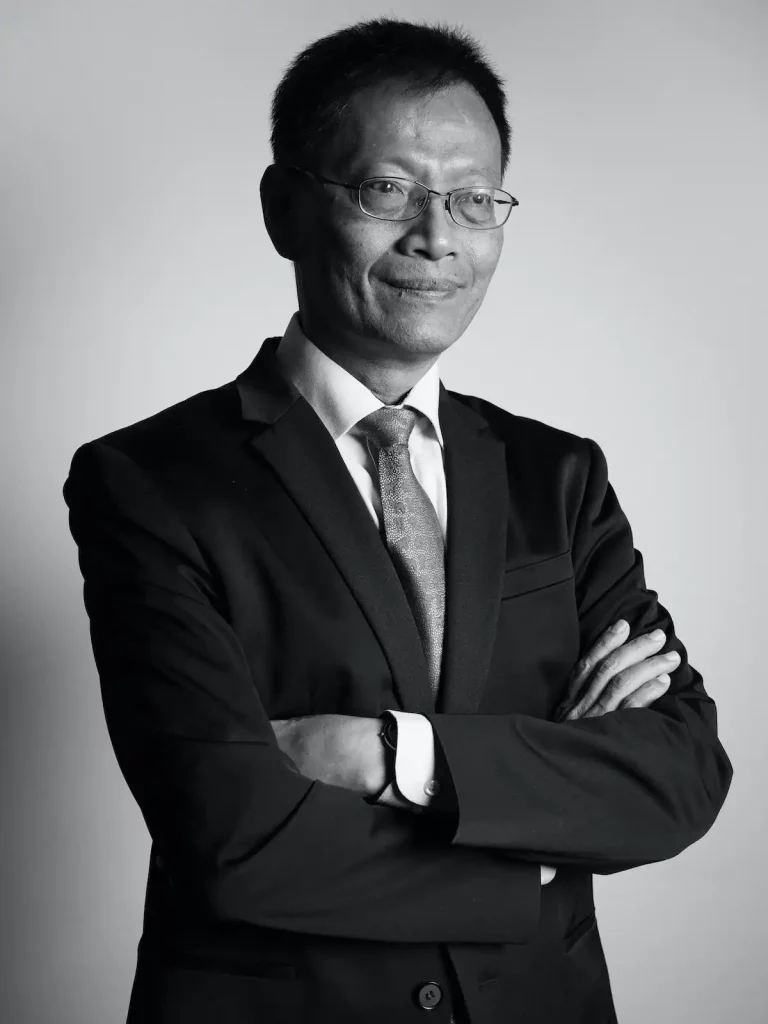
Professor Zeng Zhonglu of the Gaming Research Team at Macau Polytechnic University

“The government expects monthly GGR of MOP20 billion ($2.5 billion), but figures for the first four months of 2025 have consistently fallen short,” he stated.

The causes, Zeng explained, are multi-faceted. A key factor is the weakening mainland Chinese economy and the resulting decline in consumer spending.

“Even though hotel occupancy has remained stable, the average daily room rates in mainland cities dropped by around 8 percent in Q3 last year. This indicates that tourists may be traveling, but they are spending less,” he noted. “This trend is reflected in Macau as well — per capita spending and retail sales among visitors have both decreased.”

Another critical concern is the evolving structure of Macau’s visitor base. Although overall tourist numbers have nearly returned to pre-COVID levels, the composition has shifted significantly. “We are seeing an increase in elderly travelers and those under 15, while the most economically productive age groups — particularly those aged 25 to 34 and 45 to 54 — are declining,” said Zeng.

In the first quarter of 2025, visitors aged 55 and over accounted for 28 percent of total arrivals, up from just 21 percent in 2017. The number of young dependents also rose, while mid-aged groups with higher spending power either stagnated or declined. “This demographic shift is not favorable for gaming or retail consumption,” Zeng warned.

This stands in sharp contrast to Las Vegas, where the share of younger adult visitors has increased in recent years, while the proportion of senior tourists has declined — a more favorable trend for gaming revenue.

macau
Data from the Statistics and Census Service (DSEC)

According to AGB’s analysis, when comparing 2019 to 2024, the under-15 age group saw a 6.3 percent increase in tourist numbers. Meanwhile, the economically productive 25–34 age group declined by 25.7 percent, and the 45–54 age group fell by 21.2 percent. 

The elder demographic (>=65 years) experienced a notable increase of 21.4 percent during this period. This illustrates a modest rise in the youngest tourist demographic, a significant drop in key working-age segments, and a substantial growth in the number of senior visitors.

Zeng also emphasized that geographic proximity is influencing visitor behavior. “Visitors from nearby regions such as Zhuhai and Guangdong have surged due to relaxed travel rules. But the closer they live, the less they tend to spend — the novelty wears off quickly,” he said.

The academic cited survey data showing that while 60 percent of visitors from provinces beyond Guangdong would gamble in Macau, only around 23 percent of Hong Kong visitors and 40 percent of those from Guangdong would do the same.

On the issue of broader economic recovery, Zeng was cautiously realistic. “If the number of visitors continues to grow, it could partially offset declining per capita spending,” he said. “But the extent of that compensation will depend on China’s broader economic trajectory. Without recovery, spending will remain sluggish.”
Macau

Regulatory pressure and the end of the junket era

Although this is not a new issue, the scholar reiterated that the decline in GGR is also linked to increased regulatory pressure from mainland China, particularly the criminalization of cross-border gambling.

Zeng pointed to recent amendments to the criminal code that introduced a new offense — organizing cross-border gambling — which did not exist previously. “This legal shift has dismantled the traditional junket system that used to channel VIP players from the mainland to Macau. That channel has effectively closed,” he explained.

Even high-end mass market play, once seen as a potential substitute for the defunct VIP segment, has not matched previous spending levels. “According to data from Sands, high-end mass market customers have shown the most resilience, but this segment alone cannot make up for the absence of VIP revenue,” Zeng said.
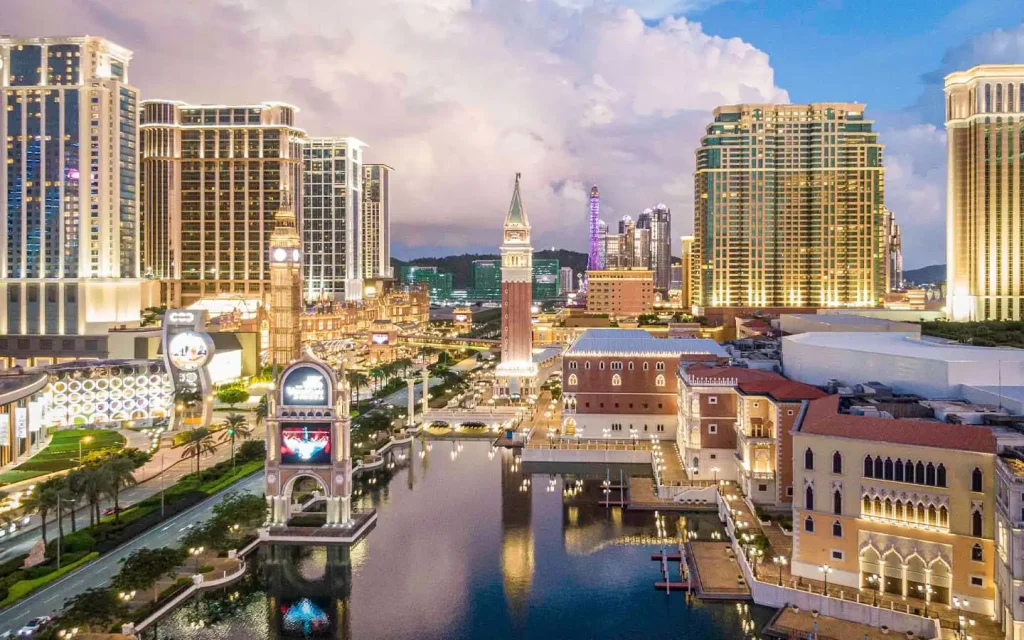
Macau, cotai-strip, Gaming revenue, Macau GGR, gaming operators, gaming industry, Macau dasino operators

Regional competition looms

Looking ahead, Zeng warned of intensifying regional competition. Japan’s integrated resort project in Osaka, set to launch operations by 2030, could attract a significant share of high-spending mainland tourists, particularly from northern provinces. “For travelers from northern China, Japan is not only closer than Macau but also offers diversified attractions such as shopping, dining, and cultural experiences,” he said.

In contrast, Macau faces physical limitations. “Most of Macau’s developable land is already in use. Future growth in hospitality and entertainment capacity will be constrained,” he noted. Some operators, such as Galaxy, have begun considering Hengqin as a spillover destination for accommodation and events.

Despite the rebound in tourist volume, Zeng cautioned against focusing solely on numbers. “Las Vegas has shown that targeting younger and more affluent segments is a more sustainable strategy,” he said. “Macau cannot rely solely on visitor numbers. Without improving the quality — particularly the spending capacity — of its tourists, the gaming industry will struggle to meet government revenue targets.”
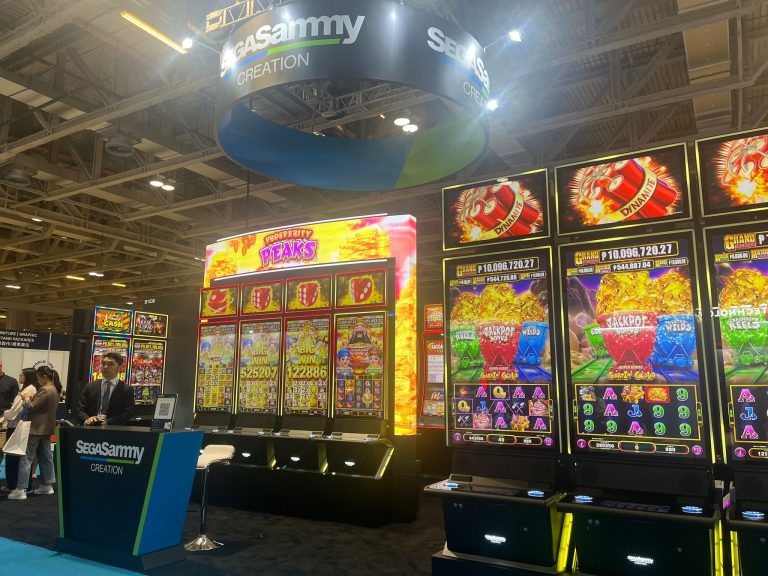
Sega Sammy reports record-high results in gaming and hospitality biz for fiscal year

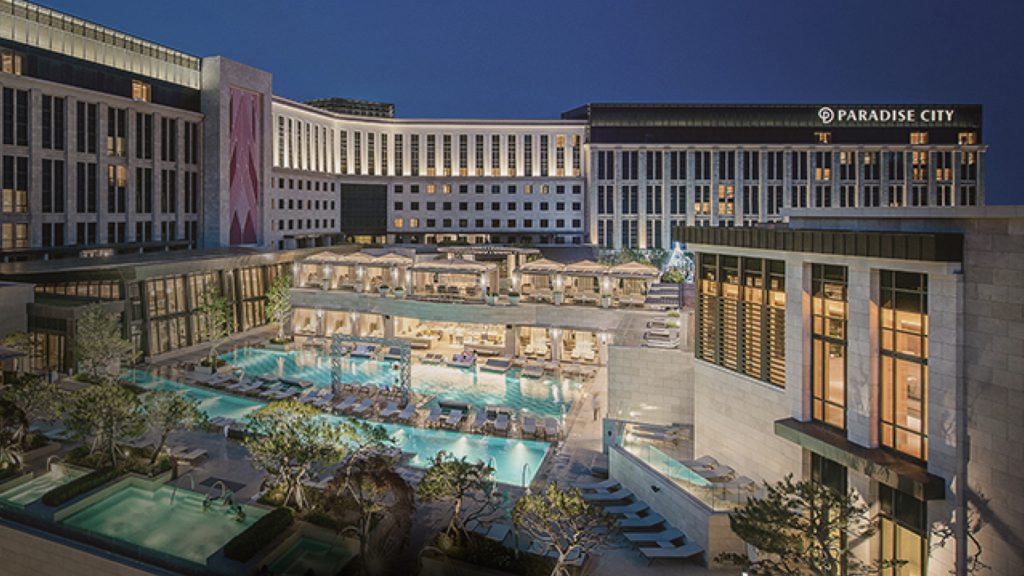
Japanese gaming giant Sega Sammy Holdings Inc. has reported record performance in its gaming and hospitality business for the fiscal year ended March 31st, 2025, driven by strong results from its Paradise City casino resort venture in South Korea.

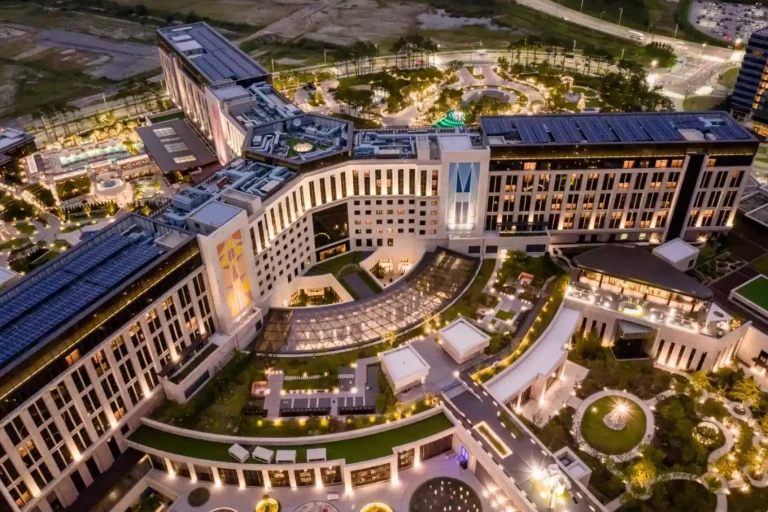
Paradise City, a foreigner-only integrated resort near Incheon International Airport, is operated through a joint venture between Sega Sammy and South Korean operator Paradise Co. Under the partnership, the affiliate Paradise SegaSammy delivered its highest-ever annual sales in both its casino and hotel operations.

macau

Casino sales reached JPY415 billion ($2.8 billion), up 26.5 percent from JPY327.9 billion ($2.2 billion) in the previous fiscal year. The growth was primarily supported by robust demand from Japanese VIP customers. 

Hotel sales also hit a record high of JPY102.3 billion ($691 million), a 2 percent increase from JPY100.3 billion ($678 million), attributed to increased domestic tourism, consistently high occupancy rates, and strong average daily room rates.

Overall, Paradise Sega Sammy’s consolidated net profit rose sharply to JPY72.2 billion ($488 million), more than doubling the JPY28 billion ($189 million) reported a year earlier. Gross profit improved to JPY136.3 billion ($921 million).

Sales revenue increased significantly to JPY5.4 billion ($36.5 million), compared to JPY1.9 billion ($12.8 million) in the prior year, marking a turnaround to profitability at the ordinary income level. The company’s adjusted EBITDA also improved, swinging from a loss of JPY0.4 billion ($2.7 million) to a profit of JPY1 billion ($6.8 million).

In its gaming machine business, Sega Sammy sold 1,310 units during the year, more than double the 563 units sold in the previous year. Looking ahead, the company projects unit sales of 1,217 machines for the next 12-month period.

Meanwhile, the number of installed gaming machines also grew significantly to 1,652 units, compared to 755 units the year before. The company forecasts an increase to 2,569 installed units over the coming year.

For the fiscal year ending March 31st, 2026, Sega Sammy expects revenue from its gaming-related businesses to continue expanding, with projected sales reaching JPY6 billion ($40.5 million).

Paradise Co reports strong 1Q25 earnings despite decline in casino drop

South Korean foreigner-only casino operator Paradise Co reported a solid performance in the first quarter of 2025, with total revenue reaching KRW283.3 billion ($199 million), representing a 7 percent year-on-year increase. Operating profit also climbed 18.3 percent year-on-year to KRW57.3 billion ($40 million).

The company’s casino business—which includes operations in Seoul, Busan, Jeju, and Incheon—generated quarterly revenue of KRW223.4 billion ($157 million), up 9.3 percent year-on-year. This marks the highest quarterly revenue ever recorded for its casino segment, despite a 2 percent year-on-year decrease in drop amount to KRW1.69 trillion ($1.2 billion). The growth was driven by an improved hold rate, which rose by 1.4 percentage points compared to the same period last year.

According to the company’s financial results released Monday on the company’s website, VIP drop from Chinese and Japanese players remained steady compared to the previous year, while mass market drop reached a new quarterly high, rising 1 percent year-on-year.

Revenue from integrated resort (IR) operations increased 5.2 percent year-on-year, despite a modest rise in drop amount and a boosted by a 0.5 percentage point improvement in the hold rate.

However, the hotel and resort (H&R) segment saw a revenue decline of 7.6 percent year-on-year, falling to KRW24.3 billion ($17.1 million). The company attributed the downturn to weak domestic demand, which offset the positive impact of increased foreign tourist arrivals.

Altenar expands US sports portfolio with Major League Baseball coverage

Altenar has expanded its portfolio of US sports by adding more Major League Baseball (MLB) content for the 2025 season. The addition of in-play Bet Builders allows live betting during MLB games, offering operators the chance to benefit from a surge in the bet type’s popularity.

There is also an expanded range of prop betting available on both pre-match and live games, with a vast range of odds now offered on player, team and game props.

Altenar already offers fast markets and micro-betting options, along with same-game parlays, player specials and pitcher lines for the popular league.

An official distributor of MLB data since 2019, Swish Analytics delivers rich, reliable and fast information that enables the development of highly engaging user markets, which are now available to Altenar’s operator partners.

These additions reinforce Altenar’s commitment to delivering relevant and tailored content for US-facing partners, while continually striving for excellence as a sportsbook provider.

Antonis Karakousis, Director of Operations at Altenar, said: “Altenar is driving innovation in US sports by pushing the boundaries of what is possible with our offering. We will continue to grow our presence in this vertical and ensure that our full suite of pre-match, in-play, and at-bat betting products defines the next generation of engagement for our operators’ MLB fans. In addition to the above, the development of our MLB Live Bet Builder is another strong statement that reflects our commitment to listening to users’ needs. Enhancing the Bet Builder experience remains a key focus and a central part of our product strategy.”

Altenar will showcase its enhanced terminal at SBC Summit Americas 2025 from May 13–15. Attendees can visit the stand or book a demo to explore the terminal’s new capabilities first-hand here.

White Hat Studios expands into US casinos via Gaming Arts OMNI deal

White Hat Studios, a leading provider in the US iGaming sector, has partnered with Gaming Arts to bring its content to land-based casinos nationwide.

The partnership brings top-ranked US iGaming content by White Hat Studios into the retail sector for the first time, allowing it to explore a new omnichannel approach to capitalize on untapped potential. The deal will also see top land-based titles from Gaming Arts launch online via White Hat Studios.

Big Catch Bass Fishing, the first title rolled out across US casino floors, has already proven a resounding success within Gaming Arts’ land-based network, highlighting the cross-platform quality of White Hat Studios’ portfolio. Upcoming titles will include Bankin’ More Bacon™ and Kong Even Bigger Bananas™

A regular flow of new titles is set to be distributed to Gaming Arts’ partners imminently as White Hat Studios looks to build on its strong momentum, which saw it named the number one new US provider at the 7th Annual EKG Slot Awards and break into the top three US suppliers by gross gaming revenue according to the Eilers-Fantini U.S. Online Game Performance Report – January ’25.

Andy Whitworth, CEO at White Hat Studios, said: “The collaboration with Gaming Arts marks a landmark moment for White Hat Studios as we take our top-performing iGaming content to the casino floors. Our primary objective is to deliver content that maximizes entertainment for players, whether that is online or in land-based casinos, and we have no doubt our portfolio will elevate the offering of Gaming Arts’ partners. We look forward to introducing White Hat Studios’ hit titles to a whole new audience and showcasing the omnichannel appeal of our games to the wider industry.”

Greg Colella, Chief Product Officer at Gaming Arts, added: “White Hat Studios has made a name for itself developing strong-performing games that resonate with players across multiple states, and its rapid rise in iGaming is a testament to the quality of its products. This agreement enables Gaming Arts to further strengthen the way in which we supply leading US retail casinos with class-leading content, while simultaneously enhancing the studio’s footprint in the land-based sector. We are also particularly excited to see our top-performing land-based titles launching online.”

3 Oaks Gaming launches with AdmiralBet to expand Italian presence

3 Oaks Gaming, an established distributor of iGaming content, has strengthened its position within the regulated Italian market after going live with AdmiralBet, one of the country’s leading casino operators.

AdmiralBet, the online brand of Admiral Sport Srl, has been a prominent operator in Italy since 2012 and is part of the Greentube Group, the online subsidiary of the globally renowned Novomatic Group.

As part of a new content distribution agreement, 3 Oaks has delivered a wide range of its best-performing slots to the Italian operator, including popular releases 3 Hot Chillies, Lucky Penny, More Magic Apples, Coin Volcano, and Sun of Egypt.

Italy remains a key market for 3 Oaks Gaming’s ambitious expansion plans and this latest launch with a high-profile casino brand is set to further enhance the distributor’s presence within the market.

The company’s vast portfolio of titles influenced by the Hold and Win mechanic have been proven to resonate with local players, with a strong player base appreciating gameplay inspired by the land-based experience and enhanced with modern features.

Yuriy Muratov, Chief Commercial Officer at 3 Oaks Gaming, said: “Launching with AdmiralBet is a major development within our Italian expansion strategy. Distributing our titles to such an iconic brand within the market will open the door for even more players to enjoy the in-demand 3 Oaks Gaming experience. We’re building strong momentum across regulated markets worldwide with several high-profile launches planned for 2025. Demand for our content is very high at present and it’s an exciting period for 3 Oaks as we scale the business to new heights.”  

Paolo Marchi, Managing Director at Admiral Sport, added: “It’s fantastic to bring 3 Oaks Gaming’s content to our online casino in a move that will further elevate our games offering. We’ve been particularly impressed with how 3 Oaks has introduced innovative twists to the iconic Hold and Win mechanic, which is already very popular with players. This agreement will provide them with exciting new ways to experience this legendary casino format within the digital environment.”

US-backed Macau operators can breathe easier after temporary tariff reductions between US and China

The tension on US-China relations has lessened slightly, as both nations announced a suspension on part of their tariffs on exports for 90 days, potentially offering a reprieve from speculation over the impact on Macau’s US-backed gaming operators.

In a joint statement on Monday, the US announced that levies on many Chinese imports will be reduced from about 145 percent to 30 percent, while those imposed by China on US goods would fall from 125 percent to 10 percent.

The move marks a significant stride in strained relations between Washington and Beijing, with US President Donald Trump aiming to pressure Chinese President Xi Jinping to the negotiating table, even as both nations suffered economic declines due to the tariffs.

A reduction in the levies had been expected, due to the massive amount of trade between the world’s top economies.

Macau can breathe easy, for awhile, maybe

Before the tariff reductions were announced, AGB caught up with Senior Analyst at Seaport Research Partners Vitaly Umansky to get his view on how US-backed gaming operators in Macau were reacting.

Vitaly Umansky, Seaport
Vitaly Umansky

“I don’t think it’s the government’s objective, either in Macau or China, to go after this (gaming) industry […] I think they view the operators in Macau as largely having done what they’re supposed to do”.

Umansky is not of the opinion that the gaming concessions would be a potential pressure point for Beijing, noting that “having well-regulated operators that are trustworthy, that have been here for (nearly) 25 years is critically important”.

But not everybody has the same standpoint.

Gaming consultant Ben Lee, Managing Partner of IGamiX Management & Consulting questions, “What makes the US operators in Macau untouchable?”

Ben Lee, IGamiX
Ben Lee

Lee questions in particular what physical goods that the three US-backed gaming operators manufacture, an interesting point given that the tariffs also target goods and not services.

But even more so, Lee questions exactly how the gaming operators are contributing to China’s economy directly.

The operators “take liquidity out of China into Macau and from Macau it goes to the US as profits or dividends”. And little can be said to contradict this fact, since the post-COVID rebound, Las Vegas Sands, Wynn Resorts and MGM Resorts have all engaged in significant stock buyback programs.

Macau likely safer, but US operations impacted

The last US-backed Macau operator to announce its 1Q25 results recently, Wynn Resorts, did have some questions to management in its earnings call about tariffs, and the group indicated that the increased pressure had caused a rethink on financial investments.

“That has to do with material costs, because they’re doing some large-scale renovation work, and obviously most of that is imported. So, it raises their costs. They’re just debating whether to delay some of the renovation work,” opines Umansky.

But Macau continues to be a cash cow for US operators and also a cause for massive expenditure.

Las Vegas Sands Chairman and CEO, in the group’s 1Q25 results announcement, indicated that Sands China had invested “approximately $17 billion” in Macau so far. A huge part of that is in non-gaming efforts. And while they’re the largest of the three US-backed Macau operators, the other two also face significant exposure to any changes in the status quo of their Macau operations.

Analysts at Fitch point out that Las Vegas Sands derived 63 percent of consolidated FY24 revenues from Macau, which drops to 52 percent for Wynn Resorts and 23 percent for MGM Resorts International.

However, “all six operators are publicly traded companies”, effectively listed on the Hong Kong Stock Exchange (Melco being a slight exception).

“If you cut off or limit dividend distributions, you’re affecting Hong Kong-listed companies, which sets a very bad precedent around investment […] so it’s not really realistic,” notes Umansky.

“It’s more important for China to see Macau as a stable, growing place that they can point to and say ‘we’ve done a great job managing this for 25 years, having an industry that’s relevant and trustworthy’”.

“And I think all the operators back in the US, when they speak with government officials etc, they are one of the industry groups that actually speaks more favorably about China,” indicates the analyst.

The tariff topic was even raised by the head of the Hong Kong & Macau Affairs Bureau during a visit to Macau over the weekend, demonstrating that the business impact on the SAR has been under evaluation by Beijing, with hopes that tensions would lessen, but with preparations to handle any eventuality.

Discussions will continue between China and the United States, as both sides still hold strong views over the relevance or necessity of tariffs, but at least – for now – both sides have sat down at the table to hash it out, with hopes that dialogue will trump political posturing (and all the negative impacts it can bring).

7777 gaming enters Croatian market with exclusive launch on SuperSport

7777 gaming, a leading provider of innovative iGaming content, has officially entered the Croatian market through an exclusive partnership with SuperSport’s brand Super Casino, the country’s largest betting operator.

This partnership underscores 7777 gaming’s strategic focus on expanding its presence in the Balkans and reinforces its dedication to delivering exceptional gaming experiences across new markets.

SuperSport, a dominant force in Croatia’s regulated gaming industry with approximately 50% market share, is now offering a selection of certified titles from 7777 gaming. Among these are popular games such as Crazy 100 Bucks, Thracian Treasures, Barbarian, Greenhats’ Megawins, and Devil’s Deal: Soul for Sale.

In addition to its diverse game portfolio, 7777 gaming introduces three exciting jackpot
concepts to the Croatian market:​ Juicy Cash Jackpot – A fruit-themed jackpot offering dynamic rewards.

Crazy Bucks Jackpot – High volatility gameplay delivering adrenaline-fueled wins.
Jackpot Temple – A mystical adventure promising epic prizes.​

“We are thrilled to partner with SuperSport and bring our unique gaming content to Croatian players,” said Elena Shaterova, CCO at 7777 gaming. “This exclusive collaboration allows us to showcase our commitment to delivering high-quality, engaging games tailored to the local market’s preferences.”​

Tugomil Cerovečki, Casino Director at SuperSport added, “Integrating 7777 gaming’s
titles into our platform enhances our offerings and aligns with our goal to provide top-tier
entertainment to our users. We are confident that our players will appreciate the innovative
gameplay and exciting jackpot features.”​

Beyond Ordinary Platforms: Bettorify bridges European operators to Asia’s gaming markets

The iGaming world is eyeing Asia as the next big opportunity. But most operators are either stuck with generic platforms dressed up with an “Asian” label or left to navigate the cultural maze alone. Bettorify has decided to take a different approach to close these gaps and help operators deliver real gaming experiences.

Operators deserve better than Western platforms with translated buttons, vague pricing, and empty promises. The need for a transparent provider that delivers real localisation and true partnership has never been greater.

Platforms That Feel Native

Most global platform providers treat Asia like a checkbox. They translate the content, add a few payment options, and call it done. Bettorify takes a fundamentally different approach, focused on deep localisation.

“We go beyond translating content or adding games. We study how players in each market actually use platforms,” Hanna Rai, CEO of Bettorify, explains. “Asian players have unique preferences shaped by their cultural context and habits.”

This includes colour choices, layout expectations, and visual details that feel native. When players feel at home, operators win.

From Factory Model to True Partnership

Bettorify is pushing back against the typical factory-style model, where providers prioritise big clients and leave smaller operators waiting for months.

“I’ve been both the operator and the platform provider. That’s why, at Bettorify, we prefer quality over quantity. When onboarding a new client, I want them to know we’ll be there every step of the way. Our goal is to deliver VIP-level service and impress operators who are tired of copy-paste platforms and slow support,” Hanna says.

Solving the Payment Puzzle

The biggest game-changer is Bettorify’s approach to one of the industry’s toughest challenges: payment processing.

“Success in these markets comes down to how well payments convert. With the right local partners, transactions go through smoothly.”

Hanna Rai, CEO of Bettorify

The data speaks for itself. While international payment providers may see 20-30% success rates, local systems often hit 85-90%. That difference alone can decide if an operator grows or fails.

The Time for Asia Is Now

Hanna-Rai-CEO-Bettorify
Hanna Rai, CEO at Bettorify

With over 30% of global gaming revenue projected to come from Asia soon, the window of opportunity is wide open. Bettorify’s white-label and turnkey solutions deliver what most platforms miss: culturally sharp execution backed by real local expertise, multiplied by a true partnership approach.

“We’re building the ultimate bridge between international operators and the local knowledge it takes to succeed in Asia,” Hanna says. “European Quality, Built For Asia.”

For operators ready to enter or expand to Asia, Bettorify’s team will be exhibiting at booth 1184 at SiGMA Asia 2025 from 1st to 4th June in the Philippines. Reach out at [email protected] to see a live platform demo and discuss your Asian market entry strategy.

Daily Asia Gaming eBrief: Vietnam’s progress hampered by “immature” policies

0
Good Morning. An absence of regulation is not always a good thing for operators, and can actually hamper growth. So, an expert about the state of Vietnam’s gaming industry opines that frameworks are needed to help companies avoid incidents by knowing which rules are in place. Meanwhile, in Macau, junkets have faith in more clarity from the city’s watchdog, now that a new Director is in place. Looking at results, Melco improved its market position in Macau in 1Q25, despite a challenging competitive environment.

What you need to know


On the radar


AGB Intelligence

VIETNAM

Immature policies/red tape hamper gaming development

Vietnam’s gaming market has strong potential, but it’s hampered by regulatory gaps which create challenges for operators. According to an expert, the nation is still trying to find a balance between business interests and regulatory requirements, with companies oftentimes having to choose their own levels of compliance due to an absence of rules. 


Industry Updates


INTELLIGENCE | ASEAN | CAREERS