Thailand’s government is intensifying efforts to revive its struggling economy with a proposed THB3.78 trillion ($115.5 billion) budget for fiscal 2026.
The budget comes as the country grapples with increasing pressure following a 36 percent tariff hike imposed by the United States on Thai exports. The move underscores Thailand’s economic vulnerabilities amid a weakening domestic outlook and highlights the urgency of finding new sources of revenue.
In response to the growing strain, Deputy Prime Minister Phumtham Wechayachai has strongly defended the Entertainment Complex bill as a necessary economic measure.
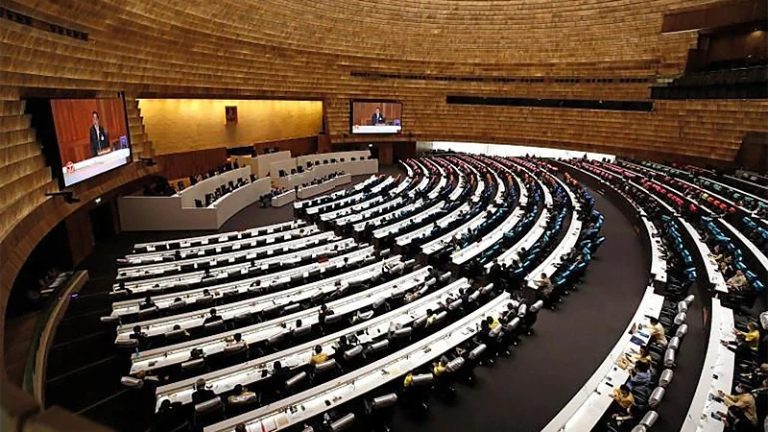
Scheduled for parliamentary debate in July, the bill has become a flashpoint between the government and opposition parties amid the challenging trade environment. Phumtham emphasized that the bill—which includes provisions for casino operations within integrated entertainment complexes—is intended to generate substantial revenue to help offset losses from the new US tariffs.
According to Reuters, Prime Minister Paetongtarn Shinawatra presented the draft budget to parliament on Wednesday, initiating a four-day debate ahead of a vote expected on Saturday. The proposed budget reflects a modest 0.7 percent increase from the previous fiscal year, with a projected deficit of THB860 billion ($26.3 billion), or 4.3 percent of GDP—slightly lower than the current year’s figure.
“The deficit budget policy is aimed at maintaining economic stability, including supporting recovery and promoting growth at an appropriate level,” the draft document states. GDP growth for 2025 and 2026 is forecast between 2.3 percent and 3.3 percent, while inflation is projected at 0.5 percent to 1.5 percent. The budget does not yet account for the potential impact of the US tariffs, which are expected to take effect after a moratorium expires in July.
Should the budget fail to pass, Prime Minister Paetongtarn could be forced to resign or dissolve the lower house and call for new elections. Despite these risks, the budget is widely expected to garner sufficient parliamentary support.
Thailand’s economy grew by 3.1 percent year-on-year in the first quarter of 2025. However, the state planning agency recently downgraded its full-year growth forecast to between 1.3 and 2.3 percent, citing ongoing uncertainties related to the US trade dispute.
Lucky those who first found the gold mine and took the opportunity before anyone else! From the creation of the asset by Satoshi Nakamoto in 2008, few had faith in its growth. Bitcoin was—and still is—notoriously volatile, from the famous day two pizzas were bought for 10,000 BTC in 2009, to the present, where one bitcoin is now valued at over $110,000.
It’s no surprise that this meteoric rise is driven by multiple macro and micro factors. Institutional adoption, growing regulatory clarity, technological advances, and shifting global sentiment have all played pivotal roles in Bitcoin’s trajectory. But beyond the headlines and price surges, what does this evolution mean for real-world utility—particularly in sectors like iGaming, where speed, privacy, and borderless functionality are paramount?
Regulation
Let’s start with the elephant in the room: regulatory clarity. For over a decade, the biggest criticism aimed at cryptocurrencies was their “wild west” status. The absence of clear guidelines made adoption risky for both users and enterprises. However, in recent years – and especially post-2021 – we’ve seen a regulatory thaw. Jurisdictions in Europe, Asia, and Latin America have begun to roll out licensing frameworks and compliance standards tailored for digital assets.
The European Union’s MiCA (Markets in Crypto Assets) regulation, for example, has laid a concrete foundation for companies to operate across borders with defined AML and KYC expectations. This clarity is especially critical in the iGaming world, which is itself under intense regulatory scrutiny. By bringing crypto transactions into a compliant structure, operators now have the opportunity to harness the benefits of blockchain payments without the regulatory risk.
What drives demand?
Next comes supply and demand dynamics, a fundamental driver of Bitcoin’s price – and increasingly, its perceived legitimacy. Unlike fiat currencies that can be printed at will, Bitcoin has a fixed supply of 21 million coins. This built-in scarcity has proven attractive not just to individual investors but also to institutional funds seeking a hedge against inflation and geopolitical instability.
Halving events, where Bitcoin’s issuance rate is cut in half roughly every four years, add to the deflationary pressure. The 2024 halving event further tightened supply, just as institutional capital flooded in through regulated products like spot ETFs launched by BlackRock and Fidelity. This confluence of demand-side enthusiasm and limited supply makes Bitcoin a unique asset class – resistant to many of the systemic risks that plague traditional financial systems.
Technological advancement has also played a crucial role. Bitcoin’s network, once slow and clunky, has seen efficiency gains through Layer 2 solutions like the Lightning Network. These upgrades allow for faster and cheaper transactions, making the currency far more viable for microtransactions and day-to-day use. At the same time, the broader blockchain ecosystem has matured. Stablecoins, sidechains, and multi-chain compatibility have opened doors for broader crypto integration into real-world payment systems. For iGaming operators, this means they can now accept crypto payments quickly, securely, and often with lower transaction fees than traditional card or bank-based options.
How has this translated into the iGaming sector?
The connection between crypto and iGaming was almost inevitable. Both industries are digital-first, attract a tech-savvy user base, and have a historical appetite for disruption. What began as a niche offering – Bitcoin casinos operating outside of mainstream platforms – has evolved into a serious payments alternative even among licensed operators. Today, many iGaming companies either accept crypto directly or partner with custodians and payment firms that allow seamless conversion of crypto to fiat.
We at Payhound, where we offer licensed and regulated crypto payment services specifically built for sectors like iGaming, have seen a significant increase in interest for crypto payments among players and operators, with almost all of them being excited about the possibilities but still concerned about volatility. By integrating Payhound’s API or custodial solutions, operators can offer deposits and withdrawals in digital currencies without ever touching the volatility risk themselves. Of course, another option that achieves this is the use of stablecoins and it is fair to say that USDT powers significant parts of the whole online gambling industry in Asia and beyond.
It’s worth noting that players themselves are increasingly looking for crypto options. A growing portion of Gen Z and millennial consumers hold digital assets, and offering crypto payment options is becoming a competitive differentiator. Add to this the advantages of privacy, speed (especially across borders), and low fees, and the proposition becomes even more compelling.
That said, integrating crypto isn’t a silver bullet. Operators must ensure compliance with local and international laws, especially as regulators tighten their grip on both crypto and gambling. Partnering with a firm that understands both worlds – like Payhound – can make the difference between smooth scaling and regulatory pitfalls. Also, crypto might be all the rage in some quarters, but good old FIAT is still crucial in many ways. From not wasting marketing budgets on funnels that ignore fiat to on and offramps, as well as continued reassurance and education of players, the worlds of FIAT and crypto currencies still walk hand in hand.
We’re still in the early days. Despite all the progress, crypto payments remain a small but fast-growing portion of the overall iGaming market. But the trajectory is clear. With increasing regulatory support, improving technology, and rising consumer demand, digital currencies are set to play a major role in the payment rails of tomorrow.
Bitcoin’s journey from pizza payments to billion-dollar ETFs is more than a quirky anecdote – it’s a signal. The world is rethinking money, value, and how we interact with financial systems. In iGaming, this rethink is already underway. For those willing to evolve with it, the rewards can be as transformative as the technology itself.
SJM Resorts, S.A. (SJM) will participate in the “Experience Macao” roadshow organized by the Macao Government Tourism Office (“MGTO”) from 30 May to 2 June at The Hyundai Seoul in Korea.
Themed around “My Favorite Macao,” the event aims to showcase Macau’s designation as a “Culture City of East Asia 2025” and highlight the city’s diverse “Tourism+” offerings, while also promoting SJM’s unique hospitality experiences to residents, tourists, industry professionals, and media representatives in Korea.
In addition, SJM will take part in a product update seminar and travel mart on 29 May at the Four Seasons Hotel Seoul to explore collaborations with potential Korean tourism partners and expand its international visitors.
SJM will offer participants luxurious accommodation packages and time-limited gift packs, as well as participating in an exciting lucky draw organised by MGTO, offering visitors the chance to win fabulous prizes, including a trip to Macau. Once in Macau, guests can indulge in everything SJM has to offer – from MICHELIN-starred dining and arts and culture, to family-friendly “edu-tainment” experiences, to rejuvenating spa treatments at Grand Lisboa Palace Resort Macau and Grand Lisboa Macau.
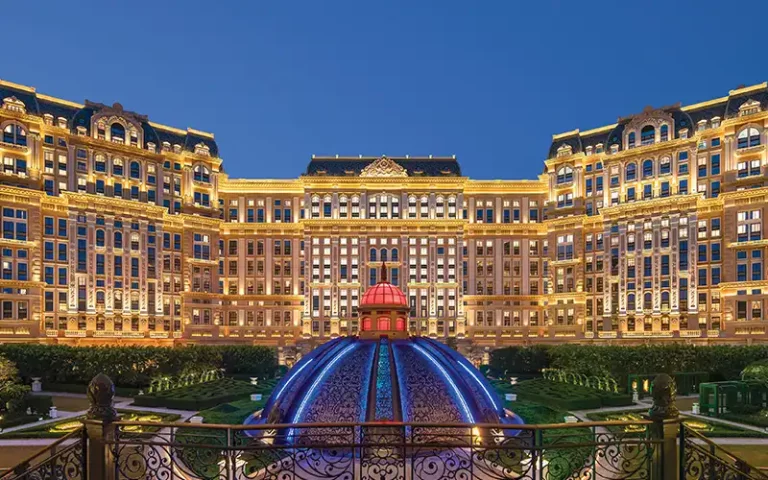
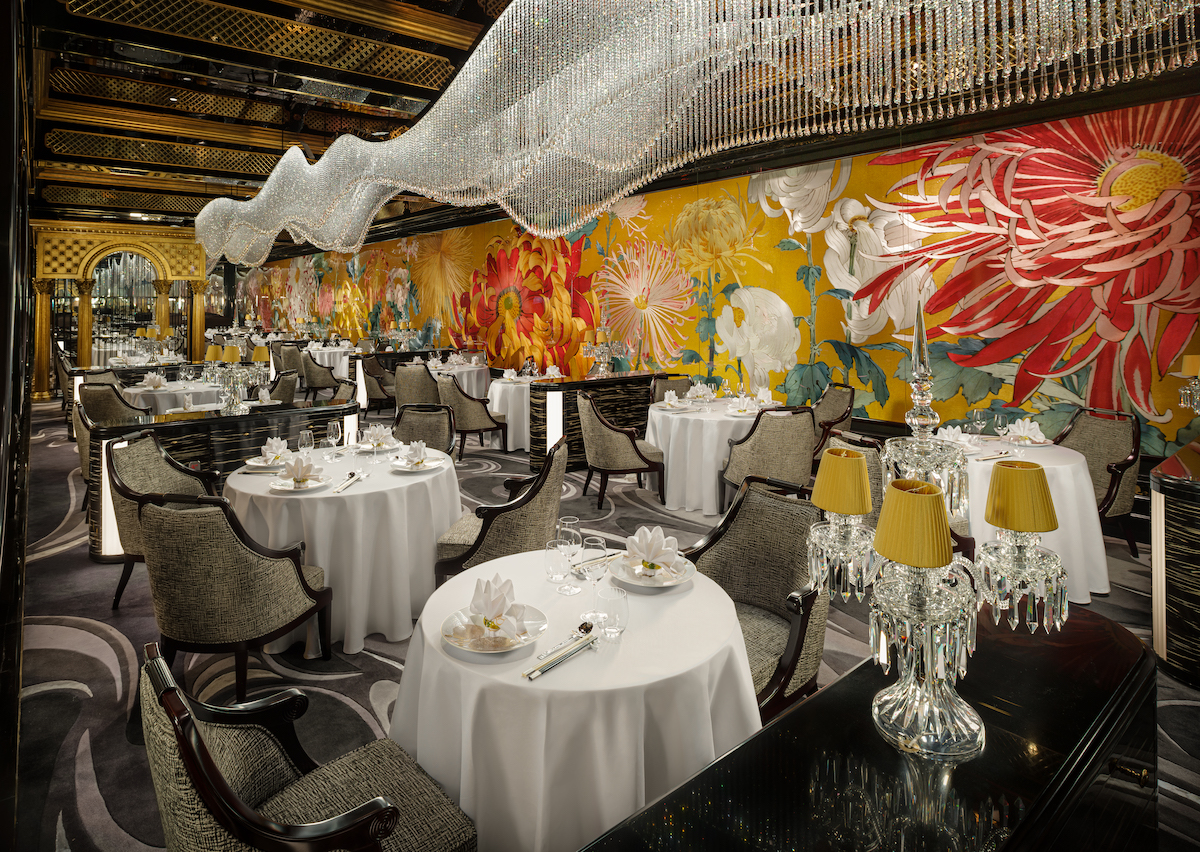
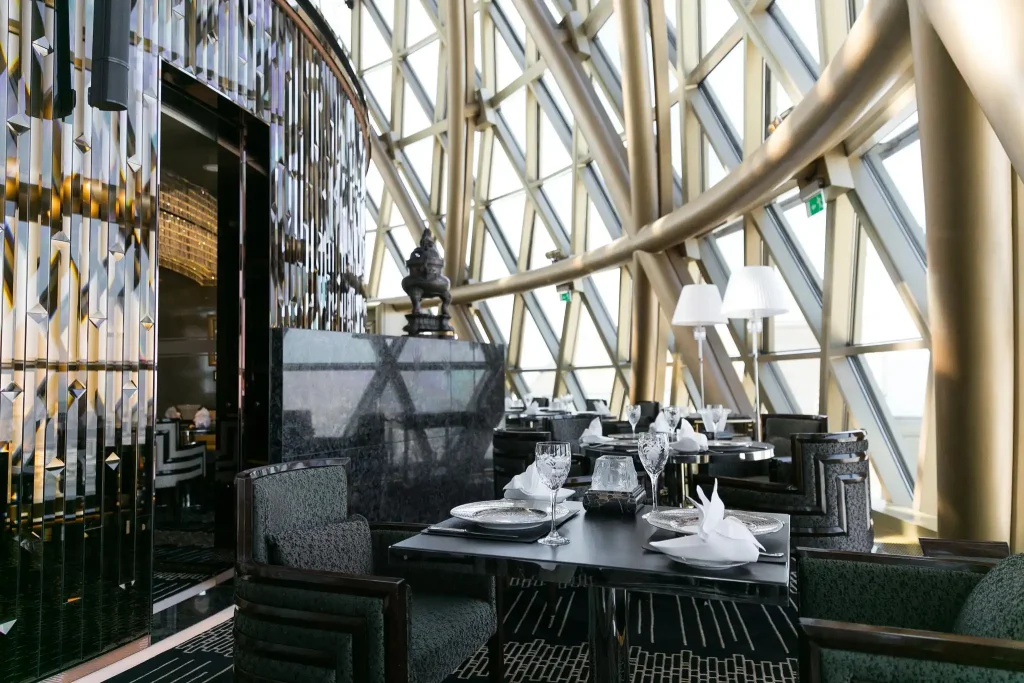
Palace Garden, Grand Lisboa PalaceRobuchon au Dôme, Grand Lisboa Hotel
Experience MICHELIN-Starred Dining and Local Flavours
As a leader in gastronomy, SJM is renowned for its MICHELIN-starred restaurants and acclaimed chefs. Whether guests are seeking exquisite French cuisine, innovative Cantonese dishes, premium Japanese fare, or authentic Macanese street food, SJM offers a one-stop destination to satisfy every preference and allows guests to experience the unique charm of Macau as a UNESCO Creative City of Gastronomy.
Encounter Arts and Culture in Macau
SJM has recently presented the Grand Lisboa Palace Art Gallery, a permanent artistic and cultural hub at Grand Lisboa Palace dedicated to specially curated thematic exhibitions. The gallery’s inaugural exhibition, “The Lisboa, Stories of Macau”, pays tribute to Macau’s rich cultural tapestry shaped by centuries of East-West exchange. Through engaging interactive displays, visitors can explore more than 500 years of Macau’s urban narratives, featuring historical figures, iconic landmarks, and vibrant cultural traditions.
This July to October, SJM will support Art Macao: Macao International Art Biennale 2025, organised by the Cultural Affairs Bureau of the Macao SAR Government, themed around “Hey, what brings you here?” SJM will present a world class exhibition debuting in Macau – an unforgettable experience art enthusiasts won’t want to miss.
Discover Family “Edu-tainment” Experiences
SJM offers a diverse range of immersive “edu-tainment” experiences for visitors of all ages. At Grand Lisboa Palace, two themed experience zones – the technologically advanced AI Wonderland and the authentically traditional Chinese Martial Arts Arena– are designed for families seeking a “Tourism + Education” experience. Further enriching the family experience is GLP Arte, a hub for artistic and cultural activities, where children and adults are invited to participate in an array of artistic, festive and cultural workshops to create unique artwork together.
Rejuvenate at the Luxurious Spas
For visitors seeking relaxation and rejuvenation, Grand Lisboa Palace offers the perfect escape. The resort is home to three Forbes Five-Star spas – The Spa at Grand Lisboa Palace, The Spa at THE KARL LAGERFELD and The SPA at Palazzo Versace Macau – all offering indulgent spa experiences in their own distinctive styles and immerse guests in a world of tranquility, restore body and mind, and experience true revitalisation.
Hotel Offers at the Roadshow
SJM has launched a variety of hotel packages for this roadshow, perfect for family getaways, gourmet retreats, or luxurious golfing holidays. Guests can choose from three distinct and luxurious hotel towers at Grand Lisboa Palace: the Forbes Five-Star Grand Lisboa Palace Macau, the world’s only hotel property designed by the late legendary icon and bearing his name, the eponymous – THE KARL LAGERFELD MACAU, and Asia’s first Palazzo Versace Macau—each catering to diverse travel needs and serving as the ideal choice.
Guests who book designated packages through SJM’s officially designated partners, Hanatour Hong Kong Co., Ltd, MH Tour Co., Ltd, Design Your Tour Co., Ltd, and Dream Tour (HK) Limited will receive an extra gift-pack valued at KRW 340,000 upon hotel check-in, including dining and shopping coupons, and tickets to themed experience zones. Packages are available for booking from now until 23 June, with stay period running from 30 May to 31 August. Limited time only!
Win Fabulous Prizes at the Roadshow
SJM is proud to support the MGTO lucky draw at the roadshow, where visitors have the chance to win fabulous prizes, including luxurious accommodation at Grand Lisboa Palace and breakfast at The Grand Buffet. Visit our booth to join interactive activities and receive a special souvenir! SJM’s adorable mascot, “Sam the Rooster,” will also make a special appearance at the roadshow to take selfies with visitors.
Rooted in Macau for over six decades, SJM offers truly unique tourism experiences that celebrate the rich, multi-cultural heritage of Macau. By highlighting Macau’s diverse “Tourism+” offerings at the roadshow, SJM aims to showcase the best of Macau’s cultural heritage and reinforce the city’s status as a “World Centre of Tourism and Leisure.”
LuckyStreak, the Riga-based live games provider, has powered its senior leadership team with the appointment of Neil Brookes as Head of Product, marking its dedication to product excellence and customer-focused innovation.
Neil brings over two decades of industry experience to LuckyStreak, with a proven track record across sports betting and online gaming product development. Most recently, Neil spent 11 years at Inspired Entertainment, where he managed virtual sports products and served as Head of Product for seven years. His role spanned game strategy, design, marketing, and performance analytics.
Earlier in his career, Neil honed his expertise during six years at SkyBet as a trader, odds compiler and sports desk manager, and prior to that, was part of the trading team at Betfred. He began his career managing betting shops for Paul Dean Bookmakers, gaining valuable front-line experience in customer engagement and operations.
In his new role at LuckyStreak, Neil will define and execute the company’s product roadmap in line with its vision and strategic goals. He will lead cross-functional collaboration to ensure that every new product, feature, and enhancement delivers value to players and partners alike.
Ady Totah, co-founder and CEO at LuckyStreak, said: “It’s always great news for LuckyStreak to bring senior talent and experience into the business. For a long time, we’ve been building great tech – but now, with Neil, we’ve found the right person to bring a true product mindset to match it. His experience across regulated markets, and his ability to align vision with execution, will sharpen how we build and deliver. It’s a strong fit at exactly the right time for us.”
Neil Brookes, Head of Product at LuckyStreak, added: “Right from the first interactions I had with the team at LuckyStreak, it was clear that it was something I wanted to be part of. The mindset and ambition to build on what is already a successful business, to further innovate and entertain with a forward-thinking, people-centric approach really clicks with me and feels like the perfect fit. I’m looking forward to the new challenge and to see what we can make happen.”
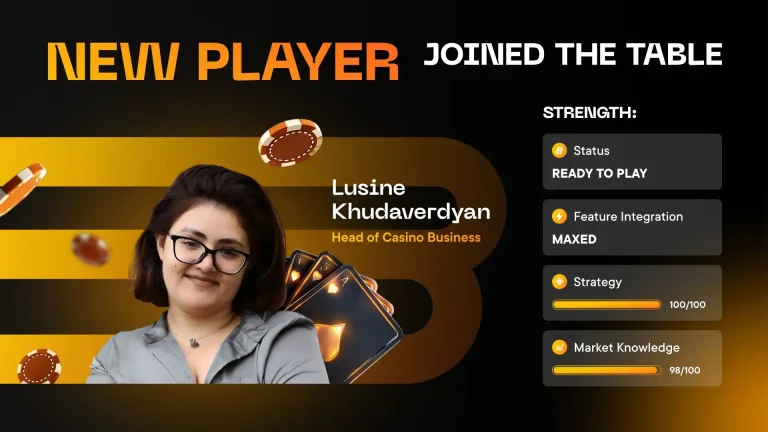
GR8 Tech, a high-performance Sportsbook and iGaming platform provider, has announced the appointment of Lusine Khudaverdyan as its new Head of Casino Business.
Lusine will support the company’s goal of delivering high-performance iGaming solutions—most notably the Infinite Casino Aggregation, which unites the world’s top casino content under one seamless integration—while leading the growth and development of GR8 Tech’s casino vertical to deliver exceptional client value.
A seasoned executive with a deep background in business development, operations, and regional strategy, Lusine brings over a decade of leadership experience in iGaming and adjacent industries. She saw a clear match between her ambitions and GR8 Tech’s future-focused approach.
“I was drawn to GR8 Tech not just for its proven and trusted product, but for the energy and ambition of its people. This is a team that’s truly driven, innovative, and ready to scale,” Lusine said.“From the very beginning, there was a clear alignment between GR8 Tech’s bold vision for expansion and my own professional journey, shaped by years of driving growth across challenging and fast-paced regions where execution meets big-picture thinking.”
As Head of the Casino Business, Lusine will focus on building a competitive, data-driven casino vertical that performs and evolves. Key priorities include product portfolio expansion, operational efficiency, partner collaboration, and new market outreach.
“Lusine brings a rare mix of regional experience, operational depth, and strategic vision. Her leadership will be instrumental in scaling our casino solutions and delivering sustained value to our clients and partners,” added Sergey Ghazaryan, GR8 Tech’s CRO.
Meet Lusine and the GR8 Tech team at SiGMA Asia on June 3–4 to explore GR8 Tech’s solutions, discuss emerging market opportunities, and see how the company is building the future of iGaming.
Hotel employment in Macau experienced significant growth in the first quarter of 2025, with full-time positions increasing by 7.2 percent year-on-year, according to the latest official data from the Statistics and Census Service (DSEC).
The number of full-time employees in the hotel sector reached 60,482, representing an increase of 4,068 positions compared to the same period in 2024. This substantial growth reflects the continued recovery and expansion of Macau’s hospitality industry.
However, wage growth did not mirror employment gains. Average earnings for full-time hotel employees, excluding irregular remuneration, totaled MOP20,090 ($2,505) in March 2025, declining by 1.9 percent from the previous year.
The job vacancy rate in hotels stood at 1.4 percent at the end of the first quarter, down 1.1 percentage points year-on-year. Total job vacancies numbered 839 across the hotel sector. Employee turnover rates also improved, dropping to 3 percent, a decrease of 0.3 percentage points compared to 2024, indicating greater workforce stability.
Language requirements continue to shape hiring patterns in the sector. The survey revealed that 86.1 percent of hotel vacancies required knowledge of Mandarin, reflecting the predominance of mainland Chinese visitors to Macau’s tourism market.
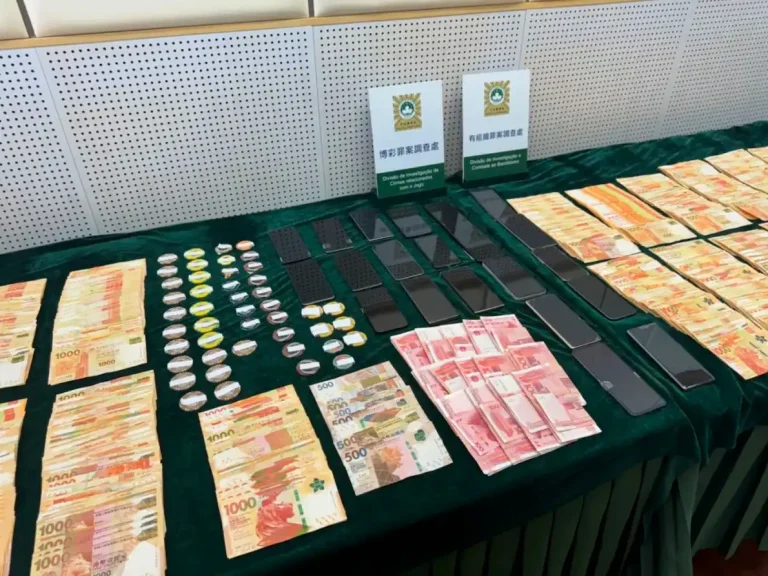
Macau recorded 567 gaming-related criminal investigation cases in the first quarter of 2025, representing a 61.5 percent increase from the same period in 2024, according to data released by the city’s security authorities during a media briefing on Wednesday.
The Judiciary Police and Public Security Police Force reported that the surge in cases was primarily attributed to new legislation targeting illegal money exchange operations, known locally as money exchangers. The Anti-Illegal Gambling Crime Law, which took effect in late October 2024, criminalized “operating illegal currency exchange for gambling” and enhanced regulations for other illegal gambling crimes.
Of the 567 cases recorded in the first quarter, 132 involved ‘operating illegal currency exchange for gambling,’ accounting for over 60 percent of the increase compared to the previous year. This new offense category represents the primary driver behind the overall rise in gaming-related crimes.
Despite the statistical increase in cases, authorities reported substantial success in their enforcement efforts. Police detained 251 suspected money exchangers during the first quarter, marking an 80.6 percent decrease from the 1,292 individuals detained in the same period of 2024.
Law enforcement agencies solved 157 cases of “operating illegal currency exchange for gambling,” including the 132 newly filed cases and additional cases initially classified under other charges but later found to involve illegal currency exchange. These operations resulted in 251 arrests and helped maintain order in gaming venues and surrounding areas.
Macau security authorities mentioned in the press release that the effectiveness of cross-border cooperation was demonstrated in March when Macau and mainland Chinese authorities jointly dismantled two transborder illegal currency exchange criminal organizations. The operation led to the arrest of over 60 gang members across both jurisdictions.
One criminal group used fake delivery services while another operated through jewelry shops conducting fraudulent transactions to provide illegal currency exchange services to gamblers, with amounts reaching HK$200 million ($25.7 million) and HK$590 million ($75.8 million) respectively.
Fraud cases dominated gaming-related crimes in the first quarter, with 152 cases representing 26.8 percent of all incidents. Illegal currency exchange operations ranked second with 132 cases, accounting for 23.3 percent of the total.
Other significant categories included usury cases with 51 incidents representing nine percent of all cases, theft with 46 cases at 8.1 percent, and misappropriation with 38 cases comprising 6.7 percent. Violations of casino exclusion orders recorded 21 cases at 3.7 percent, while remaining crime types each represented less than three percent of the total.
Compared to 2024, most major categories of gaming-related crimes showed declining trends, with fraud being the notable exception showing an increase. The new offense of “operating illegal currency exchange for gambling” cannot be compared to previous periods due to its recent introduction.
Analysis of the 679 suspects involved in gaming-related crimes revealed that 119 were Macau residents, representing 17.5 percent of the total, while 560 non-residents comprised 82.5 percent. Among the 333 victims, only 28 were local residents at 8.4 percent, with 305 non-residents accounting for 91.6 percent.
These statistics indicate that gaming-related crimes continue to primarily involve non-local individuals as both perpetrators and victims, with no signs of localization in criminal activity patterns.
As the Dragon Boat Festival holiday approaches from May 31st to June 2nd, Chinese tourists are preparing for a travel surge both at home and abroad.
Fliggy, an online travel platform under the Alibaba Group, has released its 2025 Dragon Boat Festival Travel Forecast, revealing the most popular destinations and key travel trends for the holiday period.
According to the platform, outbound travel is seeing a strong rebound compared to 2024. Regional destinations within a four-hour flight radius—including Hong Kong SAR, Japan, South Korea, Malaysia, and Thailand—remain the most popular among Chinese tourists.
Fliggy also notes a growing appetite for long-haul and off-the-beaten-path destinations. Countries such as Uzbekistan, Iceland, Qatar, Kazakhstan, and Tanzania are attracting adventurous travelers looking for unique international experiences.
In 2024, China’s outbound tourism made a strong recovery. During the first three quarters, nearly 95 million outbound trips were recorded, marking a 52 percent year-on-year increase and reaching 82 percent of the 2019 level.
By the end of 2024, the total number of outbound travelers was expected to hit approximately 130 million, representing 90 percent of pre-pandemic levels.
Southeast Asia remained a top destination last year, with travel to countries like Thailand, Malaysia, and Singapore nearing 2019 levels.
Provincial capitals lead, smaller cities surge
Major provincial capitals like Beijing, Guangzhou, Shanghai, Chengdu, and Kunming continue to dominate domestic travel itineraries. However, second- and third-tier cities are rapidly climbing in popularity thanks to viral social media exposure.
Jincheng in Shanxi province and Haidong in Qinghai province have seen booking booms, with travelers drawn to their natural beauty and cultural charm.
Emerging summer retreats such as Shuangyashan in Heilongjiang province and Pu’er in Yunnan province are also attracting a growing number of tourists seeking cooler climates and scenic escapes.
This year’s holiday coincides with Children’s Day, boosting interest in family-oriented vacations. Theme park ticket sales have more than doubled, while bookings for family hotel packages—which combine lodging, dining, and entertainment—are up 24 percent.
Traditional cultural activities like dragon boat racing and zongzi (glutinous rice dumpling) making are enjoying renewed interest, pointing to a growing appreciation for heritage-based experiences.
Meanwhile, suburban day trips for water activities, picnics, and pet-friendly camping are in high demand, with camping bookings rising 80 percent.
Short-haul travel is leading the way this year. Two-hour high-speed train rides and local getaways are preferred by many travelers. Car rentals have surged 47 percent year-on-year, reflecting a growing preference for self-driving tours. Popular self-drive destinations include Urumqi, Yili, Haikou, and Guiyang.
The shifting dynamics of China’s outbound travel also mean that integrated resort operators have to increasingly up their game to provide attractions that go far beyond the casino floor – with experience travel trumping the desire for the casino floor.
Scientific Games has been officially licensed by the General Commercial Gaming Regulatory Authority (GCGRA) as a Gaming-Related Vendor License for lottery products and services in the United Arab Emirates, marking a significant step in the country’s evolving commercial gaming sector.
The GCGRA, established in 2023, is the UAE’s federal executive agency overseeing commercial gaming, including lottery, internet gaming, sports wagering, and land-based gaming facilities.
Scientific Games is a lottery technology developer with operations across five continents, providing retail and digital gaming solutions to 150 lotteries in 50 countries.
Michael Conforti, President of International Business at Scientific Games
“We are extremely pleased that Scientific Games has been authorized as a lottery supplier in the UAE with this license”, said Michael Conforti, President of International Business at Scientific Games.
“We look forward to leveraging our 50-plus years of expertise to deliver high-performing lottery products that responsibly support local communities and national projects.”
The UAE has taken significant steps toward legalizing gambling, marking a shift in its regulatory landscape.
In 2024, the GCGRA was established to oversee commercial gaming activities, including lotteries, internet gaming, sports wagering, and land-based casinos.
One of the most notable moves was the issuance of the country’s first lottery license, signaling the government’s intent to regulate and expand gaming operations.
The GCGRA also published comprehensive casino and gambling regulations, outlining licensing procedures and responsible gaming requirements.
Good Morning. The days of anonymity are long gone. And in the world of gaming, especially the online sphere, companies are working ever harder to make sure they know exactly where funds are coming from and who they’re going to. And KYC providers stand to make a significant buck. Meanwhile, in Macau, May’s gross gaming revenue could come in as high as $2.6 billion, given a strong uptick from VIP in the final part of the month.
Verification is now the name of the game, with Know Your Customer (KYC) processes playing a crucial role in confirming who is involved and why each transaction occurs—an increasingly vital safeguard as the online gaming industry rapidly expands. At Jumio, this is in full force, with the company finding that more clients than ever are hoping to identify transactions and help to stay in regulatory compliance.
With over 30% of global gaming revenue projected to come from Asia soon, the window of opportunity is wide open. Bettorify’s white-label and turnkey solutions deliver what most platforms miss: sharp execution backed by real local expertise.