

Nevis has positioned its newly launched online gaming framework as a long-term economic diversification strategy rather than a short-term licensing play, with Premier Mark Brantley saying the jurisdiction is focused on building a reputable, sustainable ecosystem that can compete at the top tier of global gaming regulation.
Speaking to Asia Gaming Brief at ICE 2026 in Barcelona, Brantley said the decision to introduce a dedicated online gaming licensing regime was driven by lessons learned during the COVID-19 pandemic, when Nevis’ heavy reliance on tourism exposed structural weaknesses in the island’s economy.
Nevis, which forms part of the Federation of St. Kitts and Nevis, saw hotels close and borders shut during the pandemic, resulting in widespread economic disruption. Brantley said the experience prompted a firm political commitment to diversify away from dependence on a single industry.
Gaming emerged as a natural option due to Nevis’ long-standing reputation as a regulated financial services center. The jurisdiction has operated an international financial services industry for more than four decades and has been subject to ongoing assessments by international bodies including the Financial Action Task Force (FATF). Brantley noted that Nevis has remained largely compliant with global standards and has avoided grey listing, giving it a strong foundation on which to build a gaming framework.

According to the premier, the same regulatory principles applied to banking, trusts and international companies are now being extended to online gaming. These include strict anti-money laundering requirements, rigorous due diligence and a compliance-first approach to licensing.
Beyond direct licensing revenue, Brantley said Nevis is targeting broader economic benefits by encouraging companies to establish a physical and operational presence on the island. The government is actively courting not only operators, but also payments firms, technology providers, artificial intelligence (AI) platforms and other suppliers that support the online gaming value chain.
The aim is to create an integrated digital ecosystem, with Nevis positioning itself as an attractive base for digital nomads and internationally mobile professionals. Brantley highlighted the island’s internet infrastructure, local banking availability for licensed entities and overall quality of life as key selling points.
When asked how Nevis sees itself within the global licensing hierarchy, Brantley said it was too early to claim top-tier status, given the framework is still in its infancy. However, he was clear about the long-term ambition. Nevis intends to become a major jurisdiction by attracting the right partners and building regulatory and operational capacity in a measured way.
A core part of that strategy involves encouraging companies to relocate or establish regional offices on the island, whether for back-office operations, incorporation or compliance functions. Brantley said Nevis’ decades of experience in financial services allow it to offer a wide range of ancillary services that international gaming companies require.
Reputation over volume
On the question of operator profile, Brantley said the jurisdiction is competitively priced and open to both established groups and newer entrants. However, he stressed that reputation is the non-negotiable benchmark.
“Only reputable entities need apply,” he said, adding that Nevis is focused on growing the industry sensibly and sustainably rather than chasing volume for its own sake.
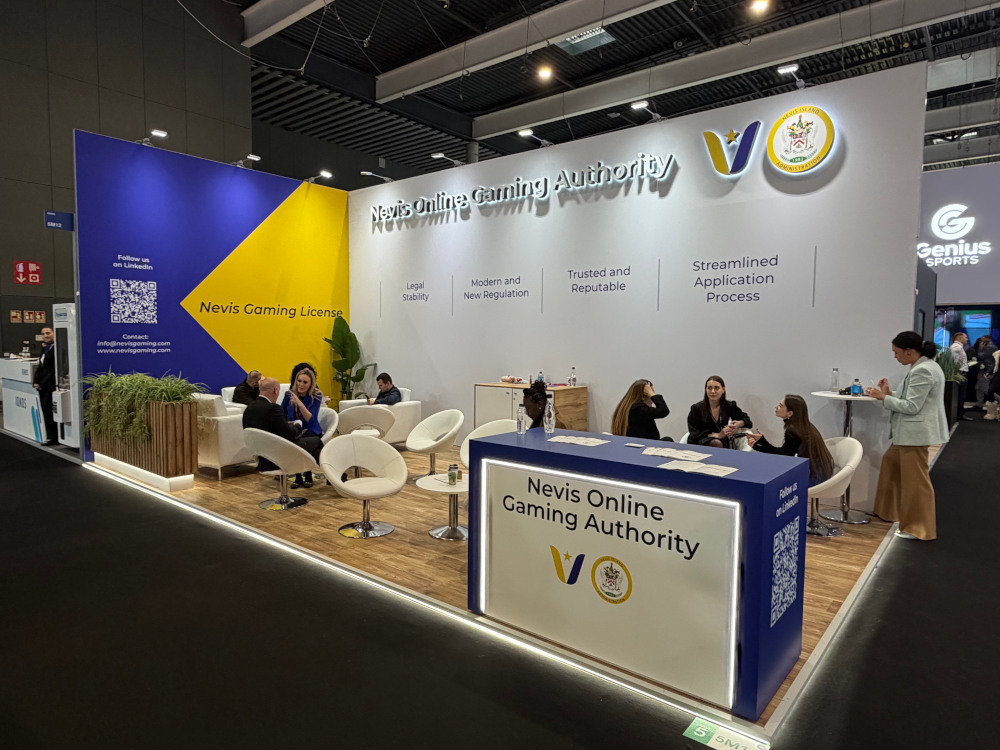
Licensing is administered through the Nevis Online Gaming Authority, which acts as the central portal for applications. Brantley said his role at ICE was to raise awareness that Nevis is open for business, while directing interested parties to engage formally with the regulator.
Addressing concerns around regulatory failures seen in other well-regarded jurisdictions, Brantley said Nevis has deliberately set a high bar for entry. Applications are subject to extensive due diligence, drawing on the island’s 40 years of experience overseeing international financial services.
The licensing process involves multiple layers of review, including the regulator and the Ministry of Finance, before final approval is granted. Licenses are issued on an annual basis, with continuous monitoring throughout the year. Renewal is conditional on operators demonstrating ongoing compliance and reputable conduct. Brantley said this layered and recurring oversight model is designed to reduce the risk of bad actors entering or remaining in the jurisdiction.
While the government has not set a numerical target for license issuance, Brantley said success would be measured by the quality of operators rather than speed of growth. He reiterated that responsible expansion is more important than rapid scale, even if that means turning away potential applicants.
With the framework now live, Brantley encouraged companies to engage sooner rather than later, suggesting that the next 11 months present an opportunity to assess Nevis firsthand. He also pointed to the island’s lifestyle appeal, citing its climate, outdoor activities and food culture as additional incentives for companies and individuals considering relocation.