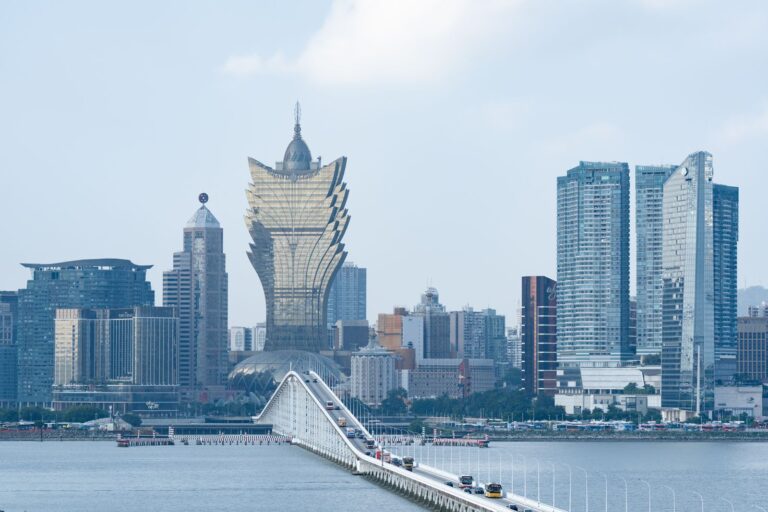

The weaker second-quarter results reported by Macau casino operator SJM Holdings were mainly due to the sluggish ramp-up at its flagship Grand Lisboa Palace and a loss of market share across all property segments, according to brokerage Seaport.
SJM’s adjusted EBITDA fell 21 percent year-on-year to HK$688 million ($88 million), about 25 percent below consensus.
Revenue rose 5.7 percent from a year earlier to HK$7.27 billion ($933 million), but the company swung to a net loss of HK$213 million ($27.3 million) from a profit in the prior quarter — its third straight quarterly decline in both profit and EBITDA.
Seaport Senior Analyst Vitaly Umansky highlighted the Grand Lisboa Palace as the main source of weakness. The Cotai resort, a multi-billion-dollar investment seen as critical to SJM’s long-term growth, captured only 2.3 percent of the market in the quarter, down from 2.8 percent in the first three months of the year.
The brokerage said the property’s ramp-up has been ‘anemic’, weighed down by low VIP hold and limited traction in the higher-growth premium mass segment, with returns on investment likely to remain sub-optimal.
Overall market share slipped to 12.3 percent, down from 13.5 percent in the first quarter and 13.9 percent a year ago. Seaport noted that SJM lost share across every property category and is unlikely to regain momentum in the near term, with its positioning in the premium segment seen as weaker than rivals.
To counter the decline, SJM said it will expand its iconic Casino Lisboa on the Macau peninsula.
The company has agreed to purchase additional space in the adjoining Lisboa Hotel for HK$582 million ($74.66 million), with plans to enlarge the self-operated casino floor.
The move comes as all of Macau’s satellite casinos — venues operated under the licenses of the city’s six concessionaires but run by third parties — are set to close by the end of the year.
Satellites accounted for nearly 11 percent of SJM’s EBITDA in the quarter, up from 8.2 percent in the first three months of 2025. The segment represented almost 40 percent of the company’s total gross gaming revenue in the period.
While SJM intends to absorb some of this business by expanding Lisboa and acquiring two satellite properties, Seaport cautioned that the operator is unlikely to retain all of the market share from the closures, forecasting its consolidated share could fall toward the low-11 percent range in 2026–27.
Leverage also remains a concern, with net debt standing at 6.6 times EBITDA. While Seaport expects this ratio to improve steadily as earnings grow and debt is repaid, the firm said dividend payments are unlikely to resume for at least the next two years as SJM prioritizes deleveraging.
‘Grand Lisboa Palace’s slow ramp-up continues to limit any potential positive view on the stock’, Seaport said, adding that despite efforts to strengthen its premium mass and VIP offerings, the property may be hitting a ceiling at a market share of about 3 percent unless there is a ‘material change in strategy and execution.’