
Home Blog Page 693

Daily Asia Gaming eBrief: From adverts to reports, gambling in public eye in the Philippines

0

Good Morning. Gambling-linked operations in the Philippines could be pushing the envelope in regards to how prevalent their marketing tactics are, as every street corner features some form of advert, with some public pushback on the content or the companies represented. Meanwhile, main gaming operators already have teams on the ground in Thailand, even as some doubts remain as to when (or if) the nation’s gaming legislation can be rolled out. Plus, take a look at Light & Wonder’s new offerings taking the market by storm.

What you need to know


On the radar


AGB Intelligence

PHILIPPINES

Gambling industry blatantly on display in the Philippines

Instantly upon arrival in the Philippines, the gambling industry and all the related suppliers, providers and offerings are immediately upon display. This has caused some backlash, in particular related to Chinese-linked companies, due to a tense political environment and uncovered cases of frauds and scams. But it also is confusing as to the scale of advertisements, and who exactly they’re meant to be targeting.


Corporate Spotlight

Know Your Enemy: An Interactive Guide to Online Gaming Fraud

Sumsub, Online Gaming Fraud, verification platform

Online gaming fraud is on the rise in the iGaming industry. In Q1 2022, there was an 85% increase in fake account registrations compared to Q4 2021. While players are undoubtedly affected by gaming fraud, iGaming platforms also suffer due to damaged reputations, huge financial losses, and legal consequences.

How 1xBet dominates the Asian market: conditions and approach

1xBet, Asian Market

1xBet operates in several dozen countries in Asia, and the number of partners in this region is growing steadily, which indicates the effectiveness of the 1xPartners affiliate program. The brand offers favorable conditions and a modern set of tools for making money on the Internet.


Industry Updates


MEMBERSHIP | INTELLIGENCE | ASEAN | CAREERS
Gaming operators already on the ground targeting Thai customers: Expert

0

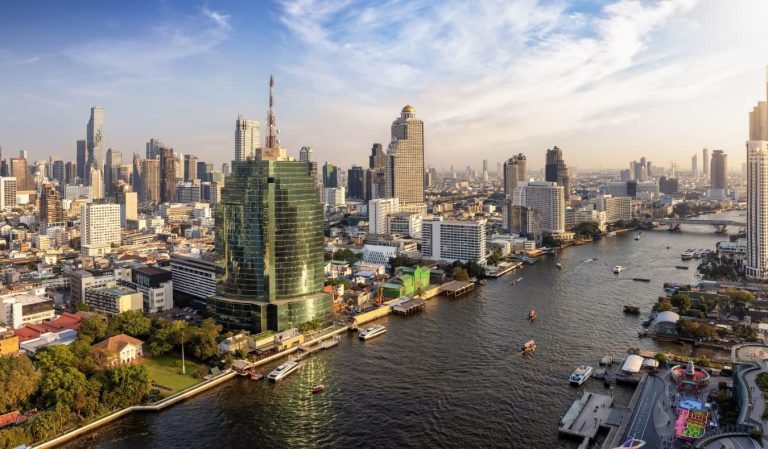
Top-tier gaming operators “certainly have development teams covering Thailand, and these teams are beginning to visit Bangkok regularly,” says gaming expert Daniel Cheng in an interview with AGB.

Gaming operators already on the ground targeting Thai customers: Daniel Cheng
Daniel Cheng, Gaming expert

Daniel Cheng is a gaming expert and the author of the book entitled How I Built an Integrated Resort.

According to recent reports, Thapanee Kiatphaibool, the governor of the Tourism Authority of Thailand (TAT), met with Pansy Ho, Chairperson and Executive Director of MGM China, late last week to discuss opportunities for tourism cooperation between the two jurisdictions.

Daniel Cheng believes that gaming operators may not have established local offices specifically to obtain new licenses, but many already have sales teams on the ground targeting Thai customers for their resorts in the region.

In addition to Pansy Ho, “other senior casino executives have been paying visits to Thai officials and business leaders in recent months,” he noted.

Bill Hornbuckle, MGM Resorts, CEO, President
Bill Hornbuckle, CEO, MGM Resorts

Bill Hornbuckle, CEO and President of MGM Resorts, has already expressed his interest in Thailand, describing the market as “interesting” during his company’s recent Q1 2024 earnings call.

The interest in the Thai market extends beyond MGM China. Macau’s casino operators are increasingly focusing on Thai tourists, who rank eighth among Macau’s top tourism source markets.

The Bangkok Post reported comments from a representative of Galaxy Entertainment Group, who disclosed plans to open a new office in Bangkok soon. This initiative aims to strengthen the company’s marketing endeavors aimed at attracting Thai players to Macau.

Study coming out any time soon

In mid-May, the Ministry of Finance in Thailand requested an additional two weeks to finalize a feasibility study on the legalization of casino gaming.

Despite the delay, Daniel Cheng anticipates that the study results “will come out any time soon” as the Thai prime minister is pushing to accelerate the process.

Besides the study itself, the expert also mentions that the current Thai prime minister is facing a possible indictment this week. If there is any political instability, the casino legalization process may face delays.

According to a recent report from Maybank, Thailand may open its first Integrated Resorts (IRs) as early as 2029, potentially legalizing casino gaming ahead of Japan. In Osaka, MGM Resorts International’s $10 billion IR development isn’t scheduled for completion until at least 2030.

Light & Wonder highlights latest products at G2E Asia 2024

0

Light & Wonder showcases its new products including its dual screen cabinet and upright 43″ cabinet, highlighting fresh new games – heading to markets across Asia.

Pragmatic Play takes a twilight trip for treasure in Big Bass Mission Fishin’

Pragmatic Play, a leading content supplier to the iGaming industry, has set players a new assignment with two thrilling bonus games in Big Bass Mission Fishin’.

Under the cover of darkness, everyone’s favorite fisherman goes underwater in search of high-paying symbols. Players  can select one of two missions when they hit three or more fish scatters to trigger the bonus round.

If players choose free spins, they first get to pick from a selection of top-secret files containing bonus game modifiers, including more fish symbols, more fisherman wilds, more dynamites, hooks and bazookas, and two additional free spins. They can even start the feature at level two with a 2x multiplier. But if a file reveals a boot, the pick game ends and the bonus game begins  with between 10 and 22 free spins.

Irina Cornides, Chief Operating Officer at Pragmatic Play, said: “The Big Bass series from Pragmatic Play continues to enthrall players, win accolades, and embark  on new adventures around the world.

Play’n GO’s Rich Wilde and the Tome of Insanity is “Game of the Year contender” following blockbuster performance

Play’n GO, the world’s leading casino entertainment provider, today hailed the release-week performance of the most recent iteration of its legendary Dead series of games, Rich Wilde and the Tome of Insanity, with the latest game data described as “exceptional” by Head of Games Retention, George Olekszy. 

Rich Wilde and the Tome of Insanity is Play’n GO’s 21st release of an already busy 2024, but early indications suggest that the game will go down as one of the Swedish studio’s classic titles, with record numbers of rounds played, bets placed, and number of players all reported in the first week of its release. Tome of Insanity’s number of rounds played was tracking at a staggering 160 percent of the average in Week 1 of its release, with player-count up by 57 percent against the same metric. 

George Olekszy, Head of Game Retention at Play’n GO said: “Rich Wilde and the Tome of Insanity received rave reviews internally while in development, and its release-week performance has been exceptional by every available metric”.

Philippine Congressman calls for abolition of PAGCOR

A Congressman in the Philippines is calling for the abolition of PAGCOR and for it to be replaced with a new agency called PAGCOM.

Bukidnon 2nd District Representative Jonathan Keith Flores, who is also the chairperson of the House Committee on Government Reorganization, proposed on Saturday to abolish state-run gaming firm Philippine Amusement and Gaming Corporation (PAGCOR) and privatize its self-operated casinos.

In its place, Flores’s proposal aims to create the Philippine Amusement and Gaming Commission (PAGCOM) to regulate gaming operations in the country.

Flores announced in a news release on Saturday that he adopted House Bill 3559, originally authored by former Batangas lawmaker and current Finance Secretary Ralph Recto, as his own. The bill seeks to address PAGCOR’s conflicting roles as both regulator and operator by privatizing state-run casinos.

“I adopted House Bill 3559 because it will abolish PAGCOR, transfer its regulatory powers to PAGCOM, and privatize all existing PAGCOR operations and casinos, including all PAGCOR online gaming,” Flores stated.

POGO hub, Philippine Congressman calls for abolition of PAGCOR

He mentioned that, during the joint deliberation of the Government Reorganization and Games and Amusement committees, he will introduce amendments to phase out all Philippine Offshore Gaming Operators (POGOs) licensed by PAGCOR.

Additionally, he will propose to dismantle all illegal POGOs operating without licenses or with expired licenses.

Flores also plans to amend the bill to ban online games on mobile phones and cyberspace that are used for cybercrime, scams, identity theft, and online theft.

Under the bill, PAGCOM would collect a 5 percent gross revenue tax from casino operators.

PAGCOM will also collect an additional 25 percent from aggregate gross earnings, earmarked for local government priority projects, the establishment and operation of rehabilitation centers for addiction treatment, and other national government social services programs.

The changing face of the gambling industry in the Philippines

The way the gambling industry is acting and presenting itself in the Philippines has changed greatly over the last decade or so, but not everyone seems pleased with it.

Travelers arriving in Manila by air these days are presented with gambling adverts before they have even had the chance to pick up their bags. Large displays around the arrival area at Ninoy Aquino International Airport are promoting a variety of products and companies in a curious mix between B2B and B2C adverts.

Newly Philippine Inland Gaming Operator (PIGO) licensed firms are trying to persuade local punters to try out their wares, while software providers are highlighting the benefits of their products in English, Chinese and other languages. Even the luggage trolleys encourage users to request more information about a gambling API, a term that will be unfamiliar to anyone outside of IT or product management.

The changing face of the gambling industry in the Philippines

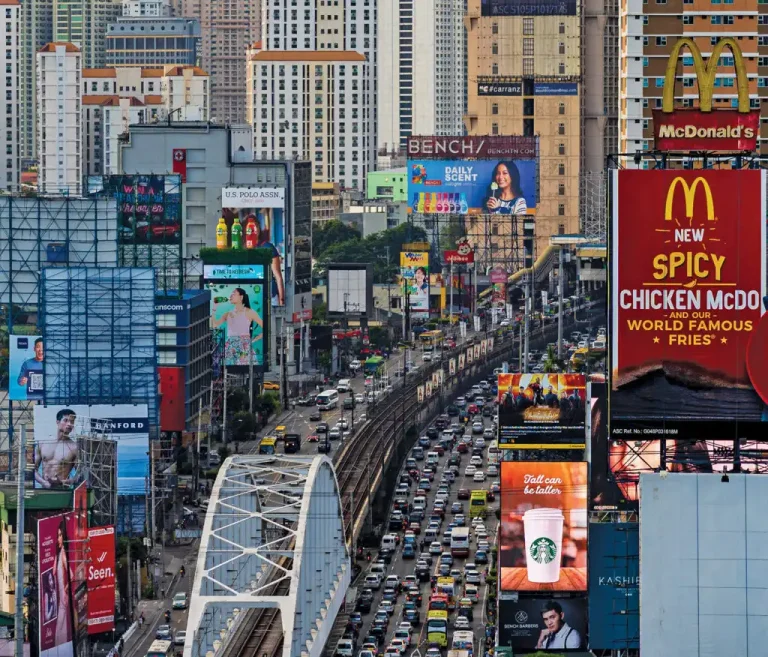
The marketing barrage continues in the city itself, where giant billboards tower over the perma-congested EDSA ring road, and celebrity endorsers look down on motorists in an attempt to catch their attention and encourage sign ups to local bingo, sports betting and casino websites.

This kind of openness would have been impossible little more than a decade ago, when Philippine Offshore Gaming Operators (POGOs) did not exist yet and offshore gambling companies mostly had First Cagayan licenses in their offices along Ayala Avenue in Makati. Printed invites for the first Asia Gaming Brief networking socials in Manila back in 2013 were hand delivered by myself to the various offices in PBcom Tower and RCBC, as simply looking up companies or employees on networks like Linkedin wasn’t an option.

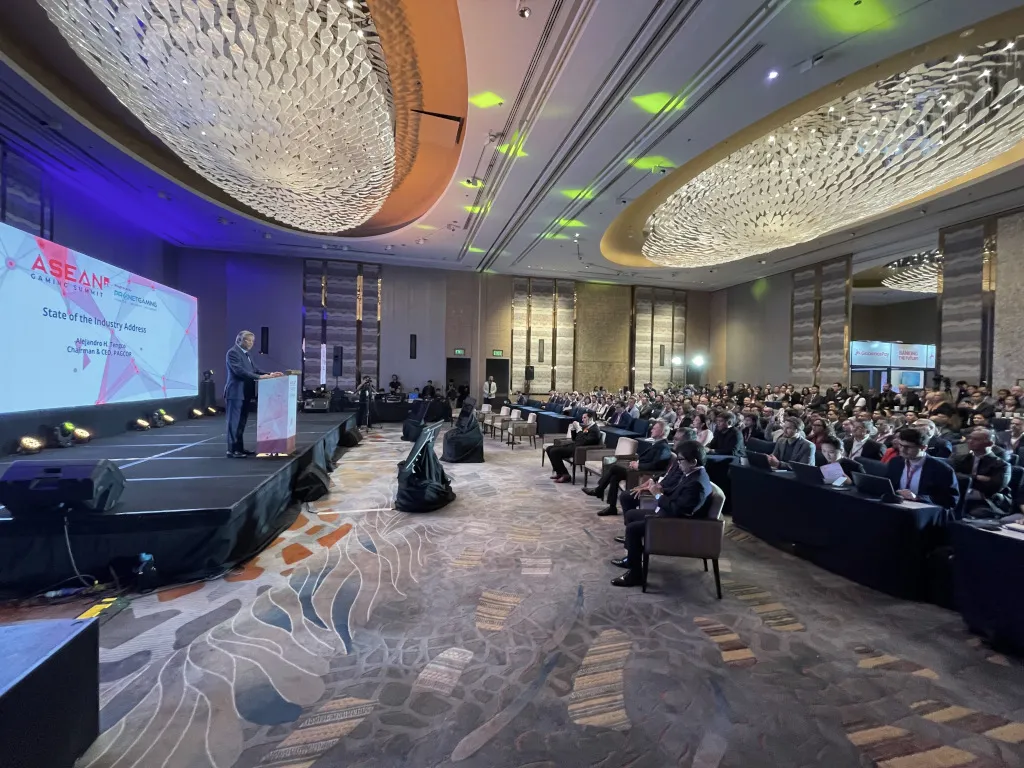
Since then, the industry has opened up considerably in Manila and beyond. The networking socials grew into the ASEAN Gaming Summit, the pioneering industry event in the country, and changes in legislation and political environment allowed gambling to come out into the open. Not everyone is happy about this, however, as POGOs (now known as IGLs) continue to attract controversy in the Philippines.

gambling industry

Initially brought in as a business-friendly option by the Philippine Amusement and Gaming Corporation (PAGCOR) around 2016, a number of unscrupulous operators have since seemingly abused the licensing framework and used it as cover for everything from money laundering to running scams. High profile stories such as the one surrounding “POGO Mayor” Alice Guo have also helped to shape public perception of gambling companies negatively, often to the detriment of the many firms who are trying to do things by the book.

The increased visibility of gaming operators in every day life has also caused public reactions in other ways, especially where links to China are seemingly present. An image depicting the advert of an apparently Chinese gambling software company on a bus in Quezon City, Metro Manila, recently attracted thousands of views on social media platform X, with some users voicing negative opinions about it. Tensions between China and the Philippines are already high due to China’s continued actions in the West Philippine Sea, and as a result many Filipinos do not perceive Chinese companies in a good light.

PAGCOR is aware of these concerns and already trying to get on top of things. POGOs are technically not called that anymore and now referred to as internet gaming licensees (IGLs), with PAGCOR Chairman and CEO Alejandro H. Tengco stating that these types of operators do not need to be outlawed and instead more should be done to intensify anti-crime operations. In his opinion, so called alien hacking and scam syndicates pose a greater threat to the country than IGLs.

gambling industry

There have also been repeated calls to ban POGOs and other operations like them, but anyone with any insight into, or understanding of, the workings of Philippines politics will quickly realize that such outright bans are unlikely. Instead, we will likely see continued growth for the industry in the country, with the regulator trying to create a safe and competitive environment through new regulations and lowered fees. The aim is clearly to stabilize legalized gambling in the Philippines and maximize the positive economic impact that can be achieved from it.

Newly opened resorts like Solaire North display business confidence in the region and support its ambitions to compete with destinations like Macau. A growing number of local operators continue to thrive under the PIGO licensing regime and support the Philippines’ claim of being the leader in regulated gambling in Asia.

With the matter of offshore gaming operators being in the public spotlight again at the moment, regulatory actions can also be expected to bring increased order and stability to the field of IGLs. All in all, it is fair to say that the gambling industry in the Philippines has truly come out of the shadows and into the limelight in the last decade, and its potential for growth remains strong.

Macau eyes 33M visitor arrivals in 2024 due to IVS expansions

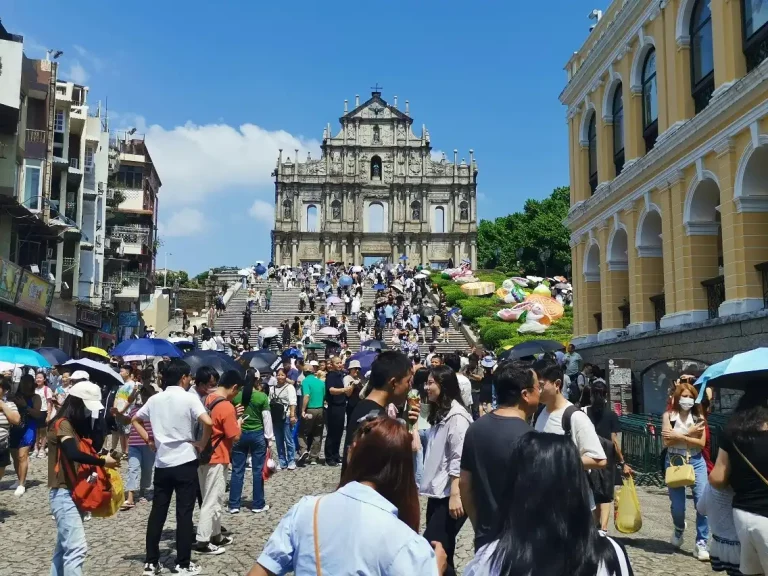
Macau tourism authorities have set a goal to welcome 33 million visitors in 2024. If realized, this would represent a nearly 17 percent increase from 2023.

The projection is based on the fact that China’s government has added 10 more Chinese cities under the Individual Visit Scheme (IVS), according to Helena de Senna Fernandes, Head of the Macao Government Tourism Office (MGTO).

Xi’an and Qingdao are newly added mainland cities for the IVS to Hong Kong and Macau this year. According to Fernandes, since the scheme became effective in March, the number of visitors to Macau from these two cities has continued to rise.

In the first five months of this year, over 34,000 visitors from Qingdao came to Macau, exceeding the 25,000 visitors during the same period in 2019. Meanwhile, more than 64,000 visitors from Xi’an traveled to Macau, recovering to 92 percent of the 2019 level.

Local media outlet Macao Daily News reported that, as the number of visitors to Macau increases, visitor spending has also risen compared to previous levels. Total visitor spending in the first quarter of this year reached MOP20.35 billion ($2.53 billion), an increase of nearly 36 percent compared to the same period last year.

In the first five months of 2024, cumulative visitor arrivals reached approximately 14.18 million, about 82 percent of the level seen in the same period in 2019. The data reflects a continued rise in tourists’ willingness to travel to and spend in Macau, a positive development trend for Macau’s tourism industry.

The number of visitors from Hong Kong and Taiwan amounted to approximately 2.98 million and 324,000, respectively, in this five-month period, representing increases of 4.6 percent and 144.2 percent compared to last year. These figures have recovered to 97 percent and 73 percent of the levels seen in the same period in 2019.

Additionally, Macau received around 978,000 international visitors in the same period, with a daily average of over 6,400, an increase of approximately 176 percent compared to last year, recovering to 67 percent of the levels seen in the same period in 2019.

Paradise Co. delists from KOSDAQ, transferring to main KOSPI market

0

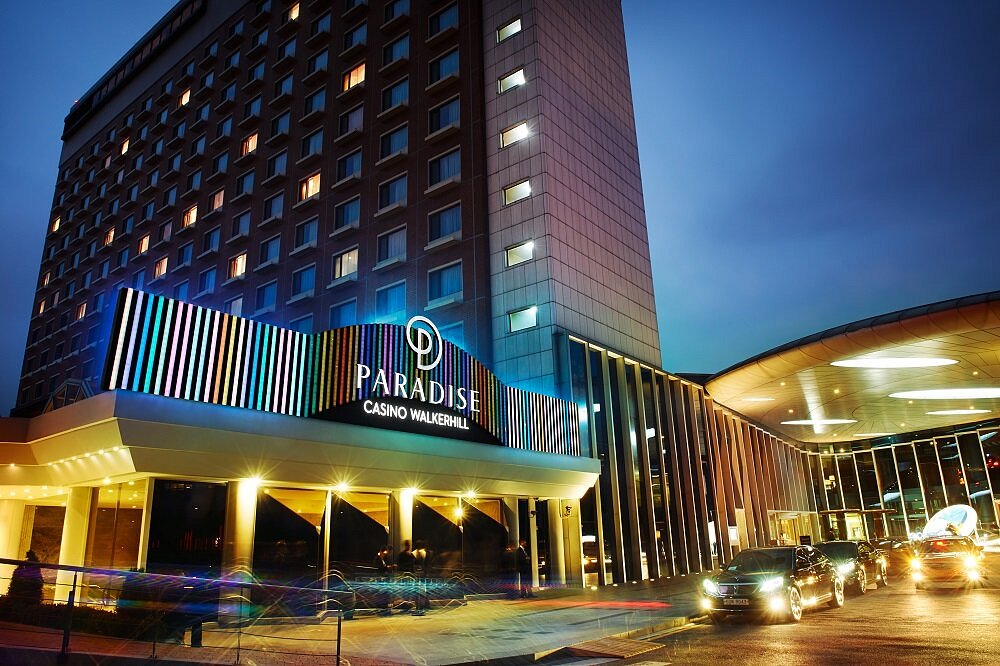
Paradise Co., an operator of foreigner-only casinos in South Korea, has announced that it has satisfied all criteria for a new listing evaluation. As a result, its stock will be transferred from KOSDAQ to the main KOSPI market.

The news was announced in a filing to the Korea Stock Exchange (KRX) on Monday.

The KOSPI Index is a capitalization-weighted index of all common shares on the KRX main board, while KOSDAQ is a trading board of KRX in South Korea, established in 1996 as an independent stock market by the Korea Financial Investment Association.

Paradise Co. initially submitted its preliminary listing application to the Korea Exchange’s Stock Market Division in April of this year and received approval on June 14th.

According to the Monday filing, the transfer will take place on June 24th, one week after receiving the green light.

Local media outlet NEWSIS reported that a Paradise official commented: “We are pleased with the meaningful outcome after submitting the preliminary examination application and communicating with the exchange and various market stakeholders. In the future, we will focus on consolidating our strengths, enhancing corporate value, expanding our institutional and foreign investor base, and maximizing shareholder value.”

Paradise Co. has been added to a list of firms subject to enhanced supervision by South Korea’s antitrust regulator, the Fair Trade Commission. 

According to South Korean law, conglomerates with assets exceeding KRW5 trillion ($3.68 billion) are classified as “large corporations” and must publicly disclose information regarding inter-affiliate transactions, their ownership structure, and key details about non-affiliated entities.

The company is a leading gaming operator in the country, managing three casino venues: Walkerhill in Seoul, Paradise Jeju on Jeju Island, and a property in Busan, a port city.

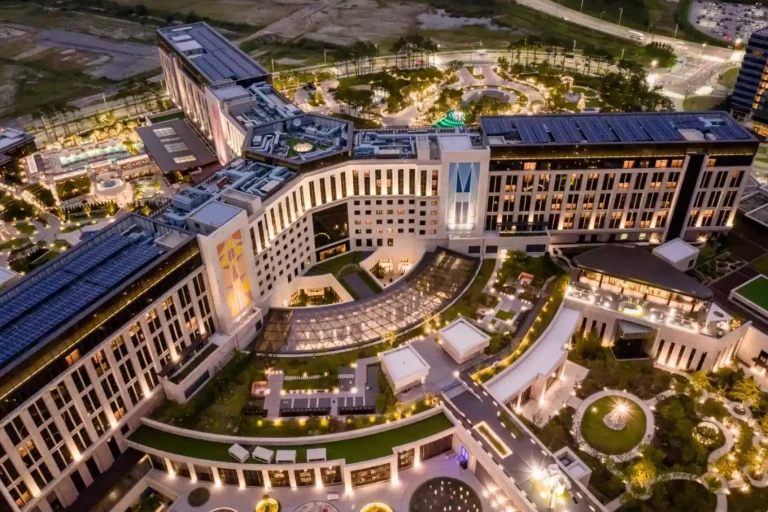
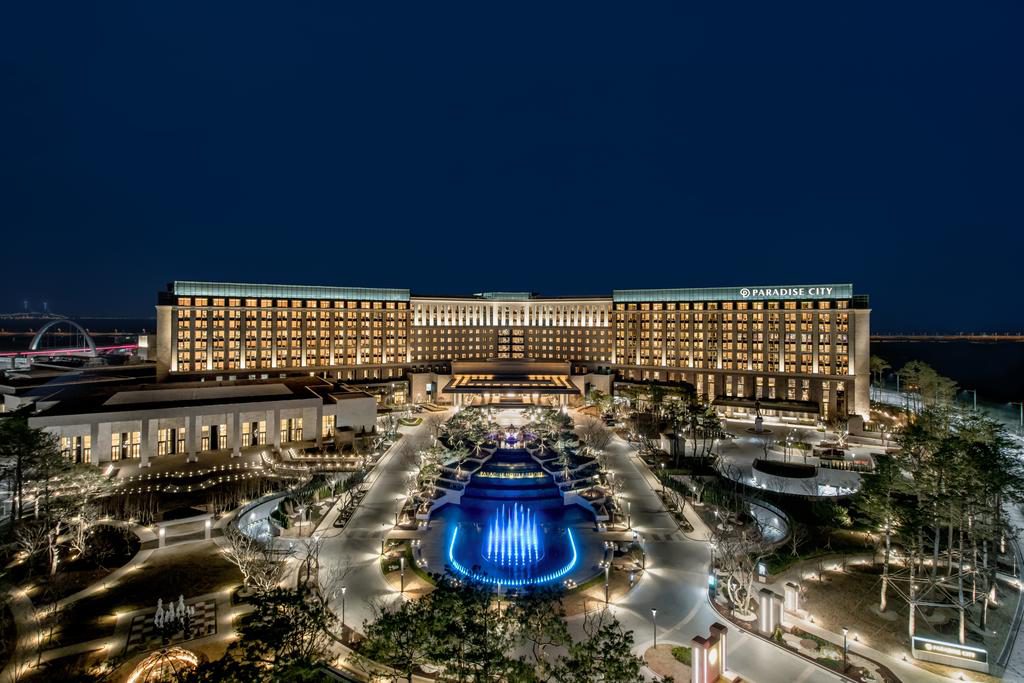
In addition, Paradise Co., in partnership with Japan’s Sega Sammy Holdings Inc., manages the Paradise City resort located in Incheon.

BetMakers appoints Carl Henschke as new CFO

0

Australian wagering market technology supplier BetMakers Technology has announced the appointment of a new Chief Financial Officer (CFO), Carl Henschke, effective on July 1st.

In a release on Monday, the company noted Henschke’s experience in financial services, capital markets and legal sectors.

The group’s new CFO most recently served as Managing Director for Cannaccord Genuity – the largest independent investment dealer in Canada.

Henscke’s experience includes software and digital businesses, ‘including those in the wagering and betting sector’, notes BetMakers.

Speaking of the appointment, the group’s CEO, Jake Henson, noted “His extensive financial expertise and deep understanding of high growth technology companies make him an ideal fit for BetMakers. Carl’s experience will be important as we continue to refine our operational efficiencies, expand our global presence, and enhance shareholder value.”

Early last year, BetMakers reshuffled its board, appointing Henson as CEO, Matt Davey as President and Executive Chairman and shifting former CEO Todd Buckinham to Chief Growth Officer.