Fnatic, a global esports powerhouse, has extended its partnership with Shikenso Analytics, the renowned German AI firm specializing in advanced sponsorship tracking and media valuation solutions.
The continued collaboration reinforces Shikenso’s role as a leading analytics provider in the ever-evolving esports ecosystem.
With rosters competing in top-tier titles like League of Legends, VALORANT, APEX and Counter-Strike, Fnatic commands millions of fans and a global following. Backed by leading brands such as Sony, Red Bull, Blacklyte, and Betify, Fnatic remains one of esports’ most commercially impactful organizations – a perfect match for Shikenso’s data-powered solutions.
Through Shikenso’s AI-driven analytics, Fnatic will continue to measure and enhance the performance of its brand partnerships across social media and streaming platforms. The collaboration supports Fnatic’s data-first strategy to deliver transparency, actionable insights, and greater value to current and future partners.
Edward Gregory, Marketing Lead at Fnatic: “Accurate and detailed data is paramount for Fnatic when it comes to showcasing the value we deliver to our partners and ensuring we’re consistently exceeding expectations. In the fast-paced and ever-evolving world of esports, having access to reliable insights is a competitive advantage. That’s why working with a partner like Shikenso is so important – they not only understand the critical role data plays in our ecosystem but also appreciate the unique nuances of the esports landscape. Their expertise empowers us to provide our partners with best-in-class reporting, transparency, and performance measurement that truly reflects the impact of their investment.”
Arwin Fallah Shirazi, Co-CEO & Co-Founder at Shikenso Analytics: “This renewed partnership isn’t just about continuing what works – it’s about elevating what’s possible. Fnatic continues to push the boundaries of what data can do for sponsorships, and we’re excited to build the future of data-driven partnerships together.”
Gaming revenue in Macau has experienced a sharper post-holiday decline than historically observed, with a 44 percent week-on-week drop following May’s Golden Week, according to a recent investment report from HSBC.
Macau recorded gross gaming revenue (GGR) of MOP8.55 billion ($1.06 billion) in the first 11 days of May, but showed significant softening after the holiday period ended, according to analysts.
HSBC analysts Charlene Liu, Jessie Lu and Lauren Cai reported that the average daily revenue (ADR) in the six days following Golden Week decreased 44 percent week-on-week to MOP575 million ($71.8 million) per day, representing a one percent year-on-year decline despite improved VIP win rates.
‘Though VIP win rate improved to 3.5-3.7 percent from 3.3-3.5 percent the week before, the sequential slowdown was sharper than historical seasonality, partly because demand was front-loaded,’ the HSBC team noted in their report.
The analysts pointed out that typical run rates in the second week of May would historically drop 25-35 percent versus the first week, making this year’s 44 percent decline more pronounced.
However, HSBC also highlighted that the month-to-date run rate remains 24 percent above April’s level, which still exceeds historical trends – where the first two weeks of May typically show only a 10 percent average increase compared to April.
Breaking down the segments, HSBC reported mass ADR was up 22-24 percent month-on-month (compared to 60-65 percent the week before), while VIP volume increased 21-24 percent month-on-month (versus 55-58 percent the previous week).
Looking ahead, HSBC forecasts May GGR could see 0-5 percent year-on-year growth, noting, ‘Recent measures announced by China and the US ease tariff tensions and may help improve consumer sentiment to some extent, in our view.’
It is important to note that amid the slow spending environment, the May Golden Week scored surprisingly good results.
According to a previous report from JP Morgan, Macau’s GGR for the first five days of May was MOP5.1 billion ($637 million) or MOP1.02 billion ($127 million) per day. This represents a strong 12 percent year-on-year growth, despite facing a tough comparison base, and 90 percent plus of pre-COVID May Golden Week despite the demise of VIP. ‘This is especially encouraging as it contrasts with the meaningful approximately 10 percent miss in GGR during the most recent Golden Week.’
On May 8th, Galaxy Entertainment Chairman Francis Lui stated after a shareholders meeting that this year’s May Golden Week saw a record number of visitors to Macau, and the group’s business volume also had double-digit growth year-on-year, so he was satisfied with this performance.
During the five-day Labor Day holiday, Macau received a total of 850,034 visitor arrivals, averaging slightly more than 170,000 visitors each day. This represents an approximate 33 percent increase compared to the 604,395 visitor arrivals recorded during the previous year’s May Day Golden Week.
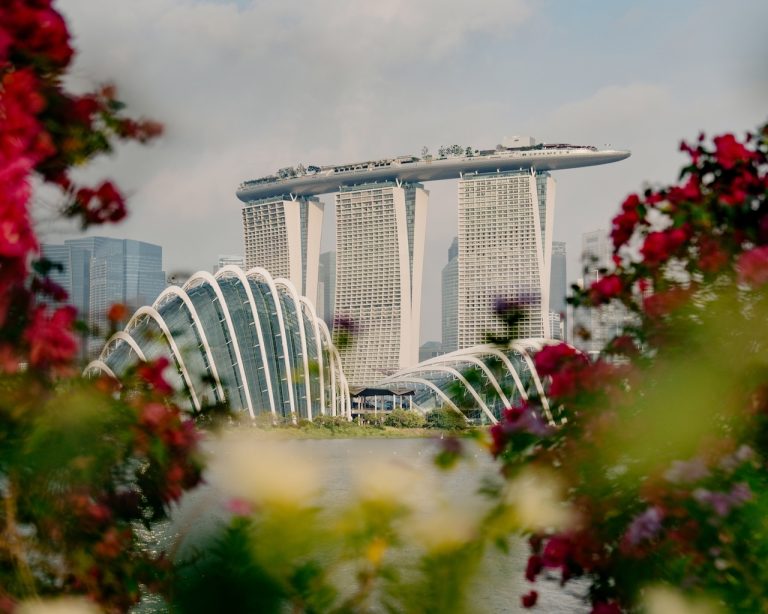
Singapore’s Marina Bay Sands (MBS) has completed its hotel room renovations as part of a multi-year transformation project worth $1.75 billion.
The Sands family integrated resort now offers approximately 1,850 rooms, including 775 suites, a significant increase from the previous 180 suites.
The milestone comes as Marina Bay Sands celebrates its 15th anniversary and welcomes its 500 millionth visitor.
The Chairman Suite
The renovation, first announced in 2022, introduced two distinct hotel collections. The Sands Collection was fully refreshed last week, featuring approximately 1,480 rooms and suites designed as an urban sanctuary in the heart of the city.
The collection offers various accommodation options, from the Sands Premier Room to the Sands Family Suite, catering to different guest profiles. Select guests receive personalized service from a Premium Services team that manages arrival, departure, and support throughout their stay.
The ultra-luxurious Paiza Collection comprises around 370 premium accommodations, mostly suites. Highlights include the three- to four-bedroom Chairman Suite with a 146-inch television, karaoke facilities, and a fully stocked kitchen; the two-bedroom Presidential Suite with a golf simulator featuring world-renowned courses; and the one-bedroom Horizon Suite with a spa-in-a-city concept that includes a Himalayan salt wall, hammam shower, dry sauna, private gym, and two massage tables. Guests of the Paiza Collection receive round-the-clock service from a 160-member Butler Services team, one of the largest in the world.
Following the room renovations, Marina Bay Sands will continue its reinvestment program with the July launch of Jin Ting Wan, an authentic Cantonese restaurant owned and operated by the property.
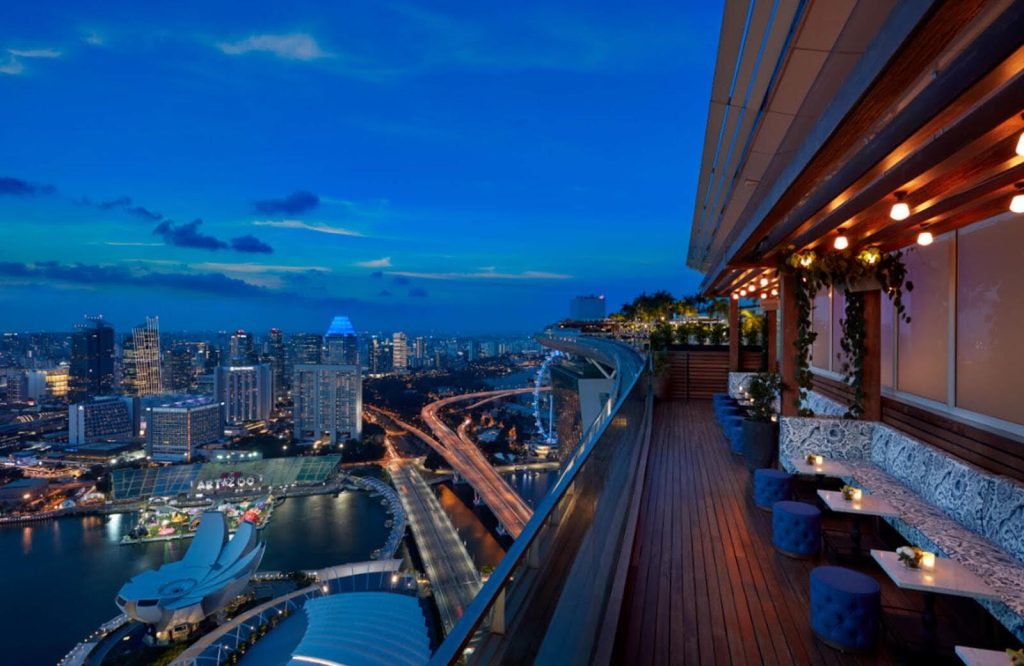
LAVO Italian Restaurant & Rooftop Bar
Additional refurbishments include LAVO Italian Restaurant & Rooftop Bar in the second half of 2025, as well as planned lobby enhancements and a new spa, with more details to be announced later.
Global sports technology company Sportradar achieved the top-end range of expectations for its 1Q25 results, with profit totaling €24 million ($26.65 million).
The most recent financial results came in high above the €20 million ($23.5 million) unaudited results published in late April. The figure was a strong reversal from the €1 million ($1.11 million) loss seen in the same period of 2024.
A large portion of the group’s revenue was derived from its Betting & Gaming Content – totaling €193.8 million ($215.22 million) – up by 13 percent yearly. The group notes this was ‘primarily from customer uptake of additional products and from US market growth.
Meanwhile, Managed Betting Services contributed a 16 percent increase, to €56.21 million ($62.42 million) ‘driven by strong growth in Managed Trading Services from increased turnover and higher trading margins’.
Overall revenue for the Betting Technology Solutions segment, encompassing the two above, was up by 14 percent yearly to €250.02 million ($277.65 million).
This was outpaced by the group’s Sports Content, Technology & Services segment, which brought in revenue of €61.21 million ($67.97 million) – up by 33 percent yearly. The group attributes this to a 36 percent growth in its Media & Marketing Services ‘led by higher ads revenue as several sportsbooks increased spending on marketing campaigns, and from contributions from the expansion of our affiliate marketing capabilities,’ notes the company.
By region, Rest of World revenue was up by 12 percent, to €225.13 million ($250 million), while the US segment was up by 31 percent yearly, to €86.1 million ($95.6 million).
Looking ahead, the company is projecting revenue of at least €1.27 billion ($1.41 billion) for FY25, yearly growth of 15 percent.
It also continues to expect to finalize its acquisition of IMG ARENA and its global sports betting portfolio from Endeavor Group Holdings in the fourth quarter of this year. The rights include Wimbledon, US Open, MLS, and PGA Tour, among others. Sportradar won’t be required to pay any financial consideration for the acquisition and is instead set to receive $125 million over two years and up to $100 million of cash pre-payments to certain right holders.
Good Morning. Age is more than just a number. For Macau’s casino operators, finding the ideal demographic ensures that they’re not just filling their venues with non-spending tourists. And the shift away from the age group with disposable income means that GGR expectations for this year could be dampened, and non-gaming spend is likely to fall as well. Meanwhile, some positive winds are blowing regarding the tariff dispute between the US and China, hopefully allowing US-backed gaming operators in the SAR to take a breath as they may no longer be a pressure point to be exploited in the economic spat.
Gaming revenues in the first quarter of the year have failed to top many expectations, and the casino hub’s shift to mass market and a non-gaming image could be largely to blame. The city is now attracting a different demographic – namely more elderly and youngsters, missing out on the tier with enough disposable income to prop up both gaming and non-gaming. If matters continue, this could significantly weigh on GGR expectations this year.
With over 30% of global gaming revenue projected to come from Asia soon, the window of opportunity is wide open. Bettorify’s white-label and turnkey solutions deliver what most platforms miss: sharp execution backed by real local expertise.
Australian gaming machine manufacturer Ainsworth Game Technology (AGT) is expecting to see relatively flat profit before tax for the first half of 2025, amounting to approximately AU$14 million ($8.92 million).
According to a Monday trading update, the figure compares to AU$14.3 million ($9.11 million) in the same period of 2024.
Total revenue for the six-month period is expected to rise by about 6 percent sequentially, up from AU$142.7 million ($90.91 million) in 2H24, boosted by ‘improved revenue contributions within Australia following the release of the Raptor cabinet in February 2025’.
Revenue out of North America is expected to be ‘broadly consistent’ with the previous reporting period, however its Latam/Europe segment is expected to see a 14 percent decrease in revenue due to import restrictions in Mexico. This comes ‘despite increased contributions from recurring revenue from units under gaming operation in this region’.
The group also notes that it will slightly increase its investment in research and development in 1H25 to 17 percent, up from 16.6 percent in 2H24.
Speaking of the results, AGI Chair Danny Gladstone noted that “The expected result outlined above is in line with our expectations and reflects previously initiated strategies undertaken”. However, revenue growth has been “offset against ongoing challenging conditions in our international markets, and an increased cost base and continued investment to support our revenue growth”.
Speaking of the deal, Gladstone furthered that the Independent Board Committee established to assess the proposal “recommends that shareholders vote in favor of the Scheme, in the absence of a superior proposal”.
The deal is still subject to shareholder approval, scheduled for August.
The Philippines Anti-Money Laundering Council (AMLC) has announced that it is investigating alleged money laundering linked to the ransom paid for the kidnapping of slain businessman Anson Que.
In a Monday statement, the AMLC noted that it is ‘working closely’ with the Philippine National Police (PNP), Philippine Amusement and Gaming Corporation (PAGCOR) and ‘the casinos’ regarding the ransom money paid.
The authority indicates that ‘the ransom monies were originally paid in Philippine Peso and US Dollars but were later converted to cryptocurrency’.
The AMLC indicates that it is ‘actively collaborating with the PNP to gather evidence on the unlawful activities, tracing the ransom funds in all their forms, and pursuing forfeiture proceedings’.
The PNP has alleged that two junket operators – 9 Dynasty Group and White Horse Club ‘facilitated a money laundering operation involving approximately PHP200-million ($3.58 million) ransom paid for Que’s release’.
The authorities say this involved ‘e-wallets intended exclusively for casino gaming, shell accounts, and cryptocurrency to obscure the money trail’.
However, the AMLC notes that it received reports that both junkets ‘officially ended their junket operations in most, if not all, Philippine casinos on 7 May 2025 – alongside 9 Dynasty’s reported announcement of its exit from the Philippine market’.
The money-laundering watchdog furthers that ‘the investigation extends beyond the kidnappers who directed the ransom payment process. It also targets casino players within these junket operations who initially received the ransom funds via their e-wallets’.
The AMLC will coordinate with the Philippine central bank (BSP) and the Securities and Exchange Commission (SEC) regarding the ‘unlicensed operations of these junket operators of e-wallets with cryptocurrency conversion capabilities’.
It also will work with foreign financial intelligence units ‘to gather more information on the movement of funds originating from the Philippines’.
Interestingly, over the weekend, authorities in Cebu arrested 11 individuals carrying nearly half a billion pesos ($9 million) in cash en route to Manila via private plane. The group claimed the money was part of their winnings from a casino in Cebu, saying that they were casino players brought into the country by junket operator White Horse Club.
The Hong Kong Jockey Club (HKJC) says that it plans to become a ‘global sports entertainment brand’, showcasing the city as a ‘center for global exchange, connectivity and tourism’.
According to a release late on Monday, the move is being done in part via a strategic partnership with entertainment group XIX Entertainment.
In specifying its focus, the group indicates that it aims ‘to create a holistically integrated racing, equestrian sports and entertainment experience, which will enable the Club to expand its fan base, especially among the younger generation, and to reach out to a global and Mainland audience.’
‘Ultimately the aim is to become the premier destination for global horse racing and equestrian sports’.
The move is expected to be bolstered via its new strategic collaboration with the China Tourism Group to promote sports racing in mainland China.
Regarding XIX Entertainment, the HKJC’s first step is to bring its global pop group Now United to Hong Kong. This move is expected to ‘give Hong Kong’s talent a chance to shine on the world stage, while through social media and racecourse performances the group will share positive stories about Hong Kong and Hong Kong racing with their millions of fans around the world’.
The collaboration will see a talent search in Hong Kong for the next member of Now United, encompassing a talent search, reality series and music videos filmed with Now United during their stay in Hong Kong ‘to be shared with their 40 million social media followers across multiple platforms around the world’.
The US sports betting landscape is set for a major shift as challenger sportsbook brands Hard Rock, Fanatics, and bet365 gain momentum, according to a comprehensive Bettormetrics analysis.
Bettormetrics, which provides competitive trading intelligence and insight into the sports betting industry, took a deep dive into several sports across the first four months of the year, including the Big Four US leagues – MLB, NBA, NHL and NFL, as well as the Australian Open in tennis, and the English Premier League.
Focusing on four key metrics for Moneyline Markets – Uptime, Overround, Green Time, and Shading Time, Bettormetrics was able to rank each operator based on a variety of factors and highlight the best-in-class when it comes to pricing strategies and market availability.
Metrics
Uptime: The proportion of the match that each bookmaker has odds available for at least one selection of the market i.e. when the market is not suspended.
Overround: The sum of the implied probabilities of each bookmaker’s market odds. Generally, a reflection of the operators’ expected return on turnover.
Shading Time: A proprietary Bettormetrics’ statistic outlining the proportion of the fixture during which each bookmakers’ prices deviated significantly enough from the market average that at least one selection of the market could be deemed to be priced unprofitably.
Green Time: The proportion of the match that each bookmaker has odds available on at least one selection of the market, and none of the selections were deemed to be priced unprofitably.
DraftKings and FanDuel form a duopoly in US online sports betting that is hardly seen anywhere else in the world. The pair takes more than 2/3 of the nation’s digital handle and closer to 80% of GGR. While these giants are unlikely to be caught any time soon, three brands merit closer inspection.
Fanatics have made notable market share gains in recent months, from 5.2% Handle Share in the last year to 6.7% in the last quarter, while Hard Rock looks to expand its coverage beyond its Florida monopoly. bet365, the talk of the town at the moment, is a more unique case: after exiting several markets amid rumours of an upcoming sale or IPO, will it soon be in a better position to push harder into the US?
Bettormetrics’ research has identified how these three operators are differentiating their in-play trading strategies in order to compete with DraftKings and FanDuel.
For Uptime, Fanatics ranked first overall, even outstripping both FanDuel and DraftKings, with ESPN Bet, bet365 and Hard Rock also in the mix. At the bottom end of the scale, Caesars and BetMGM were lagging by 5-7%.
When it comes to Shading Time aggregated across all sports, the three highlighted brands posted relatively large figures, alongside Caesars. By comparison, Penn’s ESPN BET was the clear market leader in this metric, with a shading time of under 3% across the competitions.
On a sport-by-sport basis, bet365 was most notably out of sync in the two big US sports, NBA and NFL, for a remarkable 1/6th of the time. Fanatics was also differentiated in its NBA offering while Hard Rock was a clear outlier in tennis markets.
In Green Time, DraftKings led the way as a consequence of its podium performances for Uptime and Shading Time. Fanatics market-leading Uptime helped it outshine a number of brands, including FanDuel, operating above 80%, while Hard Rock and bet365 were both sitting in the high 70% range.
In terms of overrounds, bet365, as per historical precedent outside the US appear to be looking to compete heavily on price, averaging 5.3% across the six competitions, while BetRivers and ESPN BET bring up the softer end of the market.
Robert Urwin, CEO and co-founder of Bettormetrics, commented: “The two major US sports betting operators have carved out a dominance rarely seen in regulated markets. However, a lot of attention is being put on the brands closing the gap, so we looked at three distinct use cases – bet365 with its global experience, Hard Rock with its Florida monopoly, and Fanatics with its cross-sell acquisition opportunity through non-betting channels. It does highlight that there is no one-size-fits-all approach to being a successful sportsbook, and analysing the range of different strategies allows us to really highlight strengths and weaknesses for each operator.”
Alfie Arrand, Sports Trading Analyst at Bettormetrics, added: “It is a credit to both the Bettormetrics’ technology and the quality of the data sources available to us that we can perform these deep dives and provide these perspectives on the trading strategies of competing sportsbooks. While DraftKings and FanDuel are well ahead in both performance and across our metrics, the US market is heating up as rival sportsbooks look to differentiate themselves to close the gap.”
Bettormetrics tracks and evaluates thousands of live in-play sports betting events weekly. Its performance insights and competitive analysis have empowered traders and analysts to uncover key inefficiencies affecting sportsbook revenue and profitability.
Shifting visitor demographics and sustained economic headwinds from mainland China are significantly undermining the potential for Macau’s gross gaming revenue (GGR) to return to pre-pandemic levels, according to Professor Zeng Zhonglu of the Center for Gaming and Tourism Studies at Macao Polytechnic University.
Speaking to AGB during the G2E Asia conference held in Macau, Professor Zeng highlighted alarming trends that point to long-term challenges for the SAR’s gaming industry, suggesting that GGR may not return to pre-COVID levels in the foreseeable future.
Professor Zeng Zhonglu of the Gaming Research Team at Macau Polytechnic University
“The government expects monthly GGR of MOP20 billion ($2.5 billion), but figures for the first four months of 2025 have consistently fallen short,” he stated.
The causes, Zeng explained, are multi-faceted. A key factor is the weakening mainland Chinese economy and the resulting decline in consumer spending.
“Even though hotel occupancy has remained stable, the average daily room rates in mainland cities dropped by around 8 percent in Q3 last year. This indicates that tourists may be traveling, but they are spending less,” he noted. “This trend is reflected in Macau as well — per capita spending and retail sales among visitors have both decreased.”
Another critical concern is the evolving structure of Macau’s visitor base. Although overall tourist numbers have nearly returned to pre-COVID levels, the composition has shifted significantly. “We are seeing an increase in elderly travelers and those under 15, while the most economically productive age groups — particularly those aged 25 to 34 and 45 to 54 — are declining,” said Zeng.
In the first quarter of 2025, visitors aged 55 and over accounted for 28 percent of total arrivals, up from just 21 percent in 2017. The number of young dependents also rose, while mid-aged groups with higher spending power either stagnated or declined. “This demographic shift is not favorable for gaming or retail consumption,” Zeng warned.
This stands in sharp contrast to Las Vegas, where the share of younger adult visitors has increased in recent years, while the proportion of senior tourists has declined — a more favorable trend for gaming revenue.
Data from the Statistics and Census Service (DSEC)
According to AGB’s analysis, when comparing 2019 to 2024, the under-15 age group saw a 6.3 percent increase in tourist numbers. Meanwhile, the economically productive 25–34 age group declined by 25.7 percent, and the 45–54 age group fell by 21.2 percent.
The elder demographic (>=65 years) experienced a notable increase of 21.4 percent during this period. This illustrates a modest rise in the youngest tourist demographic, a significant drop in key working-age segments, and a substantial growth in the number of senior visitors.
Zeng also emphasized that geographic proximity is influencing visitor behavior. “Visitors from nearby regions such as Zhuhai and Guangdong have surged due to relaxed travel rules. But the closer they live, the less they tend to spend — the novelty wears off quickly,” he said.
The academic cited survey data showing that while 60 percent of visitors from provinces beyond Guangdong would gamble in Macau, only around 23 percent of Hong Kong visitors and 40 percent of those from Guangdong would do the same.
On the issue of broader economic recovery, Zeng was cautiously realistic. “If the number of visitors continues to grow, it could partially offset declining per capita spending,” he said. “But the extent of that compensation will depend on China’s broader economic trajectory. Without recovery, spending will remain sluggish.”
Regulatory pressure and the end of the junket era
Although this is not a new issue, the scholar reiterated that the decline in GGR is also linked to increased regulatory pressure from mainland China, particularly the criminalization of cross-border gambling.
Zeng pointed to recent amendments to the criminal code that introduced a new offense — organizing cross-border gambling — which did not exist previously. “This legal shift has dismantled the traditional junket system that used to channel VIP players from the mainland to Macau. That channel has effectively closed,” he explained.
Even high-end mass market play, once seen as a potential substitute for the defunct VIP segment, has not matched previous spending levels. “According to data from Sands, high-end mass market customers have shown the most resilience, but this segment alone cannot make up for the absence of VIP revenue,” Zeng said.
Regional competition looms
Looking ahead, Zeng warned of intensifying regional competition. Japan’s integrated resort project in Osaka, set to launch operations by 2030, could attract a significant share of high-spending mainland tourists, particularly from northern provinces. “For travelers from northern China, Japan is not only closer than Macau but also offers diversified attractions such as shopping, dining, and cultural experiences,” he said.
In contrast, Macau faces physical limitations. “Most of Macau’s developable land is already in use. Future growth in hospitality and entertainment capacity will be constrained,” he noted. Some operators, such as Galaxy, have begun considering Hengqin as a spillover destination for accommodation and events.
Despite the rebound in tourist volume, Zeng cautioned against focusing solely on numbers. “Las Vegas has shown that targeting younger and more affluent segments is a more sustainable strategy,” he said. “Macau cannot rely solely on visitor numbers. Without improving the quality — particularly the spending capacity — of its tourists, the gaming industry will struggle to meet government revenue targets.”