As its gaming concession approaches expiration, Macau Slot has pledged to reduce its reliance on non-local labor and prioritize hiring Macau residents—a key condition set by the government for renewing its lottery operations license.
The company, which currently employs foreign workers for about 15 percent of its workforce, has committed to slashing 35 percent of its non-professional non-local staff—around 26 positions—by the first quarter of 2026.
The move comes after the Macau government explicitly demanded tighter employment safeguards as part of its concession renewal talks.
The Macau government recently held discussions with Macau Slot over the extension of its instant lottery operation concession, which officially expired on June 5th. Authorities emphasized that any renewal would require the company to ensure job opportunities for locals while systematically reducing its foreign labor quota.
The sports betting company responded by affirming its commitment to the government’s policy direction, stating that protecting local employment is a “corporate responsibility.”
The company plans to implement its foreign worker reduction plan in phases, with further cuts expected after the initial 2026 target.
Macau Slot once held an exclusive monopoly on lottery operations, but its privileges were scaled back in recent years.
In June 2021, the government extended its concession for three years—but on a non-exclusive basis, ending its sole control over the market. That extension was later prolonged by another year, finally expiring this month.
Pragmatic Play, a top content supplier to the iGaming industry, has extended its award-winning Virtual Sports portfolio with Penalty Shootout Live!, a refined sequel to the popular Penalty Shootout.
Penalty Shootout Live! recreates the nail-biting tension and drama of a real-life football shootout, offering an immersive in-play experience.
Players place their bets via the intuitive goal-style interface, backing the exact goal position, goalkeeper save, or shot location in between each kick. A new live shootout kicks off every three minutes, letting players place bets on a new penalty every 15 seconds/ They can also bet on the next five upcoming matches.
The fast-paced matches are rendered in HTML5 for seamless performance across mobile and desktop, with authentic commentary and an interactive user interface bringing players into the heart of the action.
Pragmatic Play continues to expand its comprehensive Virtual Sports library, which already boasts popular titles such as Horse Racing and Greyhound Racing. The company’s portfolio offers 24/7 availability, real-time physics engines, and best-in-class 3D graphics, ensuring players enjoy unmatched realism and excitement.
Irina Cornides, Chief Operating Officer at Pragmatic Play, said: “Featuring a new match every three minutes, 25 bet spots per penalty, and six penalties per match, Penalty Shootout Live! is an action-packed addition to Pragmatic Play’s Virtual Sports portfolio.”
Ongoing construction plans and increased competition from the online sector are hindering the growth of the land-based gaming industry in Southeast Asia. The shift to online is giving space for the lower-spending customers. And as the Asian gaming sphere shifts to a mass focus, this could be essential as a driver for both the gaming table and the keyboard. Strategic focus will be key in maintaining clientele for various operators throughout the region.
With over 30% of global gaming revenue projected to come from Asia soon, the window of opportunity is wide open. Bettorify’s white-label and turnkey solutions deliver what most platforms miss: sharp execution backed by real local expertise.
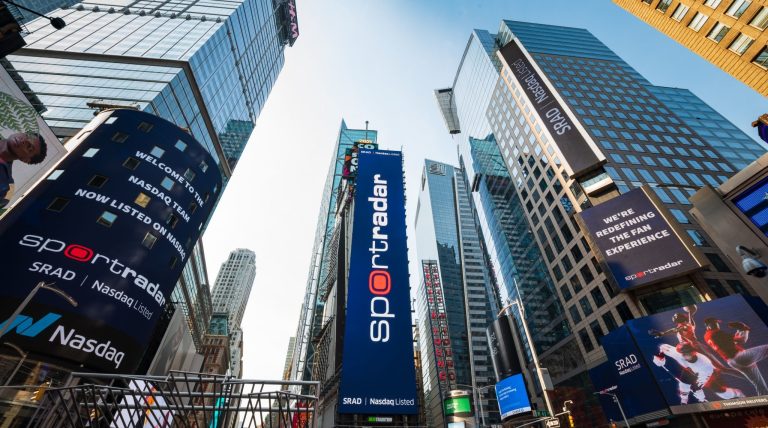
Global sports technology company Sportradar has announced that it has secured a partnership for exclusive rights to distribute ‘ultra-low latency betting data, as well as exclusive media content’ for the FIFA Club World Cup 2025.
The event is scheduled for June 14th through July 13th and is to be held in the United States.
The group indicates that the agreement means that the company can ‘deliver data and content, including live odds, across all 63 tournament matches’ to its network of over 800 ‘betting operator clients and 900 media companies’.
Sportradar will also have access to ‘deep tracking data from the FIFA Club World Cub 2025 to offer an extensive range of micro and player markets, including up to 190 pre-match and 200 in-play betting markets, as well as power live match trackers’, indicates the company.
Speaking of the new highlight, the EVP for Rights & Strategic Projects, Moritz Gloeckler, noted that “We are thrilled to partner with DAZN to elevate the FIFA Club World Cup 2025 to new heights, expanding global reach, captivating new audiences and deepening engagement with fans worldwide. At the same time, we remain committed to upholding the integrity of this prestigious competition”.
Sportradar’s coverage will be supported by global sports entertainment broadcaster DAZN.
South Korean tourism experts are requesting the creation of a task force to focus on nationals gambling abroad.
According to recent reports, participants at a joint public forum hosted by the Tourism Sciences Society of Korea (TOSOK) and The Korea Times saw primary stakeholders take an evaluation of the nation’s overseas gambling ‘problem’.
Participants urged for an expanded approach to curb problem gambling and introduce better policy for intervention, claiming regulatory loopholes and risks for those who travel overseas in search of a casino experience.
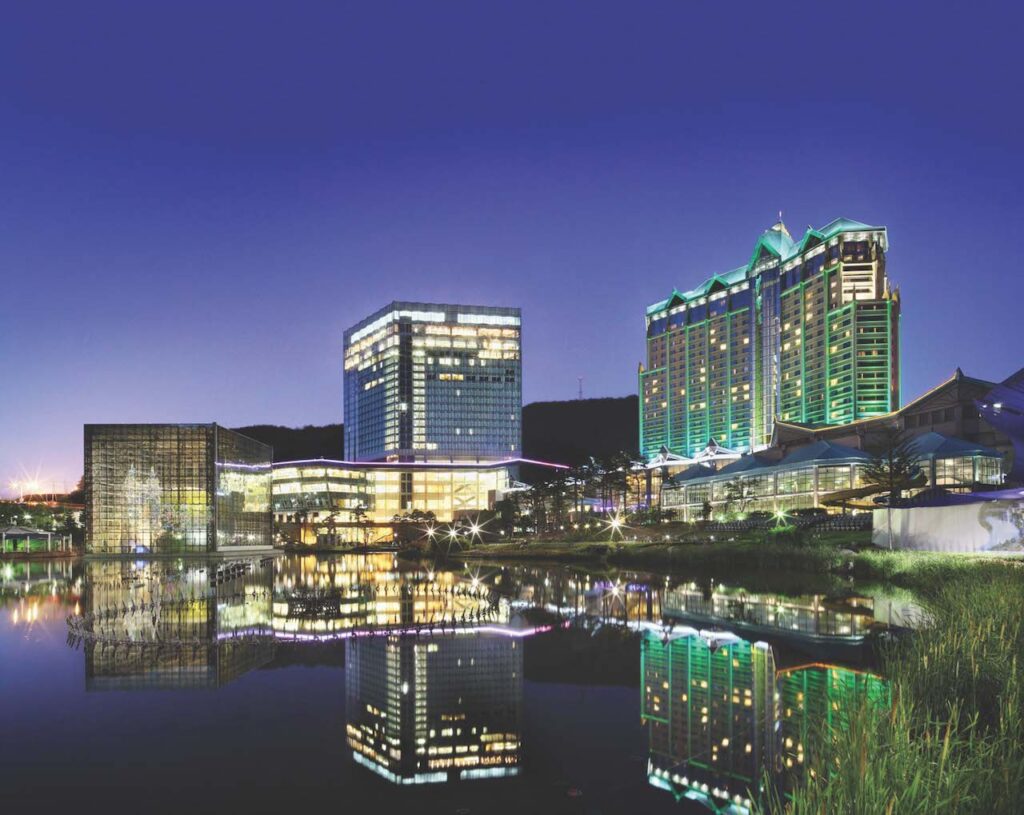
Currently, South Korea only has one operator that allows local gambling, Kangwon Land, with the rest of the venues being restricted to foreigners, in an attempt to curb gambling harm.
Kangwon Land Resort
Citizens can also try their luck at horse racing, but many also engage in the murky market of online illegal gambling, prompting government concern.
South Korea’s laws prohibit gambling activities which go beyond leisure, even when conducted overseas. While this has not tempered demand (see the growing Philippine market), it does caution more high-profile actors from engaging in the activity where they can be casually seen.
According to data from Korea’s National Gambling Control Comission, overseas gambling by nations reached as high as KRW4.9 trillion in 2017, with some 80 percent of that spent in Macau and the Philippines.
Southeast Asia’s gaming industry is expected to have a stronger second half of the year, with the traditional land-based casino model facing both opportunities and threats, according to a recent report by Morgan Stanley.
Over 40 ASEAN corporates participated in the bank’s 2025 Virtual ASEAN Conference held on May 29th–30th, with gaming companies taking center stage amid shifting trends and evolving business models.
In an overview of the conference, MS analysts stated that operators of land-based casinos across the ASEAN region are pinning their hopes on a stronger second half of the year, with new capacity coming online and existing projects nearing completion. However, a sudden spike in online gaming activity is casting a shadow over their outlook.
MS then proceeded to analyze three separate presentations by gaming companies: Singapore-based Genting Singapore (GENS), Philippines-based Bloomberry Resorts, and Digiplus.
GENS acknowledged a recent loss in market share, attributing it to long-running construction projects that rendered key assets – including 360 rooms at the Hard Rock Hotel – unusable. ‘We lost market share over the last few years due to ongoing construction,’ GENS stated, according to the report.
The company also struck a cautious tone on the future of the mass-market segment, citing rising costs and changing consumer behavior. ‘Grind mass will remain absent due to casinos becoming more expensive in the post-pandemic environment,’ GENS added. Still, the report noted ‘stable momentum in the mass segment’ and a deliberate pullback in the VIP market ‘due to increased provisions.’
While GENS may benefit from a more than 5 percent dividend yield offering valuation support, Morgan Stanley warned that ‘new management change could be disruptive in the near term.’
Investors are nonetheless eyeing upcoming attractions including the Oceanarium, Forum, and Laurus Hotel, all scheduled to come online in the second half of 2025.
Online gaming rises as key growth engine
In contrast to the uncertain outlook for brick-and-mortar casinos, online gaming is rapidly emerging as a major player in the region’s gambling ecosystem. Bloomberry Resorts sees its move into online gambling as a strategic pivot.
‘Online gaming is a way to reach lower-spending customers,’ MS noted, highlighting that land-based operations primarily target high rollers. Bloomberry does not foresee a near-term recovery in the VIP segment in Entertainment City, underscoring the importance of its digital pivot. It plans to invest PHP1–2 billion in its online gaming business.
However, Bloomberry also offered a reality check on the crowded and competitive nature of the digital space. ‘Only 3 to 4 of the 57 licensed online operators have gained significant traction,’ the report said.
One standout performer in the online gaming surge is Digiplus, an operator of online gaming platforms and bingo parlors in the Philippines, with the report highlighting the company’s explosive growth.
Digiplus reported first-quarter revenues of PHP23 billion ($410 million), a 69 percent year-on-year increase, with net profit hitting PHP4.2 billion ($75 million)—an 18 percent margin.
The company boasts 7.5 million active monthly users, each spending an average of PHP1,000 ($20). Its stock has soared over 100 percent year-to-date, compared to the flat performance of the broader Philippine index.
With approximately 60 to 70 million Filipino adults online, for MS, Digiplus appears well positioned to continue its rapid expansion in a market ripe for digital disruption.
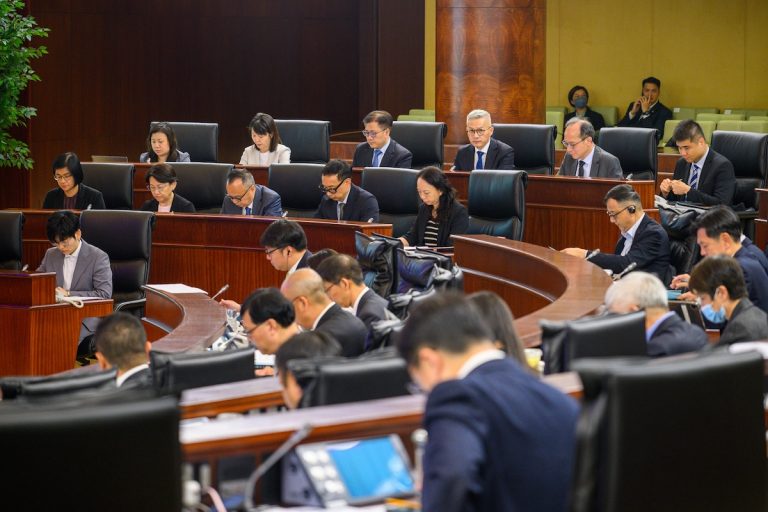
The Macau Legislative Assembly (AL) has unanimously approved the first draft of the government’s 2025 budget amendment bill, which proposes a decrease in budgeted revenue due to lower gross gaming revenue estimates.
In a move aimed at ensuring the smooth operation of public administrative services and meeting essential commitments for 2025, the Assembly reviewed a new 2025 Budget Law last year, as adjustments to the budget have become necessary due to evolving public finance policies.
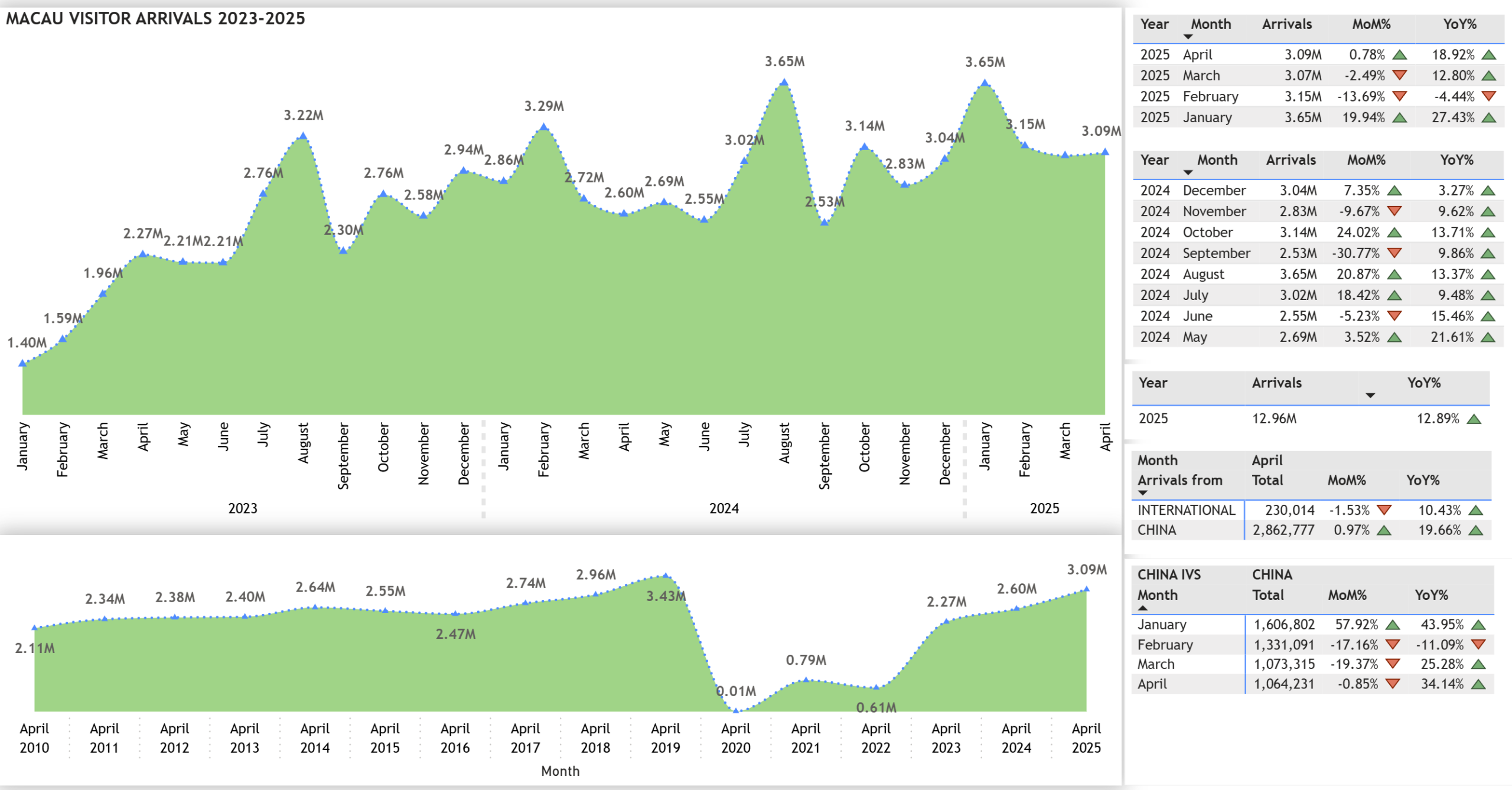
Secretary for Economy and Finance Tai Kin Ip introduced the outline of the 2025 budget amendment bill during a plenary session in the legislature yesterday, noting that in the first quarter of 2025, Macau’s economy continued to recover with a high influx of visitors.
However, gross gaming revenue slightly fell short of expectations, and as a result, the SAR Government revised its annual estimate for gross gaming revenue, which forms the primary basis for the amended budget’s financial revenues.
The government now revised downward its estimates by MOP12 billion ($1.5 billion) to MOP228 billion ($28.5 billion), or a monthly average of MOP19 billion ($2.4 billion), from a previous forecast of MOP240 billion ($30.4 billion), or a monthly average of MOP20 billion ($2.5 billion).
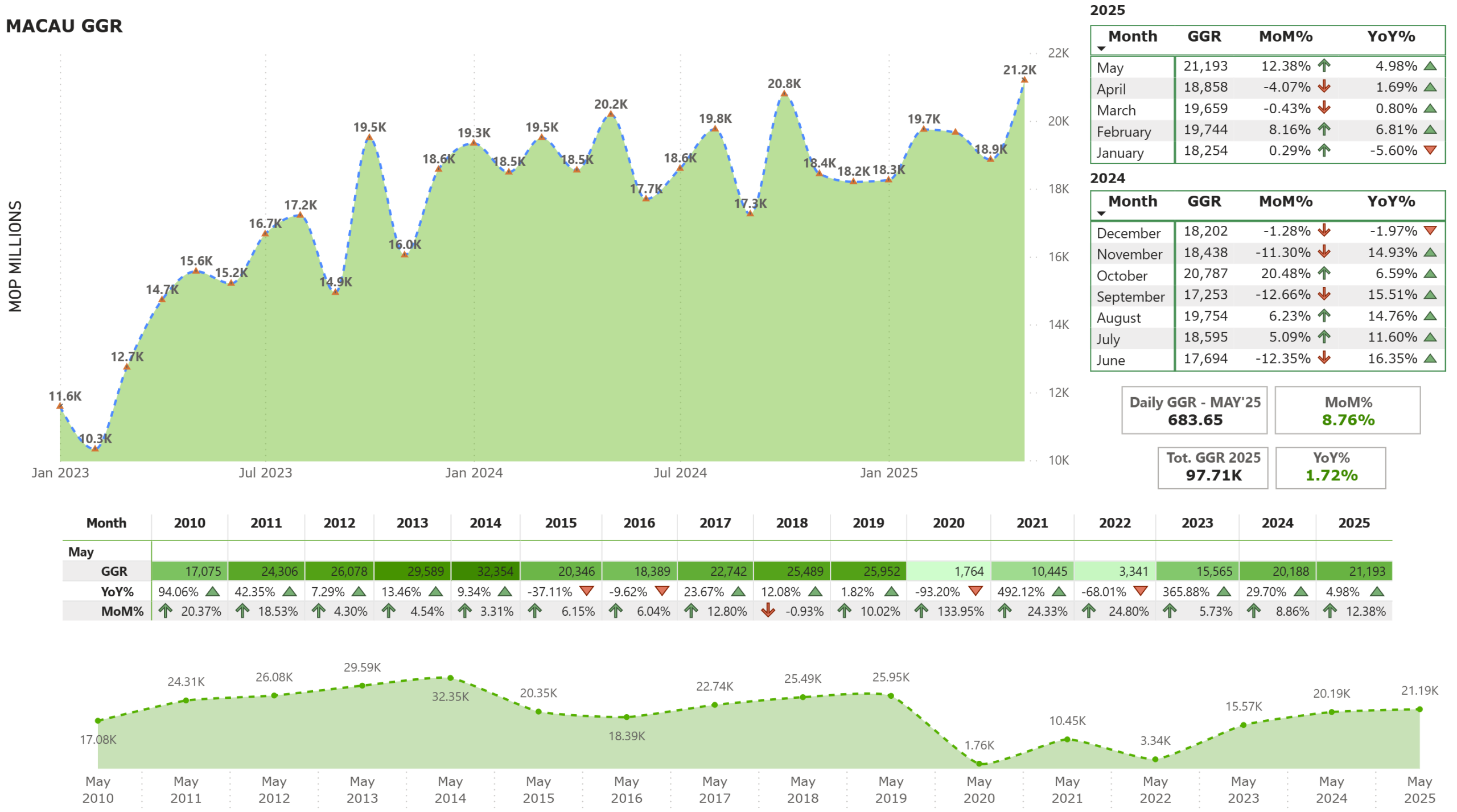
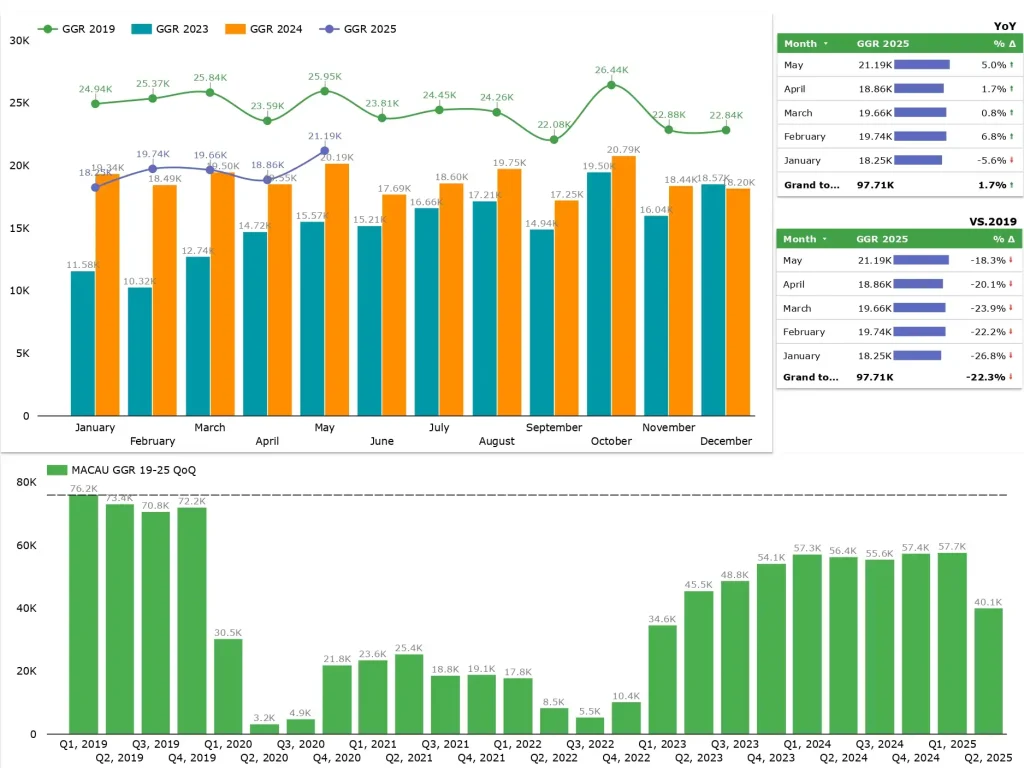
For the first five months of 2025, Macau’s casino gross gaming revenue (GGR) reached MOP97.7 billion ($12.1 billion), up 1.7 percent from last year. However, this figure remains only 77 percent of the same period in 2019, which was MOP125.6 billion ($15.5 billion).
The outline will now proceed through the legislative committee phase, after which a final draft will be debated again in the AL.
The RAEM Government plans to closely monitor public finance revenues throughout the current year, implementing prudent financial measures, including expenditure containment, to ensure the stability of public finances.
On the expenditure side, the budget sees increases in areas such as the construction of the University of Macau campus in Hengqin, investments in scientific and technological research facilities, and adjustments to subsidies for the elderly, children, and individuals with disabilities.
Conversely, expenditures under the Investment and Development Expenditure Plan (PIDDA) will experience a relative reduction.
The total revenue for the integrated ordinary budget of the RAEM for the economic year 2025 has been adjusted to MOP116.53 billion ($14.8 billion), reflecting a reduction of MOP4.56 billion ($570 million) compared to the previous figure.
Meanwhile, the total expenditure will now be MOP116.24 billion ($14.7 billion), an increase of MOP2.86 billion ($355 million) from earlier estimates.
SJM Resorts (SJM), in partnership with the Macao New Chinese Youth Association and with support from the Health Bureau, has introduced the “Silver Age Health Promotion Programme” as part of the Macao SAR Government’s “Healthy Macau Blueprint.”
The programme aims to help the elderly enhance their knowledge of health, raise awareness about disease prevention, improve their health management abilities, and express care and love for the elderly through a community support network.
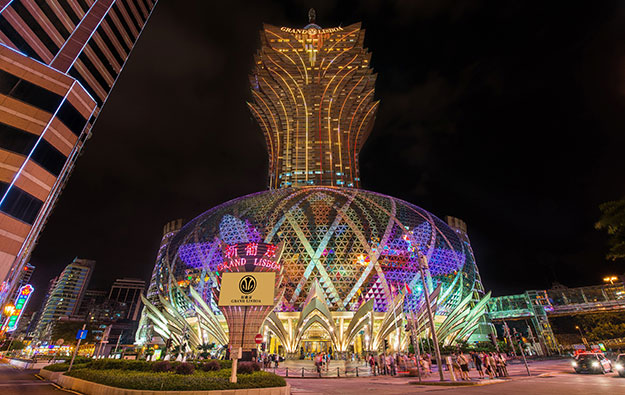
The launching ceremony of “Silver Age Health Promotion Programme” was held on 9 June at Grand Lisboa Macau. The ceremony was officiated by:
Lo Iek Long, Director of the Health Bureau;
Wong Weng Man, Head of Health Promotion Division of the Health Bureau;
Wong Chi Choi, President of the Macao New Chinese Youth Association;
Lao Cho Chon, Vice President of the Macao New Chinese Youth Association;
Paul Hung, President – Security, Surveillance & Environmental, Social and Governance of SJM.
Paul Hung, President – Security, Surveillance & Environmental, Social and Governance of SJM, expressed gratitude on behalf of Daisy Ho, Managing Director of SJM, to the Health Bureau and the Macao New Chinese Youth Association for their support of the programme.
He stated, “As one of the first enterprises to join the ‘Healthy Enterprise Scheme,’ we have launched several initiatives to promote the physical and mental well-being of our team members. Additionally, we have reached out to the community through the ‘Silver Age Health Promotion Programme,’ which aims to help older individuals manage their health in their daily lives. We also encourage our team members to actively participate in this initiative, allowing the elderly to feel the care and support of the community. Together, we are building a harmonious society.”
Wong Chi Choi, President of the Macao New Chinese Youth Association, remarked during the opening ceremony, “With the increasing trend of an aging population in Macau, the physical and mental well-being of the elderly has become a focal point for society. Many elderly individuals face challenges such as chronic diseases and feelings of loneliness. Addressing their needs is exactly what we aim to accomplish with our programme. Furthermore, the youth of Macau are full of passion and creativity, eager to contribute to the community. The ‘Silver Age Health Promotion Programme’ serves as an ideal bridge, allowing young people to partner with the elderly to create a healthier and warmer community environment together.”
The “Silver Age Health Promotion Programme” consists of three core components: Two Health Carnivals, eight Health Talks, and two Health Training Courses.
The Health Carnivals will feature booths for blood pressure screening, health consultations, and interactive games, all aim at promoting a healthy lifestyle for the elderly and their communities in a lively way.
The Health Talks will involve medical staff visiting the community and residential care homes to help seniors improve their awareness and ability to manage their health in an easy-to-understand manner.
The Health Training Courses will provide SJM team members and their families with insights from professionals on elderly healthcare knowledge and practical skills, including first aid treatment, skeletal health, and effective communication skills.
Rooted in Macau for over six decades, SJM is dedicated to the welfare of the community. In 2024, the company fully supported the “Healthy Macau Blueprint” initiated by the Macao SAR Government by becoming one of the first enterprises to join the “Healthy Enterprise Scheme,” which was launched by the Macau Healthy City Committee and the Health Bureau.
To date, SJM has organised over 40 activities, attracting more than 30,000 participants. Additionally, SJM was recognised as a “Healthy Enterprise” in 2024, highlighting its ongoing efforts and contributions to community health.
SOFTSWISS continues its commitment to player-centric innovation by updating its Game Aggregator with Advanced Mobile UX and AI Localisation, expanding the largest content hub with a portfolio of over 30,000 games.
While mobile gaming has long been the leading channel for iGaming engagement, evolving player expectations and regional diversification continue to shape the development of new tools and features. According to data from H2 Gambling Capital, mobile gaming is projected to grow at a 14.9% annual rate in iGaming. In 2024, 59.5% of global mobile gross win came from betting, while 31.5% was driven by casino games. The same source indicates that casino games are projected to outpace betting in growth, with a compound annual growth rate of 18%, compared to 14% for betting.
SOFTSWISS’ Mobile UX control empowers operators to customize the appearance of games on mobile devices. Now, operators can request the deactivation of this automatic full-screen mode. This change allows the casino interface to remain visible, supporting brand consistency and improving overall usability for mobile players.
The second update, the AI Localisation Tool, enables instant content translation into multiple languages. Operators can review, edit, and set default language versions for each region, streamlining the launch of regional campaigns and significantly reducing manual work.
By combining AI efficiency with the flexibility to refine translations, operators can ensure their messaging is relevant, compliant, and on-brand in any market. Localisation has been highlighted as one of the key trends shaping iGaming in 2025, according to the iGaming Trends Report by SOFTSWISS.
The SOFTSWISS tool empowers brands to scale faster and deliver compliant, engaging content tailored to regional audiences, aligning with what industry analysts view as a critical success factor for the coming year.
“As SOFTSWISS grows globally, we encounter a wider spectrum of player needs, regulatory frameworks, and device usage patterns. Mobile-first development and localisation have long guided our Game Aggregator strategy. With these updates, we empower our partners to scale faster and deliver more relevant, high-performing experiences,” said Tatyana Kaminskaya, Head of SOFTSWISS Game Aggregator.
The SOFTSWISS team will be available to discuss the latest trends and explore collaboration opportunities in iGaming at iGB L!VE 2025, held on 2–3 July in London.
QTech Games, a top game aggregator in emerging markets, is strengthening its commitment to quality content by partnering with the innovative game provider Peter & Sons.
Peter & Sons launched in 2019 with a promise to be the “anti-boring” studio and has since turned heads with its uniquely styled, high-performing video slots and casino games. The company works with world-class artists, mathematicians and musicians to create some of the most innovative and entertaining titles available in the market today which can now be accessed via QTech Games.
Integrating content from Peter & Sons adds yet more muscle to QTech Games’ expanding platform, which is taking the widest range of online games to emerging territories with established names such as Playtech and Evolution sitting alongside up-and-coming providers.
Peter & Sons games made available to its partners include recent releases like Blood Club and Barbarossa Revenge plus popular proven performers such as Barbarossa, Xibalba, Mutagenes and Ghostfather – all of which ride on the back ofunique maths modelling that varies the volatility spectrum, helping to foster some truly engaging gameplay.
Peter & Sons’ acclaimed portfolio of titles has been optimised for mobile, a cornerstone of QTech’s RNG model founded on its fully owned and customised technical platform, which affords providers and operators the fastest integration.
Through this leading platform, which has sealed its status as a global gaming one-stop shop, Peter & Sons will organically grow its international footprint, unlocking untapped jurisdictions for diversified growth from Asia to Africa and Eastern Europe to Latin America.
Philip Doftvik, QTech Games’ CEO, said: “Peter & Sons deliver world-class slots provision for worldwide customers, offering a diverse range of slots and instant win games for every type of player and market. They are renowned for bringing users an invigorating gaming experience with every play, thanks to their trademark jaw-dropping graphics.”
Yann Bautista, Commercial Director and Founder of Peter & Sons, added: “At Peter & Sons, we’re dedicated to raising the bar for how these games look and feel. With a new release each month, we’re on a mission to expand the Peter & Sons universe. Teaming up with QTech represents a fantastic opportunity to strengthen our product distribution across emerging territories and deliver our great games to a range of top-tier partners.”