Specialist supplier ThrillTech has announced a global partnership with Betsson Group, one of the world’s leading gaming operators, to roll out its next-generation jackpot technology, ThrillPots, across the operator’s international brand portfolio.
Through this partnership, Betsson Group will integrate ThrillTech’s fully licensed jackpot solution, enabling bespoke, player-funded side-bet jackpots designed to drive measurable incremental revenue.
The opt-in side-bet mechanism of ThrillPots allows players to contribute to progressive jackpots without disrupting core gameplay – resulting in enhanced performance across both sportsbook and casino verticals.
Operating several brands globally, Betsson Group’s flagship names – including Betsson, Betsafe, and NordicBet – are set to benefit from ThrillTech’s modular and high-performing jackpot engine. The partnership underscores Betsson’s strategic focus on elevating the play experience through innovation across multiple regulated markets and product verticals.
Ben Bradtke, Co-Founder of ThrillTech
“As a global leader in iGaming, Betsson Group is constantly innovating to enhance the player experience while driving sustainable growth,” said Ben Bradtke, Co-Founder of ThrillTech. “This deal is a major milestone in our mission to transform how jackpots are delivered at scale, with proven, compliant technology that uplifts revenue without cannibalising existing spend.
“ThrillPots gives operators a new way to engage players more deeply, offering thrill and value without friction. We’re proud to work with Betsson Group, whose global reach and commitment to excellence make them an ideal partner,” he added.
Karl Schranz, Director of Gaming at Betsson Group
The integration is part of Betsson Group’s ongoing investment in high-performance technology aimed at deepening player loyalty and enhancing operational excellence across Europe, Latin America, and other core markets.
“We’re always exploring new ways to deliver engaging and rewarding experiences for our players,” said Karl Schranz, Director of Gaming at Betsson Group. “ThrillTech’s ThrillPots solution brings an exciting, flexible jackpot layer that enhances both acquisition and retention without compromising our core gameplay. This global rollout reflects our commitment to scalable innovation across the Group.”
Altenar, a leading sports betting and iGaming technology provider, has introduced slice market functionality to its award-winning sportsbook, allowing operators to create an intuitive betting experience through segmented market views.
The feature allows operators to display a focused selection of betting options by creating filtered versions of existing markets. Selective lines or excluding certain selection options gives the end user a more personalised and streamlined view, based on their betting styles and preferences.
As part of Altenar’s continued investment in its sportsbook offering, this latest enhancement offers higher flexibility for operators to deliver a unique and tailored product that helps the bettor find their preferred bet types as quickly as possible.
Dinos Doxiadis, Director of Product – Sportsbook and Data at Altenar, said: “Through the introduction of slice markets, operator partners can now deliver a more focused and relevant user experience, which will help bettors engage faster and in a more meaningful way with the markets they care about. This is another step forward in our commitment to helping build high-performance sportsbook solutions to boost operators’ retention rates and differentiate them in a competitive vertical.”
White Hat Studios—known as the “House of Brands” in the U.S. iGaming market—has created a custom edition of its latest progressive jackpot system, Jackpot Royale Express™, exclusively for Caesars Entertainment’s online casino platforms.
The new jackpot system is now live exclusively on the operator’s marquee online casino platforms Caesars Palace Online Casino, Caesars Sportsbook & Casino, and Horseshoe Online Casino in Michigan, New Jersey, Pennsylvania, and West Virginia.
The exclusive launch introduces a uniquely branded jackpot experience for Caesars’ players across all games connected to the new Jackpot Royale Express™ system on Caesars online casino platforms. Players will now find themselves immersed in the luxurious and iconic Caesars Palace lobby as they embark on an exciting jackpot journey with Caesars’ iconic laurel logos serving as the jackpot trigger symbols.
Jackpot Royale Express™ has been specifically designed to provide faster gameplay and increased anticipation, setting it apart from traditional jackpot mechanics. Five jackpot trigger symbols are required to land on a single spin to activate the Jackpot Royale Express™ Wheel, which offers stake multiplier wins ranging from 5x to 1,000x, as well as five progressive jackpots.
White Hat Studios plans to roll out 12 Jackpot Royale Express™ games in 2025, with further expansion and enhancements to continue into 2026. The product signals the next step in the evolution of progressive jackpots in the U.S. iGaming market, delivering a premium experience with unmatched branding and excitement, and frequent rewards.
Armen Tatarevic, VP Gaming at White Hat Studios, said: “We are delighted to strengthen our partnership with Caesars Entertainment on this exclusive roll out of a fully branded version of our Jackpot Royale Express™ system. The ability to deliver a customized product for Caesars online casino platforms is a testament to our mutual dedication to creating immersive and engaging gaming experiences for their players. Jackpot Royale Express™ ensures a wider audience of players will have an exciting and engaging journey every time they play.”
Ricardo Cornejo Rivas, Vice President of Online Gaming at Caesars Digital, added: “We’re thrilled to bring White Hat Studios’ Jackpot Royale Express™ branded system exclusively to our players in a fully customized format. This tailored integration delivers a dynamic, branded jackpot experience that reflects the elevated standards of our brand. This launch is another standout example of our commitment to innovation and our ongoing mission to elevate the online gaming experience for our players.”
Thailand’s Sports Authority (SAT) has officially recognized poker as a sport. This move could open the door to new revenue streams from international tournaments and sports tourism, according to local media reports.
The Sports Authority of Thailand (SAT) confirmed the decision at a recent board meeting. The session was chaired by Deputy Prime Minister Suriya Juangroongruangkit and included Tourism and Sports Minister Surawong Thienthong, SAT Governor Kongsak Yodmanee, and other senior officials. In addition to poker, the board also granted official sporting status to American football.
SAT’s announcement emphasized that poker, while widely known for its association with gambling, is being acknowledged strictly as a mind sport. The agency highlighted poker’s popularity and accessibility worldwide, noting that the game demands a high degree of mental acuity, psychological resilience, and analytical skills—key attributes that align it with other competitive sports.
Officials expressed optimism that recognizing poker as a sport could attract both players and spectators to Thailand for local, regional, and international events. Such tournaments could, in turn, stimulate the country’s sports tourism sector and bring economic benefits through travel, hospitality, and sponsorships.
“The decision could generate income for athletes and help position Thailand as a global sports tourism hub,” SAT said in a statement. However, it also issued a clear warning that poker activities must be conducted strictly within the scope of sportsmanship, not gambling.
The inclusion of American football also follows international trends. The sport recently received recognition from SportAccord and the International Olympic Committee and has been selected as one of the five new disciplines for the LA 2028 Olympic Games. Thailand’s men’s national flag football team currently ranks 5th globally and previously won gold at the 2014 Asian Beach Games held in Phuket.
DigiPlus Interactive Corp. announced Friday it will expand into South Africa‘s online gambling market, preparing to file license applications with the Western Cape Gambling and Racing Board as the Philippines-based gaming company accelerates its global expansion strategy.
The move comes as DigiPlus faces significant challenges in its home market, with the Philippines currently discussing a total ban on online gambling operations. According to a recent Maybank report, “leading e-games company DigiPlus Interactive Corp. faced a steep drop in share price, falling by as much as 79 percent from its peak” amid regulatory uncertainty.
DigiPlus disclosed in a press release to the Philippines Stock Exchange that it will apply for three licenses in South Africa: a National Manufacturer License, Bookmaker License, and Bookmaker Premises License. The company will also secure key employee licenses to support operational leadership in the region.
DigiPlus Chairman Eusebio H. Tanco
“We are thrilled to take this next bold step in our international journey,” said DigiPlus Chairman Eusebio Tanco. “South Africa is not just the largest online gaming market in Africa, it’s a gateway to the continent’s digital future.”
The Western Cape Gambling and Racing Board represents the preferred jurisdiction for both local and international operators due to its “transparent regulatory processes and digital readiness,” according to the company’s announcement. The licensing process requires intensive probity checks for both the company and its ultimate beneficial owners, followed by board review and final platform testing.
South Africa’s online betting industry was valued at over R28.97 billion ($1.6 billion) in 2023 and 2024, with projections showing annual growth of up to 5 percent. Digital sports betting already accounts for nearly half of total gaming revenues in the country, driven by rising mobile usage and robust demand for live sports betting.
The licensing process requires a minimum of 6 months from filing, during which DigiPlus will establish a local legal entity in compliance with South African requirements that permit foreign ownership and directorship.
This expansion marks DigiPlus’s 3rd international market entry, following its recent announcement of a Brazil launch scheduled for September 2025. The company positions South Africa as a strategic gateway to Africa’s digital entertainment market, describing it as the continent’s “flagship market,” offering a scalable and regulated environment.
The timing of DigiPlus’s international expansion coincides with increasing regulatory pressure in the Philippines, where gaming companies face potential restrictions that have already impacted share prices across the sector. South Africa’s introduction of the Remote Gambling Bill signals the country’s commitment to legalizing additional online gambling formats, including casinos, potentially providing long-term growth opportunities for international operators.
One of the world’s largest accounting firms, Ernst & Young (EY), is facing allegations that it knowingly enabled fraud, misled regulators, and ignored links between its clients and organized crime connected to former Macau junket groups Suncity and Tak Chun, according to a whistleblower lawsuit filed in U.S. federal court.
Joe Howie, a former senior partner with 35 years at EY, filed the complaint under the Sarbanes-Oxley Act, claiming the firm retaliated against him for repeatedly raising concerns about what he described as widespread violations of U.S. securities laws and unethical conduct by the firm’s leadership.
The detailed 118-page lawsuit alleges that EY provided auditing and advisory services to publicly traded companies allegedly tied to transnational organized crime – particularly in the gambling and hospitality sectors across Asia – while overlooking glaring red flags.
Among the most serious accusations is that EY audited U.S.-listed casino operators with documented ties to notorious junket operator Alvin Chau, who was convicted in Macau for running one of the world’s largest illegal gambling and money laundering networks.
Chau’s operations, through his company Suncity Group, generated over $100 billion in illicit activity, according to court rulings.
Alvin Chau, once the face of Macau’s high-roller gambling scene, was arrested in 2021 and convicted in 2023 on multiple charges including illegal betting, fraud, and organized crime. His empire, built on VIP room junkets, collapsed as authorities in China and Macau tightened their grip on underground finance.
Shortly after, Levo Chan, another VIP room operator, was also convicted of criminal association and illegal gambling. Both men were linked to companies audited by EY, according to the lawsuit.
Howie claims EY knowingly maintained business relationships with Chau’s affiliated companies, including U.S. registrants with major casino operations in Macau. These firms allegedly failed to disclose their links to Chau and other organized crime figures such as Levo Chan, who was also convicted for similar crimes.
“Despite repeated warnings, EY continued profiting from engagements with these high-risk clients,” the lawsuit says, adding that Howie was ultimately sidelined, forced into early retirement, and expelled from the partnership in retaliation.”
Howie alleges that at least five U.S.-listed companies with connections to Macau’s gaming industry were either controlled by or closely associated with “Chinese Triad-linked families, including descendants of Stanley Ho”. Ho’s family remains influential in multiple casino enterprises, including Melco Resorts, SJM Holdings and MGM China.
‘The founder was repeatedly denied gaming licenses in several jurisdictions, including the United States and Australia, due to his well-documented ties to organized crime. However, he was never charged or convicted and denied criminal associations’, the lawsuit adds.
The US listed companies are not named in the lawsuit with several sections covered. Currently of the six Macau gaming concessionaires, three are linked to US entities: Wynn Macau, MGM China and Sands China.
The complaint identifies three families, not by name, but by their associations and roles in companies allegedly tied to Chau’s junket empire and other underground networks.
According to Howie, EY provided unqualified audit opinions to these entities, failing to report material weaknesses in anti-money laundering programs or conflicts of interest.
In response to raising these concerns, EY downplayed the issues and sought to rationalize EY’s and its clients’ involvement with Chau and other organized crime-linked figures. They characterized the concerns as unproven media allegations, dismissed the extensive regulatory,’ the lawsuit says.
‘Investigations in Australia or arrests in Macau as speculative or politically motivated, and incorrectly asserted that no relevant parties had been arrested, despite multiple convictions already having occurred.’
Internal pressure and retaliation
Howie, who co-led EY’s Global Risk Center of Excellence, says he repeatedly raised red flags about the firm’s failure to adhere to Public Company Accounting Oversight Board (PCAOB) standards. He alleges EY failed to conduct proper due diligence, ignored adverse media, and resisted calls to exit relationships with clients under criminal investigation.
Rather than acting on his warnings, senior leadership allegedly isolated Howie, blocked his access to key teams, and removed him from internal meetings. He also claims that some high-risk clients had former EY partners serving on their boards and audit committees, undermining auditor independence.
“Mr. Howie’s lawsuit alleges a troubling pattern, namely, EY’s repeated decisions to protect its revenue and reputation at the expense of public trust,” said Michael Willemin, Howie’s attorney at Wigdor LLP.”
EY has not commented on the lawsuit. The firm has previously faced penalties, including a $100 million fine by the SEC in 2022 over ethics exam cheating and misleading regulators. Howie argues that the firm’s behavior in this case shows a continued disregard for ethical and legal obligations.
The lawsuit seeks damages for retaliation and whistleblower protection under federal law.
Online gambling in the Philippines reached a record 0.68 percent of GDP in 1Q25—the highest globally—after surging 110 percent year-on-year. For the first time, online GGR outpaced traditional casinos, though the sector now faces intense scrutiny. Regulatory reforms, advertising bans, and tax hikes are being considered, pushing Maybank to downgrade the sector outlook. Analysts await President Marcos Jr.’s next address for policy direction.
Winning Trust, Stopping Fraud. Asia Pacific’s iGaming market is expanding extremely fast, and a new wave of digital-savvy players is pushing demand through the roof. But the rise in adoption has outpaced regulation in many markets, and fraudsters have taken notice.
The Philippines is among the countries with the highest contribution of electronic games gross gaming revenue (GGR) to national GDP globally, reaching 0.68 percent in the first quarter of 2025, according to investment bank Maybank.
This marks a dramatic increase from roughly 0.1 percent in the third quarter of 2023, highlighting the explosive growth of the country’s online gambling sector.
Despite appearing modest in absolute terms, Maybank analyst Raffy Mendoza warns this percentage significantly exceeds the 0.04 percent to 0.30 percent range recorded by developed markets with legal online gambling frameworks in fiscal year 2024, including Australia, Canada, the United Kingdom, and the United States.
The report was issued amid the country’s escalating discussion over the possibility of banning online gambling.
The Philippine Amusement and Gaming Corporation (PAGCOR) reported total industry GGR grew 27 percent year-on-year to PHP104.1 billion ($1.84 billion) in the first quarter of 2025. Online gambling and bingo contributed 49.4 percent of total GGR, with online gaming revenues surging 110 percent year-on-year to PHP47.2 billion ($834 million), surpassing physical casinos’ contribution of 47.3 percent for the first time.
‘The exponential growth of e-games was most apparent in 4Q23, when it grew 2.9x QoQ to PHP18.4 billion ($325 million),’ noted analyst Raffy Mendoza in the research report. The sector has maintained an average quarterly growth rate of 21 percent since then.
The rapid expansion coincided with DigiPlus Interactive Corp.’s entry into the online gaming space in January 2022. Traditional casinos experienced declining growth during the same period, attributed to factors including the crackdown on casino junkets that brought Chinese VIP players and increased scrutiny of Philippine Offshore Gaming Operators (POGOs).
Physical casinos’ GGR declined 5 percent year-on-year to PHP49.3 billion ($871 million) in the first quarter of 2025, despite representing nearly half of total gaming revenue. The weakness in traditional casinos was further exacerbated by President Marcos Jr.’s POGO ban announced during his State of the Nation Address in July 2024, particularly affecting Entertainment City establishments.
The remarkable growth has sparked intense debate among stakeholders regarding the future of online gambling regulation. Various proposals have emerged, ranging from complete prohibition to stricter regulatory measures including restricting e-wallet access, raising minimum bet sizes from PHP20 ($0.35) to PHP5,000-10,000 ($88-$177) per bet, and implementing additional 10 percent sin taxes on top of current taxation rates of approximately 39 to 45 percent for e-gaming operators.
The Department of Finance has also proposed requiring e-gaming operators to list on the Philippine Stock Exchange as part of enhanced regulatory oversight. Meanwhile, PAGCOR has already ordered the immediate dismantling of all gambling billboards and out-of-home advertisements in coordination with the Ad Standards Council.
Maybank has downgraded its sector outlook for gaming from positive to neutral amid regulatory uncertainties, maintaining a hold rating on Bloomberry Resorts Corp. until greater clarity emerges. The investment bank anticipates President Marcos Jr.’s upcoming State of the Nation Address on July 28th will provide definitive direction on the sector’s regulatory future.
South Korea’s top financial regulator has launched enforcement action against six domestic payment gateway (PG) firms accused of facilitating illegal gambling, fraud, and drug-related transactions through their platforms.
The Financial Supervisory Service (FSS) said this week that the companies, whose names were not disclosed, allegedly provided electronic payment accounts to criminal groups running illicit casino websites, voice phishing networks, and even narcotics distribution channels.
According to local media outlet Newsis, the FSS flagged the PG providers during a routine analysis of monthly transaction data, which all PG and electronic payment operators are required by law to submit to the agency. Suspicious account patterns were first identified using in-house monitoring software, prompting a series of on-site inspections at the six firms.
As a result of the investigation, the regulator has warned of “severe punishment” and has already referred some of the cases to public prosecutors, with potential criminal penalties including prison terms of up to 30 years.
The FSS noted that the PG companies allegedly entered into arrangements with criminal operators in pursuit of higher transaction volumes and revenue. By issuing payment accounts to unlicensed gambling and fraud entities, the companies became “direct participants in crimes including fraud and embezzlement,” according to the agency.
One case revealed that a PG provider offered payment services to gambling and voice phishing websites posing as e-commerce platforms. These sites collected money from unsuspecting victims and bettors, while the payment firms received a “large amount of commission” in the process, the FSS said. Another provider is accused of using shell companies to falsify revenue data, a move that artificially inflated the company’s financial performance.
In response to the findings, the FSS announced a series of reforms to enhance oversight of South Korea’s electronic payments sector. These include more frequent on-site inspections, tighter monitoring through data analytics, and closer coordination with law enforcement agencies.
“We will strengthen our cooperation with law enforcement agencies. We will ensure that PG companies involved in crimes such as illegal gambling and voice phishing are punished accordingly,” a spokesperson for the FSS stated.
The regulator also said it would propose legislative changes aimed at expanding its enforcement powers and improving the detection of financial crimes within the payment processing industry.
South Korea maintains one of the strictest gambling regimes in Asia. Apart from limited sports betting and three authorized horse, cycling, and motorboat racing venues, gambling is generally prohibited. The only casino legally permitted to admit South Korean nationals is Kangwon Land’s High1 Resort in Gangwon Province.
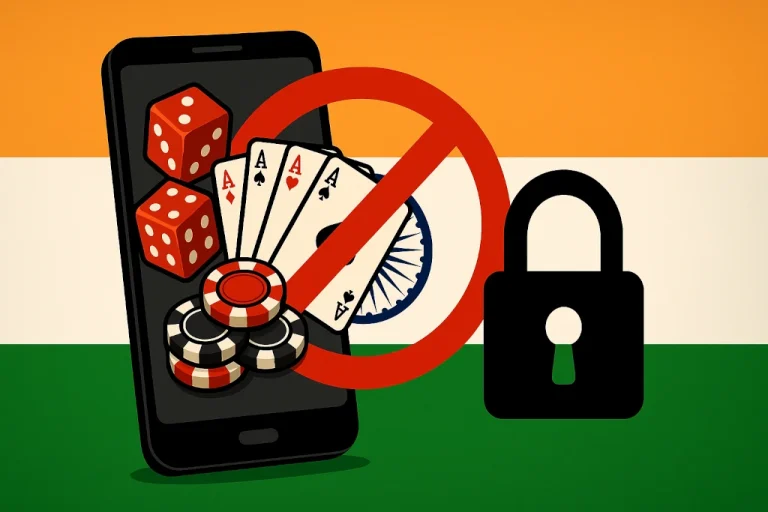
India has blocked a total of 1,524 illegal gambling and betting websites and mobile applications from 2022 to June 2025, according to a disclosure made in the Lok Sabha this week.
The move is part of the government’s ongoing effort to curb unauthorized and offshore gaming platforms that operate outside the bounds of Indian tax and legal frameworks.
Minister of State for Electronics and IT, Jitin Prasada, stated in a written reply that the government had “issued 1,524 blocking directions related to online betting, gambling and gaming websites and mobile applications” over the period in question.
The action underscores India’s increasing scrutiny of unregistered platforms—particularly those with offshore operations—that fail to comply with local tax obligations or the provisions of the Information Technology Act and the Integrated Goods and Services Tax (IGST) Act.
The Directorate General of GST Intelligence (DGGI), the enforcement arm of the Central Board of Indirect Taxes and Customs, has been empowered to direct internet intermediaries to block such platforms. This includes foreign-based companies that do not register under the IGST framework but continue to offer services in India. Online gaming in the country is subject to an indirect tax rate of 28 percent.
“The policies of the Central Government are aimed at ensuring an open, safe, trusted, and accountable internet for its users,” said Prasada.
Many of the platforms targeted by these bans are known to engage in digital marketing through tech giants such as Google and Meta. Authorities have raised concerns that these services often rely on surrogate advertising, obscuring their true nature while targeting Indian consumers.
To reinforce the tax regime around online gaming, the Finance Act of 2023 introduced a 30 percent income tax on net winnings, applicable from assessment year 2024–25. This complements the existing GST framework and aims to provide greater clarity for stakeholders in the gaming ecosystem.
While the Central Government has taken the lead in terms of taxation and online enforcement, gambling remains a state subject under India’s Constitution. Entry 34 of the State List gives state legislatures exclusive power to define and regulate betting and gambling activities, leading to a fragmented legal landscape.
To support regional enforcement, the Center offers guidance and financial aid to states and Union Territories for capacity building under various schemes. However, the burden of defining and policing gambling-related offenses still lies with individual state governments.
The DGGI continues to play a pivotal role as the designated enforcement agency under both the IT Act and IGST Act, particularly with respect to blocking access to offshore and unregistered online money gaming operations.
This development reflects India’s broader regulatory posture aimed at tightening control over digital gaming and betting, especially in light of growing cross-border and unlicensed activity in the space.