

The Philippine government is considering a 10 percent increase in taxes on online gambling operators, a move that could significantly raise the industry’s fiscal burden, which is already among the heaviest globally.

Finance Secretary Ralph Recto revealed during an informal press briefing that authorities are studying stricter rules and higher taxation as part of broader efforts to further regulate online gambling in the country.
“There are many ways of doing it. One is we leave it to PAGCOR,” Recto said, referring to the Philippine Amusement and Gaming Corporation. “Because PAGCOR, on its own, can increase the fees and charges it collects from online gaming.”
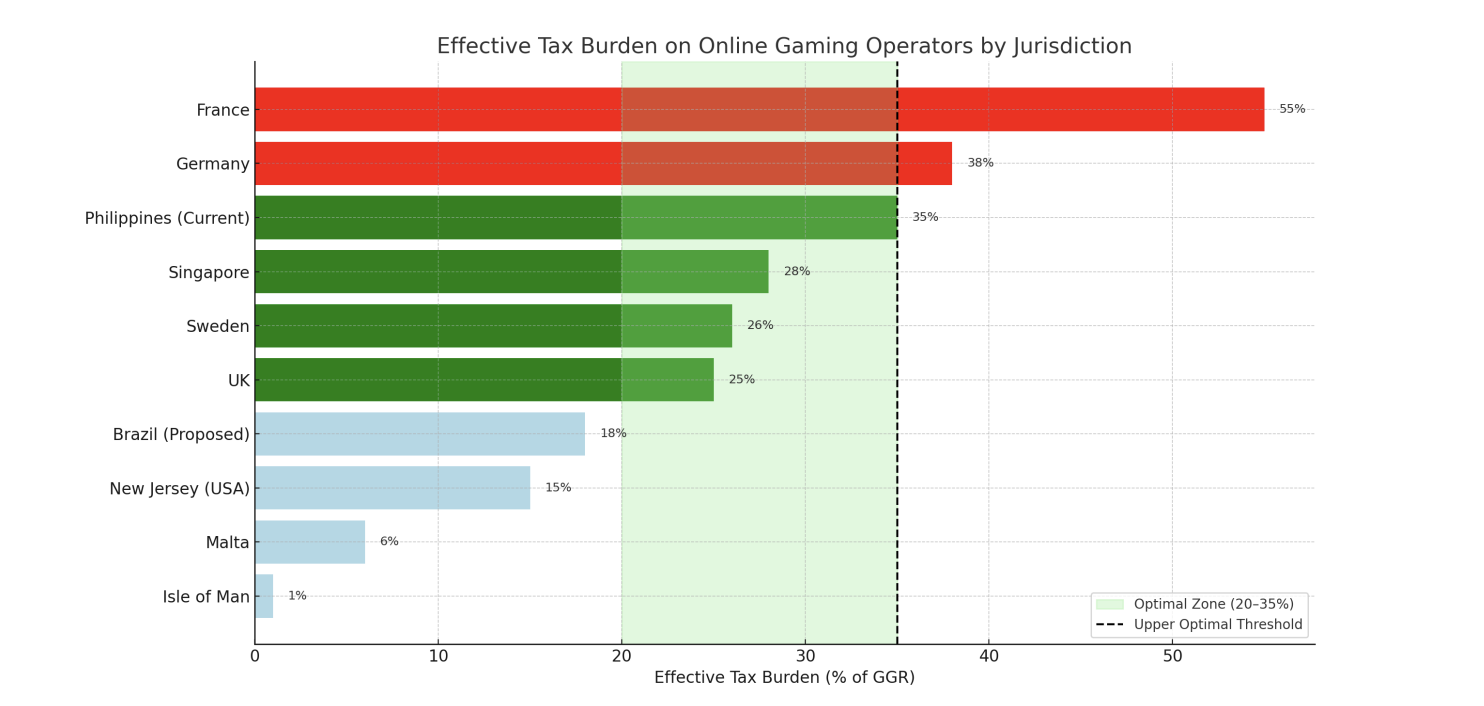
Currently, PAGCOR imposes a 30 percent fee on electronic gaming, while the Bureau of Internal Revenue levies an additional 5 percent franchise tax, with a total tax burden of approximately 38 percent of gross gaming revenue (GGR) on operators. Recto said a further 10 percent hike could generate an additional PHP20 billion ($341 million) annually for the government.
Recto also floated additional regulatory proposals, including mandatory warnings about gambling addiction, restrictions on minors through national ID verification, and a possible requirement for online gaming operators to be publicly listed for transparency.
However, the proposed measures have drawn strong opposition from industry expert, who argue that any additional tax would be excessive and could have unintended consequences.
On July 13th, Tonet Quiogue, a leading gaming law expert and CEO of Arden Consult, released a comprehensive policy brief pushing back against the proposed hike. Her analysis warns that further taxation could drive operators into the grey or illegal market.
“The reality is that licensed online gaming companies already pay some of the highest taxes in the world,” Quiogue wrote. She explained that by 2025, the effective license fee imposed by PAGCOR averages 30 percent of GGR, down from historical highs of 47.5 percent. On top of this, a 10 percent audit fee is charged on PAGCOR’s share—equivalent to another 3 percent of GGR—along with the 5 percent franchise tax collected by the national government.
“Altogether, roughly 35 percent to 38 percent of each operator’s GGR is collected by the government even before any operating costs or profit are accounted for,” Quiogue stated.
She further emphasized that licensed operators are taxed on gross revenue rather than net income, placing them at a disadvantage compared to traditional businesses. “Even if a licensed operator incurs losses or earns minimal profit in a given period, it must still remit the PAGCOR license fee and franchise tax on GGR, as well as the applicable audit fee,” she noted.