
Home Blog Page 326

Morgan Stanley forecasts 15% rise in Macau GGR for second half of 2025

0

Macau’s gross gaming revenue (GGR) is projected to increase by 15 percent year-on-year in the second half of 2025, according to a recent research note from Morgan Stanley.

The investment bank also predicts a 12 percent rise for August 2025, reaching approximately MOP20.5 billion ($2.55 billion), driven by consistent monthly growth exceeding 10 percent year-on-year. This positive outlook reflects strong trends in Macau’s gaming industry, including increased visitation and shifting market share among operators.

The analysis, authored by Praveen K. Choudhary, Dan Chee, Monica Dasoju, and Anson Lee, highlights ‘surprising spikes’ in performance metrics. For the first 17 days of August, GGR reached MOP12.1 billion ($1.5 billion), averaging MOP712 million ($88.6 million) per day, supporting the full-month forecast of 12 percent growth. At this level, revenues are expected to cover operational expenses and reinvestment needs, leading to improved margins.

Wynn Macau, Wynn Resorts_

Wynn to benefit, SJM continues to struggle

Morgan Stanley expresses optimism about Wynn Macau, noting its potential to benefit significantly from these trends. The brokerage rates Wynn Macau as “overweight” and identifies it as a preferred stock for the third quarter. Key factors include expectations that Wynn Macau will gain market share in the third quarter after losses in the first half of 2025.

The company announced a first-half 2025 dividend per share of HK$0.185 ($0.024), implying an annualized yield of 5.5 percent—the highest in Macau. The report notes an annual dividend of $250 million, yielding around 6 percent, which could drive a re-rating of the stocl. Historically, high dividend yields have led to higher trading multiples for Wynn Macau.

Additional reasons for favoring Wynn Macau include its projected market share gains, with hold-adjusted EBITDA in June and July tracking at $3.3 million daily, suggesting third-quarter EBITDA of $304 million—35 percent above the second quarter. The stock’s recent underperformance is considered undervalued compared to its 15-year average.

In contrast, SJM Holdings is expected to underperform, with second-quarter 2025 property EBITDA down 11 percent year-on-year and 6 percent below consensus, driven by a loss of over 100 basis points in mass market share. The report anticipates a focus on management changes and market share trends during SJM’s results briefing on August 28th, 2025.

Supporting the broader recovery, Macau’s July 2025 visitation rose 14 percent year-on-year, with mainland Chinese arrivals up 17 percent. Growth from Taiwan and Thailand was notable at 21 percent and 49 percent, respectively, though declines in overnight stays and air arrivals may impact per capita spending.


Former Tourism Australia managing director to spearhead Ras Al Khaimah’s tourism development

0

The former managing director of Tourism Australia has been appointed as the new CEO of the Ras Al Khaimah Tourism Development Authority (RAKTDA).

According to a release by the RAKTDA, Phillipa Harrison ‘will spearhead the Emirate’s bold visitation to become the ‘Destination of the Future’, bringing decades of international tourism expertise across Australia and other global markets’.

The emirate is aiming to achieve a goal of over 3.5 million visitors annually by 2030, after welcoming a new record 650,000 visitors in 1H24.

Before joining RAKTDA, Harrison served as Managing Director of Tourism Australia from September 2019 and as Executive General Manager International from February 2017.

Speaking of her appointment, Harrison noted “I’m honored to join at such an exciting time. Ras Al Khaimah has already established itself as an international success story, and I look forward to unlocking even more growth in the years ahead”.

The Chairman of RAKTDA’s Executive Committee, Sheikh Ahmed bin Saud Al Qasimi, noted that “Tourism is at the heart of Ras Al Khaimah’s strategy, it is our fastest-growing sector and we’ve achieved remarkable milestones in a short period of time”.

Wynn Al Marjan, UAE, Wynn Resorts

Wynn Al Marjan Island, located in RAK, is scheduled to be the UAE’s first integrated resort with a casino, and is slated to open in 2027.

Wynn Resorts’ CEO Craig Billings in May noted the group’s first mover advantage in “what several analysts have predicted will be a $5 billion-plus GGR market”.

The executive highlighted the group’s excitement about Wynn Al Marjan, noting “We think this is the most compelling development opportunity in the industry right now”.

Ainsworth and Novomatic terminate share purchase scheme but maintain takeover bid process

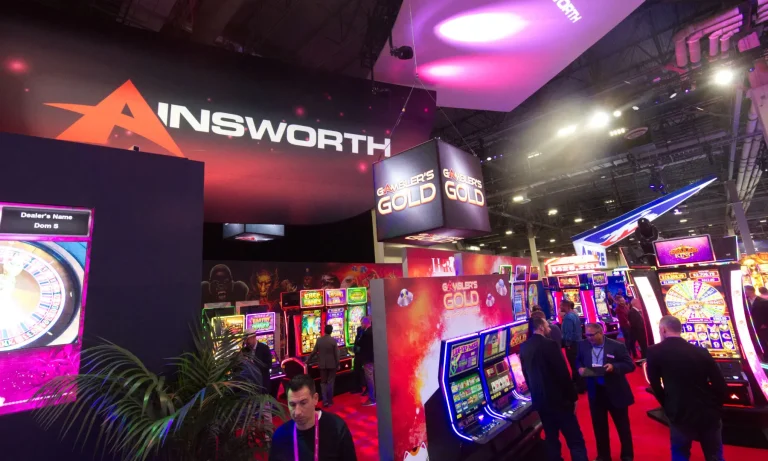
Ainsworth Game Technology (AGT) has announced the termination of a scheme arrangement for the acquisition of all of its shares by Novomatic (that it doesn’t already own) for AU$1 ($0.65).

However, the group indicated that the overall takeover bid for the company by Novomatic remains in place.

In a Tuesday filing, AGT indicated that its Independent Board Committee (IBC) ‘has assessed the lodged proxy forms to date and determined that it is unlikely that the Shareholder Approval Condition Precedent will be satisfied’.

This being a condition of the implementation deed, and the ‘imminent requirement to apply to the Court to either defer or cancel the Scheme Meeting’ scheduled for August 29th, ‘Ainsworth and Novomatic have agreed to waive the required consultation period and to terminate the Implementation Deed’. However the entire bid has not been cancelled as only certain clauses were terminated.

AGT’s IBC ‘continues to unanimously recommend that AGI shareholders accept’ the takeover offer, while Novomatic notes that it ‘believes the offer provides simplicity and certainty for AGI Shareholders who are concerned about liquidity and performance of AGI Shares’.

Ainsworth announced that it saw its net profit drop significantly in 1H25, despite seeing an increase in revenue.

The agreement termination now means that ‘every AGI Shareholder, regardless of the size of their holding, is now able to make their own decision in relation to the AU$1 per AGI Share, unconditional Offer, while it remains open’.

Novomatic directly or indirectly holds over 50 percent of AGT’s shares currently.

After the initial announcement of the Scheme, Ainsworth indicated that ‘a small number of AGI Shareholders including members of the Ainsworth family, have indicated they will not support the Scheme’.

Macau saw surge in suspicious casino chip conversions in 2024

0

Macau’s Financial Intelligence Office (GIF) said chip conversions without or with minimal gambling remained the most reported suspicious activity in 2024, topping the list for a second consecutive year amid a surge in alerts filed by the city’s casinos.

The agency said 4,794 suspicious transaction reports (STRs) were submitted through its secure online platform last year, accounting for more than 91 percent of total filings. Of these, 3,837 originated from the gaming sector, while 957 came from banks and other institutions, underscoring the continued dominance of casinos in money-laundering risks.

After chip conversions (1,596 reports), irregular large cash withdrawals (1,119) and transactions linked to other crimes (843) ranked second and third, respectively. Other common activities included currency exchanges, unexplained cash deposits, use of ATMs and phone banking, third-party gambling, check and account transfers, online banking, and suspicious wire transfers.

The use of online banking showed the sharpest increase from 2023, highlighting what the GIF called a growing trend of illicit proceeds being moved through electronic channels. Overall, the top ten typologies all recorded year-on-year rises.

Alongside its monitoring work, the office said it was stepping up its technological defenses. In 2024, it launched procurement for a new “Anti-Money Laundering Analysis System” and deployed a cyber threat monitoring platform capable of real-time surveillance of internal networks.

Officials said the upgrades would speed up the identification of security threats and enhance data governance in combating money laundering and related crimes.

Following its integration into the Special Police Unit (SPU) last year, the GIF also worked to strengthen system connectivity and data exchange.

Cybersecurity efforts included penetration testing, vulnerability scanning, and compliance checks with Macau’s Cybersecurity Law, as well as training to raise staff awareness of risks.

Authorities said the measures aimed to improve efficiency in financial intelligence analysis, reinforce network safeguards, and adapt to increasingly complex money-laundering techniques in the gaming hub.

Daily Asia Gaming eBrief: Intense ripple effects from RMG ban in India: Expert

0

Good Morning. India’s online gaming space is facing more of a tornado effect than a butterfly effect, after the ban on real money game play online has the sector reeling. An expert warns that the shutdown could be accompanied by other detrimental outcomes, although some areas – like e-sports – can still benefit. Meanwhile, in Cambodia, Naga Corp saw strong results in the first half of the year, with profits improving significantly. Looking to the Philippines, mass market growth is helping to offset a dip in VIP revenue, as tourism remains a primary driver for GGR.

What you need to know


On the radar


AGB Intelligence

india online gaming bill 2025, gambling

RMG ban causing massive ripple effect: Expert

The move by the Indian government to ban real money gaming on online platforms is having a massive ripple effect, with fears of an industry shutdown. A top expert notes that while some effects are immediate, other effects – such as a rollback on GST relief and a gradual migration of punters to the black market – are likely upcoming. Despite the ban, the e-sports sector is set to benefit, continuing its growing popularity in the nation.


Corporate Spotlight

Why Asia’s iGaming operators must rethink risk strategy | SEON

SEON,Winning Trust, Stopping Fraud: Why Asia’s iGaming Operators Must Rethink Risk Strategy

Winning Trust, Stopping Fraud. Asia Pacific’s iGaming market is expanding extremely fast, and a new wave of digital-savvy players is pushing demand through the roof. But the rise in adoption has outpaced regulation in many markets, and fraudsters have taken notice.


Industry Updates


INTELLIGENCE | ASEAN | CAREERS

India’s ban on real money games raises fears of industry collapse: Expert

India’s new law banning real money games could prove catastrophic for the sector, according to David Pinto, a Goan finance consultant. 

David Pinto

Speaking to AGB, Pinto expressed concerns that the government’s willingness to offer tax breaks on goods and services tax (GST) liabilities might wane as the industry faces potential shutdown. This comes amid the passage of the Promotion and Regulation of Online Gaming Bill 2025, which criminalizes real-money gaming platforms, including popular fantasy sports and poker apps.

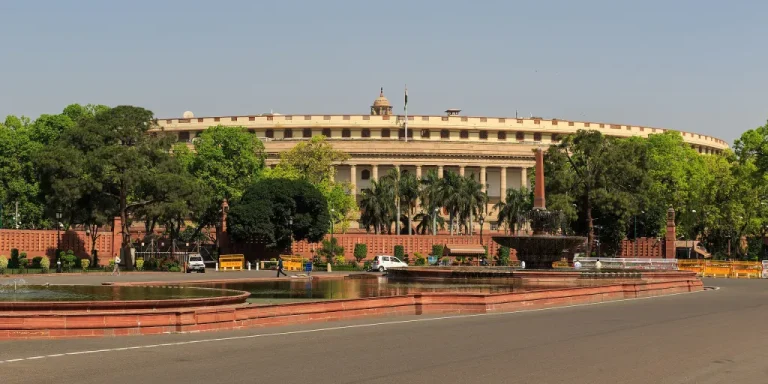
The bill was passed by both houses of India’s parliament—the Lok Sabha (House of the People) and the Rajya Sabha (Council of States)—on August 22nd, 2025, and signed into law by the president on August 24th. The Ministry of Electronics and Information Technology will now be responsible for notifying the act.

The legislation prohibits the offering, promotion, and financing of online money games, with offenders facing up to five years in prison. Government officials have cited widespread social harms—including addiction, financial distress, and suicides—as key motivations behind the measure. Official data indicate that online gambling platforms have extracted around $2.3 billion annually from approximately 450 million Indians, fueling fraud, money laundering, and terrorism financing, say authorities.

real money games

Boost for e-sports amid ban

Prime Minister Narendra Modi emphasized that the law aims to “encourage e-sports and online social games” while protecting society from the “harmful effects of online money games.” The legislation carves out exceptions for e-sports and educational games, positioning them as pillars of India’s digital economy. 

Under the bill, e-sports are defined as organized competitive events involving multiplayer formats governed by predefined rules, recognized under the National Sports Governance Act, 2025, and registered with a designated authority. Outcomes must rely solely on skills such as physical dexterity, mental agility, or strategic thinking, with allowances for registration fees and performance-based prizes—but explicitly excluding bets, wagers, or stakes.

This tightened definition clearly separates e-sports from real money gaming, which is now classified as “online money gaming” and fully prohibited. Pinto highlighted the bill as a “big boon for e-sports by giving them legitimacy as a form of competitive sport in India.” He noted that this could foster growth in non-monetary competitive gaming, aligning with global trends where e-sports are treated as legitimate athletic pursuits.

Nazara Technologies, India

Industry faces severe fallout

The ban’s immediate fallout has rippled through the industry. Publicly listed Nazara Technologies saw its shares plummet 18 percent over two days, jeopardizing its $117 million investment in the poker app Poker Baazi. Despite real money gaming accounting for only 5.2 percent of Nazara’s revenue in fiscal year 2023—and being unprofitable—the company ceased reporting it as a separate segment in subsequent years amid ongoing GST disputes. 

Other major players, such as Dream11, Gameskraft, and Mobile Premier League (MPL), face similar evaluations, with potential catastrophic impacts on operations and valuations.

Dream11, India’s largest fantasy sports platform and a key sponsor for the national cricket team since July 2023, has already discontinued cash games and contests following the bill’s passage. In a statement on its website, the company urged users to “stay tuned” while non-cash options remain available. The Board of Control for Cricket in India (BCCI) has yet to announce changes to the sponsorship, with secretary Devajit Saikia stating on August 23rd that the BCCI would adhere to government policies: “If it’s not permissible, we’ll not do anything.”

real money games

Debate over underground gambling risks

Industry groups had advocated for regulation and taxation over a blanket ban, warning that it could push users toward illegal offshore platforms. Pinto echoed this concern, noting that “it is likely that more traffic will go towards illegal websites,” which is a primary grievance for the legal gaming sector. However, he acknowledged the counterargument: prohibiting real money gaming might reduce youth exposure through endorsements and availability, even if some activity shifts underground.

The government’s stance reflects broader societal views, with the bill responding to requests from activists and voters highlighting the social costs of real money gaming. Officials, including Technology Minister Ashwini Vaishnaw, stressed the distinction between “constructive digital recreation” and exploitative platforms promising quick profits. A government briefing noted that roughly one-third of India’s population has lost money to online gambling.

Looking ahead, Pinto speculated on potential outcomes, drawing parallels to the United States, where gaming regulations vary by state and often incorporate geolocation enforcement. In India, where real money gaming lacks significant social support as a “sin industry,” a complete reversal seems unlikely unless taxation is deemed economically preferable to prohibition. He suggested the possibility of localized allowances, such as integrating sports gaming into tourism destinations like Goa, India’s premier gaming hub and a former Portuguese colony akin to Macau—though this remains speculative.

BC.GAME launches “Nezha” Slot with up to 46,656 ways to win and 10,000x max payout

0

Global crypto igaming platform BC.GAME has announced the release of its brand-new video slot — “Nezha”.

Featuring a 6-reel × 4-row base layout with 4,096 ways to win, the game can expand to 6 rows high and up to 46,656 ways through special symbols, offering players the chance to win up to 10,000x their bet. Inspired by the legendary Chinese mythological hero Ne Zha, this high-volatility slot blends traditional artistry, immersive storytelling, and innovative gameplay for an epic reel-spinning adventure.

Mythical Theme & Immersive Experience

In “Nezha,” players will embark on a quest to help the hero reclaim his powers and turn the tide against the Dragon King and his mighty army. Stunning visuals depict Ne Zha, dragon warriors, and deep-sea monsters as high-value symbols, set against an elegant landscape infused with Chinese ink-painting aesthetics and a battle-charged atmosphere.

Key Features

  • Multi-way Wins: Base layout offers 4,096 ways to win, with Demon Pearl symbols expanding reels up to 6 rows high for a maximum of 46,656 ways.
  • Spirit Pearl Wild: Appears on reels 2–5, expanding to cover the full reel and stacking multipliers up to 6x. Multipliers from multiple Spirit Pearls are added together.
  • Demon Pearl Symbol: Reveals random high-value symbols and increases reel height for more win possibilities.
  • Cascade Mechanic: Winning symbols are removed, and new symbols fall in, creating opportunities for consecutive wins.
  • High RTP: Theoretical return to player reaches 97.29%, offering long-term high potential.

Big Wins & High Potential

From the base 4,096 ways to the expanded 46,656 ways, “Nezha” offers exciting winning potential. When a single round reaches the 10,000x bet cap, the round ends immediately, awarding the capped prize.

“Nezha” is now available on BC.GAME across desktop and mobile platforms.

Macau gaming tax reaches $6.64B in Jan-July period, up by 3.4% yearly

0

The amount of gaming tax the Macau government collected in the first seven months of 2025 rose by just 3.4 percent yearly, according to the most recent data from the SAR’s Financial Services Bureau.

In total, the government collected nearly MOP53.37 billion ($6.64 billion) in taxes on games of chance during the six-month period, amounting to 60.3 percent of that outlined in the government’s budget plan.

The figure means that July’s gaming revenue tax amounted to MOP8.11 billion ($1 billion), an 18.8 percent yearly increase.

During the month of July, Macau’s GGR reached MOP22.12 billion ($2.75 billion), marking a 19 percent increase compared to the same month last year.

For the first seven months of 2025, Macau’s casino GGR reached MOP140.89 billion ($17.53 billion), up 6.5 percent year-on-year.

Under Macau’s 10-year gaming concession system, which came into effect on January 1st of last year, the effective tax rate on casino gross gaming revenue (GGR) stands at 40 percent.

NagaCorp profit surge in 1H25 as Cambodia tourism recovery fuels gaming revenue

0

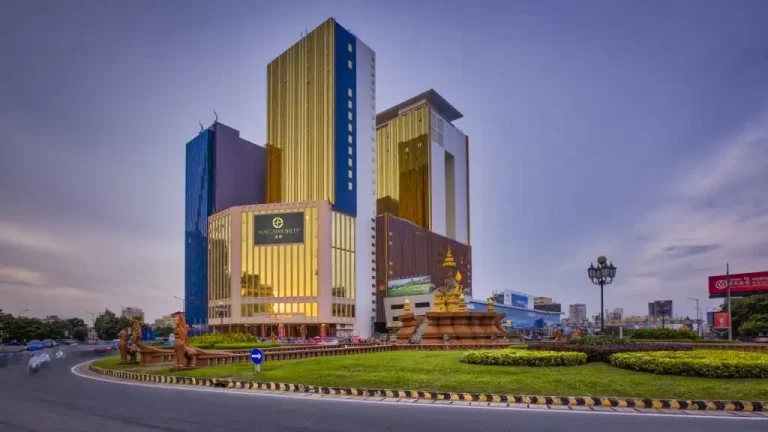
NagaCorp, the operator of Phnom Penh’s NagaWorld casino resort, posted a sharp jump in its profits for the first half of the year as Cambodia’s tourism revival and rising gaming demand boosted results.

Net profit for the six months to June 30th rose 68.9 percent year-on-year to $148.8 million, the Hong Kong-listed group said in a statement. Earnings before interest, tax, depreciation and amortisation climbed 38.5 percent to $200.3 million.

Gross gaming revenue (GGR) increased 17.2 percent to $332.3 million, with mass-market gaming leading the growth. The mass-market segment, which accounted for nearly 70 percent of total GGR, grew 20.9 percent to $232.1 million, while VIP revenue rose 9.6 percent to $100.2 million.

The company declared an interim dividend of US cents 1.01 per share, its first cash payout since 2021.

NagaCorp credited the stronger results to a rebound in Cambodia’s tourism sector, with international arrivals rising 6 percent in the first half to 3.4 million, and air connectivity nearing pre-pandemic levels.

Phnom Penh International Airport has recovered to 98 percent of 2019 traffic, while new direct routes from China, Southeast Asia and the Middle East are boosting arrivals.

The group said average daily business volumes in its mass-market segment climbed 11.6 percent year-on-year, nearly reaching pre-pandemic levels, while premium VIP rolling volumes surged 89 percent.

NagaCorp added that its long-term growth outlook remains underpinned by Cambodia’s economic expansion, rising foreign investment and government efforts to position the country as a regional tourism hub. A new international airport outside Phnom Penh is due to open in September, with capacity for up to 15 million passengers annually.

The company, which suspended dividends during the pandemic, said the resumption of payouts reflected confidence in its financial position and sustained cash flow.

Macau casino revenue hits four-year high in non-Golden Week period: JP Morgan

0

Macau’s gross gaming revenue (GGR) for the first 24 days of August reached MOP17.65 billion ($2.2 billion), averaging MOP735 million ($91.9 million) per day, according to the latest analysis from investment bank JP Morgan.

The daily run-rate last week surged 9 percent week-on-week to MOP793 million ($99.1 million), compared with MOP710 million ($88.8 million) in the first 17 days of August and MOP714 million ($89.3 million) in July. This marks the highest non-Golden Week GGR since the pandemic began.

The strong performance was supported by robust summer holiday visitation. JP Morgan projects August GGR will grow 11–14 percent, reaching MOP21.9–22.5 billion ($2.74–2.81 billion), likely setting another post-pandemic record. Both VIP and mass-market gaming segments recorded solid growth, expanding 10–15 percent year-on-year month-to-date, representing approximately 30 percent and 125 percent of pre-COVID-19 levels, respectively.

Citigroup, in its latest investment memo, attributed the stronger-than-expected GGR partly to non-gaming activities, highlighting the Tencent Music Awards held at Galaxy Arena over the weekend. The event, featuring K-pop groups such as (G)I-DLE and TWICE alongside Chinese artists Zhou Shen and Jane Zhang, helped boost visitation and gaming revenue.

Industry data show VIP volumes were flat month-on-month, while mass GGR grew 4–6 percent. The VIP hold rate also improved compared with the week of August 11th, coming in between 3.3 and 3.6 percent.

In a separate note, UBS analysts observed that the sequential acceleration of GGR month-to-date reflects strong demand momentum, despite a slowdown in the event pipeline.

Investment banks remain optimistic about Macau’s growth trajectory. JP Morgan forecasts sustained double-digit GGR expansion through at least the first quarter of 2026, noting that continued growth alongside investment banks’ upgrades should attract long-only investors and support valuation expansion.

Citigroup has also raised its August 2025 GGR forecast from MOP21.75 billion to MOP22.5 billion ($2.81 billion), equivalent to 93 percent of August 2019 levels and 14 percent year-on-year growth. This implies daily GGR will average a conservative MOP693 million ($86.6 million) for the remainder of the month.