
India’s new law banning real money games could prove catastrophic for the sector, according to David Pinto, a Goan finance consultant.

Speaking to AGB, Pinto expressed concerns that the government’s willingness to offer tax breaks on goods and services tax (GST) liabilities might wane as the industry faces potential shutdown. This comes amid the passage of the Promotion and Regulation of Online Gaming Bill 2025, which criminalizes real-money gaming platforms, including popular fantasy sports and poker apps.
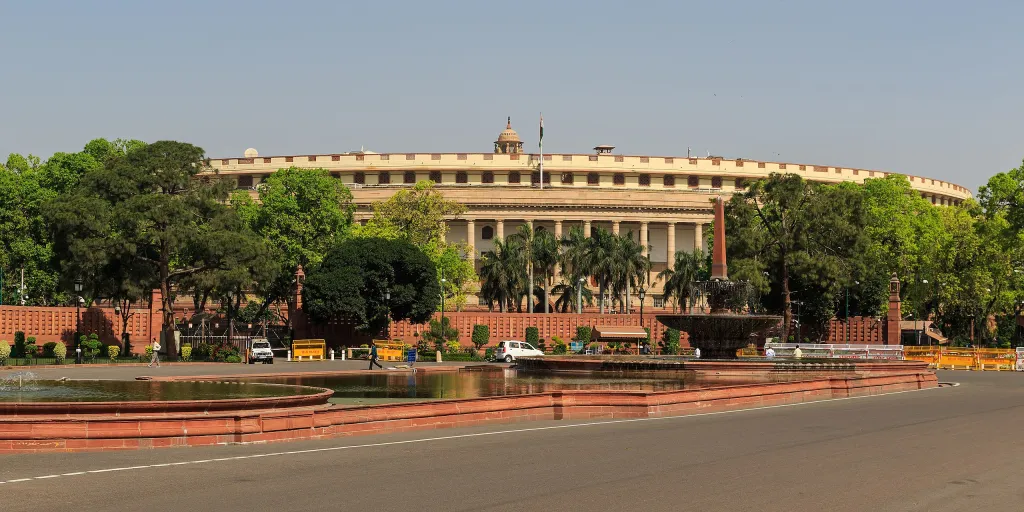
The bill was passed by both houses of India’s parliament—the Lok Sabha (House of the People) and the Rajya Sabha (Council of States)—on August 22nd, 2025, and signed into law by the president on August 24th. The Ministry of Electronics and Information Technology will now be responsible for notifying the act.
The legislation prohibits the offering, promotion, and financing of online money games, with offenders facing up to five years in prison. Government officials have cited widespread social harms—including addiction, financial distress, and suicides—as key motivations behind the measure. Official data indicate that online gambling platforms have extracted around $2.3 billion annually from approximately 450 million Indians, fueling fraud, money laundering, and terrorism financing, say authorities.

Boost for e-sports amid ban
Prime Minister Narendra Modi emphasized that the law aims to “encourage e-sports and online social games” while protecting society from the “harmful effects of online money games.” The legislation carves out exceptions for e-sports and educational games, positioning them as pillars of India’s digital economy.
Under the bill, e-sports are defined as organized competitive events involving multiplayer formats governed by predefined rules, recognized under the National Sports Governance Act, 2025, and registered with a designated authority. Outcomes must rely solely on skills such as physical dexterity, mental agility, or strategic thinking, with allowances for registration fees and performance-based prizes—but explicitly excluding bets, wagers, or stakes.
This tightened definition clearly separates e-sports from real money gaming, which is now classified as “online money gaming” and fully prohibited. Pinto highlighted the bill as a “big boon for e-sports by giving them legitimacy as a form of competitive sport in India.” He noted that this could foster growth in non-monetary competitive gaming, aligning with global trends where e-sports are treated as legitimate athletic pursuits.

Industry faces severe fallout
The ban’s immediate fallout has rippled through the industry. Publicly listed Nazara Technologies saw its shares plummet 18 percent over two days, jeopardizing its $117 million investment in the poker app Poker Baazi. Despite real money gaming accounting for only 5.2 percent of Nazara’s revenue in fiscal year 2023—and being unprofitable—the company ceased reporting it as a separate segment in subsequent years amid ongoing GST disputes.
Other major players, such as Dream11, Gameskraft, and Mobile Premier League (MPL), face similar evaluations, with potential catastrophic impacts on operations and valuations.
Dream11, India’s largest fantasy sports platform and a key sponsor for the national cricket team since July 2023, has already discontinued cash games and contests following the bill’s passage. In a statement on its website, the company urged users to “stay tuned” while non-cash options remain available. The Board of Control for Cricket in India (BCCI) has yet to announce changes to the sponsorship, with secretary Devajit Saikia stating on August 23rd that the BCCI would adhere to government policies: “If it’s not permissible, we’ll not do anything.”
Debate over underground gambling risks
Industry groups had advocated for regulation and taxation over a blanket ban, warning that it could push users toward illegal offshore platforms. Pinto echoed this concern, noting that “it is likely that more traffic will go towards illegal websites,” which is a primary grievance for the legal gaming sector. However, he acknowledged the counterargument: prohibiting real money gaming might reduce youth exposure through endorsements and availability, even if some activity shifts underground.
The government’s stance reflects broader societal views, with the bill responding to requests from activists and voters highlighting the social costs of real money gaming. Officials, including Technology Minister Ashwini Vaishnaw, stressed the distinction between “constructive digital recreation” and exploitative platforms promising quick profits. A government briefing noted that roughly one-third of India’s population has lost money to online gambling.
Looking ahead, Pinto speculated on potential outcomes, drawing parallels to the United States, where gaming regulations vary by state and often incorporate geolocation enforcement. In India, where real money gaming lacks significant social support as a “sin industry,” a complete reversal seems unlikely unless taxation is deemed economically preferable to prohibition. He suggested the possibility of localized allowances, such as integrating sports gaming into tourism destinations like Goa, India’s premier gaming hub and a former Portuguese colony akin to Macau—though this remains speculative.