Omni‑channel turnkey provider Pronet Gaming has become the first internationally licensed B2B company in the gaming sector to establish an SCBPO‑accredited operation in the Philippines, achieved in partnership with Claymore Solutions.
Pronet Gaming will now build out IT and Trading teams in Manila, further strengthening its operational presence and technical capabilities in the region.
Claymore Solutions is accredited by the Philippine Amusement and Gaming Corporation (PAGCOR) as a Special Class BPO (SCPBO), which authorises them to provide employer of record & serviced office space to internationally licenced gaming operators, enabling them to establish operations in the Philippines without taking bets or payments.
Pronet Gaming CEO Alex Leese said: “Establishing an SCBPO-accredited presence in the Philippines is a milestone that aligns perfectly with our long-term strategy of expanding our footprint in Asia, in a fully compliant way. We’re happy to have made this possible through the collaboration and support of our trusted partner, Claymore Solutions.”
Alex Leese, CEO of Pronet Gaming at ASEAN Gaming SummitPaul Fox, Chairman & Co-Founder of Claymore Solutions
Paul Fox, Chairman and Co-Founder of Claymore Solutions, added: “We’re honoured to be working with Pronet Gaming, providing EoR and serviced office space solutions for their operations which underlines the quality of local staff and further boosts the Filipino economy.”
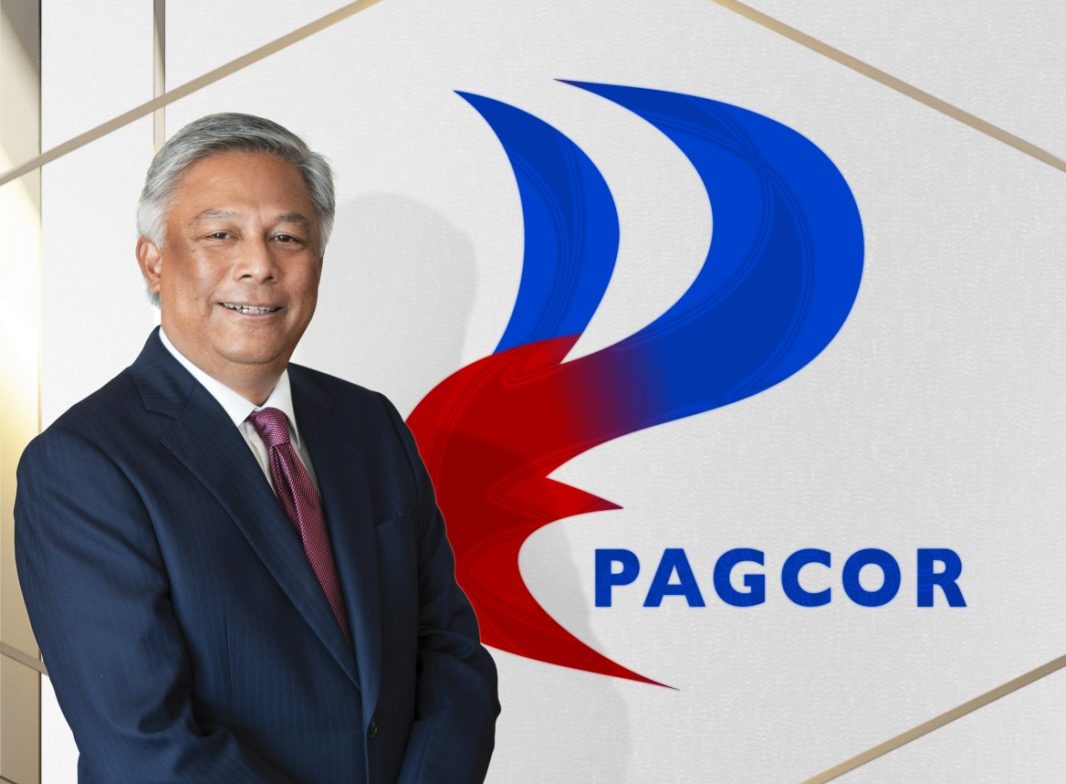
Commenting on the achievement, PAGCOR Chairman & CEO Alejandro Al Tengco said: “We’re delighted to see B2B operators such as Pronet Gaming establish their Trading and IT operations here through Claymore Solutions. I hope more companies follow suit, given the wealth of readily available Filipino talent in this sector.”
Founded in 1996, Pronet Gaming laid the foundation as a full‑service platform provider built to evolve with the industry. Since then, the company has expanded rapidly across Asia, LATAM, Europe, and Africa—turning regional opportunities into a truly global presence.
Today, its portfolio spans more than 20,000 casino games from over 150 providers, alongside a Sportsbook covering 230+ sports, 3,000+ markets, and 720,000+ live events annually. Pronet Gaming continues to push boundaries, powering 85 million bets per day through advanced technology, while innovations such as BetX Pro and omni‑channel retail integration redefine the player journey.
Claymore Solutions, founded in 2023 by Paul Fox and Nathan Kinsella, is headquartered in Taguig City, Manila, Philippines. As a PAGCOR‑accredited Special Class BPO (SCBPO), the company provides HR, payroll, and serviced office support to international gaming operators. Acting as Employer of Record (EoR), Claymore ensures full compliance with Philippine labor regulations and government‑mandated contributions.
With the shutdown of the offshore gaming operators (POGOs) in the Philippines, Paul Fox noted that he had identified a market gap—even before the POGO ban—by aiming to provide back‑office gaming functions for companies seeking to leverage the Philippines’ lower labor costs and strong knowledge base.
Claymore focuses on top‑tier, highly regulated operators who can seize opportunities and gain a strong advantage by leveraging the Philippines’ exceptional talent pool—developed over many years—while contributing to the local economy.
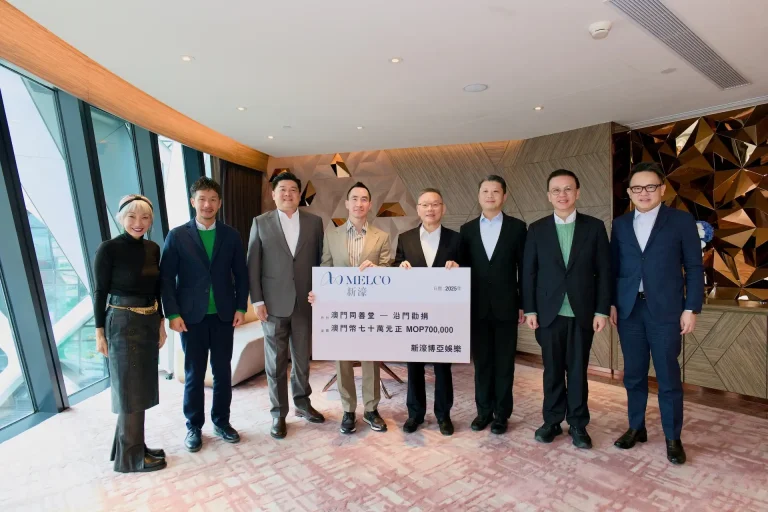
The funds are designated to support Tung Sin Tong Charitable Society’s social welfare programs and community poverty alleviation services.
A donation presentation ceremony was held at Morpheus, City of Dreams, where Melco Chairman and CEO Mr. Lawrence Ho greeted members of the Tung Sin Tong delegation, including Mr. José Chui Sai Pang, Chairman of the Board of Directors; Mr. Mok Chi Wai and Mr. Kevin Ho, Vice Chairmen of the Board of Directors; and Mr. Charles Choy and Mr. Jeffrey Ho, Directors.
Table of Contents
Founded in 1892, Macau Tung Sin Tong Charitable Society is the most prominent relief-oriented Chinese organization in Macau, second only to Kiang Wu Hospital. The Society provides medical services and medication, consistently upholding its principle of offering free care and both material and spiritual assistance to those in need.
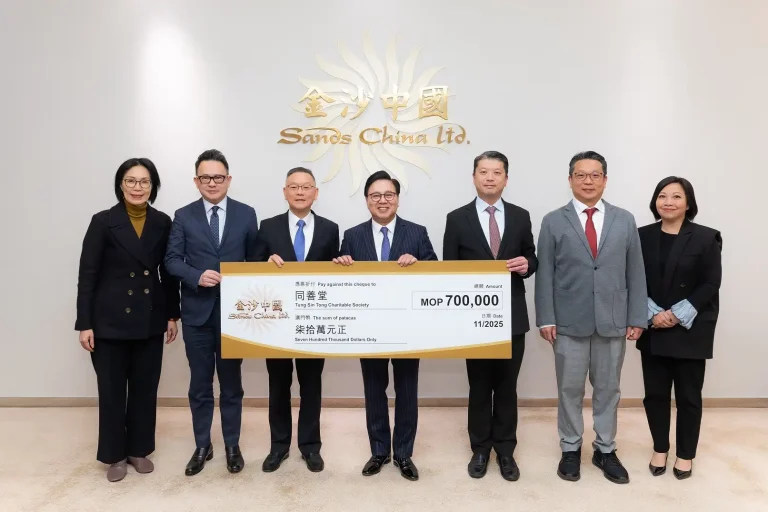
Sands China announced a donation of MOP700,000 to the Macau Tung Sin Tong Charitable Societyduring a cheque presentation ceremony on November 20 at The Venetian Macao, marking its 22nd consecutive year of supporting the NGO’s annual fundraising campaign and charitable services.
Sands China leveraged its annual signature event to not only assist Tung Sin Tong in promoting Traditional Chinese Medicine (TCM) to the public but also to actively contribute to the popularisation and development of the local TCM and health industries, while further deepening public awareness of Tung Sin Tong’s social services.
Earlier this year, Sands China purchased 3,000 packets of TCM soup from Tung Sin Tong Pharmacy to include in food kits that the Sands Cares programme distributed to community members in need in July and August. Beyond promoting and supporting the health preservation benefits of TCM, the initiative expressed tangible care to the beneficiary families in support of community health.
Dr. Wilfred Wong, executive vice chairman of Sands China Ltd., said: “Since 2004, Sands China has donated each year to Tung Sin Tong’s fundraising campaign, in support of its charity initiatives. Tung Sin Tong is one of the oldest charity organisations in Macao, with 133 years of service to the community, offering free medical services, medicine, and education to people in need. We sincerely thank Tung Sin Tong for its contributions to the community; Sands China will continue to work closely with local NGOs to actively carry out the corporate spirit of Sands Cares in giving back to the Macao community and building a harmonious and inclusive community together.“
Dr. Wong attended the cheque presentation ceremony with Catherine Kong, Sands China’s vice president of corporate communications and community affairs, and Annie Lam, director of community affairs, to present a ceremonial donation cheque to Tung Sin Tong’s José Chui Sai Peng, chairman of the board of directors; Ho King Lun, vice chairman of the board; and board members Charles M. Choy and Lee Koi Ian.
Founded in 1892, Macau Tung Sin Tong Charitable Society is the most prominent relief-oriented Chinese organization in Macau, second only to Kiang Wu Hospital. The Society provides medical services and medication, consistently upholding its principle of offering free care and both material and spiritual assistance to those in need.
Good Morning. The rising political tension between Japan and China could have some interesting ripple effects, particularly on which companies could be interested in vying for future casino licenses. Sanctions are already expected to have an influence on GDP, but MGM Osaka could be largely sheltered from the drama given its opening date. Looking to Macau, FY25 GGR is projected to reach about $29.3 billion, as the tail end of the year shines. Meanwhile, SJM has announced that it will acquire L’Arc hotel but is abandoning plans to purchase Ponte 16, choosing instead to shutter its casino this month.
Every operator can launch, but few can lead. In Asia, leadership is won in the 90 days after go-live, when payments feel effortless, content resonates locally, and every touchpoint builds trust.
TxODDS, a global leader in ultra-low-latency sports-betting data, has announced a strategic partnership with OpenBet, the industry’s most trusted sportsbook platform provider.
Through this agreement, operators that use OpenBet’s Trading System will gain the opportunity to directly access ‘Tx Fusion’, TxODDS’ next-generation data-delivery engine, now further strengthened by the integration of Lacerta Sports, the B2B analytics arm of Starlizard, the world’s most respected pricing-model providers.
This collaboration brings together OpenBet’s global operator network, TxODDS’ real-time multi-source odds technology, and Lacerta’s world-class pricing and modelling capabilities — delivering a comprehensive, high-performance data and pricing solution to sportsbooks across every major regulated market.
OpenBet will embed TxODDS’ Fusion feed into its Trading System, offering its operator clients – ranging from tier-one international sportsbooks to regional operators – the opportunity to integrate Tx Fusion as part of their omnichannel offering. Operators using OpenBet’s product suite will now have the option to access Fusion’s data-layer via a single installation, enabling faster time-to-market, simplified integration, and seamless expansion across pre-game and in-play markets.
By aligning the two organisations’ capabilities, the deal delivers a unified offering: OpenBet’s trusted platform and global footprint combined with TxODDS speed, accuracy and breadth of market coverage. This empowers operators to respond faster to shifting odds, optimise risk/trading models, and offer deeper, more dynamic markets to customers.
In a world where sports-betting operators compete on speed, accuracy, market depth, and innovation in product offering, the combination of TxODDS and OpenBet delivers a compelling advantage:
Better pricing and faster adjustment to market movements means improved margin protection and trading outcomes.
A unified feed across pre-game and in-play means fewer system integrations, lower latency risk and operational simplification.
Access to synthetic, blended and aggregated market views allows operators to benchmark, calibrate and optimise their pricing strategies more effectively.
By leveraging OpenBet’s Trading System platform, regulatory credentials and global scale, data-rich capabilities become accessible even to operators who may not have built large in-house trading desks.
The global availability via OpenBet means smaller regional operators gain access to the kind of data previously reserved for major tier-one players — which ultimately drives improved product for end-users and increased competitiveness in each region.
Thomas McGrath, Chief Revenue Officer for TxODDS, commented today: “We are delighted to partner with OpenBet to bring our Fusion data-platform to a truly global operator ecosystem. Together we are enabling the next generation of sports-betting trading, offering real-time, high precision, scalable data and making it available not just to the few, but to any operator striving to compete at the highest level in the OpenBet ecosystem.”
Jason Ayton, SVP Strategy at OpenBet, said: “The OpenBet Trading System has become one of the industry’s most powerful content aggregation networks, and our deep partnership with TxODDS represents a tremendous opportunity for both existing and new core Sportsbook & Trading System customers.
“By integrating TxODDS’ high-quality, fast and comprehensive pricing capabilities, operators gain a key competitive advantage – optimising margins, improving pricing performance, and strengthening their overall product. This is an enhancement every customer should be taking full advantage of, and we’re excited to bring this level of value to the market together.”
What is Tx Fusion?
Tx Fusion is TxODDS’ next-generation odds & event-data delivery platform, built from the ground up for high-performance trading and pricing in the sports-betting. Key features include:
Ultra-low latency delivery: Fusion is engineered for real-time odds updates with 8-10 ms in some pre-match and in-play environments.
Unified multi-source consolidation: The platform aggregates data from multiple bookmakers, marketplaces and models, standardising it into a consistent feed for downstream consumption.
Pre-game and In-play coverage: Whether operators are looking for aggregated odds ahead of events (Pre-Game) or rapid response streams during live play (In-Play), Fusion supports both modes.
Rapid integration and high availability: The platform offers simplified API integration and is designed for enterprise-grade uptime, enabling sportsbook operators to scale efficiently.
A key enhancement to Tx Fusion now available to OpenBet customers is Lacerta Sports, the B2B division of Starlizard — a company known globally for deep statistical modelling, market intelligence, and high-accuracy sports-pricing systems.
Through its integration into TxODDS, Lacerta delivers:
“True Price” and “Marginated” model options
Extensive coverage of global football, basketball and American football.
Hundreds of fully tradeable market types
Battle-tested modelling used in high-volume professional environments
How It Will Be Available via OpenBet
OpenBet will offer Tx Fusion as a plug-in or add-on service to its operator clients. Operators already using the OpenBet platform will have the option to subscribe to the Fusion feed via the same integration framework they use for other OpenBet services.
Installation will be streamlined: due to the standardised data interface of Fusion and OpenBet’s modular architecture, operators can deploy the feed with minimal disruption to existing systems.
The partnership covers all major jurisdictions: via OpenBet’s established global footprint and regulatory-compliant infrastructure, operators in Europe, North America, Asia-Pacific and other regulated markets will be able to access the feed subject to local licensing & compliance.
The offering will be scalable: operators will be able to select the depth of coverage (e.g., number of sports, markets, jurisdictions) and the latency tier appropriate for their business model.
Gaming expert Daniel Cheng examines the intricacies of the ongoing spat between Japan and China, sparked by comments by recently elected Prime Minister Sanae Takaichi and resulting in swift economic sanctions which will cut into GDP.
Daniel Cheng
No, the title of this commentary is not a reference to MGM Osaka, though I imagine the owners will be thanking their lucky stars that the resort isn’t open yet at this very moment. Neither is it about the couple more casino licenses that could soon be auctioned out to the highest bidders, albeit not in the open and transparent bidding style that one sees at the break of dawn every day at the famed Tsukiji fish market.
There are much, much higher stakes at this table, a game of geopolitical brinkmanship which holds the slimmest of odds, even less so than the razor-thin odds of baccarat, where the existence of a house advantage is moot. The Japanese casino industry is reduced to little more than a pawn on the historic Pacific theater, a stage where old wounds perpetually threaten to reopen.
In an age where xenophobia is fueling the rise of far-right regimes, fanning the flames of populism that even the world’s superpower has succumbed to, Japanese Prime Minister Sanae Takaichi is riding high on the wave, with the popularity of her new Cabinet surging past even the administration of her mentor Shinzo Abe.
Japanese Prime Minister Sanae Takaichi
She’d extended the momentum of the honeymoon period with a high-profile diplomatic charm offensive on the international stage, basking in the limelight with the US and Chinese Presidents in quick succession. Then, goaded by an opposition lawmaker in the legislature, she revealed her hawkish side for the first time since taking office in a remark about Taiwan that scuttled all the positive vibes she had established with President Xi only days earlier.
It was what many feared about Takaichi: whether she could tone down her far-right tendencies in deference to realpolitik.
China bristled, as expected, from symbolic gestures in delaying the release of Japanese movies and fiery rhetoric on social media by state officials, to a more substantive response in dismissing plans for a meeting between Premier Li Qiang and Takaichi at the upcoming G-20 Summit and imposing soft economic sanctions by reining in Chinese tourists to Japan and suspending the import of Japanese seafood.
This first salvo of punitive measures is enough to shave up to half a percent off Japan’s GDP figure for the next year, which would not bode well for the nascent administration of Takaichi, already encumbered as a minority government in both chambers of the Diet.
If the Osaka casino resort were already in operation, it would have made a sizable dent in its revenue for the quarter or two. That was always a risk for the Japanese gaming industry given the tenuous Sino-Japanese history, a seasonal one perhaps but no less concerning. If China were to forcibly annex Taiwan, a scenario most commentators and think tanks deem unlikely for the foreseeable future, it is highly improbable that Japan would actually walk the talk and come to Taiwan’s defense.
One must assume that Takaichi’s statements were more rhetoric intended to fan nationalistic flames and cater to her right-wing bloc. Analysts are divided on whether it was an unguarded gaffe, where she simply couldn’t help herself, or a calculated probe to test how far she can shift the line, which is a far more dangerous game.
Regardless, MGM Resorts and ORIX are currently immune from these concerns, as the integrated resort will not open for business for at least five years, and Takaichi will by then have long since ceded the premiership. The larger question is whether Japan will continue its drift to the right, a trend reflected in the rise and growing influence of parties such as Kokumin-to and Sanseito. Such a trajectory is almost certain to produce more frequent rifts with China and greater business volatility for Japanese gaming operators.
The more immediate concern is the anticipated restart of the IR tender for the two unawarded licenses, with details and a timeline expected by year-end. With Takaichi having left with little room to backtrack on her statement, there is a strong probability that the impasse will persist when the bidding reopens.
Hard Rock International, long shadowing from the sidelines, along with other Western operators, will predictably make their move. It remains to be seen whether local Macau operators will step into the fray. For Melco Entertainment, listed on the US Nasdaq and seen as relatively untethered to Beijing, the calculus is less political and more financial, as it must determine whether it has the capital to navigate its highly leveraged books.
More interesting is how Galaxy Entertainment will assess its options. It is the only major Asian gaming operator that has yet to spread its wings outside of Macau, after a few prior unsuccessful jaunts in the Philippines, Japan, and Thailand. Galaxy was left empty-handed in its last foray into Japan with a mixed execution of its strategy that lacked a clear focus on any specific prefecture. Known to be closely attuned to the pulse of Zhongnanhai, any move by Galaxy could be interpreted as calculated by some implicit guidance from Beijing.
On the one hand, a key consideration is whether a Chinese bidder might be treated less than fairly under the current political climate. Conversely, a favorable outcome for a Chinese bidder could be construed as a sort of olive branch that Japan can extend to China.
It is probably unlikely that Beijing would discourage Galaxy from bidding because such a prohibition would go against the Chinese leadership’s broader strategy of leveraging economic statecraft through direct investment to develop industries and employment abroad and subtly fostering economic dependence on China. From Japan’s perspective, awarding a coveted casino license to a Chinese entity would strategically tie the owner to Tokyo, creating a valuable, direct backroom channel for dealings with the Chinese leadership.
Thus, from a different vantage point, Chinese bidders may not be as hamstrung as the geopolitical optics suggest. Galaxy, in particular, may be in a uniquely advantageous position if it knows how to play its hand intelligently and flip a wildcard into a trump card to lay a strong claim to one license, even as the other appears virtually assured for Hard Rock International in Hokkaido.
The histrionics are set to continue, with the latest example being a provocative editorial by Chinese state media calling to examine China’s possible historical claims to Okinawa and the islands in the Ryukyu archipelago—a move in direct retaliation against Japan’s contention that its historical ties to Taiwan provide a legitimate basis to intervene in the island’s defense. The smartest approach for MGM Resorts and other aspiring licensees is to remain quietly in the shadows while the situation plays out.
Bally’s investment in The Star has now received regulatory approval by both the New South Wales and Queensland governments.
According to a release sent early Friday, Bally’s has ‘cleared a comprehensive probity investigation, conducted by the NICC and Liquor and Gaming NSW (L&GNSW), which has assessed a range of both financial and non-financial factors related to the company’s suitability and the suitability of key individuals involved in Bally’s’.
Bally’s corporate and individual close associates were ‘approved as ‘suitable persons’ to be associated with the management and operation of The Star Sydney casino, subject to appropriate conditions.’
Furthermore, ‘the NICC’s Chief Commissioner Philip Crawford said Bally’s had submitted a plan to improve on The Star’s financial performance, which it will be required to report back on regularly as a condition of the approval.’
The NICC also approved a proposal from the Mathieson family’s Investment Holdings to increase its shareholdings in The Star.
“Bally’s and Investment Holdings have assured the NICC they will continue the essential remediation work required at The Star so that it can continue to remedy the serious concerns raised in the two Bell inquiries,” noted Crawford.
The NICC notes that the decision does not affect the status of The Star’s Sydney casino license, which remains suspended. NICC-appointed special manager Nick Weeks ‘continues to have oversight over casino operations’.
Meanwhile, the Queensland Office of Liquor and Gaming Regulation has also approved the strategic investments by Bally’s and Investment Holdings.
The approval by both authorities means that The Star can now convert the AU$300 million ($193.5 million) investment into equity and nominate new members to The Star’s board.
Speaking of the move, The Star Chairman Anne Ward noted “We are very pleased to have received all regulatory approvals necessary to complete the Strategic Investment. This is a critical step in The Star’s progress towards a return to suitability and financial stability. We look forward to working with each of Bally’s and Investment Holdings to facilitate an orderly transition and to provide a pathway for a successful future for The Star”.
Thailand’s efforts to dismantle scam syndicates and “grey businesses” are faltering because powerful political and bureaucratic figures are allegedly taking bribes and shielding criminal networks, according to the Anti-Corruption Organization of Thailand (ACT).
The warning, reported by local outlet The Nation, comes as the government intensifies its campaign against illicit financial flows and online gambling.
Mana Nimitmongkol, chairman of Anti-Corruption Organisation of Thailand (ACT)
In a Facebook post on Wednesday, ACT chairman Mana Nimitmongkol said the country continues to “catch only small operators,” while masterminds behind online gambling networks, scam compounds, and money-laundering rings remain untouched due to “dark power and connections.” He cited recent scandals implicating ministers, parliament members, a former national police chief, and more than 200 police officers in activities ranging from online gambling and narcotics trafficking to underground businesses and corruption.
Mana referenced whistleblowing by former deputy national police chief Surachet Hakparn, who played a key role in exposing alleged ties between senior officials and illegal enterprises. High-profile cases include the Tu Hao and Jinling pub operations, Yu Xinqi’s illegal visa scheme that brought 7,000 Chinese nationals into Thailand, the Inspector Sua gambling network, the Minnie case, and the 888 online betting platform. He also noted investigations into senior police linked to oil smuggling and the indictment of a former senator tied to transnational crime and illicit operations along the Myanmar border.
The Anti-Corruption chief also questioned how Cambodian tycoons Kok An and Ly Yong Phat, along with their families, were granted Thai citizenship—later revoked—saying authorities have yet to clarify how the approvals were issued. Mana estimated that Thailand loses more than THB100 billion ($3.1 billion) each year to scam networks, arguing that outdated narcotics, gambling, fraud, and computer-crime laws hinder efforts to trace financial trails leading to influential figures.
His comments come as the government prepares a nationwide crackdown on suspicious financial flows. Earlier this month, as reported by AGB, Thailand announced a plan to establish a special task force to track online gambling proceeds, scam-related funds, and other irregular transfers that may be propping up the baht.
Finance Minister Ekniti Nitithanprapas said the new “data bureau” would link information across agencies and financial institutions, with operations expected to begin by December.
Prime Minister Anutin Charnvirakul has instructed Ekniti to lead the initiative under a “Connect the Dots” framework with the Bank of Thailand. Anutin described the move as an “all-out war” on financial crime, saying the government has “signed a blank check” to empower authorities against scammers, human traffickers, and drug-smuggling networks.
Officials say illicit funds often move through cryptocurrency platforms, informal cash hubs, and gold markets before being laundered into high-value assets such as real estate, diamonds, and luxury vehicles. Thailand also plans to update its monitoring standards to align with global rules set by the Financial Action Task Force (FATF), while the Bank of Thailand has ordered lenders to strengthen due-diligence checks.
A Philippine court has sentenced “POGO mayor” Alice Guo to life in prison for human trafficking, marking one of the country’s highest-profile crackdowns on scam compounds, AFP reported on Thursday.
Guo, 35, was convicted alongside seven others for running a large Chinese-operated online gambling complex in Bamban, north of Manila, where hundreds of workers were forced to carry out online scams under the threat of torture. State prosecutors said Guo oversaw operations at the compound while serving as mayor of the town where it was located, despite later being ruled ineligible for office because she was not a Filipino citizen.
The compound included office buildings, luxury villas and a large swimming pool. It was raided in March 2024 after a Vietnamese worker escaped and alerted police. Authorities found more than 700 people from the Philippines, China, Vietnam, Malaysia, Taiwan, Indonesia and Rwanda, along with documents allegedly identifying Guo as president of the company that owned the facility.
State prosecutor Olivia Torrevillas said all eight defendants received life sentences. She said Guo and three others were convicted of “organizing trafficking,” while four additional defendants were found guilty of “acts of trafficking.”
Guo fled the Philippines in 2024 but was arrested months later in Indonesia. A Manila court subsequently ruled she had never been eligible to serve as mayor, voiding her claim to Filipino nationality.
The report cited a UN assessment noting that Southeast Asia’s scam industry has expanded significantly, with victims across the region losing an estimated $37 billion in 2023. The Philippines’ scam hubs proliferated during the Duterte administration, which expanded licensing powers for gambling operators. In 2024, President Ferdinand Marcos ordered a nationwide ban on offshore gambling operations following public outrage over the Guo case.
Macau’s government has projected that the city’s casino gross gaming revenue (GGR) will reach MOP236 billion ($29.29 billion) in 2026, according to the newly released 2026 fiscal budget plan published on the Legislative Assembly website.
The document, which will be discussed and voted on November 25th, identifies the GGR forecast as the principal source of fiscal income for next year’s budget.
The projection represents a 3.5 percent increase from the government’s revised full-year GGR estimate for 2025, which was adjusted downward in June to MOP228 billion ($28.3 billion) after gaming revenue from November 2024 to April 2025 fell short of expectations. Officials said the 2026 forecast was determined ‘based on the consideration of the external environment and economic uncertainties’ and aligned with principles of fiscal prudence.
According to the budget plan’s justification note, Macau entered 2025 with steady economic momentum and rising visitor arrivals, although actual gaming revenue lagged initial projections early in the year. In response, the government revised its 2025 forecast through the June 2025 amendment law, lowering the estimate from MOP240 billion ($29.78 billion) to MOP228 billion ($28.3 billion) to reflect a more cautious public-financial outlook.
Authorities said tourism promotion efforts—including large-scale concerts, trade fairs, holiday campaigns, international IP events, and major festivals—helped accelerate the recovery through mid-2025. The city recorded more than MOP20 billion (over $2.48 billion) in monthly GGR for four consecutive months from May to August, signalling a stable upward trajectory for the tourism and gaming sectors.
The government said this positive momentum is expected to continue into 2026, supported by sustained tourist demand and strengthened “tourism+” integration measures aimed at diversifying Macau’s leisure economy.
While anticipating stronger results from integrated resorts, the fiscal document also acknowledged challenges in other parts of the local economy. Small and medium-sized enterprises in traditional sectors continue to face operating pressures despite the broader tourism-driven recovery. As a result, the 2026 budget will maintain a series of tax relief measures introduced in the 2025 fiscal year to support business transformation and upgrading.
For public revenue, the government expects to collect MOP92.53 billion ($11.48 billion) in gaming-related taxes in 2026. That includes MOP82.6 billion ($10.25 billion) from the 35-percent ‘special gaming tax’ levied on GGR, with additional contributions from other statutory charges bringing the effective rate to about 40 percent. Income from taxes on commissions paid by casinos to licensed junkets is projected at MOP150 million ($18.61 million).