The iGaming powerhouseSOFTSWISS unveils insights on why operators should launch sportsbooks six months ahead of the 2026 FIFA World Cup.
Although the 2026 FIFA World Cup is still six months away, operators who delay launching a sportsbook are already falling behind.
In his latest video commentary, SOFTSWISS Sportsbook’s Victor Sekushenko highlights key revenue advantages and explains how early launch unlocks the full potential of the event. He also outlines why a casino-only strategy is no longer enough in today’s market and how, in these conditions, operators can increase bets per player by 50%. Victor provides a step-by-step explanation of the full timeline, helping operators understand what actions to take and when.
“When a sportsbook has been live for a while before a major event like the 2026 FIFA World Cup, operators already know which markets resonate with players, which teams spark the most interest, and which promotions actually generate engagement. That data makes pre-tournament activation far more effective and much more cost-efficient,” shared Victor Sekushenko, Head of Sales at SOFTSWISS Sportsbook.
Victor emphasises that launching a sportsbook is not a short-term move tied to the 2026 FIFA World Cup, but a strategic decision for long-term business growth. And, while a post-event slowdown is expected, operators will be better positioned to re-engage audiences through consistent bonuses, jackpots, loyalty mechanics, and personalised offers.
Early preparation also helps build an active player base, adjust and improve offers, and enter peak betting periods fully prepared. Sustainable success comes through planning, experimentation, and giving players a strong experience before they are drawn to another brand.
Melco Resorts & Entertainment mobilized over 2,200 colleagues and family members in support of the ‘Walk for a Million’ charity event, organized by the Charity Fund from the Readers of Macao Daily News.
The event took place today (December 14), marking its 42nd year, with a strong turnout from the Company that collectively highlighted the Macanese spirit of harmony and unity through active community engagement.
Spanning approximately 3 kilometers, the walk’s route commenced on Avenida Dr Sun Yat-sen and finished at Barra Square.
Earlier last month, Melco reaffirmed its commitment to corporate social responsibility by donating MOP 700,000 to the Charity Fund to support this year’s ‘Walk for a Million’ event, sharing care and encouragement for underprivileged and vulnerable groups in Macau.
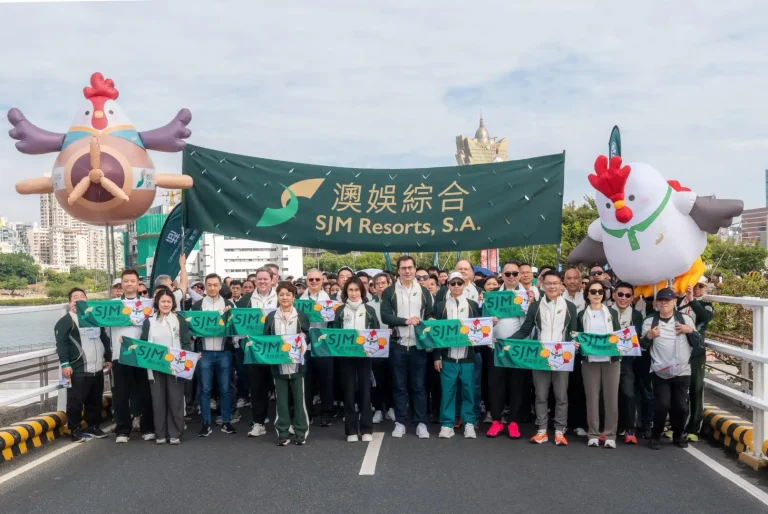
Macau gaming operator SJM Resorts fully supported the “42nd Walk for a Million”, organising over 3,000 staff members and their family and friends to participate in today’s charity walk event.
Ms. Daisy Ho, Managing Director of SJM, and Ms. Angela Leong, Director of SJM and Chairman of the Staff Welfare Consultative Committee, walked alongside the team, united in heart for this charitable initiative.
Ms. Daisy Ho, Managing Director of SJM, stated that the company remains dedicated to supporting charitable efforts. Today, SJM encouraged its team members to join the ‘Walk for a Million’. These concrete actions enable SJM to promote care and positive energy throughout society, building on its previous donation of MOP 700,000 to support the event.
SJM maintains a long-term commitment to serving the Macau community, actively supports public welfare and charitable causes, assists underprivileged groups, and fulfills its corporate social responsibilities.
The Macau Economics Association (MEA) projects that Macau’s gross domestic product (GDP) will reach about MOP435 billion ($54.4 billion) in 2026, representing year-on-year real growth of between 2 percent and 5 percent, according to estimates released at a local economic forum on Saturday.
The association said Macau’s GDP next year is expected to recover to around 93 percent of its 2019 pre-pandemic level, pointing to a broadly stable macroeconomic outlook. However, it stressed that continued policy focus will be required to advance structural reforms and support sustainable growth.
The projection broadly aligns with previous forecasts by international rating agency Fitch. Earlier this week, Fitch projected that Macau’s economic growth would be about 4 percent in 2026, marking a deceleration from 2025. Fitch said the low single-digit growth rate reflects weakening conditions in mainland China, which are increasingly weighing on the spending power of visiting tourists.
The projections were unveiled at the “Macau Economic Forum 2025,” organized by the MEA, which focused on aligning China’s upcoming 15th Five-Year Plan (2026–30) with Macau’s third five-year development plan. The association described the outlook as one of cautious optimism amid persistent global uncertainties.
Joey Lao
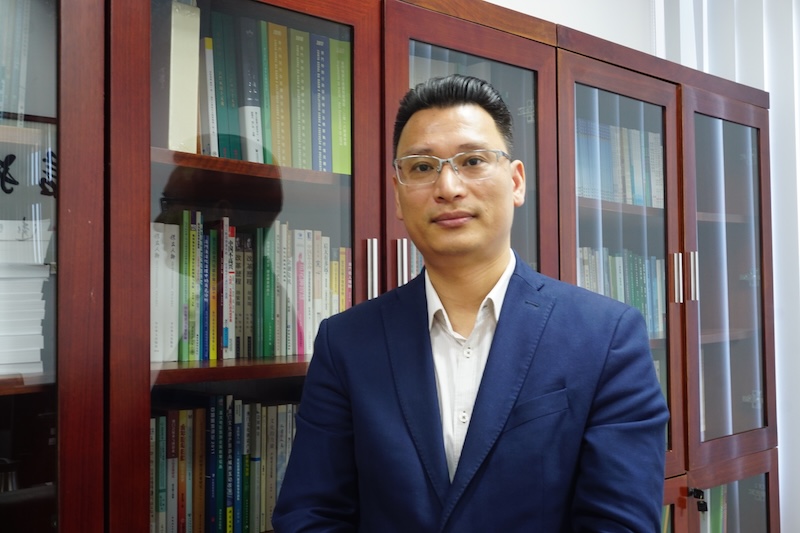
Presenting an economic outlook titled ‘Macau’s Economic Situation and Prospects 2026’, MEA director and Macau lawmaker Joey Lao said the global environment remains complex and volatile, with geopolitical tensions and weak global growth momentum continuing to pose challenges. He noted that external uncertainties are likely to persist, making the international environment more demanding in the year ahead.
Despite these headwinds, Lao said Macau’s economy is showing signs of steady improvement. He cautioned, however, that long-standing structural issues remain difficult to resolve, including unbalanced and insufficient development and the limited effectiveness of diversification efforts.
Gaming-related crime in Macau surged 70.1 percent in the first three quarters of 2025, with police recording 1,737 cases compared to 1,021 during the same period in 2024, Secretary for Security Chan Tsz King announced on December 12th.
The sharp increase was largely attributed to changes in statistical methodology following the implementation of new anti-illegal gambling legislation, rather than an actual deterioration in public security, Chan said.
He explained that the Anti-Illegal Gambling Crime Law, which took effect in October 2024, introduced a new offense of ‘operating illegal currency exchange for gambling purposes’ and prompted police to expand the statistical scope of gaming-related crimes. Previously, fraud cases involving illegal money exchangers outside casinos were often not classified as gaming-related crimes because their link to gambling could not be definitively established. With the criminalization of such activities, all related cases are now included in gaming crime statistics, resulting in a numerical increase.
Despite rising gaming-related crime figures, Chan stressed that Macau’s overall public security situation remains stable. Total criminal cases fell 7.1 percent year-on-year to 10,058 cases during the January to September period. Violent crime, theft, robbery, fraud, and computer-related crimes all recorded declines.
Serious violent crime levels remained particularly low, with 187 cases recorded in the first three quarters, down 11 percent from a year earlier. Cases of kidnapping, homicide, and serious assault continued to register zero or minimal occurrences. Police detained 4,475 individuals during criminal investigations and operations, representing an 8.8 percent increase from 2024.
Chan also addressed concerns about satellite casinos, which are required to cease operations or change their business models by the end of 2025 under the Gaming Law. He said police have stepped up intelligence gathering and risk assessments to prevent any potential negative impact on public security, adding that no suspicious situations have been identified so far.
The secretary highlighted improvements in efforts to combat telecom and cyber fraud, noting that telephone scams, online fraud, and computer fraud cases declined by 45, 285, and 275 cases respectively. However, he warned that fraud methods are evolving, particularly with the emergence of AI deepfake technology, which appeared in Macau for the first time in late April 2025. While the three reported cases resulted in no actual losses, Chan urged continued public vigilance.
At the same press conference, Chan disclosed that, as of November, authorities had confirmed that 11 Macau residents had traveled overseas to engage in illegal activities, including telecom fraud. Of these, two traveled to Cambodia and have since returned safely to Macau, while nine traveled to Taiwan and were detained for criminal offenses, with five still serving sentences. Most of those involved were young people, including one minor, he said.
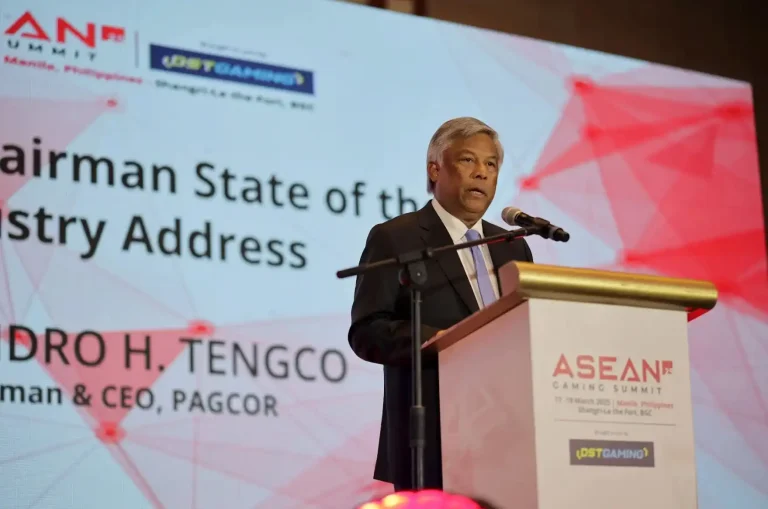
The Philippine government has urged critics to present concrete evidence to substantiate allegations of a conflict of interest involving Philippine Amusement and Gaming Corp. (PAGCOR) Chairman and CEO Alejandro H. Tengco, following reports that a construction firm owned by his family secured multiple government contracts after his appointment.
Claire Castro
According to the Philippine News Agency, the call was made on Friday by Malacañang, the official residence and office of the Philippine president and a term commonly used to refer to the executive branch of government. Palace Press Officer Claire Castro said accusations must be supported by proof so authorities can determine whether any irregularities occurred.
Castro said the government would assess the issue based on whether procurement procedures were properly followed and whether Tengco maintains any direct link to the company involved. She added that no anomalies have been officially reported so far and that Tengco has denied any involvement in the awarding of public works contracts.
Her remarks followed media reports that Nationstar Development Corp., a construction firm founded by Tengco in 2015 and now owned by his children, was awarded more than 14 government contracts worth PHP7.1 billion ($120.14 million) since 2022, the year he assumed leadership of PAGCOR.
Tengco has previously rejected claims that his position or political connections influenced the awarding of the contracts. He has said he fully divested his interests in Nationstar when he took office in 2022, after beginning to transfer ownership to his children in 2019. He has also stressed that PAGCOR has no authority over public infrastructure procurement.
In earlier statements, Tengco said the allegations misinterpret Philippine law, which defines a conflict of interest as existing only when a public official retains a financial interest in a transaction requiring their official intervention. He has maintained that Nationstar’s projects were secured through lawful and competitive bidding processes, including consortium arrangements for large-scale infrastructure works.
The issue was first raised following an investigative report detailing Nationstar’s government and private-sector projects across several administrations, as well as Tengco’s longstanding involvement in the construction industry. Tengco has described the firm as a legitimate business with an established track record serving both public agencies and private clients.
Castro added that any review of potential gaps in conflict-of-interest regulations would fall under the jurisdiction of Congress, reiterating that the executive branch’s position would remain guided by evidence and due process.
Concert organizer CQ Entertainment has cancelled a planned performance by South Korean band Hi-Fi Un!corn at Galaxy Macau, citing ‘unforeseen circumstances’, marking the latest concert cancellation to draw market attention amid Japan–China political tensions.
In an official notice, the organizer said the “Hi-Fi Un!corn Asia Tour 2025 ‘Teenage Blue’ in Macau”, originally scheduled for December 21st, 2025, at G Box in Galaxy Macau, would no longer proceed. The announcement was made nine days before the scheduled concert. CQ Entertainment said it ‘regrets to announce’ the cancellation due to circumstances beyond its control, following discussions among the relevant parties. No further explanation was provided.
The organizer clarified that the decision was made by CQ Entertainment. Refunds will be processed automatically for tickets purchased through official platforms.
Hi-Fi Un!corn is a five-member South Korean rock band comprising four Korean members and one Japanese member.
The Macau cancellation follows another high-profile concert disruption earlier this month involving Japanese pop singer Ayumi Hamasaki, whose planned Macau performance was cancelled by Sands China. While neither organizer has publicly linked the decisions to geopolitics, the back-to-back cancellations have fueled speculation that rising China–Japan political tensions may be influencing entertainment scheduling decisions in the city.
Responding to media inquiries on the recent concert cancellations, Macau’s Cultural Affairs Bureau said organizers’ commercial considerations typically drive such decisions.
Macau’s Cultural Affairs Bureau Director Leong Wai Man
Director Leong Wai Man said cancellations due to uncontrollable factors are not uncommon and stressed that isolated cases would not undermine Macau’s broader ambition to develop as a regional “City of Entertainment”.
Leong added that, from a broader perspective, a wide range of performances continues to take place across Macau. When asked whether authorities had advised organizers against hosting Japan-related events, she reiterated that event decisions are made by companies themselves and declined to comment further.
SOFTSWISS closes 2025 on a high note as its Non-Executive Director, Rubens Barrichello, wins the NASCAR Brasil Series championship, a victory that reflects the company’s own year of strategic growth, innovation, and landmark achievements.
Barrichello’s outstanding performance secured him the overall championship title in the NASCAR Brazil Series 2025 and a place in the NASCAR Hall of Fame in Charlotte, North Carolina. Only the third driver from the Brazilian series to receive this honour, Barrichello is recognised for his exceptional skill and lasting contribution to the sport.
This victory resonates deeply with SOFTSWISS, where Rubens is now completing his second year as Non-Executive Director for Latin America, providing valuable insight and a winning perspective to the company’s strategic direction. His contribution is especially relevant in a landmark year for SOFTSWISS, as 2025 marks the first fully regulated year of the Brazilian market, where the company is active.
SOFTSWISS became one of the first tech providers to fully certify its products in Brazil, including the Casino Platform, Sportsbook, Jackpot Aggregator, and the flagship Game Aggregator
Ivan Montik, Founder of SOFTSWISS, commented: “Rubens’s championship closes a milestone year for both the industry and SOFTSWISS, but what gives this victory its deeper meaning is the sense of legacy behind it – racing side by side with his son and dedicating the win to his children. It’s a moment that highlights the importance of family and continuity, themes that resonate strongly with our culture and shape the way we build partnerships and drive progress at SOFTSWISS.”
Rubens Barrichello and Ivan Montik at SBC Summit Lisbon 2025
Rubens Barrichello, Non-Executive Director in Latin America at SOFTSWISS,added: “Becoming the NASCAR Brazil Series champion in my debut season is incredibly meaningful. I am equally proud to contribute to SOFTSWISS, a company that pursues excellence with the same determination and passion that I bring to my racing endeavours. 2025 has been a winning year, both on the track and in business.”
Rubens Barrichello’s debut-season win in the NASCAR Brasil Series championship brings a fitting close to a successful year for SOFTSWISS.
As a respected figure in Brazilian sports and business, Barrichello plays a key role in promoting SOFTSWISS’ values of innovation, data-driven decision-making, and responsible gambling – themes he recently highlighted during his keynote at Futurecom.
Good Morning. To infinity and beyond. Macau’s casino industry is forecasted to experience significant profitability growth over the next decade, driven by a shift toward higher-margin mass-market play, operational efficiencies, and a regulatory environment that limits supply, brokerage Morningstar projects. At the same time, Citigroup estimates the SAR’s gross gaming revenue is expected to rise 6 percent year-on-year to $33.3 billion in 2026, supported by an expanded concert calendar and increased hotel suite supply. Meanwhile, in the Philippines, the Chairman and CEO of the Philippine Amusement and Gaming Corporation (PAGCOR) Alejandro H. Tengco has defended himself against allegations that his family’s construction company benefited from his position or political connections.
Macau’s casino industry is forecasted to experience significant profitability growth over the next decade, with adjusted EBITDA margins expected to rise from 27.6% in 2024 to 33.7% by 2034, driven by a shift toward higher-margin mass-market play, operational efficiencies, and a regulatory environment that limits supply. Morningstar projects a compound annual growth rate of 6.2% for industry-adjusted EBITDA, outpacing a 4.2% CAGR in gross gaming revenue. The mass-market segment, which comprised 88% of GGR in 2024, remains the primary driver of growth, especially as mainland China’s economic expansion and improved travel accessibility boost visitor numbers.
Macau’s casino industry is poised for a decade of meaningful profitability expansion, with industry-wide adjusted EBITDA to gross gaming revenue (GGR) margins expected to rise from 27.6 percent in 2024 to 33.7 percent in 2034, according to Morningstar’s latest outlook.
The firm attributes the improvement to a sustained shift toward higher-margin mass-market play, rising operating efficiency, and a regulatory environment that constrains supply and supports industry-wide economics.
Morningstar Senior Equity Analyst Jennifer Song
Jennifer Song, senior equity analyst at Morningstar, projects industry-adjusted EBITDA to grow at a compound annual rate of 6.2 percent through 2034, outpacing the expected 4.2 percent compound annual growth rate (CAGR) in GGR during the same period.
The research notes that longer-term operating leverage—particularly as mass volumes expand—will be central to margin enhancement. While promotional intensity has increased in the near term amid heightened competition, Morningstar expects mix improvements and incremental efficiency gains to outweigh cost pressures over the next decade.
The financial data and analytics firm expects industry GGR to reach $42.5 billion in 2034, recovering to 2019 levels by 2030 despite the structural removal of junket-driven VIP volumes. Mass-market revenue is forecast to exceed historical peaks by a wide margin, even though total GGR will remain below the 2013 high.
The mass segment—already 88 percent of GGR in 2024—continues to be the core driver of long-term expansion, supported by broader customer pools, more resilient spending, and higher margins relative to VIP play.
Mainland China remains the engine of growth
Visitors from mainland China accounted for roughly 70 percent of Macau’s arrivals in 2024, underscoring the city’s reliance on the mainland’s economic and demographic scale. Morningstar notes that China’s per-capita disposable income—expected to roughly double between 2020 and 2035—will continue to support long-term leisure spending and gaming demand.
The evolution of travel facilitation continues to deepen Macau’s addressable market. Expanded Individual Visit Scheme (IVS) processing, the rollout of self-service e-visa kiosks, and improved cross-border infrastructure—such as high-speed rail coverage and enhanced air links—have significantly increased accessibility. Morningstar estimates that five-hour rail access now covers around one-quarter of China’s population, while two-hour air corridors reach more than 40 percent, broadening Macau’s reach well beyond the Greater Bay Area.
Meanwhile, non-gaming has become the strategic priority. A central pillar of the industry’s structural transformation is the shift toward non-gaming investment. Under the current 2023–32 concession cycle, operators have committed $18 billion in development spending, with more than 90 percent allocated to non-gaming upgrades such as hotels, entertainment venues, retail experiences, and MICE facilities.
Morningstar emphasizes that this reorientation is critical for attracting longer-stay, higher-value visitors and supporting Macau’s diversification agenda. It also aligns with government policy objectives to reduce gaming’s share of the local economy and expand international tourism. Non-gaming revenue accounted for 17 percent of operators’ business mix in 2024, nearly triple the level recorded a decade earlier.
Regulatory constraints create strong moats
The research reiterates that Macau’s tightly controlled regulatory framework—including a cap of 6,000 gaming tables, a six-license regime, and strict oversight from the Gaming Inspection and Coordination Bureau (DICJ)—remains a major source of competitive advantage.
Morningstar classifies all six concessionaires as ‘narrow moat’ operators, reflecting substantial intangible assets arising from licensing exclusivity and constrained supply.
Macau’s status as China’s only legal casino market further strengthens operators’ competitive positioning and supports the sustainability of economic profits.
The analyst also flags significant long-term licensing risks beyond 2032, cautioning that future concession cycles carry considerable uncertainty. Potential increases in non-gaming revenue requirements, tighter regulatory burdens, possible tax adjustments, and higher mandated capital spending—particularly in support of Macau–Hengqin integration—could weigh on returns after the current concession period ends.
Competitive landscape to shift with major non-gaming launches
Macau’s competitive landscape is expected to shift noticeably in 2026 as a new wave of non-gaming projects, room additions, and upgraded premium products come online.
Analyst notes that these enhancements—particularly in hotel capacity and high-end amenities—will directly influence operators’ share of the mass and premium-mass segments.
Sands China is positioned for meaningful gains as Londoner Phase 2, launched in April 2025, continues to ramp up.
The expansion introduced 1,500 suites and 900 rooms, significantly strengthening the operator’s premium inventory and supporting a broader push toward longer-stay visitors. Galaxy Entertainment is also set to benefit from the full opening of the Capella at Galaxy Macau, which adds 100 ultra-luxury suites and complements the company’s strategy of expanding non-gaming events and entertainment offerings.
MGM China is expected to defend market share as it enhances premium-mass facilities and refreshes room products, even without major capacity additions. By contrast, Wynn Macau may see modest share pressure as its renovations, including new villas, suites, and dining concepts, temporarily limit competitive momentum.
SJM Holdings is projected to face the steepest disruption, with the closure of all satellite casinos by end-2025 and the transition of L’Arc Macau affecting near-term performance before table redeployments support longer-term recovery.