

The first phase of the Shambala resort in Russia’s Far East opened on Friday evening with an entertainment show and cash prize draw. It’s the second casino to open in the Primorye region.
The second casino will open in the Far East (Amur Info)
The first phase of the Shambala resort in Russia’s Far East opened on Friday evening with an entertainment show and cash prize draw. It’s the second casino to open in the Primorye region.
The second casino will open in the Far East (Amur Info)
SkyCity Entertainment Group says it doesn’t expect to be back to full strength until 2022 and has prepared the business for the eventuality of further Covid-19 lockdowns.
SkyCity Entertainment prepared for more lockdowns, no normality until 2022 (NZ Herald)
Paradise Co Ltd says its KRW100 billion (US$87.3 million) bond sale was to raise liquidity during the Covid-19 crisis, while it’s also working to control costs and restructure.
Paradise Co US$87mln in bonds for pandemic liquidity (GGR Asia)
MGM ranks 107 in world’s best employers list (Company press release)

Adelsons become Trump’s biggest donors with $75m to PAC (Bloomberg)
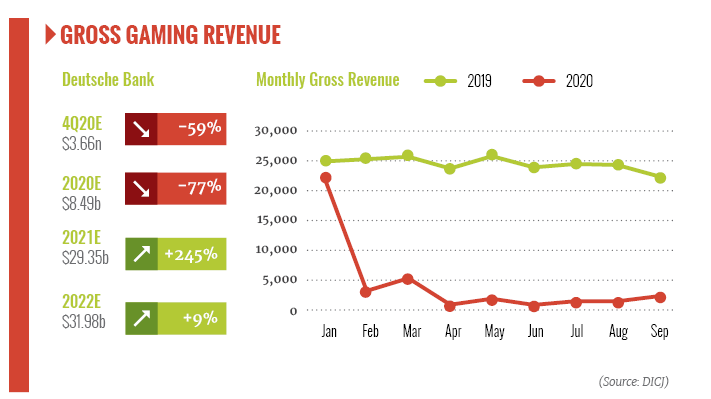
Analysts at Bernstein note there has also been a shift in focus when it comes to anti-corruption drives, with an increased number of investigations targeting state-owned-enterprise executives and sub-ministerial level individuals. “We see a risk that the CCP may be embarking on a second wave Anti-Corruption campaign,” the note said. “Macau could suffer damage if activity increases and leads to a suppression of gaming. This may be more so the case if the current campaign against foreign casinos and online gambling and increasing financial flow scrutiny begins incorporating Anti-Corruption activity into the same sphere,” it said. Analyst Michael Ting, publishing on the Smartkarma platform, also wrote that Golden Week hasn’t produced the strong rebound that had been expected. “Headwinds such as increased government scrutiny on capital outflow has likely hurt gaming sentiment demand from higher spending VIP and premium mass players,” he said. “We expect these trends to continue and hence believe that Macau gaming stocks could underperform in the near term.” During the last anti-corruption drive, Macau’s gross gambling revenue fell for three straight years, from 2014, plunging 35 percent in 2015. Although Macau was not an official target, revenue suffered as high rollers preferred to keep a low profile. This time China is also targeting foreign outflows, which it says are a threat to national security. The Ministry of Public Security’s International Cooperation Department Director-General Liao Jinrong told a conference in Beijing that about RMB1 trillion (US$145 billion) in gambling funds flow out of China each year, “There are so many casinos overseas, and details of the assets of many domestic entrepreneurs, individuals, and related parties would have been investigated thoroughly.” This is very unsafe for us.” Liao added that Beijing needed to “severely crack down in accordance with the law.” Beijing is threatening to draw up a black list of those countries that target Chinese nationals for gambling purposes and while Macau is again not seen as a target, there has been an impact on liquidity amongst junket operators. Junket liquidity is reportedly at an all time low and there have been reports on social media of operators freezing clients’ funds, adding to the uncertainty. Gross gambling revenue in September fell 90 percent to MOP2.2 billion. Although disappointing, it was the best performance since March and was up from MOP1.33 billion in August. The September numbers prompted yet another round of downward revision from analysts for their forecasts for this year, with Deutsche Bank now expecting 2020 GGR to be down 77 percent to $8.49 billion from its prior estimate of $9.46 billion. It sees a rebound to $29.35 billion next year, trimmed slightly from $29.57 billion.“ We see a risk that the CCP may be embarking on a second wave Anti-Corruption campaign,”
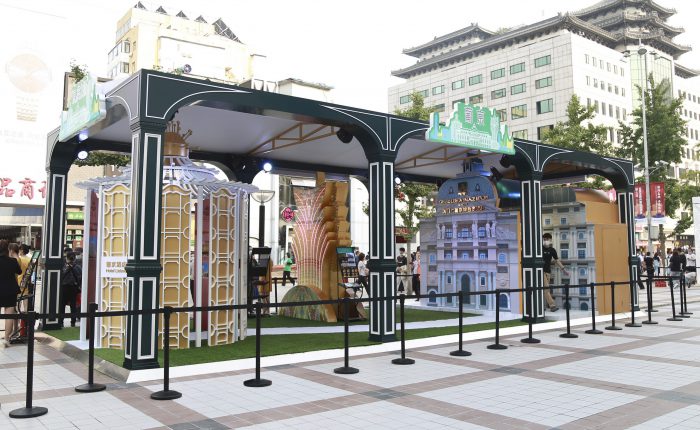 Macau’s six operators travelled to Beijing in September to take part in a major marketing push to introduce non-gaming attractions, in conjunction with the Macau government. Beijing Macau Week was held on the capital’s busy Wangfujing Street.
As well as leveraging the resumption of Mainland travel to Macau it also celebrated the 15th anniversary of Macau’s entry into the UNESCO World Heritage list.
“As a company with its roots in Macau, we are obliged and delighted to tell Macau’s success story,” SJM Chair Daisy Ho said. “We look forward to rejuvenating Macau tourism and boosting the economy, joining forces with the Government and the local community.”
Opened in 1970, Hotel Lisboa was Macau’s first integrated resort, blazing new trails in a pioneering spirit with its cylindrical hotel tower design. SJM held the monopoly until the market was opened to competition in 2002.
Macau’s six operators travelled to Beijing in September to take part in a major marketing push to introduce non-gaming attractions, in conjunction with the Macau government. Beijing Macau Week was held on the capital’s busy Wangfujing Street.
As well as leveraging the resumption of Mainland travel to Macau it also celebrated the 15th anniversary of Macau’s entry into the UNESCO World Heritage list.
“As a company with its roots in Macau, we are obliged and delighted to tell Macau’s success story,” SJM Chair Daisy Ho said. “We look forward to rejuvenating Macau tourism and boosting the economy, joining forces with the Government and the local community.”
Opened in 1970, Hotel Lisboa was Macau’s first integrated resort, blazing new trails in a pioneering spirit with its cylindrical hotel tower design. SJM held the monopoly until the market was opened to competition in 2002.
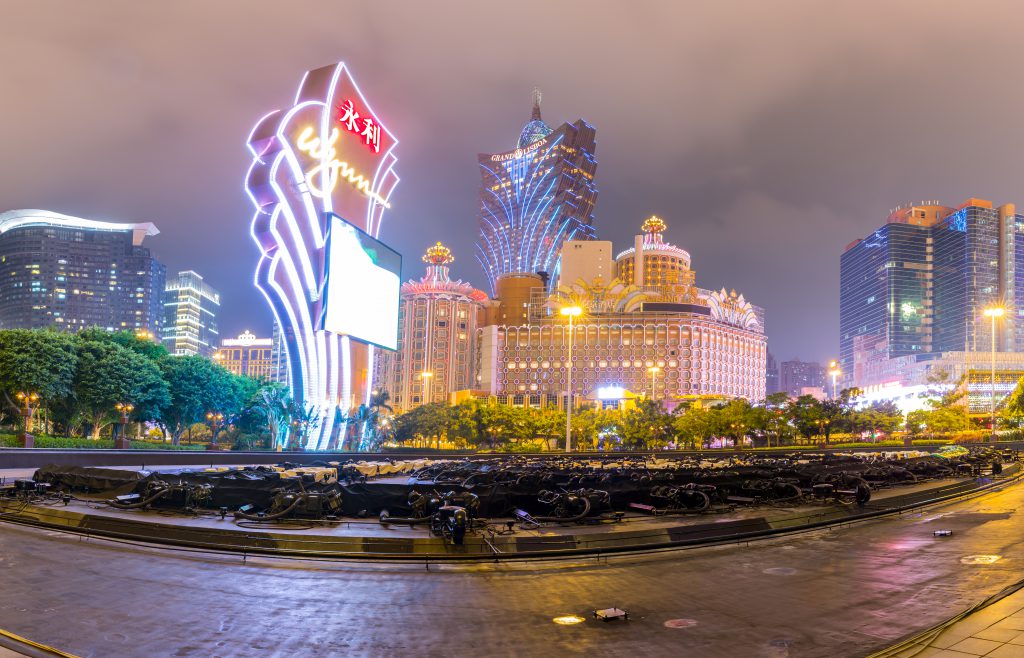 Macau expects a bill to amend the city’s gaming law to be available next year, ahead of the expiry of the current casino concessions in June 2022. The six operators will have to go through another public tender, but at present, there is no clarity as to how the process will be carried out, or what extra conditions may be attached to the licenses if any.
Most market observers expect a clearer mandate to diversify their offerings away from gaming. The government has also said there are no plans to delay the tender. Some analysts have postulated that a delay is likely given the disruptions due to Covid-19.
Macau expects a bill to amend the city’s gaming law to be available next year, ahead of the expiry of the current casino concessions in June 2022. The six operators will have to go through another public tender, but at present, there is no clarity as to how the process will be carried out, or what extra conditions may be attached to the licenses if any.
Most market observers expect a clearer mandate to diversify their offerings away from gaming. The government has also said there are no plans to delay the tender. Some analysts have postulated that a delay is likely given the disruptions due to Covid-19. 
Good morning!
We have some more excitement to perk you up on this Friday morning, which is to announce the first in our series of video interviews, which we call Face to Face. In our inaugural interview, AGB Nippon Executive Editor Michael Penn spoke to CNMI opposition lawmaker Tina Sablan about the ongoing saga over Imperial Pacific International.
Sablan made clear that she believes that CNMI regulators dropped the ball and that the entire way that the issue has been handled raises concerns about the possibility of corrupt behavior. Also, in our new TGIF column, we take one last look at the disappointing Golden Week results in Macau. In short, it was bad, but there are some more encouraging long-term trends.
Revenue and sentiment amongst Australia’s slot venue operators has improved in October from July, though many are still wary about loosening the purse strings to pay for new products, according to an annual slot machine survey from J.P. Morgan. The survey found that only 32 percent of casinos and pubs said they will maintain their spending on replacements, down from 50 percent in 2019. This indicates they are “quite cautious on spend levels due to Covid-19.” Only 23 percent said they would actually increase spending, compared with 37 percent in 2019.
The Hong Kong-Singapore travel bubble agreement is certainly a step forward in the process of the emergence from the Covid-19 pandemic, but few signs suggest that excessive optimism is warranted at this early stage. Singapore’s Transport Ministry itself notes that the agreement in principle can be “scaled by adjusting the number of dedicated flights upwards or downwards, or even suspended, in line with the latest developments and Covid-19 situation in the two cities.” That means this agreement is understood to be tentative, and the bubble could pop should a major new wave of coronavirus cases hit either city.
AGB Nippon Executive Editor Michael Penn speaks to CNMI opposition lawmaker Tina Sablan about the ongoing saga over Imperial Pacific International. The Democratic Representative in the Northern Marianas Legislature makes clear that she believes that CNMI regulators dropped the ball and that the entire way that the issue has been handled raises concerns about the possibility of corrupt behavior.
TGIF by Sharon Singleton
The numbers are in and they’re not pretty. The key Golden Week holiday didn’t produce the much anticipated shot in the arm for Macau’s gaming industry, although they did highlight some noteworthy underlying trends that may drive longer-term performance. During the seven days of Golden Week, average daily gambling revenue was down 76 percent, according to Bernstein Research, which said the numbers were “disappointing,” but not surprising. Visitation from Mainland China was down 86 percent from the same period last year.
 Endorphina, a slot game provider known for its creative twists and trendy games, has released a range of slots, each with characteristics that will appeal to every type of player, leaving no one behind. Continuing its ambitious march around the world, Endorphina proposes its slot in multiple languages and includes a great bonus tool.

BetConstruct’s East & West virtual expo recently reconnected the industry and created the largest virtual gathering accessible to everyone involved in gaming and sports betting. On the first day of the expo, industry giants and supporters showcased the best new products and technologies at personalized interactive stands.




MEMBERSHIP | MAGAZINE | ASEAN | CAREERS
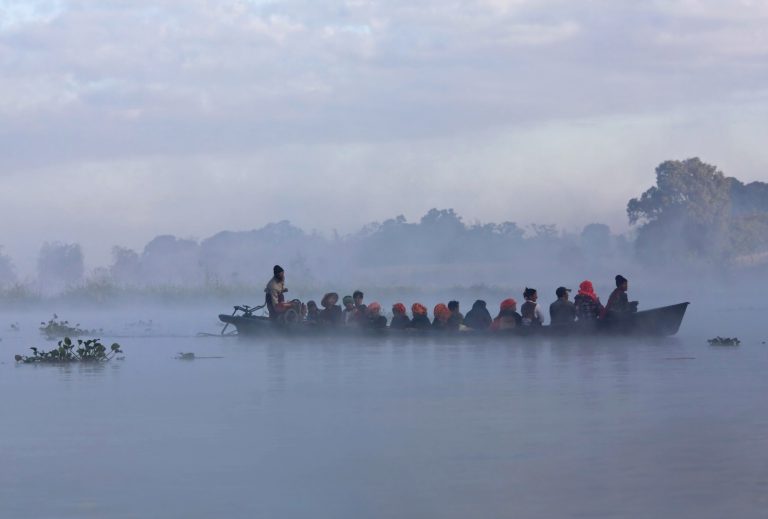
Before the Covid-19 crisis, tourism in the Greater Mekong Sub-Region was at a record high, on track to welcome 80 million visitors in 2019, generating some $90 billion in revenue.
Regional governments have focused on inter-regional cooperation, putting agreements in place to help improve tourism infrastructure and promote each other’s respective countries, creating a vibrant internal Mekong market.
The nations have also been at the forefront of investment into integrated resorts, with Vietnam seen as one of the most attractive jurisdictions in Asia. Myanmar, keen to boost its foreign exchange reserves and pull in more visitors, last year passed legislation setting out a framework for legal casinos. While Cambodia, once seen as the wild-west of casino investment in Asia, is slowly evolving.
In our focus section, we look at opportunities around the region and efforts that are being made to make up for the current lack of international travel. We hone in on recent proposals in Vietnam that will allow investment in infrastructure in designated economic zones to be counted when it comes to minimum capital requirements for integrated resorts.
This key change will allow a major project in the far north of the country to proceed. The Sun Group is aiming to create a tourism and entertainment zone in Van Don, which may become home to as many as eight casinos.
Once a remote and difficult to access area, it is now served by a new international airport and highways, which have cut the travel time to Hanoi to just 3.5 hours.
We also take stock of the situation in Cambodia. At the beginning of last year, the government banned online gambling, pulling the rug out from many of the properties that had sprung up to make money out of live dealer operations. Many of those have now shut up shop, while the current pandemic has also dealt a further blow to the market.
Adam Steinberg, a long-time casino consultant, with first-hand experience of Cambodia, discusses the nation’s potential and the right business model for the market.
In our third piece, we examine how regional governments have been forced to focus on boosting the domestic tourism market to try to fill the vacuum left by international visitors. On the whole, demand for internal travel has been strong, though in most of these countries it hasn’t helped operators as locals aren’t allowed to gamble.
Those with large expatriate populations, especially of Chinese business executives, have done better. NagaCorp in Phnom Penh for example has seen its volumes in the mass market return to about 97 percent of its prior levels, though the more volatile VIP segment has been lagging at just over 70 percent.
Casinos in most other areas are waiting for borders to reopen, so they can service their prior cross-border clientele.
However, if travel in the Greater Mekong Sub Region returns to pre-pandemic trends, the future should be bright for tourism and integrated resorts in this vibrant area of Asia.
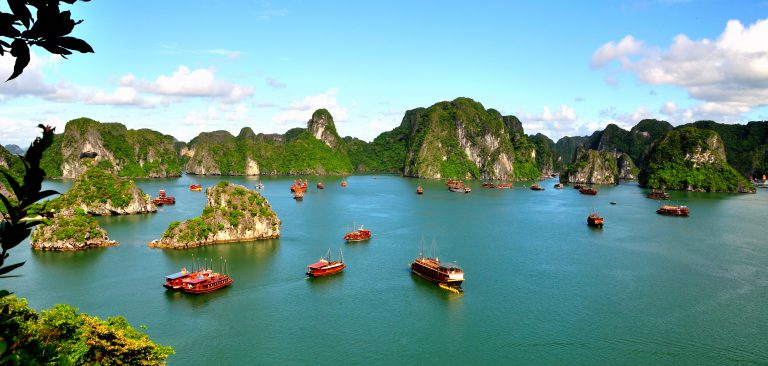
Vietnam is seen as one of the most promising emerging markets in Asia and recent changes in regulation will unlock plans for an ambitious project to create a Macau-style entertainment hub in the north of the country.
The government recently announced it plans to allow funds invested in infrastructure in designated economic zones to be counted as part of the minimum capital requirements for integrated resorts. The country’s gaming decree stipulates that developers need to spend $2 billion on the resort and at least $1 billion needs to be disbursed before the casino license will be issued. The new proposal still needs to be ratified by the parliament.
That was creating roadblocks for investors in the Van Don Special Economic Zone in particular, as the area suffered from poor infrastructure and required substantial investment to improve access.
Sun Group, a Vietnamese property developer, holds the license to run casinos in the zone and is now expected to proceed with its project, which is close to the UNESCO World Heritage Site of Ha Long Bay.
The group has already invested VND7.5 trillion ($322 million) in Van Don International Airport, which opened in December 2018 and VND12 trillion into the 60km Ha Long-Van Don Expressway which is expected to be complete in 2021.
However, the integrated resort portion of the zone was delayed pending government decisions on the minimums. According to the company’s website, it was initially forecast to begin construction in 2017, with completion in 2025.
“ I would put Vietnam as the hot spot in Asia right now.”
To be built over 2000 hectares, the resort will include hotels, villas, apartments, a theme park, commercial center, exhibition space, sports complex with horse racing and an 18-hole golf course. Sun Group is the only casino license holder, but the resort may house up to eight separate casinos.
Situated 15 minutes from the airport and 3.5 hours from Hanoi on the new highway, it will also be linked by road to Mainland China.
“I would put Vietnam as the hot spot in Asia right now,” said Ben Lee, managing partner in iGamiX Management & Consulting, which is involved in the Van Don and other projects in the country. “One of the unique factors is the land border with China, which no other regulated jurisdiction other than Macau has.”
“Despite the political differences, it has been an attractive destination for the Chinese, with a unique culture and at reasonable price points,” he adds.
Dr Oliver Massmann, a partner with law firm Duane Morris, who has more than 20 years of experience working in Vietnam, also cited the country’s dynamic economy with a rising metropolitan middle class, as well as a huge potential for tourism, with long coastlines and natural landscapes as key draws.
Last year, Vietnam attracted a record 18 million tourists, generating revenue of $31.4 billion. China was the main source market accounting for 5.8 million of the total, followed by South Korea with 4.2 million.
It is also one of the best-performing economies in Asia, with gross domestic product expanding by about 7 percent in 2019. Vietnam hasn’t escaped the economic ravages of the Covid-19 pandemic, but is expected to still record growth for the year as a whole.
Economic reforms launched since 1986 have lifted millions out of poverty. Currently about 13 percent of the 97 million population are considered middle class and that’s forecast to rise to 26 percent by 2026, according to World Bank figures.
Locals are only allowed to gamble in two casinos in the country under a three-year pilot program. One of those is Van Don and the other is the Corona Resort & Casino on Phu Quoc.
Developed by Vietnam’s Vingroup and managed by Netherlands-based Upffinity, Corona last year got about 45 percent, or 47,400, of its casino guests locally last year. The resort opened in early 2019.
Hong Kong-listed Suncity Group Holdings holds a contract to provide management and technical support to the Van Don project. It has also opened its own $4 billion foreigner-only property in the centre of the country.
The central region around Danang is viewed as having among the most potential due to its strong flight connectivity, however, properties there are not allowed to accept locals.
“The ban on locals gambling is still a major hurdle,” Dr Massmann says. “The government seems reluctant to open the floodgate. If foreign investors cannot access local customers they will have to rely almost exclusively on foreign tourists and that may be challenging in the short term due to Covid.”
He adds there are further drawbacks in that casinos need to be integrated into a wider hospitality project, which means higher entry costs, involving large areas of land and investment in connecting infrastructure.
Vietnam has eight operational properties that have doubled their revenue in the past three years, from VND1.19 trillion in 2017 to VND2.5 trillion in 2019, according to Ministry of Finance figures cited by local media. The contribution to the State budget rose from VND645 billion to VND1.34 trillion.
Dr Massmann says aside from Hoiana, which is scheduled to open fully next year, there are a further two IRs that have received approval — Laguna Lang Co in Hue and Casino KN Paradise Cam Ranh in Nha Trang.
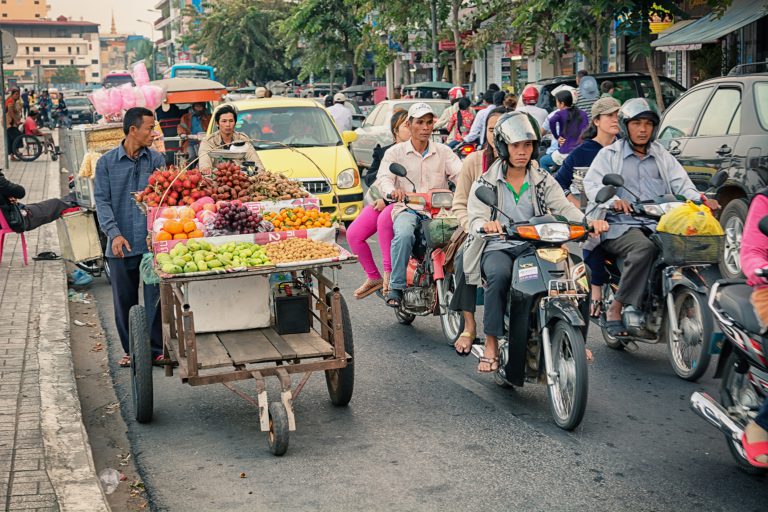
Through government action and a cultural norm of wearing face masks when ill, Cambodia has seen few get sick during the COVID-19 pandemic. According to the World Health Organization, Cambodia has 275 COVID cases and zero COVID-related deaths as of the last week of September.

However, the pandemic has had an impact on Cambodia’s economy. Cambodia has been one of the fastest growing economies in the world, with annual GDP growth between 6 percent and 7.5 percent since 2009. But the Asian Development Bank estimates GDP will contract 5.5 percent in 2020; reversing gains made in combating poverty.
In 2008, 47.8 percent of the population lived below the poverty line, declining to 12.9 percent by 2018. The Asian Development Bank estimates the contraction will push around 20 percent of the population below the line in 2020.
The decision to close the country’s casinos limited COVID’s spread but impacted the economy because tourism is one of two important industries driving Cambodia’s economy. A reinvigorated Cambodian casino industry could drive a recovery in Cambodia’s fight against poverty.
However, casino industry investment has to mature to bring real gains to the Kingdom. The casino industry in Cambodia has been self-regulated consisting of NagaWorld and a couple of other regional resorts, including Donaco’s Star Vegas Resort and Club, while the remainder of the country’s over 190 casinos are no-frills properties for the hard-core gamer. Many of those properties were created to profit from online, live table gaming, but the Kingdom’s decision to ban such operations in January 2020 resulted in many properties closing.
Because the industry doesn’t report gross gaming revenue (GGR), the actual GGR is unknown, but based on public reports, property visits and conversations with operators and suppliers it is estimated that NagaWorld generates more than half of Cambodia’s GGR.
There are a number of elements that make Cambodia an attractive market for casino operators, including relatively low costs to operate and a young motivated workforce, but, we believe there are four factors that should make operators confident to invest in Cambodia’s casino industry:
The size and scale of such investment will be dependent upon total casino licenses issued and the ease with which international travelers can get to the destination. Phnom Penh is the capital and home to the largest airport; thus, investment in this market will be larger than investment in other cities. Nonetheless, international integrated resort developers can generate sufficient ROI to justify investing in Cambodia.
* Adam Steinberg is Founder of AM Steinberg Advisors, a consultancy specializing in the hospitality, leisure and travel industries on a global basis. Before forming AM Steinberg Advisors, Steinberg was Advisor to the CEO of NagaWorld Limited, where he led all international development efforts, including assessing market potential, identifying operating partners and sourcing opportunities to develop land-based casinos in the ASEAN region. He also researched and presented findings to the CEO and Board of Directors on incremental distribution channels. Prior to joining NagaWorld, Steinberg was with Spectrum Gaming Group and Spectrum Gaming Capital.

Asia Gaming Brief (AGB) is a news, market intelligence, events, and networking company focused on Asia Pacific’s rapidly expanding gaming industry.
© Copyrights as Blue Sky Venture Ltd. All rights reserved