

Macau’s gaming sector is transitioning from a post-pandemic rebound to a maturity-driven phase, with gross gaming revenue expected to remain 10 percent to 15 percent below pre-pandemic levels in 2026, according to a report released by S&P Global Ratings.
The ratings agency forecasts Macau’s GGR to grow between 3 percent and 7 percent year-on-year in 2026, marking a notable slowdown from the 9.1 percent expansion recorded in 2025. Analysts Flora Chang, Rivka Gordon and Melissa A Long attribute the deceleration to near-full hotel occupancy, limited additions to gaming capacity, and the slower-than-expected return of base mass players.
Weaker consumption dampens growth outlook
The softer outlook also reflects broader economic headwinds in mainland China, where the gradual withdrawal of government stimulus is weighing on consumption. This trend could erode discretionary spending on leisure and travel, the report notes, although analysts add that the risk has eased compared with a year earlier, given that gaming demand remained stable throughout 2025.
Sector resilience continues to be underpinned by premium mass players, who have shown greater resistance to economic pressures than base mass customers. Even so, overall GGR is expected to remain below pre-pandemic levels, with tighter regulations on junket operators continuing to constrain the VIP segment.
Despite revenue headwinds, S&P Global Ratings expects EBITDA for rated issuers to grow by around 5 percent in 2026. This projection is supported by steady mass-market demand, modest wage growth, and disciplined promotional spending, with the report highlighting ‘steady growth in Macau’s mass gaming market’ as the key driver of profitability.
Market share shifts among operators
Competitive dynamics are expected to evolve in 2026, with Las Vegas Sands and Melco Resorts positioned to gain market share in the mass segment. The operators are set to benefit from the ramp-up of The Londoner Macao and the reopening of The Countdown Hotel, which should help drive additional customer traffic.
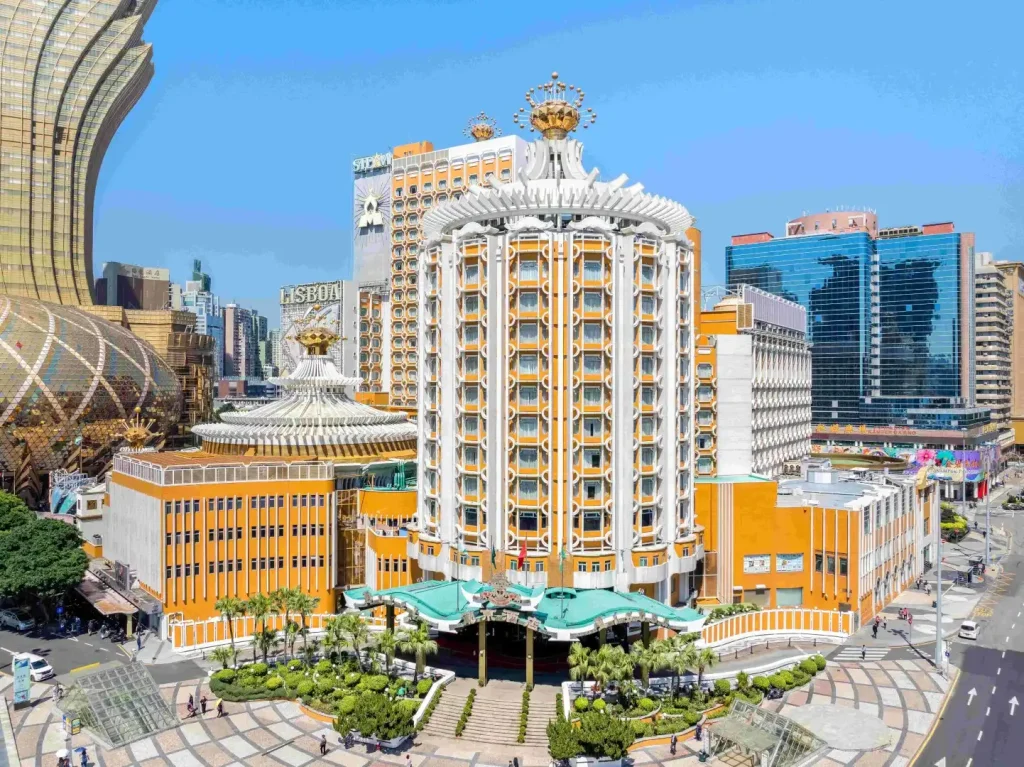
In contrast, SJM Holdings may continue to lose share, as customer volumes have not been effectively redirected to its remaining properties following satellite casino closures, while Grand Lisboa Palace continues to underperform expectations.
MGM Resorts International has recorded the largest gains in mass-market share since the pandemic, rising from 18.4 percent in 2019 to 19.2 percent in the nine months ended September 2025. S&P attributes this to strong performance at MGM Cotai and the allocation of additional mass tables under its new concession. The group’s ‘differentiated product in the premium mass segment’ is expected to support its competitive position.
Galaxy Entertainment Group remained the market leader with a 25.4 percent share as of September 2025, followed by Sands at 24.4 percent.

Deleveraging critical for rating upgrades
While capital structures are stabilizing, heavy capital spending and shareholder payouts are likely to push aggregate discretionary cash flow into deficit in 2026. S&P Global Ratings notes that refinancing needs are comparatively light for 2026, with debt maturities concentrated between 2027 and 2029.
For four operators—Wynn Resorts, MGM Resorts International, Melco Resorts, and Studio City (under Melco)—a return to pre-pandemic rating levels hinges on achieving lower leverage and demonstrating the ability to maintain it.
Las Vegas Sands returned to its pre-pandemic BBB-/Stable rating in 2023 and maintains a stable outlook. However, ratings on Wynn Resorts and MGM Resorts International remain one notch below pre-pandemic levels. Although their leverage has fallen below upgrade thresholds, ‘rating upside hinges on our confidence they will maintain lower leverage after incorporating operating volatility and shareholder returns,’ the report states.
The ratings on Melco Resorts and Studio City also sit one notch below pre-pandemic levels due to higher debt accumulated for new capacity during the pandemic. The stable outlook expects Melco will continue to deleverage to below 4.5 times by the first half of 2026.