
Hotels and casinos in Jeju, a popular destination for Greater China tourists, benefited significantly from China’s nine-day Lunar New Year holiday, as visitor numbers surged across South Korea.
At the Grand Hyatt Jeju inside the Jeju Dream Tower integrated resort operated by Lotte Tour Development, 1,590 of 1,600 rooms were occupied during the holiday period, approaching full capacity. This compares with a maximum occupancy rate of 72 percent during last year’s Lunar New Year.
The strong performance in Jeju suggests a broader rebound in tourism-related sectors, including retail and duty-free, according to a report by local media outlet Chosun Biz. The influx of Greater China visitors lifted spending across major shopping districts and integrated resorts.
Data cited by Chosun Biz showed that Lotte Department Store recorded record sales from Greater China tourists during the holiday period. From February 13th to 18th, sales to foreign customers rose 120 percent from the same period last year, while sales to customers from Greater China, including China and Taiwan, increased 260 percent, the highest level for the Lunar New Year period.
At Lotte Department Store’s main branch, foreign-customer sales climbed 180 percent. Sales in the beauty category rose 80 percent, while purchases of sports and outdoor goods by Greater China customers surged 255 percent. At Lotte Town Jamsil, foreign-customer sales increased 80 percent, and food and beverage sales at Lotte World Mall rose 85 percent.
The Lotte Tourist Membership Card, launched late last year for foreign customers, surpassed 38,000 cumulative issuances, with about 3,000 issued during the Lunar New Year period. A company official said growing interest in Korean culture has contributed to higher visitor inflows, adding that holiday-focused promotions and customer-oriented marketing produced meaningful results.
Lotte Duty Free also reported strong performance. From February 13th to 18th, sales to foreign customers rose about 69 percent year on year. Sales to foreign independent travelers increased 82 percent, while purchases by package tour groups rose 61 percent.
Earlier, the Ministry of Culture, Sports and Tourism and the Korea Tourism Organization projected that up to 190,000 Chinese tourists would visit Korea during the holiday period from February 15th to 23rd, representing a 44 percent increase from last year’s daily average.
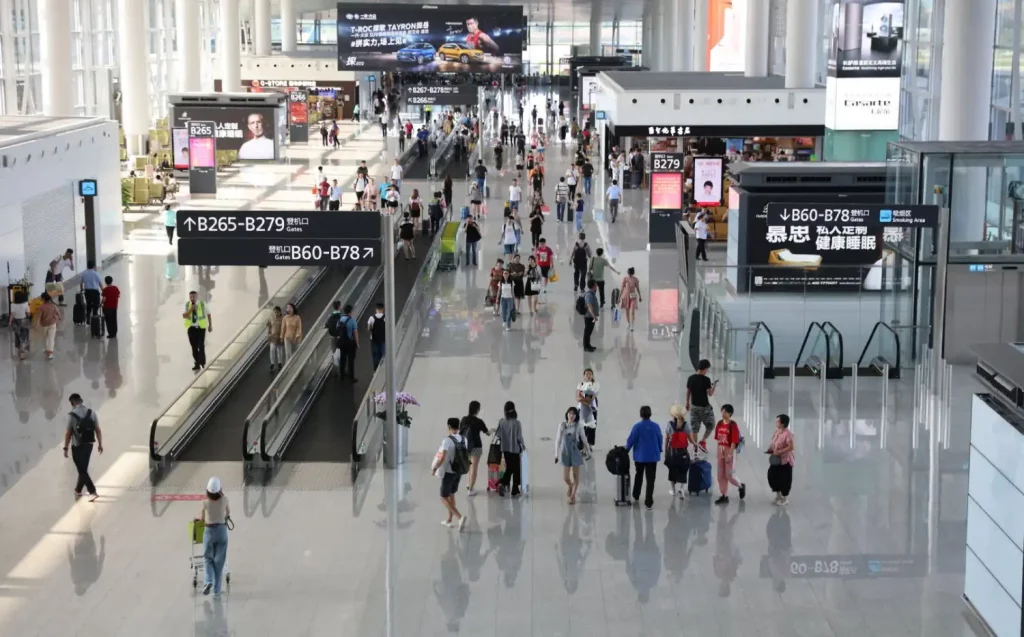
Separately, China’s National Immigration Administration estimated that average daily cross-border passenger flows during the Chinese New Year Golden Week would exceed 2.05 million, up 14.1 percent from last year, implying more than 18 million border crossings over nine days. Data from Flight Master DAST showed that international flights during the first 16 days of the Chinese New Year travel season totaled 31,719, up 0.7 percent year on year, while flights to and from Hong Kong, Macau, and Taiwan rose 9.9 percent to 6,463.
The Chinese travel platform Tongcheng Travel reported that popular outbound destinations during the holiday included Bangkok, Kuala Lumpur, Seoul, Singapore, Hong Kong, Bali, Sydney, Ho Chi Minh City, Macau, and Phuket.