



The pandemic made online gambling rich. Now the Iran-driven fuel crisis is squeezing Asia’s punters, but the house has survived worse.
There is a particular dark magic to the gambling industry. Through war, recession, and plague, the house has (almost always) not only found a way to stay open, but often thrived when other sectors folded. The pandemic proved this more dramatically than any prior crisis in modern memory. As the world shuttered, billions of people retreated to their screens. As a result, online casinos, poker platforms, and sports betting apps quietly logged some of the most extraordinary revenue figures in their history.
It was, by any measure, a golden age born of catastrophe and if the industry had any moral self-awareness, it might even have felt at least a little guilty for making so much money while entire industries around it were virtually wiped out.
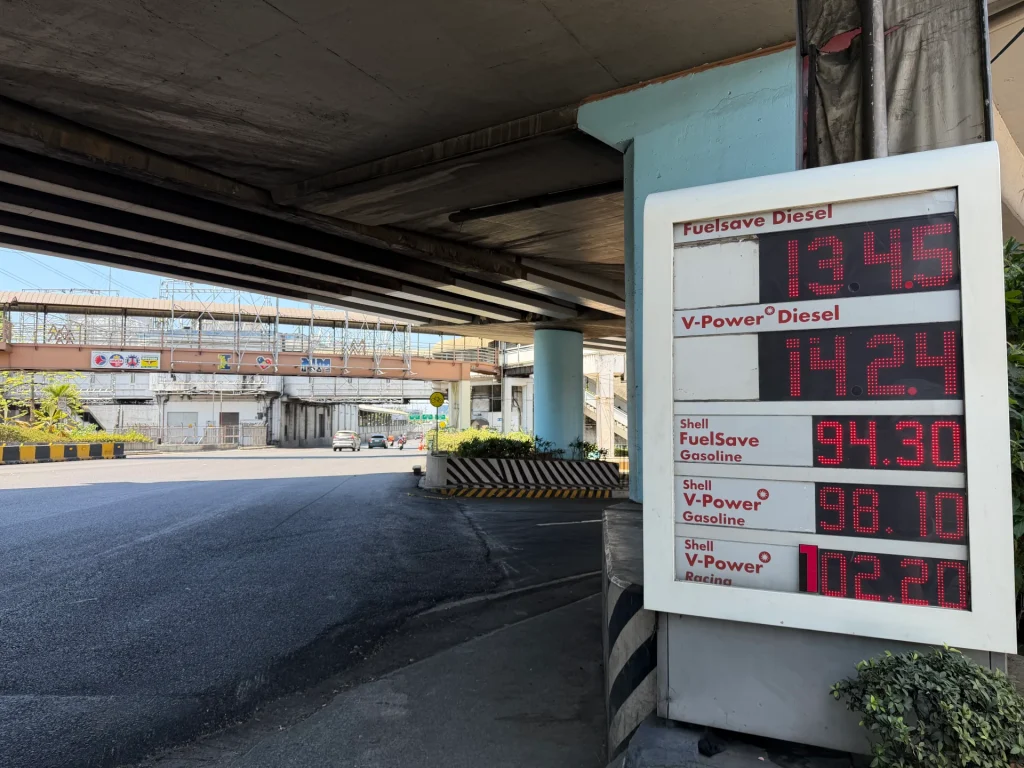
Now, a different catastrophe is knocking at the door. The conflict between Donald Trump’s ego and the nation of Iran has not only brought instability to the wider Middle East, but also sent global fuel prices on a sustained upward spiral, inflating the cost of everything from electricity to transport to the simple act of driving to your local casino. In the Philippines, Southeast Asia’s most significant regulated gambling market and a bellwether for the wider region, the squeeze is being felt from Luzon to Cebu and beyond.
Across other Asian markets, many of them carefully referred to as pre-regulated territories, the picture is the same: household budgets are tighter, disposable income is shrinking, and the question now hanging over boardrooms from Manila to Macau is whether the iGaming boom can survive an inflationary bust. History, and a handful of sharp industry observers, suggest the answer may be more nuanced, and more optimistic, than the headlines imply.
To understand whether the fuel crisis can be compared to the pandemic, you first need to appreciate the sheer scale of what the pandemic did for online gambling. The numbers were staggering. Global online gambling revenue, already on a growth trajectory before 2020, surged at rates that analysts had not projected for another half-decade.
In the Philippines alone, the Philippine Amusement and Gaming Corporation (PAGCOR) saw its licensees pivot hard toward digital platforms, while the POGO (Philippine Offshore Gaming Operator) sector – already controversial and already substantial but still legal at the time – was suddenly processing unprecedented volumes as China’s locked-down middle class looked for entertainment and a flutter.
The logic was brutally simple: people were bored, they were anxious, and they were sitting in front of screens with government stimulus cheques in their digital wallets. Land-based casinos shuttered and the integrated resorts along Manila Bay fell silent. But the online operators? They were running round-the-clock at capacity. Sports betting pivoted to esports and virtual sports. Live dealer studios, many of them ironically based in the Philippines, worked through skeleton crews and strict bubble protocols to keep the roulette wheels spinning for European and Asian players who had nowhere else to go.
It was, to put it bluntly, a crisis the online gambling industry profited from enormously. The pandemic was a demand shock. It crushed the land-based supply side, redirected consumption to digital channels, and left operators with fundamentally stronger customer acquisition metrics, larger databases, and habits in their customers that proved sticky even after reopening.
By comparison, the current fuel crisis operates through different mechanics entirely, and that distinction matters enormously when predicting its impact on gambling. The pandemic was a channel disruptor. It did not reduce the human desire to gamble, it redirected it. The Iran-driven fuel crisis, by contrast, is a purchasing power destroyer. When petrol prices spike on the back of Middle East conflict and tightening supply, so does transport, food, utilities, and ultimately the discretionary spending budget of the ordinary punter. This is not about where people gamble. It is about whether they can afford to gamble at all.
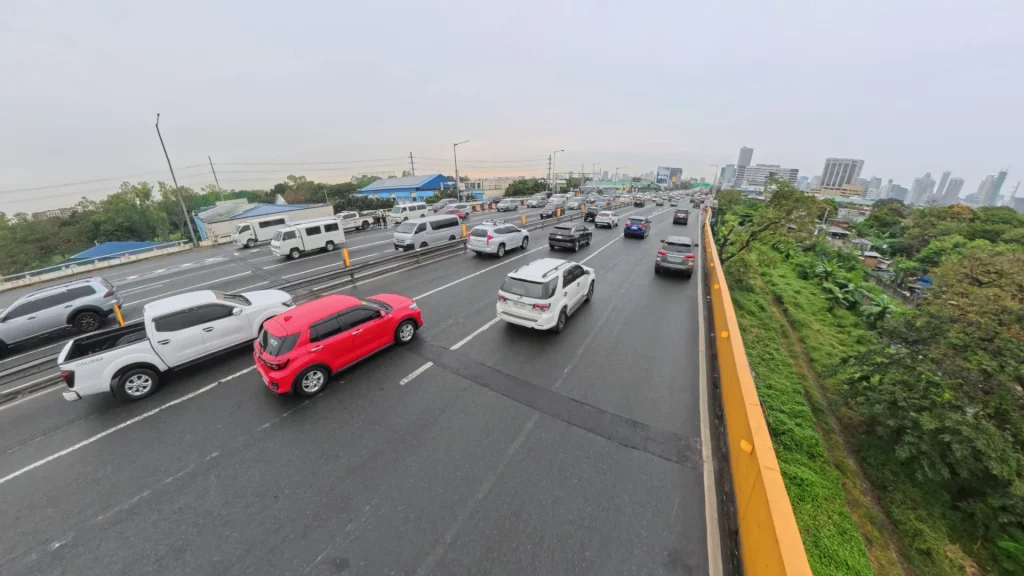
In the Philippines, the situation is particularly acute. The conflict’s ripple effect on global oil markets has compounded an already challenging inflation environment, hitting ordinary Filipinos – who are the backbone of the local gambling market that ranges from PAGCOR’s licensed casinos to the retail bingo and e-games parlors found in every barangay – with a cost-of-living pinch that has real consequences for gambling budgets. A taxi driver is not going to slip into Solaire or City of Dreams for a punt on the baccarat tables when he is spending significantly more on fuel and his family’s rice.
Even higher-earning members of the fledgling middle class have to turn every centavo over twice at the moment as the economics are unforgiving – and yet, here is where it gets interesting: the same dynamics that make the fuel crisis painful for land-based gambling may, paradoxically, breathe life into online gambling once again.
“Recessions are generally good times for the iGaming industry. People enjoy that slim glimmer of hope we give them, a momentary relief from the endless struggle. We’re hoping that this will be short-lived though, unlike the pandemic. I’m honestly more worried about the possible hit on the Philippines BPO industry from AI.”
Alexander G. Czajkowski, iGaming Marketing Consultant
Czajkowski’s framing is a view grounded in decades of observed consumer behavior. The lottery is famously recession-resistant, scratch cards sell better in a downturn and the psychology behind it all is well-documented: when the legitimate pathways to prosperity feel blocked, the illegitimate but legal ones become more attractive. A five-peso bet on an online slot is not a rational investment strategy. It’s an emotional purchase, a momentary suspension of economic anxiety.
Online gambling, in this context, has a structural advantage over land-based. You do not need fuel to access it. You do not need to pay for transport, for a hotel room, for dinner in the resort restaurant. The entry cost is a mobile data connection which, in the Philippines, is increasingly affordable and near-ubiquitous, and whatever minimum deposit the operator requires. In a fuel-price crisis, online gambling’s low friction-to-entry is a genuine competitive advantage over the integrated resort experience.
But Czajkowski’s caveat deserves equal attention: the pandemic was an extraordinary, sustained period of captivity. The fuel crisis, if it proves shorter-lived, will not produce the same behavioral entrenchment. People did not merely gamble more during COVID. They rebuilt their entertainment habits around digital platforms. That rewiring takes time and prolonged exposure. A six-month fuel squeeze, however painful, may not generate the same structural shift.
His other observation – about the threat to the Philippines’ BPO (Business Process Outsourcing) sector from AI – is a cannonball fired into the middle of this entire analysis. The BPO industry is the Philippines’ economic backbone, employing over 1.5 million people in call centers, back-office operations, and content moderation. These workers are exactly the demographic that supports the locals’ gambling market. If AI automation displaces even a fraction of that workforce, the downstream effect on gambling revenues could dwarf anything the fuel crisis produces.
For land-based operators, the Iran conflict’s fuel shock does not land equally across the market. Dr. Andrew Russell, an independent economist whose PhD focused specifically on casino gambling economics, cuts straight to the diagnostic that most industry commentators miss entirely. Forget consumer confidence indices and inflation dashboards. The variable that actually determines a casino’s exposure to this particular crisis is simpler and more brutal: how far do your customers travel to reach you, and what does that journey cost?
“If this war persists, the big impact will be mediated by travel costs. So the more ‘local’ any casino’s market is, the better insulated they’ll be, whereas the more dependent any property is on VIPs-who-fly-in, the more that property will feel the squeeze.”
Dr. Andrew Russell, Independent Economist, PhD in Casino Gambling Economics
A casino’s exposure to this crisis is not a function of its size, its brand, or its gross gaming revenue. It is a function of where its customers come from and how they get there. A mega-resort that draws most of its revenue from inbound international visitors is structurally more vulnerable than a smaller suburban casino whose regulars arrive by jeepney. That is a simple point, but it gets lost in the noise of headline inflation figures and consumer sentiment surveys.

At one end of the spectrum sit the hyperlocal operators: the PAGCOR-licensed card clubs and e-games parlors scattered across the Philippines, the community gaming venues across Southeast Asia, the grey-market betting shops that service the neighborhood rather than the nation. Their customers travel kilometers, not continents. Fuel prices dent household budgets, yes, but they do not make the casino physically unreachable. This tier is getting squeezed, but isn’t broken.
[Read more: Casino Plus delivers a ₱271M jackpot while advancing responsible gaming standards
At the other extreme, the ultra-premium VIP market is almost perversely insulated. The whale who charters a Gulfstream to gamble in Macau or Manila is not repricing his weekend because aviation fuel has moved. These players are the last to feel any crisis, and the first to return when one ends. But, and this is the crux, the real story is neither of these extremes. It is what happens in the middle.
This is the most operationally significant insight for Asian casino operators right now, and it deserves to be read carefully. Russell is not saying the mid-market disappears. He is saying it fractures. A segment that previously behaved as a single cohort – aspirational, travel-willing, budget-conscious but not budget-paralyzed – is now splitting into two groups moving in opposite directions. One group absorbs the higher travel cost and comes anyway, perhaps a little less frequently. The other decides the trip is no longer worth it and either finds a local alternative or stops gambling altogether.
“There’s a ‘mid-market’ issue – ‘mid-market’ players can afford to travel but are much more sensitive to travel costs than the super-VIP market. We’ll probably see the ‘mid-market’ segmenting between those who can still afford to travel and those who revert to gambling locally or abstaining.”
Dr. Andrew Russell
For the integrated resorts of the Philippines, Cambodia, and Vietnam that built their entire growth thesis around capturing the aspirational mid-market inbound visitor – the Korean businessman, the mainland Chinese tourist, the Taiwanese professional on a long weekend – this fracturing is a serious operational challenge. They are now competing not just against each other, but against every local gambling option their former customers can access without buying a plane ticket. The mid-market visitor who stays home does not simply stop gambling. He gambles somewhere closer, somewhere cheaper, or somewhere on his phone.
The Philippines occupies a genuinely interesting position in this analysis, and Russell’s assessment of it carries more optimism than the domestic inflation story alone would suggest.
“As for the Philippines, there is a strong locals’ market there, although fuel costs and any other price hikes will naturally reduce gambling. I doubt we’ll see permanent damage to the gambling industry in the Philippines.”
Dr. Andrew Russell
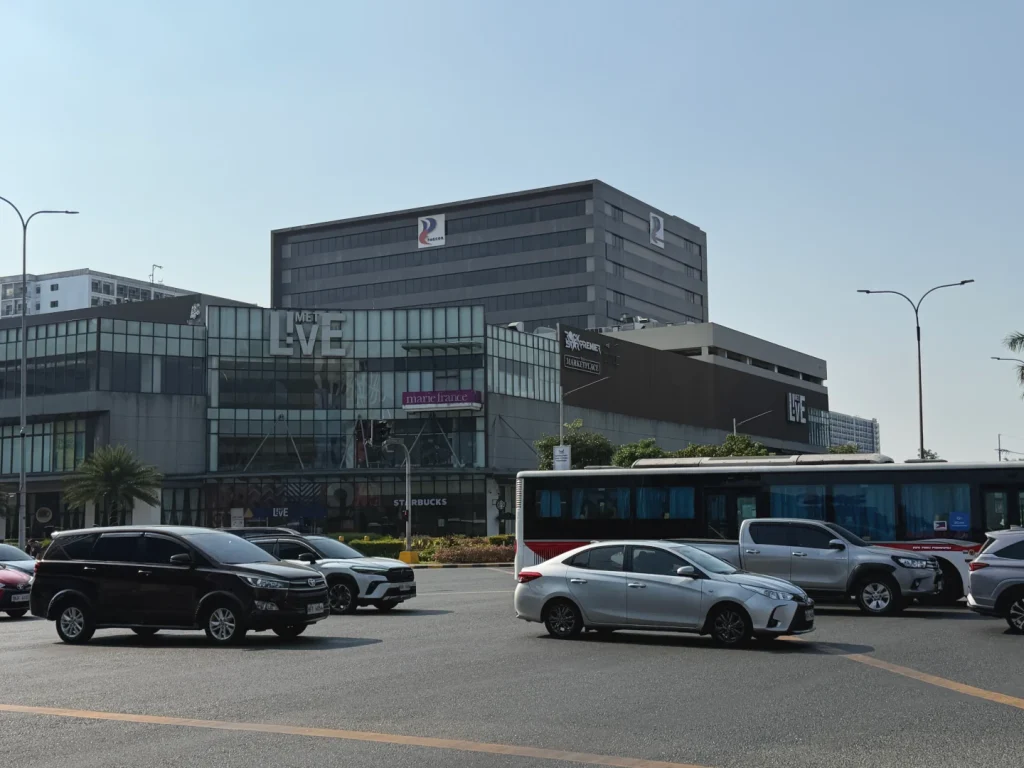
The domestic spine is what saves the Philippines from the worst of it. PAGCOR’s licensing infrastructure has ensured legal gambling venues exist within reach of the majority of the population, and the Filipino appetite for gambling, from cockfighting to baccarat to online slots, is deep-rooted enough to survive a fuel price squeeze. Entertainment City’s integrated resorts depend on a blend of international tourism and high-spending locals, and while the mid-market tourist channel is impaired, the local channel remains. Fuel costs hurt Filipino wallets, but they do not make Solaire physically unreachable for the Makati professional or the Laguna businessman who was already a regular.
The honest caveat is that ‘natural reduction’ is still reduction. Household budgets under pressure mean fewer visits, smaller buy-ins, and shorter sessions. PAGCOR’s aggregate revenue figures will feel the pinch even if the structural damage is limited. Russell’s point is a measured one about permanence, not immunity. This is a cyclical headwind, not a structural wound. But where his analysis becomes genuinely surprising is in what he sees happening at the premium end of the market, and its connection to a development thousands of kilometers from Manila Bay.
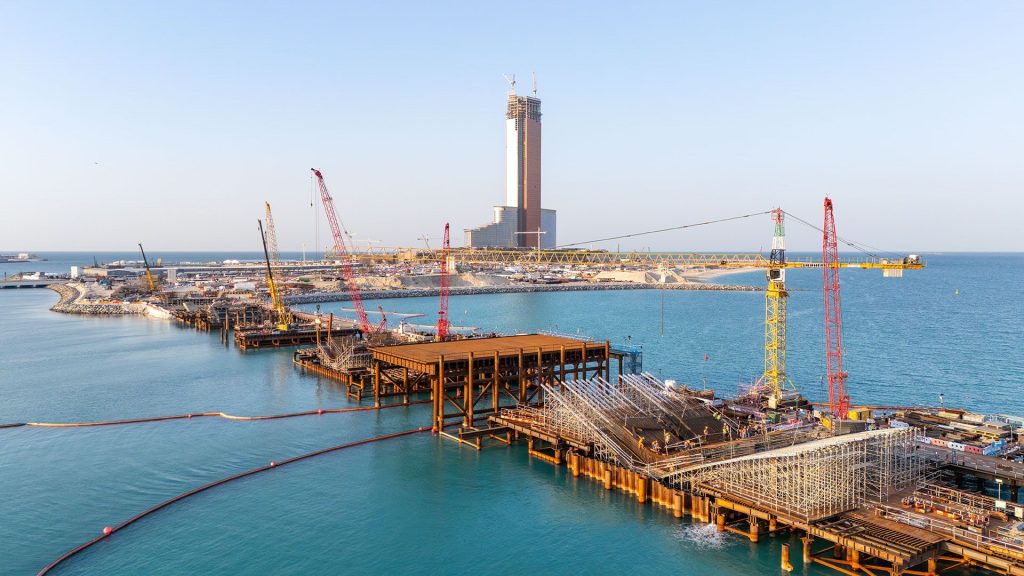
Dr. Andrew Russell“Another special consideration is how this affects Wynn Resorts’ RAK development. If the UAE is no longer seen as ‘safe’ by the foreign guests who are undoubtedly the target market, Wynn Resorts can expect to have a slower-than-expected ramp-up on RAK. Indeed, if a perception of danger remains over the Middle East, we might see people who would’ve gambled at Wynn RAK gamble in Asia – including the Philippines – instead.”
This is one of those observations that, once you hear it, seems obvious, but almost nobody is saying it. Wynn RAK was positioned as the Gulf’s opening move into regulated casino gambling, and its target market was always internationally mobile, high-net-worth visitors: the same globally-travelling VIP demographic that already rotates between London, Monte Carlo, Macau, and Singapore. The Iran conflict, and the broader shadow it casts over regional security, makes that market nervous about the UAE in a way it simply was not eighteen months ago. Those guests do not stop gambling. They reroute.
The beneficiaries are the established Asian casino destinations – Singapore’s Marina Bay Sands and Resorts World Sentosa, Macau’s Grand Lisboa and Studio City, and Manila’s Entertainment City – that already have the infrastructure, the junket relationships, and the premium hospitality to absorb redirected VIP flows. For Philippine integrated resorts, the net effect of the Iran crisis on their top-end business may well be neutral or even marginally positive, with mid-market losses at least partially offset by premium players who had other plans and have quietly changed them.
The final piece of Russell’s analysis is where the fuel crisis and the pandemic come closest to rhyming, even if the verse never quite scans the same way.
“Online gambling is accessible across the entire globe and tends to be cheaper than land-based casino gambling. And if people can’t travel… if they’re stuck at home and bored… we’re likely to see an increase in online gambling similar to how all electronic entertainment industries did well during COVID — although probably not to the same degree.”
Dr. Andrew Russell
‘Probably not to the same degree’ is doing a lot of work in that sentence, and it is worth sitting with. The pandemic produced an online gambling supercycle because it eliminated every physical alternative simultaneously, for an unpredictable and sustained period. People didn’t just gamble online more during COVID. They rebuilt their entertainment habits around digital platforms over months of enforced captivity. The Iran fuel crisis, unless it metastasizes into something far more severe, will not replicate those conditions. The casino is still open. The flight is still possible. It is merely more expensive.
What the fuel crisis does accomplish, though, is apply pressure at the margin and margins are where behavior changes. The mid-market player who was already borderline on whether to book that trip to Manila now has a concrete financial reason to stay home and open his phone instead. Online gambling’s structural advantages in this environment are real and compounding: no transport costs, no hotel, no minimum buy-in beyond the platform’s requirement, accessible on a mobile data connection that is cheap and near-ubiquitous across most of Asia. The casino in your pocket does not care what petrol costs.
This matters especially across Asia’s pre-regulated markets, which is to say, most of Asia. In jurisdictions without domestic licensing frameworks, online gambling happens anyway through offshore operators, VPNs, and informal networks. These operators carry almost no fixed infrastructure costs relative to their land-based equivalents. The fuel crisis is, for them, purely a demand-side variable: if their customers have more time at home and less appetite for expensive travel, the direction of traffic moves in their favor. Quietly, without press releases, without regulatory filings, without appearing in any official statistics.
So: pandemic versus Iran-driven fuel crisis. Can they be compared? In mechanism, no. The pandemic was a forced channel migration. It killed every physical alternative and drove players online en masse. The fuel crisis is a purchasing power shock and a travel cost barrier. It operates through wallets and flight prices, not lockdowns and border closures. The levers are entirely different.
In broader pattern, though, the echoes are hard to ignore. Both crises test land-based operators while creating oxygen for digital channels. Both hit the middle of the market hardest – the mid-market tourist who can no longer justify the trip, the mid-income local whose entertainment budget has been eaten by inflation – while leaving the hyperlocal and the ultra-premium comparatively intact. Both generate, in some portion of the gambling public, a sharper appetite for the cheap and accessible hope of a screen-based bet. And both, ultimately, accelerate structural shifts that were already underway before they arrived.
Russell’s framework, taken in full, produces a map rather than a verdict. Hyperlocal operators: squeezed but resilient. Ultra-premium destination properties: insulated, possibly a net beneficiary as Middle East instability redirects VIP flows their way. Mid-market inbound properties: genuinely challenged, facing a fracturing customer segment that demands strategic rethinking. Online gambling, licensed and grey alike: quietly ascending, for reasons that echo COVID without replicating it.
The fuel crisis will not mint the online gambling fortunes that COVID did. But for operators who can read their customer’s travel sensitivity clearly, who can serve the mid-market player who has quietly stopped flying and started scrolling, and who can position themselves for the VIP flows that a troubled Middle East is already beginning to redirect, this crisis is less catastrophe than reconfiguration. The house adapts. It always has and it always will. The question is which version of the house is best positioned when the dust finally settles.