
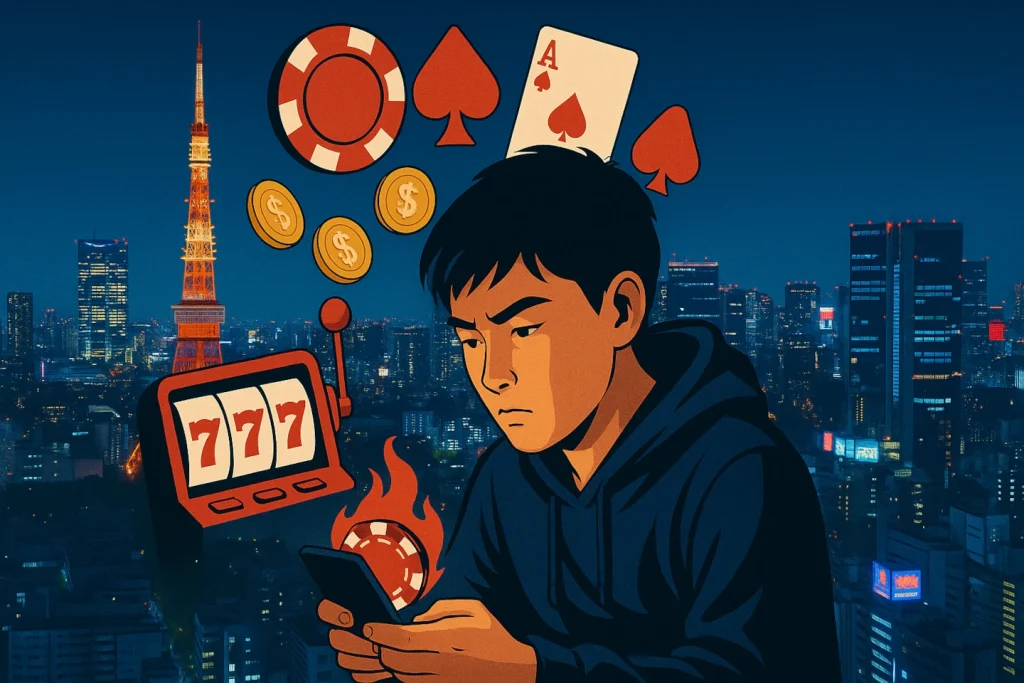
Japan is facing a worrying rise in underage online gambling, with police reporting that even junior and high school students are becoming involved, in some cases turning to fraud to pay for their betting.
Experts warn that young people are particularly vulnerable to gambling addiction and are urging families and schools to recognize warning signs early and seek help through medical or counseling support.
A recent case that drew national attention involved a 15-year-old first-year high school student from Sendai who told Tokyo’s Metropolitan Police Department (MPD), “I wanted to have a lot of money so I could keep gambling in online casinos.” The boy was arrested in October for allegedly defrauding a man in his 30s of around JPY1.34 million ($8,800) through a romance scam.
According to investigators, the student started gambling online during junior high school after becoming interested in smartphone games. He joined an online chat group after seeing social media posts about people “making easy money” through online gambling. A member of that group advised him to raise funds first, leading the boy to follow instructions from an online manual titled How to earn ¥500,000 a month and begin conducting romance scams. He reportedly posed as a female college student and swindled more than 30 men, using the proceeds – several million yen – to continue gambling online.

Authorities say minors typically buy points to play on casino sites, but since they cannot obtain credit cards, many instead use cryptocurrencies purchased illegally from unregistered sellers. The MPD has so far referred 15 individuals aged 13 to 21 from Tokyo and nine other prefectures to prosecutors or child welfare centers for habitual gambling. One 13-year-old was found to have been gambling online since elementary school.
A National Police Agency (NPA) survey released in March estimated that about 3.37 million people in Japan had used online casinos, with roughly 180,000, or 5 percent, aged between 10 and 19. Many reportedly started gambling out of curiosity, boredom, or a desire to socialize online.
According to Toshiaki Tsuneoka, associate professor at Showa Medical University and a psychiatrist specializing in gambling addiction, minors are especially prone to addiction because of underdeveloped impulse control and limited outlets for stress. The same NPA survey showed that nearly 70 percent of minors who had gambled online recognized they were addicted, higher than the 60 percent average across all age groups.
“Because online gambling is so easily accessible through a smartphone, there’s a real danger that children could become addicted before their parents even notice,” Tsuneoka warned. “We need stronger efforts to raise awareness that addiction can be treated through medical care and self-help groups.”