Gaming supplier Ainsworth Game Technology announced on Monday that Ryan Comstock has been appointed Chief Executive Officer, effective immediately, following a six-month period serving as Acting CEO.
According to a filing with the Australian Securities Exchange, Comstock, who previously served as Chief Operating Officer since 2018, was selected after the Board reviewed his performance since taking on the acting role in October 2025.
The Board cited Comstock’s experience across all operational areas of the business, as well as initiatives undertaken during his tenure as Acting CEO, as key factors behind the appointment. The filing also noted that he had already obtained the necessary gaming regulatory licensing approvals through his previous positions.
Ryan Comstock will receive a base salary of US$625,000 per year and is expected to participate in the company’s 2026 Short-Term Incentive Plan, subject to financial performance targets and foreign exchange adjustments.
There will be no change to his existing long-term incentive arrangement of 400,000 cash-settled performance rights, which remain subject to service conditions and performance hurdles.
The appointment has no fixed term and remains subject to Board review. The employment agreement allows either party to terminate the contract with six months’ notice, while non-compete and non-solicitation provisions apply for up to six months following termination.
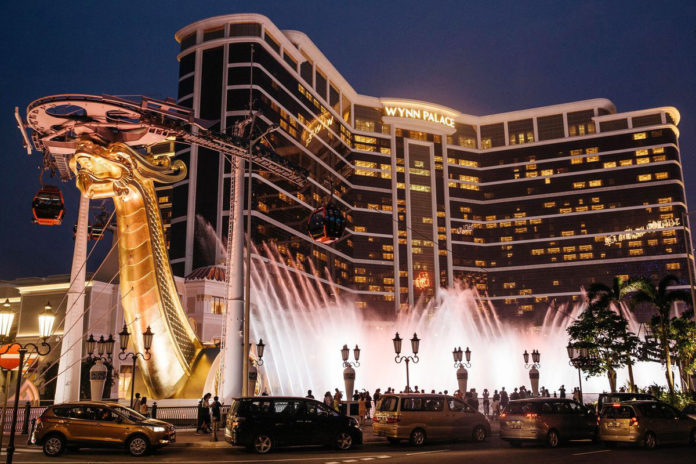
CreditSights expects Wynn Macau to post incremental topline and EBITDA growth in the second quarter of 2026, supported by stronger Labor Day Golden Week performance and the recently opened Chairman’s Club at Wynn Palace, although the research firm continues to forecast only low-single-digit growth for the full year due to ongoing competitive pressures in Macau’s gaming market.
In a report released on Monday, CreditSights said Wynn Macau’s second-quarter performance should benefit from ‘higher drops YoY‘ during the Labor Day holiday period, alongside additional contribution from the Chairman’s Club, which opened in 2026.
The firm nevertheless maintained a cautious outlook for the remainder of the year, projecting only a ‘low-single-digit YoY-increase‘ in both revenue and EBITDA for FY26. CreditSights said its forecast was based on assumptions of low-single-digit growth in Macau-wide gross gaming revenue and stable market share for Wynn Macau.
‘While management acknowledged the competitive environment, as premium demand continues to drive the Macau gaming market, the company aims to stay disciplined with its reinvestment,‘ CreditSights wrote.
The report noted that margins are expected to remain steady despite increased operating expenses tied to new amenities and ongoing investment projects. CreditSights added that the company’s higher capital expenditure plans for FY26 are likely to offset some EBITDA growth and weigh on free cash flow, although free cash flow is still expected to remain positive.
Market share edges higher
CreditSights estimated Wynn Macau’s market share improved slightly to 12.5 percent in the first quarter of 2026, compared with 12.3 percent a year earlier and 12.0 percent in the fourth quarter of 2025.
The research house also noted that Wynn Macau continued to generate positive free cash flow during the quarter, estimating approximately $91 million in free cash flow despite around $91 million in capital expenditure related largely to the Chairman’s Club expansion and hotel room refurbishments.
CreditSights said Wynn Macau’s leverage metrics remained largely unchanged in the first quarter, with gross and net leverage at 5.3x and 4.5x respectively as of March 2026. The company’s total debt stood at $5.8 billion as of March 2026.
The firm maintained its ‘Market perform‘ recommendation on Wynn Macau bonds, while reiterating that MGM China remained its preferred pick among Macau high-yield gaming operators.
The Financial Action Task Force (FATF) has identified scams, cyber-enabled fraud and illegal gambling among the key money laundering threats facing Singapore, while also praising the city-state’s gambling regulatory oversight and broader anti-money laundering framework in its latest mutual evaluation report released on May 6th.
The report, jointly published by FATF and the Asia/Pacific Group on Money Laundering (APG), said Singapore maintained a ‘robust understanding‘ of its money laundering and terrorism financing risks and demonstrated ‘strong domestic cooperation‘ among regulators, law enforcement agencies, and financial institutions.
FATF noted that Singapore’s role as a major international financial and wealth management hub continued to expose it to significant illicit financial flows linked to transnational criminal activity, including cross-border organized crime and illegal gambling operations targeting the country.
‘Scams and fraud are identified as the highest money laundering threats for Singapore,‘ the report stated. FATF also identified corruption, tax crimes, and illegal gambling among the country’s major predicate offenses linked to money laundering activity.
The evaluation noted that Singapore’s open economy, large volume of cross-border transactions and status as a regional financial center increase its vulnerability to the movement and integration of illicit funds originating overseas.
Casino oversight receives positive assessment
While highlighting broader financial crime risks, FATF also gave positive assessments of Singapore’s casino regulatory oversight.
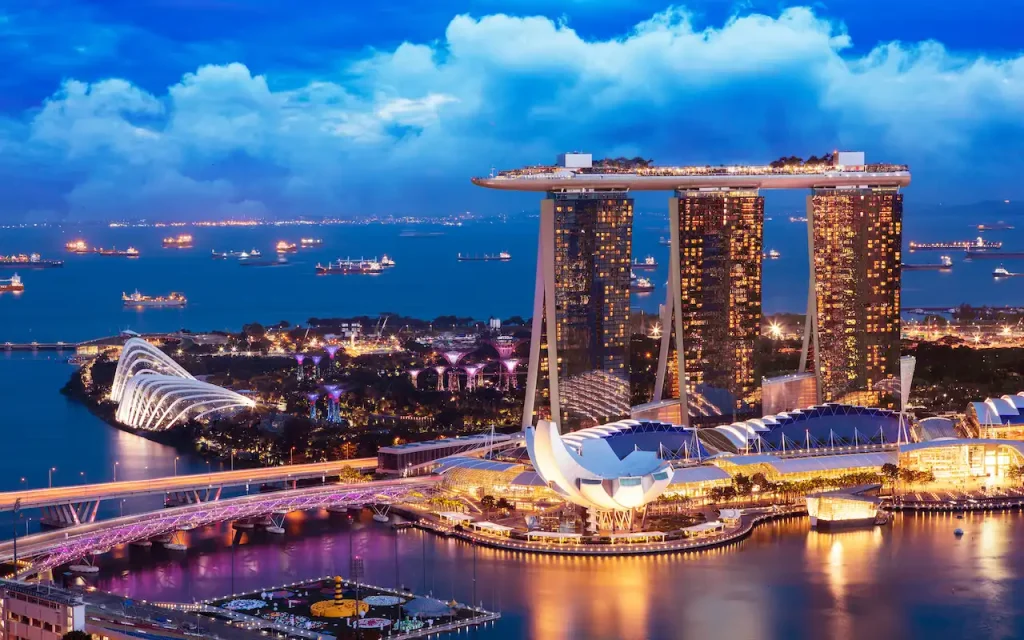
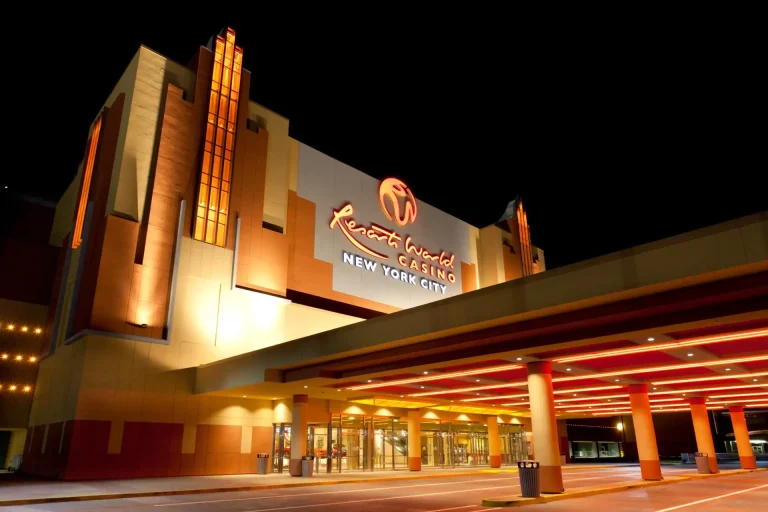
The report said Singapore’s Gambling Regulatory Authority (GRA) demonstrated a ‘high-level understanding‘ of anti-money laundering and counter-terrorism financing risks within the gambling sector and applied ‘stringent supervision‘ over the city-state’s two integrated resort operators — Marina Bay Sands and Resorts World Sentosa.
FATF noted that Singapore casino operators had implemented ‘robust‘ customer due diligence and monitoring systems, including identity verification procedures and transaction monitoring measures designed to detect suspicious financial activity.
According to the report, Singapore authorities conducted 16 examinations of casino operators between 2020 and 2024, covering customer due diligence, ongoing monitoring, and suspicious transaction reporting obligations. During the same review period, regulators issued nine warning letters and six financial penalties totaling nearly SG$2.7 million ($2.1 million) related to anti-money laundering and counter-terrorism financing breaches.
SG$3 billion laundering case highlighted
The report cited the SG$3 billion ($2.3 billion) money laundering case uncovered in 2023 as a major example of the scale and complexity of illicit funds flowing through Singapore’s financial system. Authorities seized luxury properties, vehicles, cash, cryptocurrency and other high-value assets linked to foreign nationals.
FATF said Singapore authorities had demonstrated an ability to detect and disrupt large-scale laundering operations through financial intelligence and coordinated investigations.
According to the evaluation, Singapore conducted more than 11,000 money laundering investigations over the past five years, with over 80 percent initiated by victims of cyber-enabled fraud. However, FATF noted that only 682 of those investigations resulted in prosecution.
The organization also said investigations involving tax crimes, trade-based money laundering and complex financial crime appeared comparatively limited relative to Singapore’s overall risk profile.
Singapore received ‘Substantial Effectiveness‘ ratings on seven of FATF’s 11 Immediate Outcomes and ‘Moderate Effectiveness‘ on the remaining four. The country was placed under FATF’s ‘regular follow-up‘ process, improving from the ‘enhanced follow-up‘ status assigned in 2016.
In a statement, the Monetary Authority of Singapore (MAS) said the report affirmed that Singapore maintains a ‘robust framework for combatting financial crime,’ while adding that authorities would continue strengthening measures to address evolving risks.
Yevhen Krazhan, CSO at GR8 Tech, explores how surging crypto adoption across Asia is revolutionizing iGaming payments, stating: “When I look at what’s changing fastest in Asia, it’s payment behavior,” as wallets, stablecoins, and seamless cross-border transfers become deeply ingrained in player habits.
Macau’s per-capita non-gaming spending by visitors rose 9.5 percent year-on-year in the first quarter of 2026, reversing a long downward trend, according to data from the Statistics and Census Service (DSEC).
Each visitor spent an average of MOP2,179 ($272) on non-gaming items during the period. Total visitor non-gaming spending reached MOP24.43 billion ($3.05 billion), up 24.5 percent from the same period in 2025.
Spending by overnight visitors totaled MOP17.25 billion ($2.15 billion), an increase of 12.2 percent year-on-year, while spending by same-day visitors rose 69.2 percent to MOP7.18 billion ($896 million).
Per-capita spending by overnight visitors increased 7.7 percent to MOP4,101 ($512), while same-day visitors spent an average of MOP1,025 ($128), up 40.6 percent year-on-year.
By spending category, shopping accounted for the largest share of visitor expenditure at 48.2 percent, followed by accommodation at 21.1 percent and food and beverages at 21 percent.
Mainland Chinese visitors spent an average of MOP2,392 ($299), up 4.1 percent year-on-year, while international visitors’ per-capita spending rose 32.5 percent to MOP2,178 ($272).
Sands China has launched Community Revitalization Programme 2.0 for Rua das Estalagens and held its first public briefing session at The Londoner Macao to support the Macao SAR government’s community-based economic development efforts and help local entrepreneurs and SMEs explore new business opportunities.
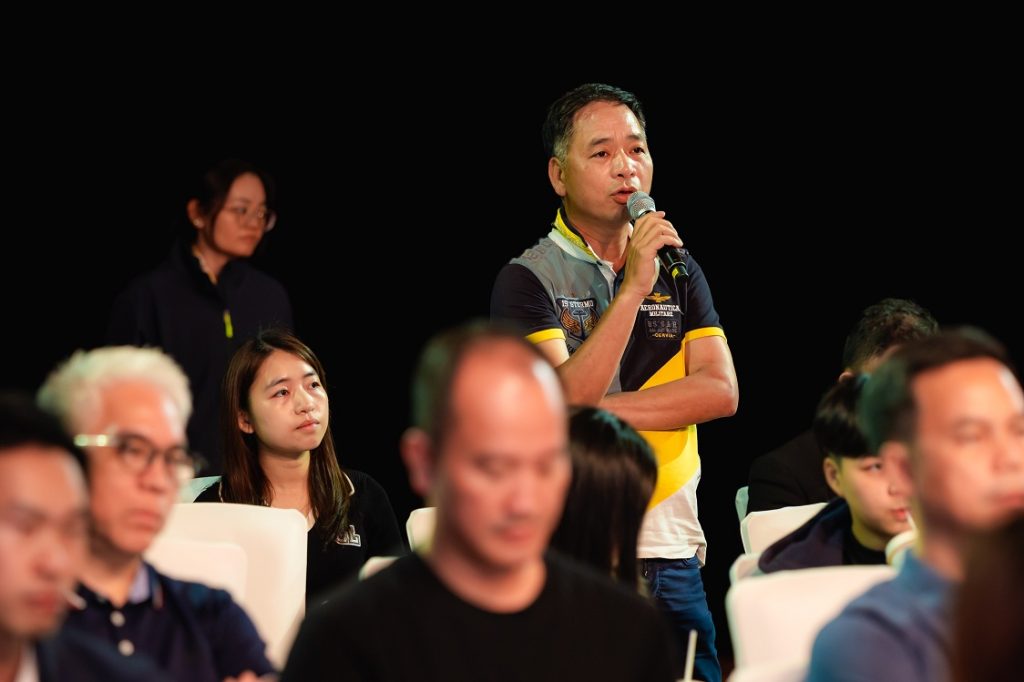
The session that drew nearly 100 aspiring entrepreneurs and SME representatives reviewed the achievements of the first Entrepreneurship Recruitment Programme and introduced the upgraded Entrepreneurship Recruitment Programme 2.0 and the new Shop Rebranding Programme, built on the principle of “integrating the old with the new, bridging the past into the future.”
Under the Entrepreneurship Recruitment Programme 2.0, applicants investing at least MOP 300,000 may receive subsidies of one to two times their investment, capped at MOP 1 million, based on creativity, market potential and team experience. The Shop Rebranding Programme supports existing Rua das Estalagens merchants with brand upgrades, offering subsidies of one to three times a minimum MOP 50,000 self‑investment, capped at MOP 500,000.
Representatives from government departments and public utilities provided guidance on policy support, licensing, compliance, electricity and water arrangements. Speakers highlighted key schemes such as the Young Entrepreneurs Aid Scheme, SME Aid Scheme, and the upcoming one‑stop licensing system taking effect July 1. A Q&A session allowed attendees to clarify operational and regulatory concerns.
Sands China will continue offering free public activities during the application period, including SME training on May 14 and Rua das Estalagens Open Days on May 15–17 and June 12–14, supporting both new entrepreneurs and existing merchants in upgrading their businesses.
The programme is organised by Sands China with the Macao Chamber of Commerce as co‑organiser and the Secretariat for Economy and Finance as advisory body, supported by multiple government departments, public utilities and financial institutions under Sands China’s F.I.T. SME support framework and the Sands Resorts Incubation Center.
IDX Games, an innovator in advanced casino display technology, has announced that it has entered into an agreement to supply its premium X-Trend and display systems to INSPIRE Entertainment Resort in support of the property’s new casino extension.
Following the successful deployment of the X-Trend system across the resort’s existing 110 casino tables, INSPIRE has renewed its partnership with IDX. The new casino extension will be equipped with IDX’s advanced X-Trend software and high-quality displays, increasing the installation footprint by a further 30%.
Will Donghyung Lee, AVP of Casino Operations at INSPIRE, expressed his satisfaction with the continued partnership, noting that IDX has consistently provided a superior trendboard product and excellent service for the casino floor. For this expansion, INSPIRE has chosen to install the new IDX Halo table displays to add further enhancements to the original setup.
“Being selected for the new table extension at INSPIRE Casino is a testament to their satisfaction with our products and software,” said Peter Johns, Chief Commercial Officer at IDX Games Ltd. “As we expand our offerings in digital displays and signage, we are seeing increased demand for our high-quality displays, which perfectly complement the X-Trend solution. We not only cover all game trendboards, but we now also offer a range of bonus and jackpot games for casino operations.”
This marks another major step for IDX and its X-Trend gaming systems solution, following last month’s announcement that Westside Resort will deploy the X-Trend display system across 250 gaming tables when it opens later this year in Manila’s Entertainment City.
In February, the company announced the appointment of Steven Wolstenholme as its new Chief Casino Officer (CCO), a move INSPIRE CEO Gyubum Ko described as a way to “further accelerate its growth as a world-class integrated resort delivering the ultimate ‘Playcation’ experience.”
The Australian Transaction Reports and Analysis Center (AUSTRAC) has commenced an enforcement investigation into wagering operator Tabcorp Holdings over concerns relating to the company’s compliance with anti-money laundering and counter-terrorism financing obligations, the company disclosed on May 7th.
According to an ASX announcement issued by Tabcorp, Australia’s financial crimes regulator informed the company it had “a number of serious concerns” regarding Tabcorp’s ability to effectively identify, mitigate and manage money laundering and terrorism financing risks. The investigation will initially focus on whether the company maintained a compliant AML/CTF program, complied with that program and appropriately monitored customers.
Tabcorp said AUSTRAC had advised that the investigation remains at an early stage and that all possible outcomes remain open, including the possibility that no further enforcement action may be taken.
In commentary issued following the announcement, Fitch Ratings said the investigation was not expected to have an immediate impact on Tabcorp’s BBB- credit rating with a stable outlook. However, Fitch noted that any enforcement action could result in civil penalties, remediation costs, legal expenses or other measures that may affect the company’s financial profile and potentially raise governance concerns.
Fitch also said the development adds to broader regulatory scrutiny of Australia’s gaming and wagering sector. The agency referenced AUSTRAC’s civil penalty proceedings against Entain plc, operator of Ladbrokes and Neds in Australia, as well as ongoing cases involving Sportsbet and Star Entertainment entities.
Tabcorp Chairman Brett Chenoweth said the company took its AML and counter-terrorism financing obligations “very seriously” and that management remained committed to collaborating with AUSTRAC. Chief Executive Officer Gillon McLachlan added that strengthening the company’s risk capabilities had been an ongoing part of Tabcorp’s transformation efforts.
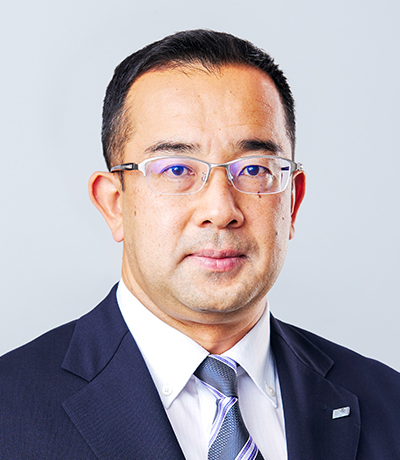
Orix Corporation announced on May 1st, 2026 that Nobuki Watanabe has been appointed as Representative Director and Chairman of MGM Osaka Corporation, the joint venture developing Japan’s first integrated resort (IR).
The appointment took effect on the same date.
Watanabe will retain his role as Managing Executive Officer of Orix’s Infrastructure Business Unit, where he is responsible for the Osaka IR Business. He has been overseeing Orix’s involvement in the project since April 2025, when he was assigned to lead the company’s Osaka IR Project Office, before being promoted to Managing Executive Officer in January 2026.
A 25-year veteran of Orix, Watanabe joined the group in August 2001 after starting his career at Daiwa Securities. He has previously served as President of Orix Capital Corporation and held senior roles in the company’s Group Strategy Business Unit and CEO’s Office.
MGM Osaka Corporation is a joint venture between MGM Resorts International and Orix, each holding approximately 40 percent equity stakes, alongside 22 minority domestic shareholders. The integrated resort is being developed on Yumeshima Island in Osaka Bay at an estimated cost of JPY1.27 trillion ($8.8 billion), with completion targeted for autumn 2030.
Construction officially began on April 24th, 2025. According to MGM Resorts’ most recent update, more than 40 percent of the foundation piling has been completed, the first concrete floor has been finished, and initial steel structures are now in place. The property will feature a 23,293-square-meter casino with around 470 gaming tables and 6,400 electronic gaming machines, three hotels with approximately 2,500 rooms, and a 3,500-seat theater.
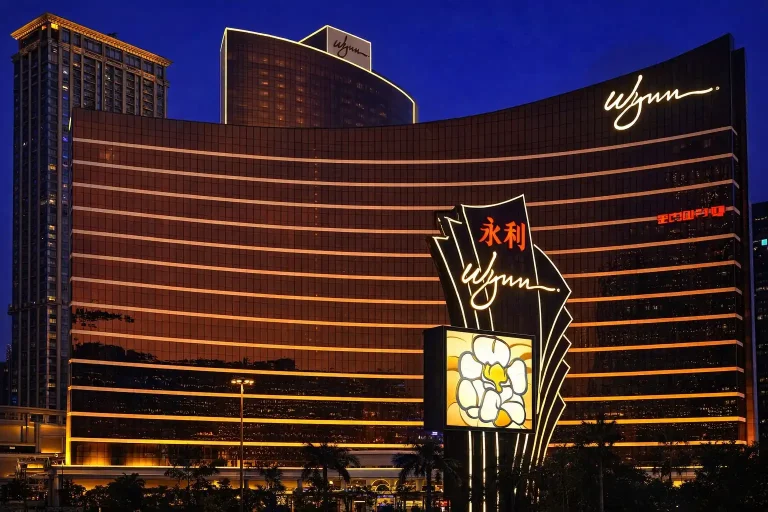
Wynn Resorts’ Macau operations posted double-digit revenue and EBITDA growth in the first quarter of 2026, but profitability was held back by higher player reinvestment as the city’s premium-mass segment grew increasingly competitive, according to analysts at Seaport Research Partners and CBRE in investment memos.
Seaport Research Partners senior analyst Vitaly Umansky noted that player reinvestment as a percentage of mass volume increased at both Wynn Macau and Wynn Palace during the quarter. ‘All operators to have already reported experienced increase in player reinvestment in Mass,’ Umansky wrote, adding that managements across the sector ‘continue to speak about potential stabilization.’ The level of reinvestment at Wynn Macau came in higher than Seaport had modeled, although operating expense growth was lighter than expected.
Wynn’s gross gaming revenue in Macau rose 20 percent year-on-year, outpacing the broader market’s 14 percent expansion, with market share climbing roughly 70 basis points quarter-on-quarter to 13.8 percent. Net revenue increased 14.2 percent and property EBITDA grew 10.9 percent, although unfavorable VIP hold cost the company approximately $17 million.
According to Umansky, Wynn’s biggest challenge going forward will be defending its position at the top end of the market: ‘The key for Wynn will be to remain an operator of choice for the luxury end of the market in light of increased competition,’ he wrote, as rival operators continue to upgrade product quality and service offerings.
Wynn Enclave to drive Macau capex surge
On the investment front, Seaport projects Macau capital expenditure, excluding maintenance, will jump to between $400 million and $450 million in 2026, and to between $700 million and $750 million in 2027.
The increase reflects the recently announced Wynn Enclave, a 432 all-suite luxury hotel tower at Wynn Palace, estimated to cost between $900 million and $950 million and scheduled to open in 2029. The project will lift Wynn Palace’s room capacity by 25 percent and suite capacity by 50 percent.
CBRE described the move as Wynn ‘doubling down on Macau,’ reinforcing its premium strategy by capturing unmet demand at a property currently running at near-full occupancy.
Main hotel lobby at dusk at Wynn Al Marjan Island
Modest delay to Wynn Al Marjan opening
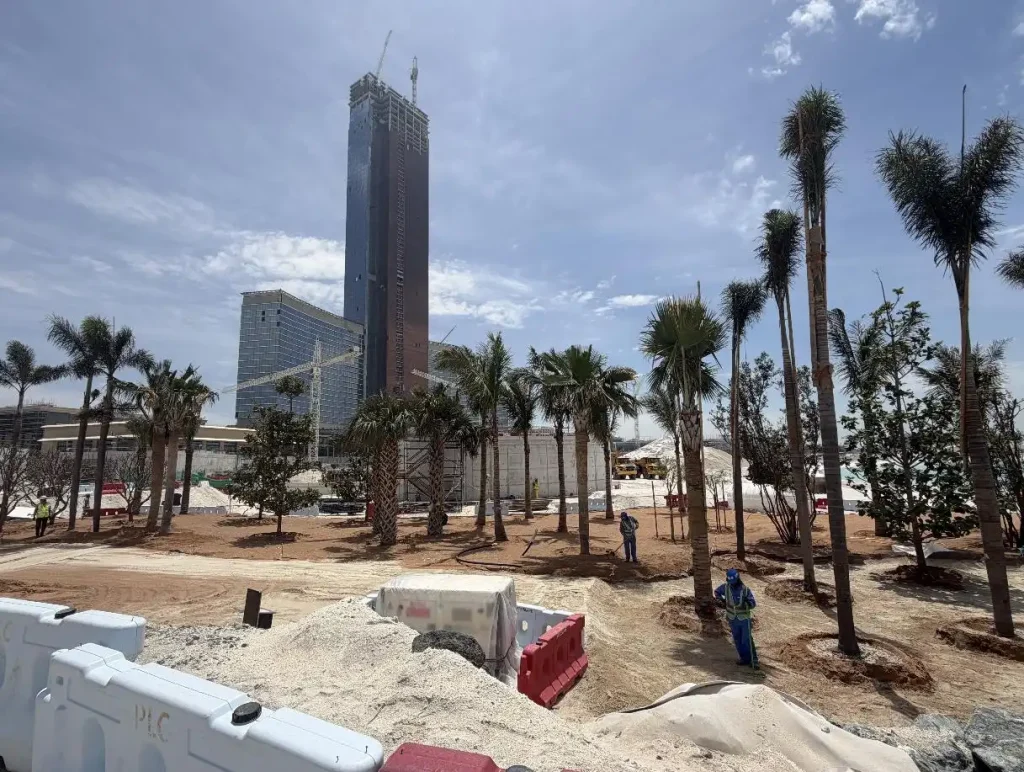
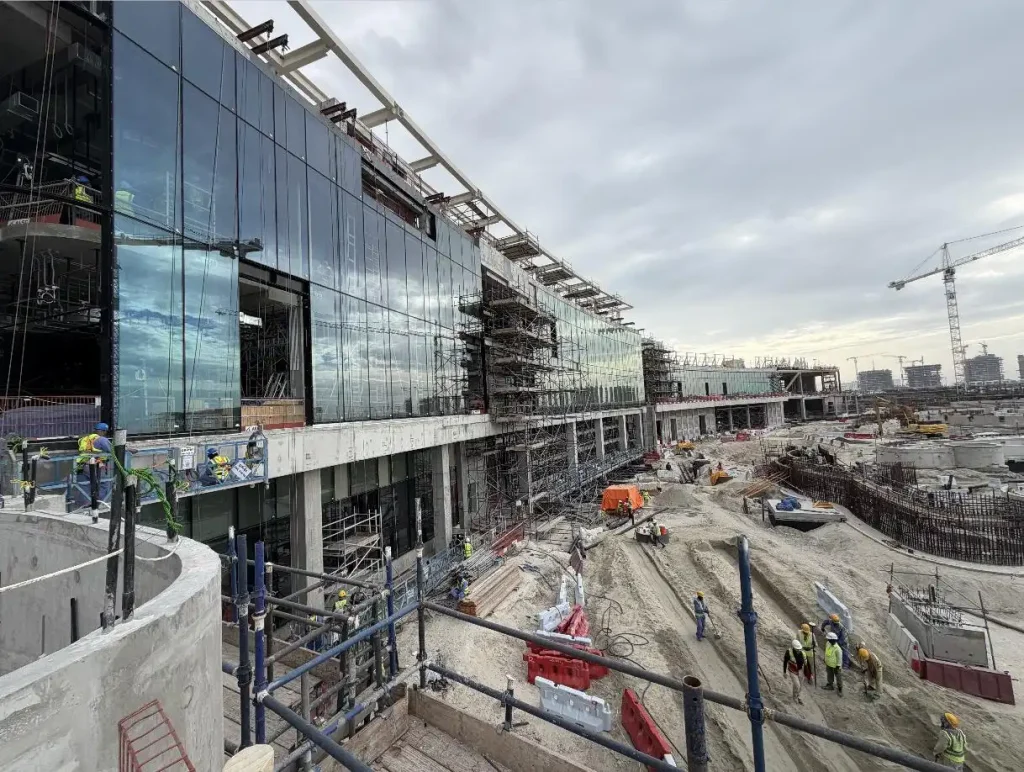
On Wynn Al Marjan Island in the United Arab Emirates, CBRE reported that construction has continued to progress despite regional conflict, with most issues so far related to logistical and shipping challenges that are expected to be manageable. Wynn is forecasting only a modest delay to the opening, which it intends to quantify at a later date.
Wynn Al Marjan Island construction site
CBRE has pushed its opening assumption from the first quarter of 2027 to the third quarter of 2027, reducing modeled management fees from the project in fiscal 2027 to $47 million from $72 million.