


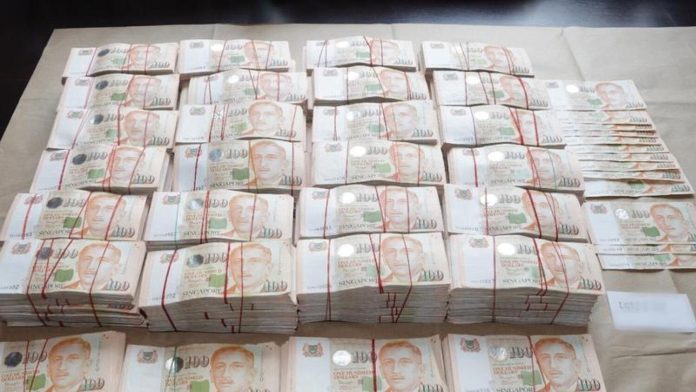
Two of the culprits in Singapore’s largest money laundering case have been stripped of their Cypriot “golden passports” due to the criminal proceedings against them.
The case involved some SG$3 billion ($2.34 billion) and involved a network of mostly Chinese individuals who took on different nationalities. The network has been linked to online gambling, including in the Philippines.

According to the Straits Times, Su Haijin and Wang Dehai had their “golden passports” revoked by Cyprus’ Council of Ministers. The two are part of 88 investors and 218 family members who have so far had their Cypriot citizenship revoked. The golden passport scheme was scrapped in 2020 after it was revealed that dozens of those who secured passports faced criminal charges in other countries, had prior convictions or were under international sanctions.
Aside from Su and Wang, eight other foreigners were arrested in Singapore in 2023 on suspicion of being linked to the money laundering case. Su received a 14-month jail sentence, while Wang was sentenced to 16 months. Both of the individuals were deported from Singapore, with Su going to Cambodia and Wang to the UK. All of those sentenced were deported from Singapore and barred from re-entering the country.

The case lies bare the intricate nature of investment citizenship in countries that act as offshore gambling licensing hubs or land-based casino hubs. Of the 10 Chinese nationals detained in Singapore, some held foreign passports from Vanuatu, Saint Kitts and Nevis, as well as Cyprus and Cambodia.
The golden passport providing countries are now under pressure to shut down the citizenship-via-investment avenue, with Vanuatu, Saint Kitts and Nevis and Cyprus all flagged by the Organization for Economic Cooperation and Development. The OECD highlights that the programs are prone to attracting criminals or former government officials seeking to avoid punishment. Interpol is also calling for tightened restrictions on golden passports or a total ban.