The pandemic made online gambling rich. Now the Iran-driven fuel crisis is squeezing Asia’s punters, but the house has survived worse.
There is a particular dark magic to the gambling industry. Through war, recession, and plague, the house has (almost always) not only found a way to stay open, but often thrived when other sectors folded. The pandemic proved this more dramatically than any prior crisis in modern memory. As the world shuttered, billions of people retreated to their screens. As a result, online casinos, poker platforms, and sports betting apps quietly logged some of the most extraordinary revenue figures in their history.
It was, by any measure, a golden age born of catastrophe and if the industry had any moral self-awareness, it might even have felt at least a little guilty for making so much money while entire industries around it were virtually wiped out.
Now, a different catastrophe is knocking at the door. The conflict between Donald Trump’s ego and the nation of Iran has not only brought instability to the wider Middle East, but also sent global fuel prices on a sustained upward spiral, inflating the cost of everything from electricity to transport to the simple act of driving to your local casino. In the Philippines, Southeast Asia’s most significant regulated gambling market and a bellwether for the wider region, the squeeze is being felt from Luzon to Cebu and beyond.
Across other Asian markets, many of them carefully referred to as pre-regulated territories, the picture is the same: household budgets are tighter, disposable income is shrinking, and the question now hanging over boardrooms from Manila to Macau is whether the iGaming boom can survive an inflationary bust. History, and a handful of sharp industry observers, suggest the answer may be more nuanced, and more optimistic, than the headlines imply.
To understand whether the fuel crisis can be compared to the pandemic, you first need to appreciate the sheer scale of what the pandemic did for online gambling. The numbers were staggering. Global online gambling revenue, already on a growth trajectory before 2020, surged at rates that analysts had not projected for another half-decade.
In the Philippines alone, the Philippine Amusement and Gaming Corporation (PAGCOR) saw its licensees pivot hard toward digital platforms, while the POGO (Philippine Offshore Gaming Operator) sector – already controversial and already substantial but still legal at the time – was suddenly processing unprecedented volumes as China’s locked-down middle class looked for entertainment and a flutter.
Fuel prices in the Philippines have skyrocketed due to the Iran war.
The logic was brutally simple: people were bored, they were anxious, and they were sitting in front of screens with government stimulus cheques in their digital wallets. Land-based casinos shuttered and the integrated resorts along Manila Bay fell silent. But the online operators? They were running round-the-clock at capacity. Sports betting pivoted to esports and virtual sports. Live dealer studios, many of them ironically based in the Philippines, worked through skeleton crews and strict bubble protocols to keep the roulette wheels spinning for European and Asian players who had nowhere else to go.
It was, to put it bluntly, a crisis the online gambling industry profited from enormously. The pandemic was a demand shock. It crushed the land-based supply side, redirected consumption to digital channels, and left operators with fundamentally stronger customer acquisition metrics, larger databases, and habits in their customers that proved sticky even after reopening.
By comparison, the current fuel crisis operates through different mechanics entirely, and that distinction matters enormously when predicting its impact on gambling. The pandemic was a channel disruptor. It did not reduce the human desire to gamble, it redirected it. The Iran-driven fuel crisis, by contrast, is a purchasing power destroyer. When petrol prices spike on the back of Middle East conflict and tightening supply, so does transport, food, utilities, and ultimately the discretionary spending budget of the ordinary punter. This is not about where people gamble. It is about whether they can afford to gamble at all.
Traffic in Manila is noticeably down since the war started as people scale back on fuel expenses.
In the Philippines, the situation is particularly acute. The conflict’s ripple effect on global oil markets has compounded an already challenging inflation environment, hitting ordinary Filipinos – who are the backbone of the local gambling market that ranges from PAGCOR’s licensed casinos to the retail bingo and e-games parlors found in every barangay – with a cost-of-living pinch that has real consequences for gambling budgets. A taxi driver is not going to slip into Solaire or City of Dreams for a punt on the baccarat tables when he is spending significantly more on fuel and his family’s rice.
Even higher-earning members of the fledgling middle class have to turn every centavo over twice at the moment as the economics are unforgiving – and yet, here is where it gets interesting: the same dynamics that make the fuel crisis painful for land-based gambling may, paradoxically, breathe life into online gambling once again.
“Recessions are generally good times for the iGaming industry. People enjoy that slim glimmer of hope we give them, a momentary relief from the endless struggle. We’re hoping that this will be short-lived though, unlike the pandemic. I’m honestly more worried about the possible hit on the Philippines BPO industry from AI.”
Alexander G. Czajkowski, iGaming Marketing Consultant
Czajkowski’s framing is a view grounded in decades of observed consumer behavior. The lottery is famously recession-resistant, scratch cards sell better in a downturn and the psychology behind it all is well-documented: when the legitimate pathways to prosperity feel blocked, the illegitimate but legal ones become more attractive. A five-peso bet on an online slot is not a rational investment strategy. It’s an emotional purchase, a momentary suspension of economic anxiety.
Online gambling, in this context, has a structural advantage over land-based. You do not need fuel to access it. You do not need to pay for transport, for a hotel room, for dinner in the resort restaurant. The entry cost is a mobile data connection which, in the Philippines, is increasingly affordable and near-ubiquitous, and whatever minimum deposit the operator requires. In a fuel-price crisis, online gambling’s low friction-to-entry is a genuine competitive advantage over the integrated resort experience.
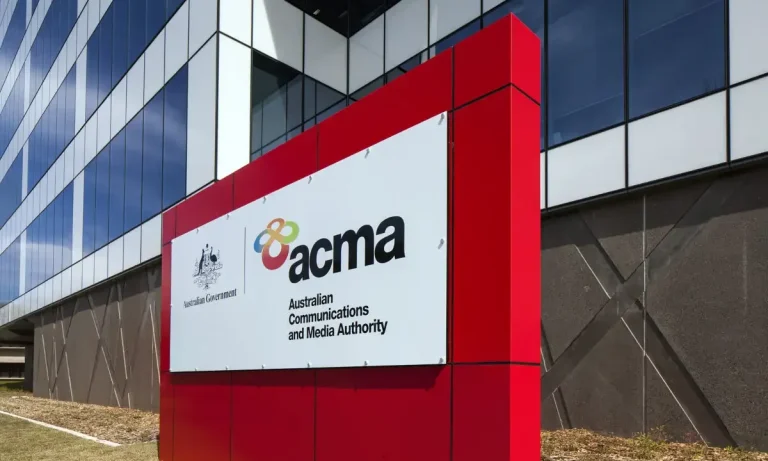
The PAGCOR office in Pasay City, Metro Manila.
But Czajkowski’s caveat deserves equal attention: the pandemic was an extraordinary, sustained period of captivity. The fuel crisis, if it proves shorter-lived, will not produce the same behavioral entrenchment. People did not merely gamble more during COVID. They rebuilt their entertainment habits around digital platforms. That rewiring takes time and prolonged exposure. A six-month fuel squeeze, however painful, may not generate the same structural shift.
His other observation – about the threat to the Philippines’ BPO (Business Process Outsourcing) sector from AI – is a cannonball fired into the middle of this entire analysis. The BPO industry is the Philippines’ economic backbone, employing over 1.5 million people in call centers, back-office operations, and content moderation. These workers are exactly the demographic that supports the locals’ gambling market. If AI automation displaces even a fraction of that workforce, the downstream effect on gambling revenues could dwarf anything the fuel crisis produces.
For land-based operators, the Iran conflict’s fuel shock does not land equally across the market. Dr. Andrew Russell, an independent economist whose PhD focused specifically on casino gambling economics, cuts straight to the diagnostic that most industry commentators miss entirely. Forget consumer confidence indices and inflation dashboards. The variable that actually determines a casino’s exposure to this particular crisis is simpler and more brutal: how far do your customers travel to reach you, and what does that journey cost?
“If this war persists, the big impact will be mediated by travel costs. So the more ‘local’ any casino’s market is, the better insulated they’ll be, whereas the more dependent any property is on VIPs-who-fly-in, the more that property will feel the squeeze.”
Dr. Andrew Russell, Independent Economist, PhD in Casino Gambling Economics
A casino’s exposure to this crisis is not a function of its size, its brand, or its gross gaming revenue. It is a function of where its customers come from and how they get there. A mega-resort that draws most of its revenue from inbound international visitors is structurally more vulnerable than a smaller suburban casino whose regulars arrive by jeepney. That is a simple point, but it gets lost in the noise of headline inflation figures and consumer sentiment surveys.
At one end of the spectrum sit the hyperlocal operators: the PAGCOR-licensed card clubs and e-games parlors scattered across the Philippines, the community gaming venues across Southeast Asia, the grey-market betting shops that service the neighborhood rather than the nation. Their customers travel kilometers, not continents. Fuel prices dent household budgets, yes, but they do not make the casino physically unreachable. This tier is getting squeezed, but isn’t broken.
At the other extreme, the ultra-premium VIP market is almost perversely insulated. The whale who charters a Gulfstream to gamble in Macau or Manila is not repricing his weekend because aviation fuel has moved. These players are the last to feel any crisis, and the first to return when one ends. But, and this is the crux, the real story is neither of these extremes. It is what happens in the middle.
This is the most operationally significant insight for Asian casino operators right now, and it deserves to be read carefully. Russell is not saying the mid-market disappears. He is saying it fractures. A segment that previously behaved as a single cohort – aspirational, travel-willing, budget-conscious but not budget-paralyzed – is now splitting into two groups moving in opposite directions. One group absorbs the higher travel cost and comes anyway, perhaps a little less frequently. The other decides the trip is no longer worth it and either finds a local alternative or stops gambling altogether.
“There’s a ‘mid-market’ issue – ‘mid-market’ players can afford to travel but are much more sensitive to travel costs than the super-VIP market. We’ll probably see the ‘mid-market’ segmenting between those who can still afford to travel and those who revert to gambling locally or abstaining.”
Dr. Andrew Russell
For the integrated resorts of the Philippines, Cambodia, and Vietnam that built their entire growth thesis around capturing the aspirational mid-market inbound visitor – the Korean businessman, the mainland Chinese tourist, the Taiwanese professional on a long weekend – this fracturing is a serious operational challenge. They are now competing not just against each other, but against every local gambling option their former customers can access without buying a plane ticket. The mid-market visitor who stays home does not simply stop gambling. He gambles somewhere closer, somewhere cheaper, or somewhere on his phone.
The Philippines occupies a genuinely interesting position in this analysis, and Russell’s assessment of it carries more optimism than the domestic inflation story alone would suggest.
“As for the Philippines, there is a strong locals’ market there, although fuel costs and any other price hikes will naturally reduce gambling. I doubt we’ll see permanent damage to the gambling industry in the Philippines.”
Dr. Andrew Russell
The domestic spine is what saves the Philippines from the worst of it. PAGCOR’s licensing infrastructure has ensured legal gambling venues exist within reach of the majority of the population, and the Filipino appetite for gambling, from cockfighting to baccarat to online slots, is deep-rooted enough to survive a fuel price squeeze. Entertainment City’s integrated resorts depend on a blend of international tourism and high-spending locals, and while the mid-market tourist channel is impaired, the local channel remains. Fuel costs hurt Filipino wallets, but they do not make Solaire physically unreachable for the Makati professional or the Laguna businessman who was already a regular.
The honest caveat is that ‘natural reduction’ is still reduction. Household budgets under pressure mean fewer visits, smaller buy-ins, and shorter sessions. PAGCOR’s aggregate revenue figures will feel the pinch even if the structural damage is limited. Russell’s point is a measured one about permanence, not immunity. This is a cyclical headwind, not a structural wound. But where his analysis becomes genuinely surprising is in what he sees happening at the premium end of the market, and its connection to a development thousands of kilometers from Manila Bay.
“Another special consideration is how this affects Wynn Resorts’ RAK development. If the UAE is no longer seen as ‘safe’ by the foreign guests who are undoubtedly the target market, Wynn Resorts can expect to have a slower-than-expected ramp-up on RAK. Indeed, if a perception of danger remains over the Middle East, we might see people who would’ve gambled at Wynn RAK gamble in Asia – including the Philippines – instead.”
Dr. Andrew Russell
This is one of those observations that, once you hear it, seems obvious, but almost nobody is saying it. Wynn RAK was positioned as the Gulf’s opening move into regulated casino gambling, and its target market was always internationally mobile, high-net-worth visitors: the same globally-travelling VIP demographic that already rotates between London, Monte Carlo, Macau, and Singapore. The Iran conflict, and the broader shadow it casts over regional security, makes that market nervous about the UAE in a way it simply was not eighteen months ago. Those guests do not stop gambling. They reroute.
The beneficiaries are the established Asian casino destinations – Singapore’s Marina Bay Sands and Resorts World Sentosa, Macau’s Grand Lisboa and Studio City, and Manila’s Entertainment City – that already have the infrastructure, the junket relationships, and the premium hospitality to absorb redirected VIP flows. For Philippine integrated resorts, the net effect of the Iran crisis on their top-end business may well be neutral or even marginally positive, with mid-market losses at least partially offset by premium players who had other plans and have quietly changed them.
The final piece of Russell’s analysis is where the fuel crisis and the pandemic come closest to rhyming, even if the verse never quite scans the same way.
“Online gambling is accessible across the entire globe and tends to be cheaper than land-based casino gambling. And if people can’t travel… if they’re stuck at home and bored… we’re likely to see an increase in online gambling similar to how all electronic entertainment industries did well during COVID — although probably not to the same degree.”
Dr. Andrew Russell
‘Probably not to the same degree’ is doing a lot of work in that sentence, and it is worth sitting with. The pandemic produced an online gambling supercycle because it eliminated every physical alternative simultaneously, for an unpredictable and sustained period. People didn’t just gamble online more during COVID. They rebuilt their entertainment habits around digital platforms over months of enforced captivity. The Iran fuel crisis, unless it metastasizes into something far more severe, will not replicate those conditions. The casino is still open. The flight is still possible. It is merely more expensive.
What the fuel crisis does accomplish, though, is apply pressure at the margin and margins are where behavior changes. The mid-market player who was already borderline on whether to book that trip to Manila now has a concrete financial reason to stay home and open his phone instead. Online gambling’s structural advantages in this environment are real and compounding: no transport costs, no hotel, no minimum buy-in beyond the platform’s requirement, accessible on a mobile data connection that is cheap and near-ubiquitous across most of Asia. The casino in your pocket does not care what petrol costs.
Flying to places like Vietnam might not be an attractive option for smaller punters anymore.
This matters especially across Asia’s pre-regulated markets, which is to say, most of Asia. In jurisdictions without domestic licensing frameworks, online gambling happens anyway through offshore operators, VPNs, and informal networks. These operators carry almost no fixed infrastructure costs relative to their land-based equivalents. The fuel crisis is, for them, purely a demand-side variable: if their customers have more time at home and less appetite for expensive travel, the direction of traffic moves in their favor. Quietly, without press releases, without regulatory filings, without appearing in any official statistics.
So: pandemic versus Iran-driven fuel crisis. Can they be compared? In mechanism, no. The pandemic was a forced channel migration. It killed every physical alternative and drove players online en masse. The fuel crisis is a purchasing power shock and a travel cost barrier. It operates through wallets and flight prices, not lockdowns and border closures. The levers are entirely different.
In broader pattern, though, the echoes are hard to ignore. Both crises test land-based operators while creating oxygen for digital channels. Both hit the middle of the market hardest – the mid-market tourist who can no longer justify the trip, the mid-income local whose entertainment budget has been eaten by inflation – while leaving the hyperlocal and the ultra-premium comparatively intact. Both generate, in some portion of the gambling public, a sharper appetite for the cheap and accessible hope of a screen-based bet. And both, ultimately, accelerate structural shifts that were already underway before they arrived.
Russell’s framework, taken in full, produces a map rather than a verdict. Hyperlocal operators: squeezed but resilient. Ultra-premium destination properties: insulated, possibly a net beneficiary as Middle East instability redirects VIP flows their way. Mid-market inbound properties: genuinely challenged, facing a fracturing customer segment that demands strategic rethinking. Online gambling, licensed and grey alike: quietly ascending, for reasons that echo COVID without replicating it.
The fuel crisis will not mint the online gambling fortunes that COVID did. But for operators who can read their customer’s travel sensitivity clearly, who can serve the mid-market player who has quietly stopped flying and started scrolling, and who can position themselves for the VIP flows that a troubled Middle East is already beginning to redirect, this crisis is less catastrophe than reconfiguration. The house adapts. It always has and it always will. The question is which version of the house is best positioned when the dust finally settles.
Continuing a 14‑year tradition of community support, MGM contributed MOP300,000 to the Macau Holy House of Mercy (SCMM)’s Welfare Shop, strengthening its backing of the food hamper distribution program and bringing its cumulative donations to MOP4.1 million.
Established in 2013, the SCMM’s Welfare Shop has been providing food supplies and daily necessities regularly to families in need. MGM’s latest donation will benefit nearly 400 local households, further strengthening the Company’s support for the local community.
On April 8, Kenneth Feng, Chief Executive Officer and Executive Director of MGM China Holdings Limited, visited the SCMM’s Welfare Shop and presented the MOP300,000 donation cheque on behalf of MGM to António José de Freitas, President of the Board of Trustees of SCMM.
The donation ceremony was witnessed by members of MGM’s management team, including Wendy Yu, Executive Vice President of Human Resources, and Irene Wong, Senior Vice President of Public & Community Relations, together with representatives of beneficiary organizations, including Leong Heng Kao, President of the Supervisory Committee of the General Union of Neighborhood Associations of Macau (UGAMM) and Leong Iok Wa, Consultant of the Macao Federation of Trade Unions (FAOM), reflecting the collective efforts of enterprises and community organizations in caring for the community.
The food hampers, packed by MGM’s management team and the Golden Lion Volunteer Team, were distributed with reusable handcarts and filled with essentials such as rice, noodles, canned food, oatmeal, cooking oil, and daily necessities.
Volunteers, joined by their children, delivered the hampers and handcarts to families referred by FAOM, UGAMM, SCMM, and the Macau Association of Parents of the Mentally Handicapped, fostering parent‑child engagement while extending warmth and care to the community.
SOFTSWISS wrapped up its participation at the BiS SiGMA South America Summit 2026 in São Paulo, Brazil, with a showcase shaped by expert panel discussions and industry dialogue on regulated market development, supported by a series of initiatives throughout the event.
The tech provider’s on-site activation featured Rubens Barrichello, Non-Executive Director in Latin America at SOFTSWISS, who arrived at the expo floor in a Porsche racing car. The vehicle was later converted into a racing simulator for visitors of the company stand.
Rubens Barrichello, Non-Executive Director in LATAM at SOFTSWISS
Barrichello also took part in the summit’s opening ceremony. In his speech, he addressed Brazil’s position as a rapidly maturing betting market, where the next phase of growth depends on advanced technology, clear regulation, and social responsibility. He emphasised that this process requires collaboration between the government and tech companies.
Rubens Barrichello, Non-Executive Director in LATAM at SOFTSWISS, shared: “I appreciate how the BiS SiGMA South America summit brings together two worlds I know well – racing and technology. The people I meet here understand that building a sustainable market in Brazil takes discipline, tech expertise, and, of course, teamwork. And this reminds me a lot of the racing environment, where teamwork and precision make all the difference.”
The programme opened with a fireside chat between Plínio Lemos Jorge, President of Brazil’s National Association of Games and Lotteries (ANJL), and Carla Dualib, Regional SOFTSWISS Business Development Manager at SOFTSWISS and Communication Director at ANJL. They explored the rapid growth of the Brazilian market and the responsibility that comes with operating at scale.
Carla Dualib, Regional SOFTSWISS Business Development Manager at SOFTSWISS and Communication Director at ANJL
Carla Dualib, Regional Business Development Manager in Latin America at SOFTSWISS, comments: “A year ago, many of these conversations were still theoretical. Brazil’s market has moved past the point where general ideas are enough. What made these sessions valuable was the willingness to get specific – regulators, operators, and tech providers sharing what actually works on the ground. Honest dialogues like that really move the industry forward.”
Beyond the conference stage, SOFTSWISS presented the second edition of its limited capsule collection, created with Rubens Barrichello and iconic racing brand Sparco. Inspired by the Driven by Ambition concept, the capsule was designed by Brazilian Sportswear Designer Denis Romanello. It reflects a shared focus on performance and reliability across motorsport and technology.
The company was also recognized for the SOFTSWISS Sportsbook Network Jackpot, which was named Best Innovative Sportsbook Feature for bringing proven casino‑style engagement mechanics into sports betting.
The summit closed with the SOFTSWISS Racing Carnival, an exclusive karting event at the Kartódromo de Granja Viana. The tech provider’s partners joined Rubens Barrichello for demonstration races and competitive karting heats. This racing experience was accompanied by live samba performances, interactive activities, and networking in an informal setting.
Genting Singapore, operator of Resorts World Sentosa (RWS), has cautioned that near-term performance may remain volatile while emphasizing its long-term resilience strategy, as the integrated resort operator responded to shareholder queries ahead of its Annual General Meeting.
In its written responses released on Friday, the company said short-term fluctuations in gaming results are expected, citing inherent volatility in hold percentage and customer mix. ‘Gaming performance can vary between periods due to normal fluctuations in hold percentage and customer mix,’ the group said, adding that comparisons across reporting periods ‘should be interpreted within this context.’
It added that while near-term results may fluctuate, ongoing investments in asset enhancement, operational discipline, and customer experience are aimed at supporting ‘longer term performance and resilience.’
The comments come as Genting Singapore reported revenue of SG$2.45 billion ($1.81 billion) for the financial year ended December 31st, 2025, down from SG$2.53 billion ($1.87 billion) a year earlier, while net profit fell to around SG$390 million ($289 million) from SG$578.9 million ($428 million) in 2024. Gaming revenue declined by approximately SG$100 million ($74 million), or about 6 percent year-on-year.
The issue was raised by shareholders, who noted that this contrasted with the strong growth reported by Singapore’s competing casino, Marina Bay Sands, which posted gaming revenue growth of 52 percent in the fourth quarter of 2025 and achieved $1.2 billion in casino revenue in 4Q2025 alone.
Resorts World Sentosa
Confident ahead of license assessment
For the coming period, Genting Singapore highlighted its readiness for the next casino license assessment cycle, following a two-year renewal granted in February 2025. The shorter renewal period had drawn scrutiny from investors, but the company said it reflected the impact of pandemic-related disruptions during the review period.
Since then, the group has progressed its Resorts World Sentosa 2.0 transformation plan in alignment with Singapore’s tourism strategy, while maintaining close engagement with regulators. The board said it ‘continues to oversee Management’s execution of improvement initiatives and believes the Group is well positioned for the next assessment cycle.’
At the same time, Genting said it is closely monitoring geopolitical risks, particularly the evolving conflict in the Middle East, which could have broader implications for its operating environment.
‘The Group continues to actively monitor geopolitical developments in the Middle East and assess potential implications for its business and operating environment,’ the company said, noting that potential risks include changes in international travel flows, cost conditions, and overall macroeconomic sentiment.
However, Genting cautioned that it is ‘premature to draw definitive conclusions’ given the fluid nature of the situation, adding that it will continue to assess developments and respond as necessary should conditions materially change.
Over the longer term, the group pointed to its diversified integrated resort offerings, strong financial position, and Singapore’s status as a well-connected destination as factors supporting its ability to navigate external uncertainties while maintaining operational resilience.
Macau is considering subsidizing transport for international tourists arriving at Guangzhou Baiyun International Airport to travel onward to the SAR, as authorities step up efforts to diversify visitor sources amid shifting flight patterns.
Maria Helena de Senna Fernandes, director of the Macau Government Tourism Office (MGTO), said the government is evaluating a plan to cover transport costs for overseas visitors landing in Guangzhou, enabling them to continue their journey to Macau. The move targets international travelers outside Greater China and aims to strengthen Macau’s appeal as a multi-stop destination.
Guangzhou, located about 150 kilometers from Macau, offers direct connections from several European and international cities. Senna Fernandes said the proposal responds to a decline in flights from the Middle East and Europe to Hong Kong due to the war in Iran, adding that alternative mainland gateways such as Guangzhou are becoming increasingly important.
The initiative would build on an existing scheme launched on January 20th, 2026, under which Macau subsidizes transport for international tourists arriving via Hong Kong International Airport. The program, running through December 31st, offers eligible visitors free cross-border bus services from Hong Kong directly to Macau, aiming to encourage extended itineraries and boost international arrivals.
Secretary for Economy and Finance Tai Kin Ip
According to Ou Mun Tin Toi, the Chinese-language radio channel of public broadcaster TDM, Secretary for Economy and Finance Tai Kin Ip said on the sidelines of the Macau International Travel (Industry) Expo that visitor arrivals have remained resilient. He revealed that Macau recorded more than 10 million visitor arrivals in the first quarter of 2026, including over 750,000 international tourists, reflecting steady growth in the tourism sector.
He added that the government will continue to enrich tourism offerings, organize major events, and improve supporting infrastructure, seeking to capture opportunities amid uncertainties in the international environment and geopolitics.
Maisy Ho, the daughter of late casino magnate Stanley Ho and an executive director of Shun Tak Holdings, has died at the age of 60, her family confirmed on April 12th.
According to a family statement, she “passed away peacefully… surrounded by family,” who were by her side at the time of her death.
The announcement was jointly issued by her siblings Pansy Ho, Daisy Ho, Josie Ho and Lawrence Ho, who described her as “our beloved sister” and expressed appreciation for condolences while requesting privacy during the period of mourning. No cause of death was disclosed.
Shun Tak Holdings also released a brief statement confirming her passing, noting that she was accompanied by family members in her final moments.
Born in 1966, Maisy Ho was the third daughter of Stanley Ho and Lucina Laam King-ying. She graduated from Pepperdine University in the United States with a bachelor’s degree, majoring in telecommunications and psychology.
As an executive director at Shun Tak Holdings, she played a role in overseeing the group’s diversified portfolio, which spans real estate, transportation, hospitality and investment businesses. The company has long been associated with the Ho family’s broader business interests in Hong Kong and Macau.
PAGCOR‑licensed online casino Casino Plus, a leading responsible gaming brands in the Philippines, marked a record milestone with a single jackpot payout of USD 4.53 million.
Recognized as one of the largest individual online gaming payouts in the country this year, the life-changing prize, at₱271,433,871.79 (USD 4.53 million), was won in the platform’s popular, uniquely Filipino-inspired Color Games.
In a simple yet meaningful awarding ceremony witnessed by officials from PAGCOR, Casino Plus CEO Evan Spytma formally handed over the check to the winner, who, for security and privacy reasons, goes by the name “Angel.”
Commenting on the landmark milestone, Evan Spytma, CEO of Casino Plus, said: “At CasinoPlus, we celebrate wins and take pride in creating life‑changing experiences through our distinctively fun, Filipino‑inspired games. But more importantly, we stand for self‑control, awareness, and smart decisions. This jackpot of over ₱271 million showcases the extraordinary possibilities on our platform while reinforcing our steadfast commitment to offering these opportunities responsibly, with player safety and fair, transparent digital gaming at the forefront.”
Upholding transparency and full regulatory compliance
The jackpot payout was processed in full compliance with PAGCOR requirements, including mandatory Know Your Customer (KYC) verification, anti-money laundering (AML) protocols, and robust encryption security measures. Casino Plus strictly adheres to the regulatory body’s responsible gaming framework, upholding the highest standards of player protection and operational integrity.
“Integrity and transparency remain at the core of our mandate at PAGCOR, and big moments like this reinforce the trust placed in the country’s gaming industry. Let us continue playing safe by supporting PAGCOR-licensed gaming sites and responsible gaming partners”, said Senior Compliance and Monitoring Officer Cheryl Dyoco.
Beyond the Colors, Uniquely Filipino
Color Game is one of Casino Plus’s most popular live game offerings on its online casino platform in the Philippines. Players place bets on one or more color combinations before a game host pulls a lever to reveal a randomized combination of results. Wins are determined by how a player’s chosen colors match the outcome and multiplier bonuses. Games are hosted live, often by prominent personalities, and streamed in real time to players nationwide.
Casino Plus emphasizes that sustainable gaming begins with informed players. Responsible gaming is a core principle, and the platform encourages users to set personal limits, play within their means, and approach gaming as entertainment. This ₱271 million payout stands as proof that regulated, responsible gaming delivers real, verified outcomes for Filipino players.
In August 2024, a ₱303 million jackpot was won on Casino Plus, marking one of the platform’s largest payouts to date. The win represents a significant milestone in its operations and underscores the growing popularity of its Color Game offering. Since its launch on August 31, 2023, the game has produced 76 millionaires across the Philippines, with total payouts reaching approximately ₱870 million. These outcomes reflect the platform’s expanding reach and its role in delivering meaningful, life-changing opportunities to players, underpinned by transparent processes and adherence to regulatory standards set by PAGCOR.
ArenaPlus has secured a multiyear collaboration with the National Basketball Association (NBA), becoming the league’s first official betting partner in the Philippines in a move that highlights the continued convergence of sports, gaming and digital entertainment in one of basketball’s most engaged global markets.
The partnership was unveiled at a star-studded launch event at SM Mall of Asia in Pasay, Metro Manila on Saturday, attended by local celebrities, brand ambassadors, and headlined by NBA star Derrick Rose, underscoring the commercial weight behind the deal.
ArenaPlus, a PAGCOR-licensed online sportsbook under DigiPlus, said the agreement marks a major milestone for the brand as it looks to strengthen its position in the country’s competitive online gaming sector. The Philippines remains a key international market for the NBA, with basketball deeply embedded in local culture and fan engagement among the highest globally.
Under the deal, ArenaPlus will integrate official NBA branding across its online platforms, execute localized marketing activations and feature across the league’s digital and social channels in the Philippines. The collaboration is also expected to include joint efforts around responsible gambling, with both parties emphasizing best practices and integrity safeguards.
The partnership will be supported by a range of fan engagement initiatives, including NBA-themed free-to-play games and promotions designed to drive interaction during the season. On the same day as the announcement, ArenaPlus also introduced a new PHP100 million ($1.67 million) MVP (Most Valuable Predictor) Bracket challenge as part of its ongoing playoffs campaign, offering fans a free-to-play prediction format centered on the NBA postseason.
ArenaPlus Head Erick Su described the agreement as a landmark moment for the company, noting that the NBA’s global reach and deep connection with Filipino fans provide a platform to deliver more immersive and interactive experiences.
For the NBA, the tie-up points to a broader strategy to expand its footprint in regulated betting markets through partnerships with licensed operators. Kuljeet Sindhar, the league’s Head of International Gaming and Data Distribution, said the collaboration will enable the NBA to engage Filipino fans in new ways while maintaining a strong focus on responsible gaming.
The deal comes as the Philippine gaming market continues to evolve, with operators increasingly leveraging partnerships with global sports brands to differentiate their offerings and capture a growing base of digitally active consumers.
For ArenaPlus, the agreement positions the operator at the center of the country’s basketball ecosystem, combining the NBA’s global scale with localized digital engagement. For the NBA, it provides a regulated entry point into the Philippine betting space, aligning with its international strategy of working with licensed partners in key markets.
As competition intensifies among local sportsbooks, the ArenaPlus-NBA collaboration signals further maturation of the Philippine market, where high-profile sports partnerships are becoming an increasingly important driver of growth.
ArenaPlus has launched a PHP100 million ($1.68 million) MVP Bracket challenge as part of its ongoing NBA Playoffs campaign, expanding its suite of free-to-play engagement tools aimed at basketball fans in the Philippines.
The initiative forms part of the operator’s “NBA Playoffs MVP: Battle for the Most Valuable Predictor” campaign and introduces a bracket-style competition built around the National Basketball Association (NBA) postseason. The format is designed to mirror traditional playoff prediction brackets, a structure widely familiar to basketball audiences.
Running from April 11th to April 18th, 2026, the challenge allows eligible ArenaPlus users aged 21 and above to submit predictions for all 15 NBA Playoffs matchups. Participants are provided with two free entries, with no deposit, betting or entry fee required.
NBA player Derrick Rose at the launch event in Manila on Saturday.
The top prize of PHP100 million ($1.68 million) will be awarded to the participant who achieves the highest number of correct predictions across the full bracket. In the event of a tie, the winner will be determined based on the earliest valid submission.
In addition to the main prize, ArenaPlus has introduced a PHP50 million ($840,000) shared prize pool for participants who achieve the next highest number of correct picks. This pool will be distributed among top-performing entrants below the grand prize winner, such as those correctly predicting 14 matchups or the closest tier, depending on overall results.
All valid entries will also be entered into a raffle draw, with additional prizes including PHP1 million ($16,700) for 10 winners and PHP100,000 ($1,700) for 100 winners, broadening participation incentives beyond the primary competition.
The launch event at Mall of Asia in Pasay, Metro Manila.
ArenaPlus Head Erick Su said the campaign reflects the way Filipino fans engage with basketball, emphasizing analysis and prediction as core elements of the viewing experience. He added that the bracket challenge is intended to deepen fan interaction with the playoffs while rewarding knowledge and intuition.
The MVP Bracket builds on ArenaPlus’ earlier PHP1 billion ($16.8 million) “MVP Dream” initiative, which similarly centered on predicting playoff outcomes, and represents the next phase of the operator’s strategy to integrate interactive, free-to-play mechanics into its sports offering.