The Malaysia and Singapore gaming sectors are poised for robust recovery in the second half of 2024, driven by increased tourist arrivals and regulatory developments, Hong Leong Investment Bank Research (HLIB Research) estimates.
According to a report by The Star, the research house maintained an ‘overweight’ stance on the sector, citing the restoration of global flight capacity and the visa-free-travel pact between China and both Malaysia and Singapore as key factors supporting the optimistic outlook.
‘We anticipate continued earnings recovery for Genting Singapore Ltd and Genting Malaysia Bhd in 2H24 and beyond – and thus benefiting Genting Bhd – driven by the ongoing rebound in tourist numbers,’ it noted.
Malaysia aims to achieve foreign-tourist arrivals of 27.3 million in 2024 versus 20.1 million in 2023, while Singapore is hoping to see about 15 to 16 million visitors this year against 13.6 million in 2023.
HLIB Research also highlighted the recent High Court ruling that the Kedah government’s decision to cease issuing and renewing business licenses for gaming operators is unconstitutional, reducing the risk of similar closures in other states.
The research house expects Sports Toto Bhd’s number forecast operator segment to normalize in the fourth quarter ending June 30th, 2024, after benefiting from seasonally stronger sales in the previous quarter.
The recently announced POGO ban could negatively impact sales, earnings, and stock prices of businesses reliant on the industry, while reducing employment, demand for real estate, and sales for retailers and other businesses in the sector supply chain, an economist told AGB.
In his third State of the Nation Address on Monday, Philippine President Ferdinand Marcos Jr. mandated PAGCOR officials to wind down all POGO operations by the end of the year.
This decision comes after mounting pressure from officials, lawmakers, and the public due to numerous crimes linked to these operators, most particularly those operating illegally.
“Disguising as legitimate entities, their activities have ventured into illicit areas, furthest from gaming, such as financial scamming, money laundering, prostitution, human trafficking, kidnapping, brutal torture, and murder,” Marcos stated.
The president condemned POGOs as a grave abuse of Philippine law, asserting that their operations must cease entirely. He has given the Philippine Amusement and Gaming Corporation (PAGCOR) a strict deadline to shutter all POGO activities by year’s end, while saying the ban was effective “immediately”. According to reports, this includes all IGL (formerly known as POGO) operations under PAGCOR.
Michael Ricafort, Chief Economist at the Rizal Commercial Banking Corporation, described to AGB the potential adverse economic impact of the offshore gaming ban.
“The POGO ban could have an adverse impact on the sales and earnings, as well as on the stock price, of some companies that partly cater to or rely on POGOs and POGO-related businesses,” Ricafort noted.
The economist added that the ban was somewhat anticipated and may have already been factored into market expectations, given recent positions taken by local business groups.
“The current and previous finance secretaries hinted that it was acceptable for POGOs to stop. China has been appealing for the ban on POGOs for more than five years already,” Ricafort explained.
Ricafort also highlighted that POGO operations had already been reduced since the pandemic. However, he warned of further adverse impacts, such as reduced employment for locals, decreased demand for real estate rentals and leases, and lower demand for retailers and other commercial establishments.
PAGCOR Chairman Alejandro H. Tengco, commented to radio DZBB after the decision that he had yet to discuss with the President his directive, as the entity currently only had jurisdiction over Internet Gaming Licensees (IGLs).
The office of the President since confirmed to Philstar that all IGLs will be included in the ban.
Pagcor’s Offshore Gaming Licensing Department has a list of 45 IGLs – which were previously known as POGOs – two of which are suspended (Gambol Leisure and Amusement Inc. and Tritech Technology Corporation), for a total of 43 operating as of July 16th.
Tengco indicated that these 43 IGLs employ 31,000 Filipinos directly. Another 9,800 Filipinos are part of the special class of business process outsourcing (BPO).
Speaking of further impacted industries, Michael Ricafort noted that “suppliers or any other businesses in the supply chain of POGOs could be adversely affected, including rental income, employment agencies, and other related services,” he said. “Transport and logistics services catering to POGOs could also suffer from reduced business.”
The economist pointed out that the ban aligns with the official policy stance of the Economic Team over the past two years, especially against POGOs that violate laws or contribute to social ills.
“This is also good signaling for good governance since global investors prefer countries that comply with ESG standards. Compliance with ESG means signaling good business for the country,” Ricafort emphasized.
“Any gradual ban would only prolong uncertainties, particularly potential legal violations. The ban is part of efforts to further strengthen the country’s institutions and governance standards in line with global best practices.”
Pressure on Marcos to ban POGOs has been increasing in recent months, especially after the Senate investigation has exposed several other issues, from fake birth certificates being bought by foreign nationals to suspended Bamban, Tarlac Mayor Alice Guo suspected of being a Chinese spy.
Both the Department of Finance (DOF) and the National Economic and Development Authority have backed the banning of POGOs. The DOF has said that allowing POGOs to proliferate is costing the Philippines around PHP99.5 billion ($1.7 billion) a year.
According to PAGCOR data, POGOs generated PHP3.15 billion ($54.3 million) in revenue for the regulator in 2023.
Tonet Quiogue, a partner at a Philippines-based law firm and an expert in the legal gaming space, told AGB that PAGCOR will now focus its regulatory and licensing efforts on Philippine Inland Gaming Operators (PIGOs), remote gaming licensees for inland betting, and land-based casinos.
Good morning. Goodbye to POGOs. At least that was the tone of the Philippine President when he announced that offshore gaming operations overseen by PAGCOR should be banned by the end of the year. A legal expert points out how this could cause a refocus on onshore gaming. But questions remain as to whether forms of offshore will continue, particularly outside PAGCOR’s purview. Meanwhile, Macau operators continue their market share dance, with expectations for continual adjustments throughout this and next year, despite few surprises anticipated from the soon-to-be-released 2Q24 results.
What you need to know
Legal expert suggests that the Philippines’ POGO ban will redirect PAGCOR’s regulatory focus to onshore gaming activities.
A legal gaming expert based in the Philippines is expecting the recent news that Philippine Offshore Gaming Operators (POGOs) are going to be banned by the end of the year will cause the nation’s gaming regulator to refocus its efforts on onshore gaming. The announcement yesterday by the Philippine President has also raised many concerns over whether there’s any future for offshore gaming, possibly in jurisdictions not overseen by PAGCOR.
Online gaming fraud is on the rise in the iGaming industry. In Q1 2022, there was an 85% increase in fake account registrations compared to Q4 2021. While players are undoubtedly affected by gaming fraud, iGaming platforms also suffer due to damaged reputations, huge financial losses, and legal consequences.
No major surprises are expected out of the upcoming second-quarter results for Macau gaming operators, according to Seaport Research Partners, however market share is expected to continue to shift as competitive positions realign.
In a Monday note, Senior Analyst Vitaly Umansky noted that ‘The key questions for the Macau industry will be around operating costs, player reinvestment, July trends and August outlook […] impact of money flow crackdown and the impact it may be having on gaming revenues, slowness of base mass recovery and what expectations may be’.
The analyst notes that July started off ‘quite weak but has picked up’, and that overall the third quarter gross gaming revenue should ‘have a slight increase from Q2 on seasonality’.
Third quarter GGR is now expected to reach over 80.5 percent of the same quarter in 2019.
Looking forward to the fourth quarter, Umansky estimates a 5.5 percent sequential increase, with GGR reaching 83.3 percent of the same quarter in 2019.
For full-year results, GGR is predicted to rise by 26 percent yearly in 2024 and 10 percent in 2025.
Operators
Overall, the group notes that its top pics for the next three to six months are Melco, Wynn and Galaxy, while going into 2025, the analysts prefer Sands China and Las Vegas Sands.
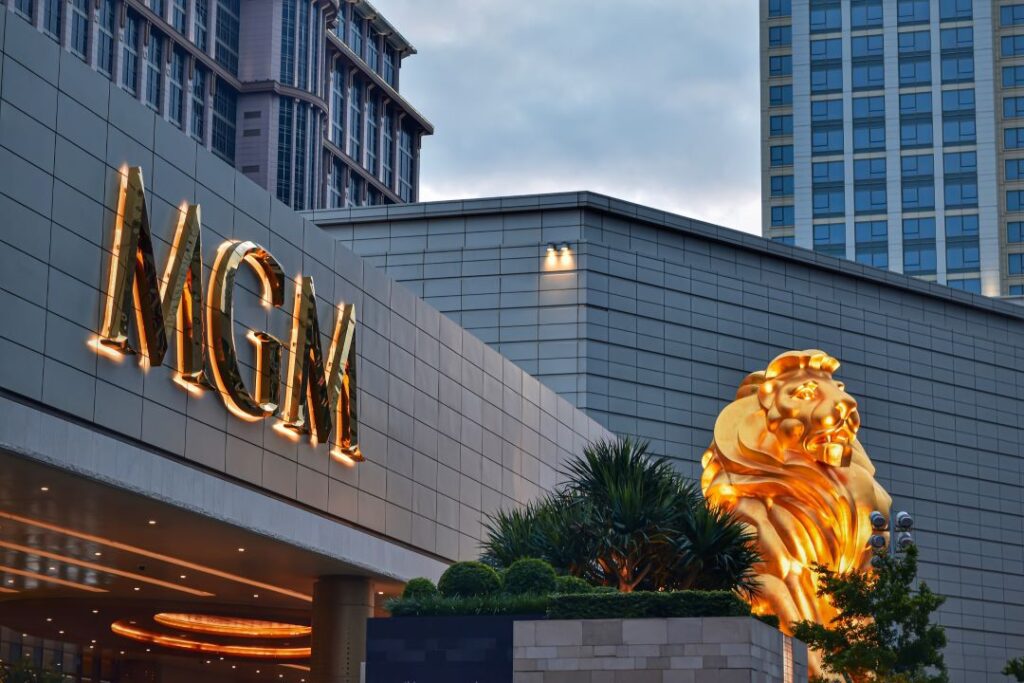
Despite having taken advantage of its increased table numbers and its smart tables, MGM China is predicted to ‘lose share’ starting already in the second quarter, also as other operators incorporate smart table technology.
Estimates are for MGM’s market share to drop to ‘mid 15s percent by the end of this year and into the high 14 percent range in 2025’.
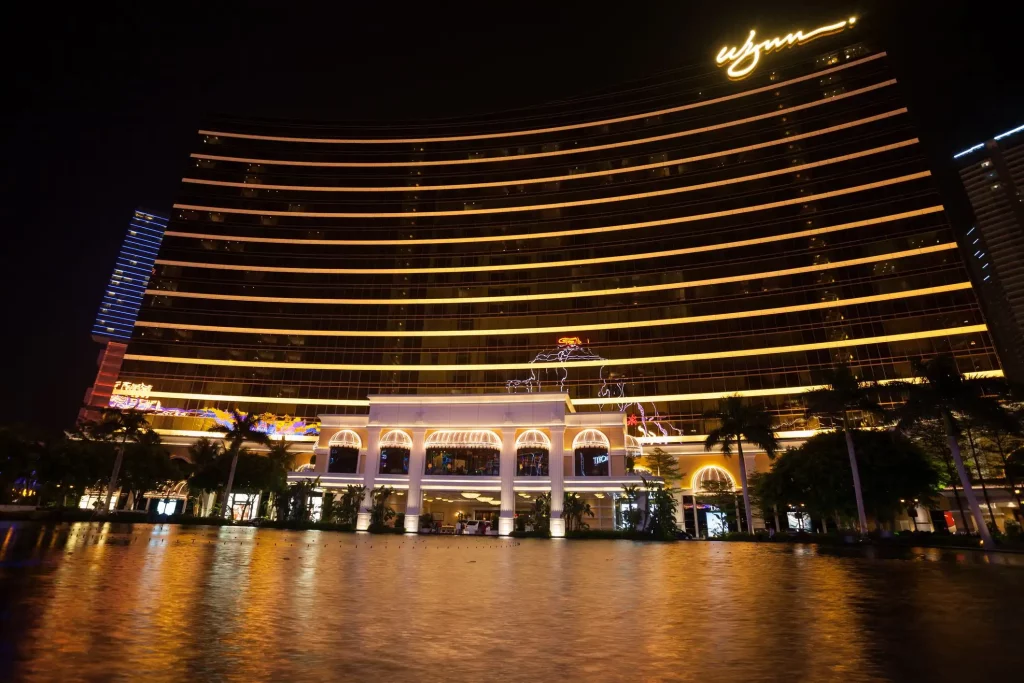
Another market share lower has been Wynn Macau, despite a slight recovery in the first quarter to ‘over 14 percent’. Umansky estimates this will ‘stabilize in the mid 13 percent range this year’.
This is in part due to the loss of the VIP business and its shift towards more premium mass. The analyst notes that ‘Wynn has no new product offering and low capacity to attract base mass and other operators increase competitiveness around premium mass which lead to continued headwind for Wynn in its ability to gain share’.
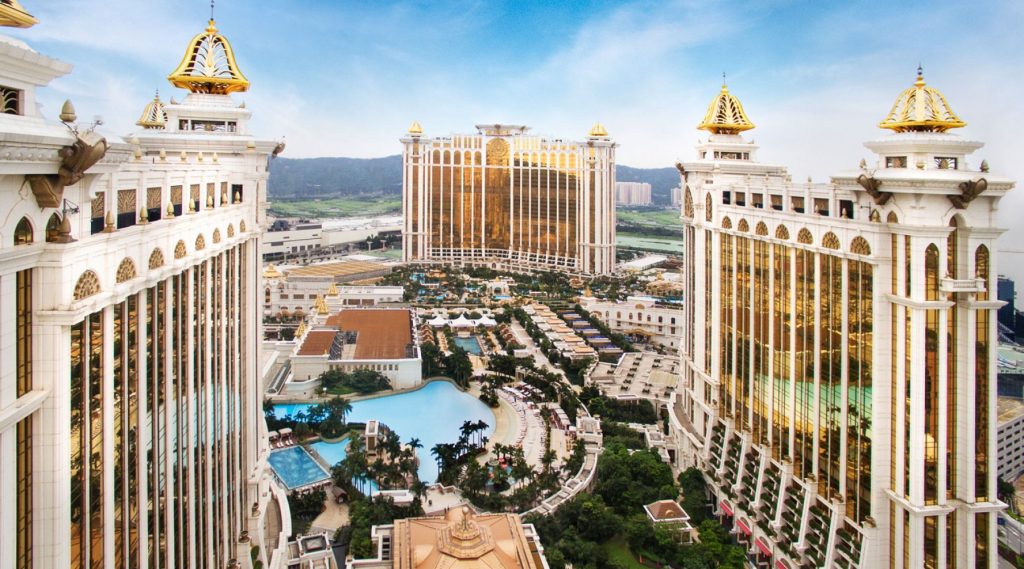
For Galaxy, which also lost market share in the first quarter due to the decline in VIP, ‘where it was the largest operator’, and softness in base mass (also where it lead due to scale), the group gained ‘significant share in Q2 and we expect share to continue to rise during 2024 and into 2025.
Market share is estimated to ‘rise over 19 percent in 2025’ due to a recovery in base mass.
Looking at Sands China, Umansky is estimating that its GGR market share will also rise to ‘over 25 percent in 2025’, from 24.2 percent in the first quarter of this year. This is aided by a predicted strong contribution from the Londoner and an increase in base mass – which it’s benefitted by its scale.
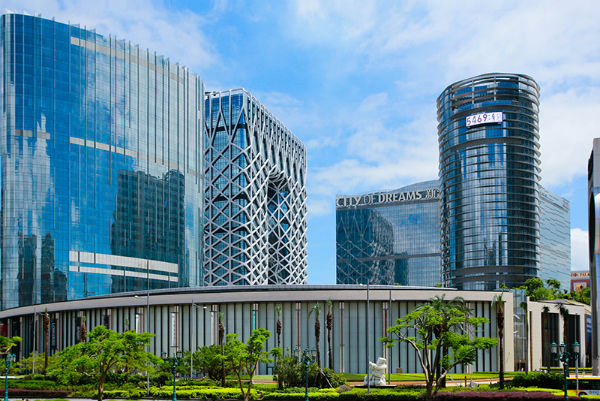
Looking to Melco, the forecast is for some market share gain in the second half of the year, ‘stabilizing in the high 14s percent range in 2025’. The group is now focused on ‘rekindling its premium mass strength in City of Dreams and ramping up Studio City driven by the new Phase 2 product offering’.
At the back of the pack is legacy Macau gaming operator SJM. Currently expectations are for continued market share gains this year, rising from 12.5 percent in the first quarter to 12.9 percent by 4Q24. But the analyst notes that ‘SJM is likely to lose share in 2025 due to the mid 12s percent range’.
‘The company has become the smallest operator in terms of revenue and remains the smallest operator in terms of EBITDA. The key focus on SJM is for it to hastily improve the ramp up of its new Cotai property – Grand Lisboa Palace. However, we do not forecast a rapid turnaround story for SJM,’ indicates Umansky.
Jade SportsBet has announced that it is now back online after a brief period of pause. During the downtime, Jade SportsBet took significant steps to enhance its product offering and ensuring an even better experience for its patrons, now allowing them to place the lowest minimum bet of Php10.00.
A key highlight of this period has been the increase in Jade SportsBet’s PAGCOR Security Bond, which has been uplifted from PHP 15 Million to PHP 25 Million. This substantial increase underscores Jade SportsBet’s commitment to compliance, security, and the trust it places in its valued customers.
Joe Pisano, CEO, Jade Entertainment
“At Jade SportsBet, we prioritize responsible gaming and satisfaction of our customers. The increase in our PAGCOR Security Bond is a testament to our dedication to providing a secure and reliable platform,” said Joe Pisano Founder and CEO of Jade SportsBet. “We have used this downtime efficiently to discuss and plan our product offerings with our Platform Provider BetConstruct who was just awarded the Global Gaming Award for Best Sportsbook Platform at the recent Awards Ceremony in Manila.
Jade will also be powering Nustar’s SportsMaxx user interface, which allows for Nustar to focus on Marketing and Jade to provide a Best in Class platform and enhanced trading services.
Jade SportsBet continues to uphold the highest standards of responsible gaming, ensuring a safe and enjoyable environment for all users. The company remains committed to compliance with all regulatory requirements and to promoting responsible gaming practices.
BetBlocker received the prestigious Jim Wuelfing Annual Award for Prevention at this year’s National Council on Problem Gambling Awards on Friday the 19th of July, which was received by the charity’s Chief of Safer Gambling Partnerships, Pedro Romero.
The award, which was named after a famed trainer and advocate for the prevention of problem gambling in the United States, recognizes people or organizations who have advocated for the inclusion of prevention strategies in the spectrum of problem gambling services, developed effective prevention programs and who have worked to help problem gambling prevention programs reached underserved and at-risk groups.
This award comes off of the back of years of work by the BetBlocker team to deliver an effect and free blocking software that can be used anonymously by anyone, anywhere in the world. As well as a traditional blocking software product, intended for use after a crisis, BetBlocker is the only blocking software to offer a Calendaring feature, allowing users to plan ahead and set the block to switch on during known periods of vulnerability.
Alongside these features, BetBlocker has translated its services into 6 non-English languages with many more to come, to help minority communities access support that would otherwise be unavailable to them.
Founder of the charity, Duncan Garvie, had this to say about the award:
“Recognition of BetBlocker’s work within the problem gambling space by the NCPG, one of the most influential voices within the sector, is amongst the highest possible accolades our organization could receive.”
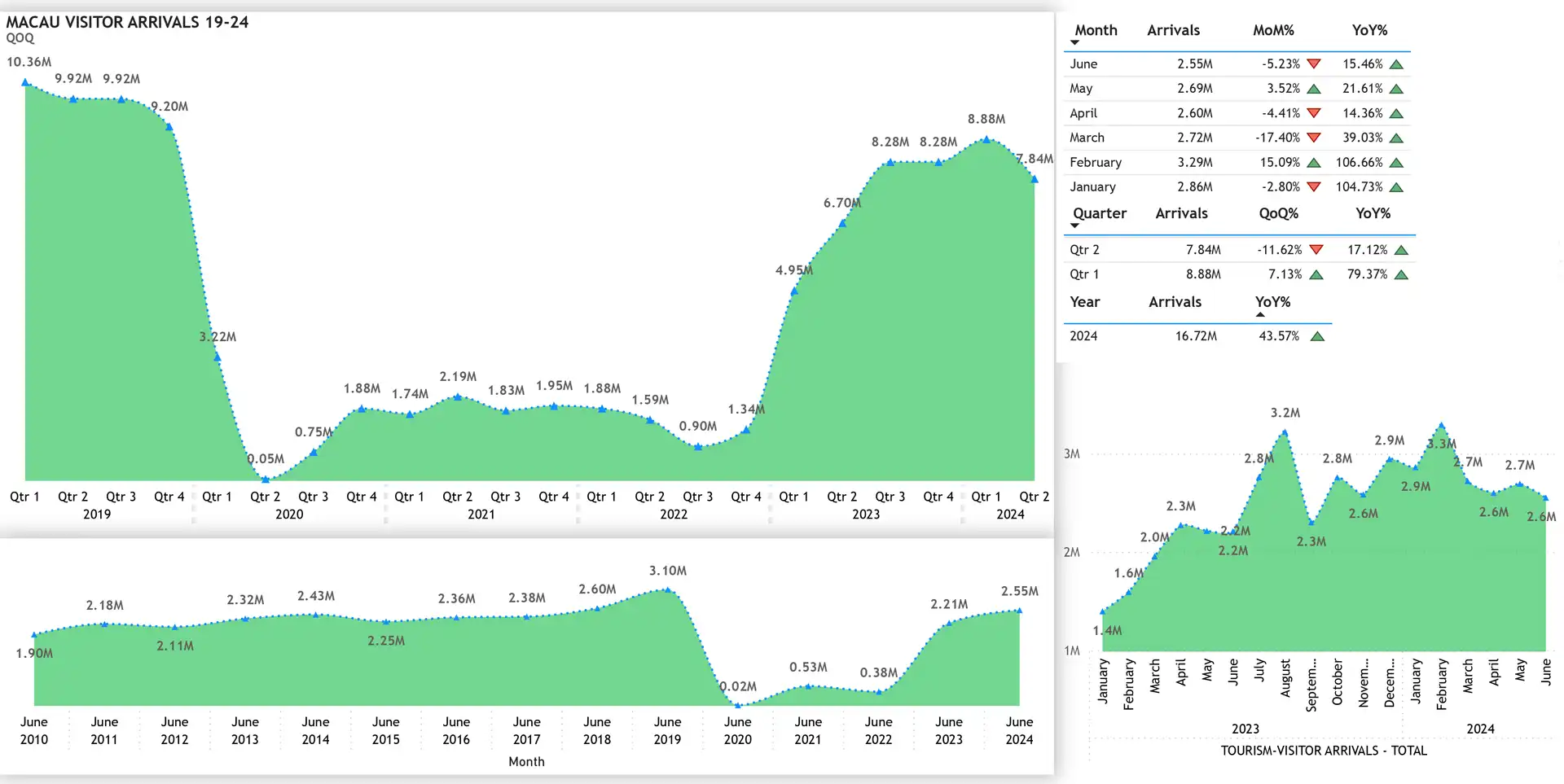
Macau’s visitor arrivals surged by 43.6 percent year-on-year to 16.7 million in the first half of 2024, recovering to 82.4 percent of pre-pandemic levels.
This growth was driven by a 59.3 percent increase in same-day visitors and a 29.1 percent rise in overnight visitors.
The mainland China market, Macau’s largest source, saw a 52.9 percent jump in visitor numbers to 11.5 million, including a 31.8 percent increase in Individual Visit Scheme (IVS) visitors to nearly 6 million. Visitation from the nine cities in the Greater Bay Area (GBA) also rose by 48.2 percent to 5.6 million.
The data from Statistics and Census Service (DSEC) show that the newly added ten cities to the IVS scheme proved to be a significant catalyst, with visitor arrivals from these cities soaring by 89 percent year-on-year to 251,678, including 21,668 IVS visitors.
The ten new IVS cities were Foshan, Zhongshan, Jiangmen, Zhaoqing, Huizhou, Shanwei, Heyuan, Yangjiang, Qingyuan, and Chaozhou, further expanding Macau’s mainland Chinese visitor base.
International visitors jumped by 146.3 percent year-on-year, to nearly 1.2 million in the first half of 2024, back to 67.2 percent of the figure in the same period of 2019.
In the wake of Philippine President Ferdinand Marcos Jr.’s announcement of an immediate ban on Philippine Offshore Gaming Operators (POGOs), the industry’s attention is expected to shift significantly towards onshore gaming activities, according to a legal expert.
Tonet Quiogue, gaming law expert based in the Philippines
Tonet Quiogue, a partner at a Philippines-based law firm and an expert in the legal gaming space, told AGB that the Philippine Amusement and Gaming Corporation (PAGCOR) will now focus its regulatory and licensing efforts on Philippine Inland Gaming Operators (PIGOs), remote gaming licensees for inland betting, and land-based casinos.
Quiogue noted that PAGCOR has recently refined and consolidated its rules for PIGOs, aligning them with global standards observed in other highly regulated jurisdictions. This transition is expected to unlock growth potential within the onshore gaming sector.
President Ferdinand Marcos Jr. declared a ban on POGOs on Monday, July 22nd, stating that it was effective immediately, however, PAGCOR has been given until the end of the year to wind up offshore operations under its jurisdiction.
In his announcement, President Marcos emphasized that the decision was driven by concerns about criminal activities linked to offshore gaming operations. He cited several examples of illegal activities uncovered in recent months, which influenced the decision to enforce the ban.
According to data from gaming regulator PAGCOR, there are currently 43 licensed POGO firms in the country. POGOs generated PHP3.15 billion ($54.3 million) in revenue for the regulator in 2023.
“The announcement is not unexpected, as POGOs have faced increased scrutiny in recent months due to raids on illegal and unregistered businesses masquerading as POGOs to conceal other illicit activities.”
Tonet Quiogue
She noted that Marcos’s primary concern seems to be ensuring that Filipino workers and employees of POGOs are not displaced. To address this, he has instructed the Department of Labor and Employment (DOLE) to collaborate with economic managers to assist in finding new jobs for these workers before the end of the year.
As reported by AGB last month, the DOLE conducted inspections of all legally operating POGO firms in the National Capital Region (NCR) and found that approximately 22,000 Filipinos employed by legal POGOs in Metro Manila could face unemployment as a result of the ban.
More details need to be clarified
A gaming industry insider from the Philippines, who wished to remain anonymous, told AGB that many details still need to be clarified in the near future, including the scope of the ban. According to Marcos, the ban appears to affect only POGOs.
POGO, a type of license rebranded as Internet Gaming Licensees (IGLs), allows operators to run online gaming platforms in the Philippines targeting players outside the country. However, the insider noted that some land-based casinos still operate “video streaming games” for foreign players. This kind of operation is not under the POGO license.
In this context, both the industry and the public must await further clarification on the real scope of the ban.
PAGCOR Chairman Alejandro H. Tengco
Regarding Marcos’s announcement, the expert highlighted that concluding his State of the Nation Address (SONA) with the news about POGO was likely a strategic move to “appease constituents”.
Additionally, the presence of PAGCOR Chairman Alejandro Tengco during the announcement suggests he was consulted and plays an active role in managing the situation. The official was even seen laughing and clapping during the announcement of the POGO ban.
Daniel Cecilio, SVP, PAGCOR
When questioned about the specifics of the new ban, Daniel Cecilio, Senior Vice President at PAGCOR, indicated that many questions still remain.
In comments to AGB, the official noted that “I cannot confirm at this time what the exact details of the directives arising from the SONA (State of the Nation Address) will be. What is clear so far is that the IGLs are given until the end of this year to wrap up their operations (sunset provision).”
In addition, aside from the question over PIGOs, who operate onshore gaming operations targeted at local customers, there are serious questions over what happens to other non-PAGCOR jurisdictions – such as the Philippines’ first offshore gaming hub: Cagayan.
The Cagayan Economic Zone Authority (CEZA) acts as its own regulator and, in its own words, notes that it has ‘the power to license Interactive Gaming and Landbased Gaming activities without needing to secure prior license or approval from PAGCOR’.
PAGCOR’s Daniel Cecilio notes that this is a key sticking point to be discussed following the President’s address, stating “What is not being confirmed at this time (and I believe is an important question) is the status of Offshore Gaming located in the various economic zones (eg CEZA), which PAGCOR has no jurisdiction (over)”.
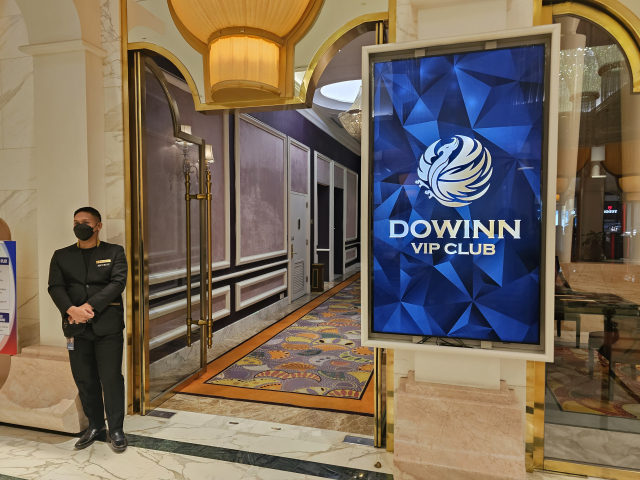
According to a source familiar with the situation, a leading junket operator in the Philippines, Dowinn Group, has reopened all of its previously shuttered VIP gaming rooms. However, the majority of these rooms have not recorded any activity.
The reopening is backed by a new group of investors, brought in by the group’s “old partners,” a source told AGB.
This occurred after the group was recognized as partners, with “old partners finding new investors to inject fresh capital.” The source said the current situation is “enough to sustain the whole operation.”
Previously, Dowinn ceased operations on the evening of June 17th, 2024, at casinos such as Solaire, Okada Manila, City of Dreams Manila, Clark D’Heights Resort & Casino, and Royce Hotel & Casino.
The group failed to resume operations as promised on the afternoon of June 24th, then announced the postponement of its reopening until July 19th.
According to the same source, Dowinn Group has partners from China, the Philippines, and South Korea. No details were provided on the origin of the new investors or the amount they injected into the company.
However, so far, among all the reopened VIP rooms, the junket operation at Royce Hotel & Casino is the only one that has recorded any activity, according to the source.
Philippines President Ferdinand Marcos Jr. announced a ban on Philippine Offshore Gaming Operators (POGOs), starting from year-end during his latest State of the Nation Address.
The move was anticipated by some and comes in the wake of numerous high-profile cases where POGOs were accused of being involved in criminal activities. Most notably, “POGO Mayor” Alice Guo has dominated the headlines in the country for weeks, leading to calls for a reform or even outright ban of the sector.
During his speech, Marcos spoke about POGOs straying from gaming into scams, crime and even murder.
“Effective today, all POGOs are banned” Marcos said to roaring applause from the audience. “I hereby instruct PAGCOR to wind down and cease the operations of POGOS by the end of the year.” he continued. He also instructed government departments to assist affected Filipino workers in finding new positions.
The POGO ban came at the end of a SONA that appeared well received and focused on the economy and tourism. It appears the ban will only affect POGOs and not PIGOs or other land based operations targeting the country in a legal manner.