

Good morning. A red badge for junket employees. Macau’s Gaming Inspection and Coordination Bureau (DICJ) has heightened scrutiny on junket operations, requiring administrative management members and employees to wear work permit badges in casinos, with hefty fines up to $62,150 for non-compliance. U Io Hung, president of the Macau Professional Association of Gaming Promoters, expressed concern over these fines, noting that the current commission structure makes it difficult for junkets to bear such costs. Meanwhile, the Philippines Presidential Anti-Organized Crime Commission has indicated the country’s authorities are preparing two major crackdowns on the online gambling industry.
What you need to know
Macau junket veteran doubts the heavy fines for not using work badges in casinos, noting that the fine amount doesn’t align with their income.
The Philippines is preparing to launch two major crackdowns on the online gambling industry, according to the Presidential Anti-Organized Crime Commission.
Macau’s gaming watchdog has ramped up enforcement of regulations, with the Gaming Inspection and Coordination Bureau (DICJ) now requiring junket operators and their staff to wear work permit badges in casinos, with fines of up to $62,150 for non-compliance. U Io Hung, president of the Macau Professional Association of Gaming Promoters, expressed concerns over the financial burden these fines place on junket operators, given their modest commission structure. He also questioned why junkets face disproportionately high penalties compared to other industries, especially as unlicensed activities seem to go unpunished.
For global betting company 1xBet, Asia is a key market for several reasons. This is why 1xBet pays special attention to the Asian market and actively promotes its sports betting platform and the most popular gambling games on the continent.
Play’n GO Music, the music division of the world’s leading casino entertainment provider Play’n GO, has announced the release of its fifth and final playlist in a series in conjunction with MoneyGram Haas F1 Team.
Fan Fueled Faves will consist solely of songs chosen by fans of the American team, a change up from the first four playlists of the series which directly involved MoneyGram Haas F1 Team members.
Fan Fueled Faves follows the release of Ayao’s Anthems, the Haas Tracklist, Hulkenberg’s Hits, and Magnussen’s Mix, and is the culmination of a near season-long collaboration between Play’n GO Music and MoneyGram Haas F1 Team.
With Team Principal Ayao Komatsu, drivers Nico Hulkenberg and Kevin Magnussen, and even the entire backroom team at the elite racing outfit getting the chance to put their own spin on a Play’n GO Music playlist, it is now the turn of the fans who cheer on the team every race weekend to take the virtual aux chord and play their music, their way. As expected, the playlist is a diverse one, with artists ranging from Metallica, to Bruce Springsteen, to even Kendrick Lamar making an appearance.
Fan Fueled Faves will be available on the Play’n GO Music Spotify channel from 5pm this afternoon.
Ebba Arnred, Chief Marketing Officer and Co-Founder of Play’n GO said: “Collaborating with everyone at MoneyGram Haas F1 Team on this project has been a lot of fun, and we’re excited to hand over the mic, as it were, to the fans for this final playlist of the series.
“It’s no surprise to us that Fan Fueled Faves is the most musically diverse, eclectic playlist we’ve seen so far, and we’re excited to share it with the entire world. Hopefully it can inspire the team to a positive result in the Netherlands this weekend!”
Ayao Komatsu, Team Principal at MoneyGram Haas F1 Team said: “It’s cool to see the fans get the chance to share their music with all of us here at MoneyGram Haas F1 Team thanks to Play’n GO Music, especially after we all had so much fun crafting our playlists for you over the last few months. Music brings people together in a way that few other mediums can manage, and we’ll be using your support and dedication (as well as your inspired musical choices!) to inspire us on track this weekend!”
21VIRAL,which aims to create a simplified integration, onboarding and transparent pricing in the iGaming casino and games aggregation supply vertical, announced the expansion of its sales team with the industry appointment of Juliana Querino as Sales Manager for Latin America.
Christoph Härtel, CEO of 21VIRAL, said: “We are delighted to have Juliana Querino join our expanding team.
Having held positions with Better Collective and Endorphina in sales and commercial development roles, Juliana will and can provide and facilitate comprehensive solutions as 21VIRAL expands its iGaming aggregator services across Latin America.”
Juliana Querino, Sales Manager, said: “I’ve always admired 21VIRAL over the years as the company has expanded its business solutions within the iGaming supply chain. The business puts its customers first [operators & games providers] and its people when delivering streamlined game aggregation solutions for today’s multi-jurisdictional operators and game providers.
“I look forward to attending one of the biggest shows in Brasil, CGS, Recife, stand 19 August 29th – 30th, and meeting with new and existing partners and working from our Brasil Sales Office over the months ahead across all LatAm markets.”
Former prime minister Thaksin Shinawatra has included promoting investment in integrated resorts in a 14-point strategy he presented to boost Thailand’s economy.
Thailand’s constitutional court recently removed the prime minister, Srettha Thavisin, from office, ruling that he had violated the constitution with one of his cabinet appointments. Just two days later, Thailand’s parliament voted to install Paetongtarn Shinawatra as prime minister, the 37-year-old daughter of ousted former leader Thaksin Shinawatra.
In an event held on Thursday of last week, Thaksin introduced a 14-point strategy to improve the country’s economy, in his first public speech since returning to Thailand after 17 years abroad.
Included in this list was a proposal that casinos should represent 10 percent of the space in each complex, and that Thailand must attract investors in other related businesses, including theme parks and hotels. Thaksin reckoned that each complex in Bangkok will require up to 100 billion baht ($2.9 billion) of investment and 50 billion baht ($1.4 billion) in the provinces.
He believes this approach can help propel Thailand’s growth rate to match some of its Southeast Asian neighbors.
The former premier argued that Thailand needs to urgently tackle its high levels of household and public debt, and suggested a debt restructuring initiative to cover both households and businesses, stating that “Thailand and its people are trapped in debt.”
This month the Thai government released the Draft Integrated Entertainment Business Act for public consultation until August 19th. The legislation seeks to modernize outdated laws and create a comprehensive framework to support and regulate the industry’s growth.
Alongside the push for entertainment complexes, Thaksin highlighted the need for greater coordination between fiscal and monetary policymakers to address Thailand’s economic challenges.
He defended Pheu Thai’s coalition with establishment parties, saying the new administration will be stable and help the party emerge as the largest group in the next election due in 2027.
Thaksin’s vision for Thailand includes restructuring public debt, reforming the agricultural sector, and making Thailand a global financial hub. By focusing on developing large-scale entertainment complexes with casinos as a key component, he believes Thailand can revive its sluggish economy and better compete with its Southeast Asian neighbors.
Philippine police raided a Chinese-run scam center in the capital city of Manila, arresting dozens of Filipino and foreign workers who were allegedly involved in defrauding people through a “manipulated” trading platform.
According to local reports, the center was operating under the guise of a licensed online gaming company, which President Ferdinand Marcos had banned last month due to the industry’s links to scams, kidnapping, human trafficking, and murder.
Among the 67 foreigners arrested during the pre-dawn raid on August 22nd on an office tower in the metropolis were 58 Chinese nationals, as well as individuals from Malaysia, Myanmar, Indonesia, and Vietnam. Additionally, 32 Filipinos were also apprehended.
The owner and manager of the facility, both Chinese nationals, were among those arrested, the police said in a statement.
The police stated that the center was running a “crypto-currency investment scam” and a “love scam,” with employees posing as wealthy models who would “entice” victims to invest in the “manipulated” trading platform.
The Filipinos arrested told the police that they were forced to work as scammers, although the statement did not specify what would happen if they refused.
Furthermore, some employees were made to “dress in a seductive manner” and engage in “lascivious conduct” to help lure prospective victims, the statement added.
The crackdown comes after Marcos issued a ban on online gambling operators last month, following a public outcry over allegations that a local mayor, Alice Guo of Bamban municipality, was involved in a huge scam center north of Manila.
Guo, who was accused of being a Chinese citizen who fraudulently obtained Filipino citizenship to run for office, has since left the country, prompting Marcos to vow to go after those who “aided in her flight,” stating that “heads will roll.”
Authorities believe that there could be several hundred illegal online gambling entities, as well as many of the more than 40 licensed operators, that are running scam centers under the noses of public officials.
Konami Gaming has announced several key internal promotions to its executive leadership team.
Lori Olk has been appointed as the company’s new Senior Vice President, Regulatory Compliance & Chief Compliance Officer. In this expanded role, Olk will leverage her nearly three decades of experience in regulatory compliance, overseeing Konami’s operations across hundreds of jurisdictions worldwide.
Additionally, Scott Mineo has been promoted to the position of Senior Vice President, Finance & Accounting.
According to the group, Mineo brings over 30 years of expertise in finance and accounting, having held positions at several of the world’s largest entertainment companies prior to joining Konami.
Lori Olk
Scott Mineo
“Through their many years of service at Konami Gaming, Lori Olk and Scott Mineo have consistently demonstrated a commitment to advancing the company’s effectiveness as a top-tier global supplier,” said Steve Sutherland, President and Chief Executive Officer of Konami Gaming, Inc.
“This leadership expansion within our executive team helps solidify the foundation for achieving the company’s strategic objectives and enduring industry contributions.”
Konami Gaming recently announced new appointments to its North American sales leadership team.
The Philippines plans to initiate two major crackdowns on the online gambling industry.
Meanwhile, the House Committee on Human Rights Chairman supported the POGO ban, citing that, despite the tax revenue generated from these operations, the recurring issues indicate that their social harm persists and remains unaddressed.
The Presidential Anti-Organized Crime Commission (PAOCC) has announced that it is preparing to launch two large-scale operations targeting the Philippine online gambling industry. The goal is not only to disrupt these operations but also to arrest individuals involved.
The announcement was shared by the Chinese-language Philippine newspaper Chinese Commercial News on Friday, citing an interview on the state-owned PTV-4. Winston Casio, the spokesperson for the PAOCC, did not provide details about the crackdown, including whether the targets are solely online gaming operations, POGOs, or even the so-called scam centers.
Winston Casio, PAOCC
According to the report, Casio stated that the agency is awaiting reports from the National Bureau of Investigation (NBI) and the Criminal Investigation and Detection Group (CIDG) regarding recent raids on online gambling hubs conducted over the past few weeks.
The official mentioned that, despite President Ferdinand Marcos Jr.’s decision to ban POGOs, online gambling operators continue to operate in the country. In response, the PAOCC has established a task force to plan a large-scale crackdown on these operators. The task force includes members from the PAOCC, the Philippine National Police (PNP), the NBI, the Bureau of Immigration (BI), the Department of Justice (DOJ), and the Anti-Money Laundering Council (AMLC).
Casio said, “We are planning to carry out two major operations in the coming weeks. We will follow the necessary legal procedures to truly eliminate them, not just disrupt their operations. This way, we can arrest them, file charges, deport them, and confiscate their assets.”
Casio stated that illegal POGOs remain a problem as they continue to operate in a “guerrilla” manner. However, he indicates that the good news is that online gambling companies that were operating legally before the president’s directive have started to cease operations. Foreign nationals working in online gambling have also begun to voluntarily leave the Philippines.
He also mentioned that communication with several foreign embassies revealed an increase in the number of foreign nationals applying for travel documents, indicating that many are leaving the country voluntarily.
In addition, House Committee on Human Rights Chairman Rep. Benny Abante Jr., speaking to ANC News, defended the POGO ban as he compared the POGO crackdown to the country’s ongoing drug war probe.
He noted that he doesn’t believe many people need to be killed to eradicate drugs. In fact, even without mass killings, drugs still exist, and so does illegal gambling. Abante mentioned that some opinions suggest that these issues will continue to recur. Therefore, even if some tax revenue is generated from these activities, their social harm is not actually eliminated.
After meeting with four of Macau’s gaming operators, Seaport Research Partners notes that Macau’s base mass is unlikely to experience a strong recovery until China’s economy and consumer confidence improve.
This conclusion is drawn from Sands China, the most representative operator in Macau due to its largest market share, including the mass market segment, supported by its extensive hotel room inventory.
Vitaly Umansky, Senior Analyst, Seaport Research Partners
Seaport senior analyst Vitaly Umansky indicates that the mass market is bifurcated, with the lower end (base mass) still not having recovered. This segment is experiencing both lower visitation and reduced spending per customer, which can be attributed to China’s economic conditions and constraints on middle-class income and wealth.
Seaport’s report highlights that Sands’ player reinvestment was excessively high in Q2 2024, as the strategy fell short of delivering the anticipated results. While Sands managed to maintain its overall market share, the elevated reinvestment costs negated the potential gains.
‘Sands China will most likely see a dividend restart in 2025, with the scale of the dividend dependent on performance after the completion of the Londoner. Hong Kong investors appreciate dividends, so it makes sense to restart some dividends at Sands China.’
MBS growth in 2025 due to Tower 3 redevelopment
Commenting on the Singapore business, Seaport notes that Marina Bay Sands’s (MBS) Tower 3 is expected to open in May next year, and this redevelopment is anticipated to be a key driver of growth in 2025.
The first quarter of this year saw an outsized performance, buoyed by seasonal factors, Taylor Swift concerts, and other major events in Singapore. However, the ongoing work at Tower 3 has impacted results in the second and third quarters, with the third quarter showing improvement over the second. The fourth quarter is expected to continue this trend, with both quarter-over-quarter and year-over-year growth anticipated.
The total capital expenditure for the renovation works is projected at $1.75 billion, with the renovations of Towers 1 and 2 already completed and the Sky Casino set to open by early September. Seaport emphasizes that the completion of Tower 3 by May 2025 will mark the final phase of this extensive redevelopment, solidifying MBS’ position as a premier destination in Singapore.
Melco reintroduces highest tier club for premium mass
Looking at other Macau operators, the research firm indicates that Melco’s marketing has been restructured, resulting in improved performance. For example, the employee incentive scheme has been reorganized and simplified, and the Melco loyalty program is being revamped with the Signature Club, Melco’s highest tier for premium mass, being brought back. The objective is to return to 2019 EBITDA levels by the end of 2025.
House of Dancing Water
The incremental operating expenses will largely come from the opening of The House of Dancing Water (~$100k/day) in early 2025, but this is expected to be EBITDA positive.
The promotional environment seems to be stabilizing, and Melco does not plan to increase promotional intensity. The utilization of smart digital tables, combined with the breadth of player data for analytics, will allow operators to optimize reinvestment, resulting in a better return on investment.
Seaport indicates that, currently, Studio City has 30 tables running, with plans to have the entire casino fitted out with smart tables by October. City of Dreams is expected to have a full complement of smart tables by 1Q25, which will lead to some cost savings once fully implemented.
MGM projects mid-teens percent market share
MGM’s management remains optimistic about their potential to capture additional market share in Macau, a stance that contrasts with Seaport’s view that MGM’s share may have reached its peak. The company’s leadership suggests that achieving a mid-teens percentage share is realistic, with Q1 performance reaching approximately 17 percent and Q2 at around 16 percent. This projection underscores their confidence in expanding their presence despite a challenging market environment.
Meanwhile, Macau’s premium business, which represents the bulk of MGM‘s operations, continues to demonstrate year-on-year growth. Despite the soft Chinese economy, premium demand does not appear to have been significantly affected. However, it is still uncertain whether this demand would be even stronger without the current economic pressures.
Wynn’s smart table rollout slower than peers
Analyst Vitaly Umansky has highlighted that Wynn’s rollout of smart tables is progressing more slowly compared to some of its competitors. Currently, Wynn is testing a limited number of these tables, with plans to initiate a broader rollout later this year and into early next year. This cautious approach contrasts with the more aggressive deployments seen at other operators, which could impact Wynn’s ability to fully leverage the potential cost savings and revenue benefits that smart tables offer.
In the meantime, Wynn Macau is poised to benefit from anticipated improvements in the base mass business by 2025. The property’s stronger walk-in traffic compared to Wynn Palace positions it advantageously, especially as base mass walk-ins remain softer than pre-2019 levels.
Wynn Palace, on the other hand, is expected to maintain a better-than-fair share position, bolstered by the opening of a new international food hall planned for mid-2025. This development is anticipated to attract more family and longer-stay customers, with premium guests traveling from increasingly distant locations beyond Guangdong.
Macau’s Gaming Inspection and Coordination Bureau (DICJ) has recently intensified its scrutiny of junket operations, leading to concerns within the industry.
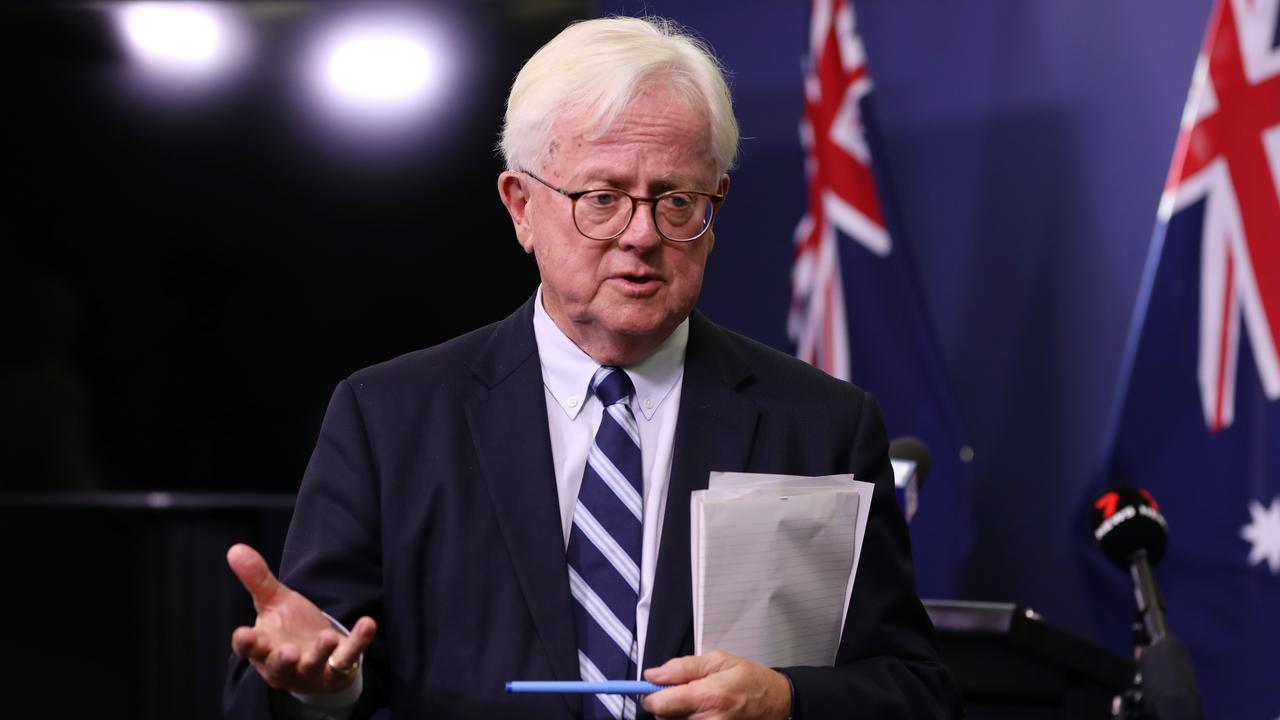
U Io Hung, President of the Macau Professional Association of Gaming Promoters
The president of the Macau Professional Association of Gaming Promoters, U Io Hung, expressed his shock to AGB following a recent reminder issued by the DICJ, which emphasized that junkets must ensure their administrative management members and employees wear work permit badges issued by gaming operators while performing duties in the casino. Failure to comply could result in fines ranging from MOP100,000 ($12,430) to MOP500,000 ($62,150).
U Io Hung highlighted the substantial burden these fines could impose on junket operators, especially given the current commission structure. He noted that junkets earn around MOP1,250 ($155) for every MOP100,000 ($12,430) in rolling chip turnover.
To cover a maximum fine of MOP500,000, a junket would need to generate MOP40 million ($5 million) in rolling chip turnover, not accounting for other operational expenses. Even the minimum fine of MOP100,000 would require a turnover of MOP8 million ($1 million).
According to Law 16/2022, which reformed the Legal Regime for Operating Games of Chance in Casinos, using the identification card issued by the concessionaire while performing activities in casinos is one of the duties of junkets. Their collaborators, who are also required to obtain a license, are subject to this requirement as well, which carries a lighter fine of MOP50,000 ($6,215).
Junket veteran U Io Hung questioned how these fine amounts were determined, pointing out that penalties in other industries, such as real estate, are significantly lower. “Why is it that only junkets face such heavy fines?” he inquired.
This issue arises in the context of recent findings by the DICJ, which revealed unlicensed junket-like business activities within Macau casinos. Under Macau’s revised junket laws, individuals engaging in the junket business in casinos must obtain a government-issued license, and each junket can only sign an intermediary contract with one concessionaire. Additionally, junkets are no longer permitted to operate their own VIP rooms or hold revenue-sharing agreements with concessionaires.
U Io Hung also criticized the apparent inconsistency in the regulatory approach, telling AGB: “It doesn’t make sense to impose such elevated fines on licensed employees while there is no punishment for unlicensed ones. It’s like saying if you drive without a license, you won’t be punished, but if you already have your license, you may face penalties.”
“I think the responsibility to confirm the identity of the junkets belongs to the DICJ, as they should have records that can verify the qualifications of the junkets when necessary,” said U.
Only 24 junkets in Macau
Currently, Macau has 24 licensed junkets, a slight increase from the 18 reported at the beginning of the year. However, the number is still below the 36 recorded last year.
This sharp decline is part of a broader trend, with the junket sector experiencing nearly 90 percent drop over the past decade. In 2014, Macau’s casinos reached their revenue peak of over $45 billion, three times that of Las Vegas, with 235 junket operators contributing approximately 60 percent of casino revenues. In response to the sector’s contraction, the gaming regulator has set a cap of 50 junkets for 2024.
As of January this year, only nine collaborators—individuals with extensive networks to bring players to VIP rooms—are registered in Macau, with the regulator imposing an overall cap of 250 collaborators for the market.
Macau’s gross domestic product (GDP) grew by 15.7 percent year-on-year in real terms during the first half of 2024, reaching MOP204.3 billion ($25.4 billion).
This figure surpassed the MOP200 billion level ($24.9 billion) for the first time since the first half of 2019.
According to data released on Friday by the city’s Statistics and Census Service (DSEC), exports of services, including casino gaming services, accounted for 81.8 percent of the current-prices GDP in the first half of this year, totaling nearly MOP167.03 billion ($20.8 billion).
This was the first time since the opening quarter of 2019 that such exports, measured at current prices, had surpassed this percentage contribution.
The city’s exports of gaming services grew by 39.9 percent year-on-year, while exports of other tourism services increased by 2.8 percent. Both categories exceeded their levels from the same period in 2019 by over 20 percent.
DSEC noted, ‘Exports of services continued to thrive due to increases in the number of visitor arrivals and tourism activities.’
Macau’s gross gaming revenue (GGR) surged by 36.7 percent year-on-year to MOP132.2 billion ($16.4 billion) between January and July of this year.
According to a July forecast, analysts at CLSA project Macau’s casino GGR could reach MOP232.7 billion ($28.6 billion) in 2024, a 27 percent increase year-on-year.
However, the brokerage has lowered its 2024 GGR estimates by 3 percent, adjusting visitation and GGR per visitor assumptions based on the Macau casino regulator’s reported 2Q24 GGR of MOP56.4 billion ($7 billion), which is 1.6 percent lower than 1Q24, and suffered in part from the effects of China’s crackdown on illegal money exchange.