
Home Blog Page 526

Macau premium mass players continue to grow in January: Citigroup

0

According to the latest table survey from investment bank Citigroup, Macau’s premium mass gaming segment showed continued growth in January 2025.

During a mid-month survey, the research team observed total wagers amounting to HK$12.8 million ($1.6 million) January 2025, an 11 percent increase from the HK$11.5 million ($1.5 million) recorded in a similar period of January 2024. This rise in total wagers highlights the growing appeal of the premium mass market, with more players placing higher-value bets.

This aligns with other studies on the Macau gaming industry, which have noted that Chinese players continue to demonstrate a strong willingness to spend in Macau.

A key observation is that the number of premium mass players rose by 19 percent, with 636 players recorded in the January 2025 survey, compared to 534 players in the same period last year. This surge suggests that the segment is attracting more individuals, driven by favorable economic conditions and Macau’s sustained reputation as a leading gaming destination.

The average wager per player in January 2025 remained strong at HK$20,160 ($2,589), although slightly lower than the HK$21,581 ($2,772) recorded in January 2024. Despite a slight decline in the number of ‘whales’ (high-stakes players)—24 in January 2025 compared to 27 in January 2024—the overall betting volume remained robust.

A ‘whale’ is defined as a player whose bet size ranges from HK$100,000 to HK$500,000 ($12,800 to $64,000) per hand or more.

Wagers by the whales encountered by the analysts were higher compared to the January 2024 period, up by 37 percent, averaging HK$195,000 ($25,000). This rise was driven, in part, by a hefty HK$1 million ($128,400) wager at the Londoner, marking the first such wager at the property since the Londoner Grand casino opened in September 2024. Even without this outlier, the average wager per whale was still up by 12 percent.

While overall gaming was robust, the typical pre-Chinese New Year slowdown was observed. The Chinese New Year Golden Week arrives earlier this year, running from January 28th to February 4th, compared to February 10th to 17th in 2024.

Analysts George Choi and Timothy Chau maintain their forecast for January 2025’s gross gaming revenue (GGR), predicting a 2 percent year-on-year decline to MOP19 billion ($2.36 billion). However, they continue to expect positive GGR growth for the combined January-February period.

In terms of market share, Sands China emerged as the leader in the premium mass segment, holding a 28 percent share of the total wager observed. This was up from 23 percent in December 2024. Galaxy ranked second with a 27 percent share, slightly down from 26 percent in December 2024. Wynn saw a decline in market share, likely due to ongoing major renovation works at Wynn Macau’s Encore Tower.

Angel, smart table, RFID, AI, Angel Playing Cards

Galaxy fully deploys smart tables for mass baccarat

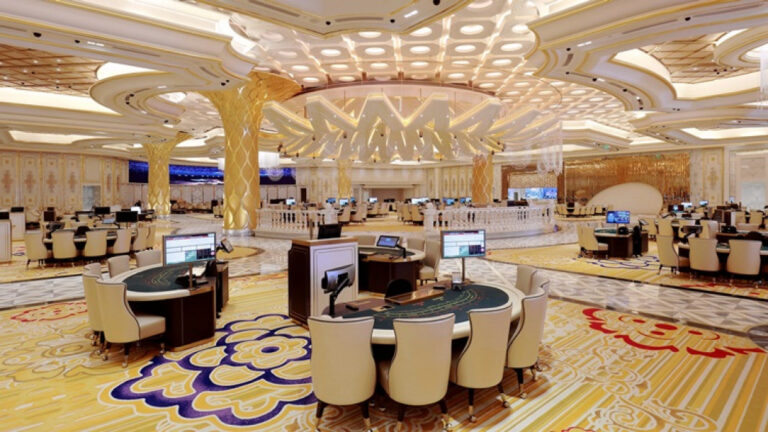
In the same survey, the research team updated information on the smart table deployment across Macau’s gaming operators. Citigroup found that Galaxy Entertainment Group has become the second casino operator in Macau to fully deploy smart tables for its mass baccarat operations, following MGM China. The casino added 74 smart tables in its base mass area, while StarWorld introduced nine.

Sands has also made significant strides in smart table deployment, adding 19 at the Venetian’s base mass area, 12 in the high-limit area of Sands Macao, and 80 at the Parisian’s base mass area. Sands is now approximately 80 percent smart-table-enabled.

Wynn has expanded its smart table count as well, with 72 at Wynn Macau and 60 at Wynn Palace, bringing its smart table share to about 60 percent.

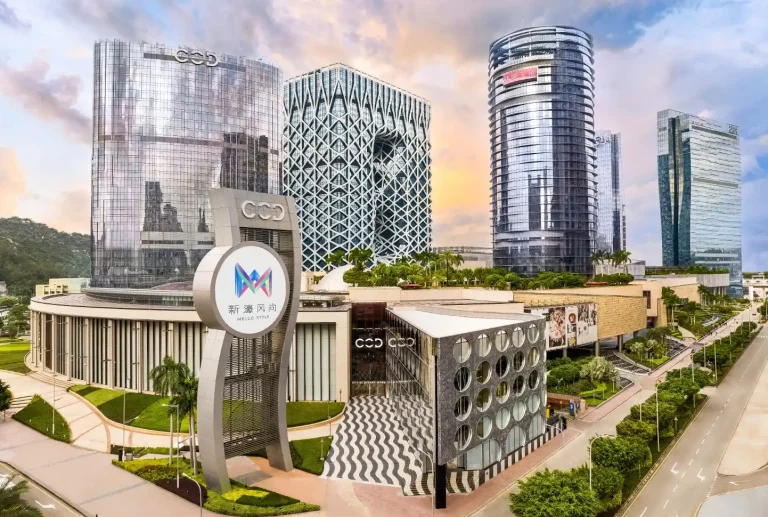
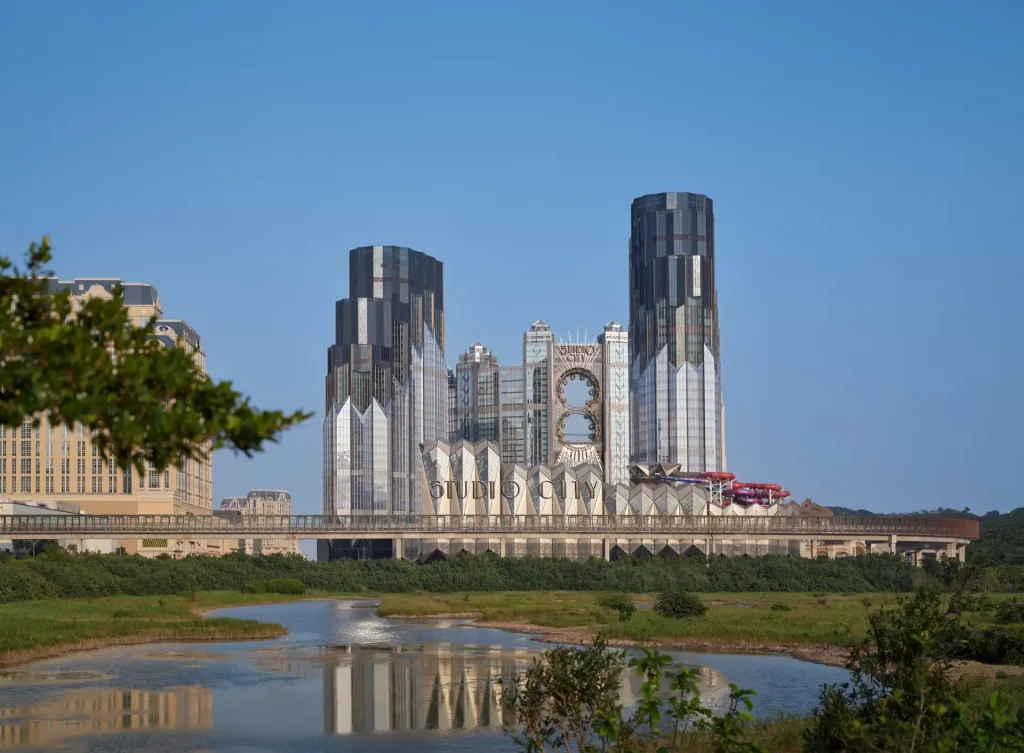
City of Dreams showed little change in its smart table count, while Studio City is now fully deployed. As a result, Citigroup estimates that Melco’s properties are approximately 50 percent smart.

A significant development is the introduction of smart tables at SJM’s casinos, with 63 installed in the base mass area of Grand Lisboa.

Analysts noted that this trend is a key factor driving Citigroup’s 7 percent Macau GGR growth forecast for 2025, as the adoption of smart tables is expected to enhance game speed and increase the number of games dealt per hour.

Clark aims to attract more Taiwanese partners for freeport zone

0

Clark authorities are aiming to attract more foreign investors from Taiwan, in a bid to draw in more freeport operators and encourage internal collaboration.

According to recent reports, the Clark Development Corporation (CDC) President and CEO met recently with representatives of some 17 Taiwanese companies, aimed at encouraging interlinkages between businesses located in the freeport zone.

The move is part of a business interdependence program that was launched last year.

One of the Taiwanese firms present in the meeting is BB International Leisure and Resort Development Corp – a real estate development firm behind the Midori Clark Hotel and Casino.

Midori casino, Clark

One of the company’s claims to fame is being the ‘first and only casino property in Clark to invest in gaming tables that use RFID,’ according to Midori Casino Division Head Edgar Lim.

Other Taiwanese companies present at the meeting included EVA Airways and Starlux Airlines Co.

Taiwanese investment in the Clark Freeport Zone has already topped $190 million, with exports from Taiwanese firms totaling over $10 million.

Official expectations are for the freeport zone, located nearby the Clark International Airport (which in 2024 saw 2.4 million passengers), to create some 600,000 jobs once ramped up – focused on tourism, education and aviation.

Clark has proven to be fruitful ground for operators such as Hann Resorts, while more recently City of Dreams Manila operator Belle Corp announced it was pursuing Clark as a “strategic location” for further growth.

Other operators have not fared so well, such as Fontana Resort & Country Club (including its casino), whose operations were recently ‘indefinitely suspended’ by authorities for failure to meet financial obligations.

Macau-based investor now holds over 5.5% voting rights in The Star

0

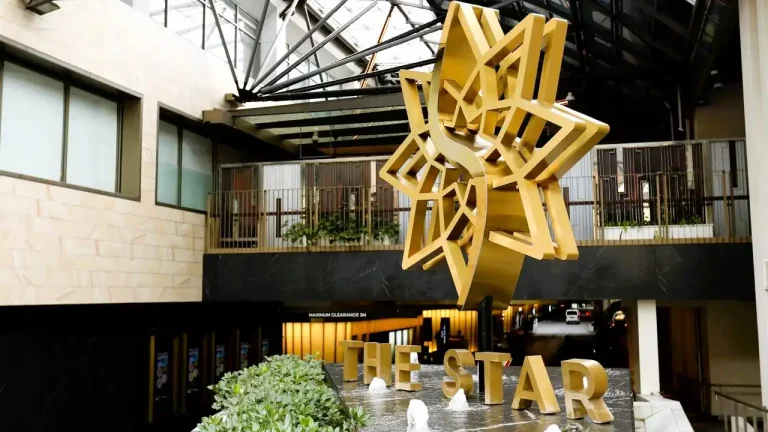
Australia’s The Star Entertainment Group has announced that a Macau-based investor has increased their stake in the company so that they now hold 5.52 percent of voting rights.

According to the company, Xingchun Wang became a substantial shareholder of the company on January 10th, 2025, holding over 158 million ordinary shares.

Wang had begun investing in The Star shares in 2024, according to its records, initially purchasing 50 million shares at more than double the stock’s current price.

The most recent share acquisitions in January increased Wang’s stake by over 17 million shares, further upping the voting power.

Wang’s address provided in The Star’s filing is for a residential building in Taipa, Macau: Windsor Arch.

While further details are not provided on Wang’s other business interests, numerous Hong Kong-listed companies have or had been affiliated with someone of the same name.

The same name also appears in the investigative reporting initiative the Panama Papers, with an address also registered to Macau, this time on the peninsula’s NAPE district.

The Panama Papers listing also details Wang’s purported link to numerous investment and petrochemical companies, among other industries, most of which were registered in the British Virgin Islands.

Companies or individuals that appear in the Panama Papers are not necessarily linked to any wrongdoing.

The share increase comes at a crucial time for The Star, with recent reports indicating the group could face voluntary administration (eg bankruptcy) within months.

The group saw a massive drop in market value and recently indicated that it had only AU$70 million ($43.56 million) left in available cash as of December 31st.

The group noted that it ‘continues to explore other liquidity solutions’ aside from working to fulfill conditions to draw AU$100 million ($62.23 million) under the second part of an AU$200 million ($124.46 million) New Facility negotiated to keep the company afloat.

Thailand’s draft casino bill approved by Cabinet

0

Thailand has taken a significant step toward legalizing casinos, with Prime Minister Paetongtarn Shinawatra confirming the Cabinet’s approval of the draft “Entertainment Complex Business Act” during a meeting on Monday.

The draft law will now proceed to the House of Representatives for further consideration, though no specific timeline for its enactment has been set. According to previous projections, Thailand could launch its first casino as early as 2029.

Proposed by the Ministry of Finance, the legislation aims to regulate the country’s underground gambling sector by establishing legal entertainment complexes and casinos to generate tax revenue.

According to reports, the approval follows extensive public consultations and adjustments based on feedback from citizens and relevant agencies. The government expects the initiative to significantly boost Thailand’s economy and tourism industry.

Paetongtarn Shinawatra, Thailand
Prime Minister Paetongtarn Shinawatra

Prime Minister Paetongtarn highlighted that the initiative draws inspiration from Singapore’s successful model. The proposed entertainment complexes are designed to incorporate a range of attractions, with casinos comprising only a small portion of the offerings.

She noted that Singapore’s approach has spurred tourism growth and contributed significantly to its GDP, and Thailand aims to replicate this success.

To manage local participation, Thai citizens would be required to pay an entrance fee of THB5,000 ($144) to access casino facilities. This compares to Singapore’s SGD150 ($110) daily entry for locals.

Officials aim to assuage concerns about potential growth in illegal or unregulated gambling markets with a focus on transparency and robust oversight. Paetongtarn emphasized that a well-regulated framework will not only curb unlawful activities but also generate substantial tax revenue, strengthening the nation’s financial position.

bangkok thailand

Council of State highlights six concerns over IR draft law

The Council of State has identified six key issues with the draft casino law:
  • Narrow Focus: The draft centers exclusively on casino entertainment venues, diverging from the government’s broader vision of promoting diverse tourism destinations. These could include water parks, amusement parks, shopping malls, concerts, festivals, and world-class sporting events.
  • Lack of Clarity: If the law targets “entertainment complexes,” it must explicitly define the term. For example, does it encompass hotels, service establishments, and restaurants? Since such activities are already regulated under existing laws, introducing new legislation may be redundant.
  • Misalignment with Existing Definitions: A House of Representatives study suggests that entertainment complexes could address illegal gambling. However, public understanding of these complexes includes a variety of recreational activities beyond gambling. The report argues that enforcement of existing laws, rather than new legislation, is the real issue.
  • Missed Opportunity for Reform: If the goal is to combat illegal gambling or legalize it within entertainment establishments, the government could amend the existing Gambling Act (1935) instead of drafting an entirely new law focused on regulating entertainment complexes.
  • Unclear Objectives: The draft law’s purpose—whether to develop tourist destinations or address illegal gambling—needs clarification from the Finance Ministry. These objectives require distinct legal strategies. Additionally, the Cabinet should consider public feedback and input from relevant agencies, particularly the Interior Ministry, before proceeding.
  • Public Engagement: Clear and accurate information about the bill’s objectives should be communicated to the public. This would help address criticism and confusion before the draft is submitted to the Cabinet.
thailand
Finance Minister and Deputy Prime Minister Pichai Chunhawajira

Despite these concerns, Finance Minister and Deputy Prime Minister Pichai Chunhawajira has dismissed the objections raised by the Council of State. He stressed the importance of maintaining Thailand’s competitiveness in global tourism, asserting that the draft law is primarily focused on attracting foreign gamblers, with gambling revenue as a secondary priority.

Pichai also highlighted that no government agency, aside from the Council of State, has opposed the bill. The Finance Ministry is now working to address jurisdictional concerns and is devising measures to restrict access to casinos for Thais under 20 years old.

Reports indicate that the Council of State could be planning to oppose the new Entertainment Complex bill.

Push to increase inspections, investigate banks over POGOs

0

Philippine Senator Sherwin Gatchalian has promised to further investigations into banks and financial institutions’ involvement in the movement of illegal activities by Philippine Offshore Gaming Operators (POGOs).

The politician says he aims to file a resolution and call for an investigation, specifically into the case of “POGO Mayor” Alice Guo and a POGO hub located in Bamban, Tarlac.

The Senator claims some PHP7 billion in transactions entered into banks without being detected by the Anti-Money Laundering Council (AMLC).

The AMLC during the recent Senate hearings indicated it was still investigating the source of the funds used in the Bamban POGO hub.

The senator further accuses the AMLC of not preventing criminal activities in POGO hubs by not strictly complying with AMLC measures.

Officials to increase inspections

Local Chief Executives (LCEs) in Philippine jurisdictions have also been warned against harboring or ignoring any potential POGO-linked activities.

thailand

Interior Secretary Jonvic Remulla directed a message to LCEs, urging them to “inspect all the buildings”, while saying they would be held responsible “if we catch you entering buildings and you do not report to us”.

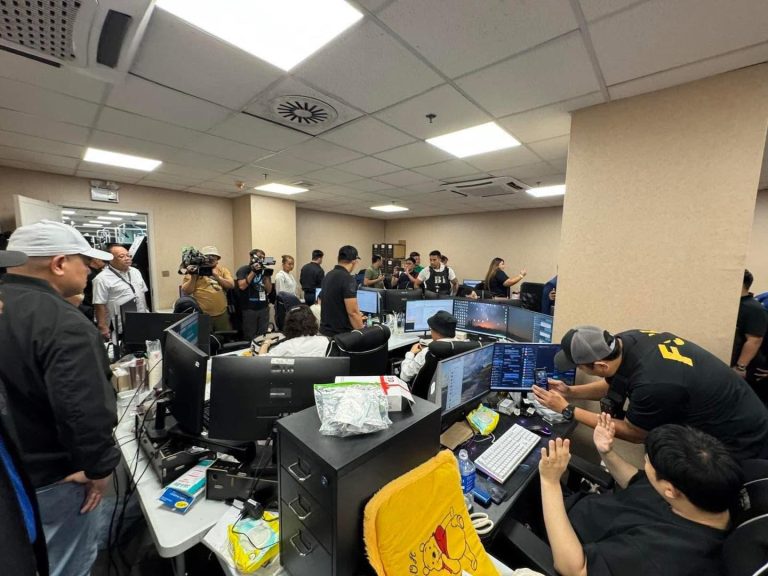
The statement comes in the wake of a raid on a POGO-like compound in Parañaque City which involved the detainment of some 400 foreigners.

Local Government Units are required to submit a “no POGO certificate” by the end of January.

This comes after a total ban on POGOs came into effect on January 1st, 2025.

Top officials have previously warned LGUs that they cannot feign ignorance over POGO operations in their jurisdictions.

Daily Asia Gaming eBrief: Macau GGR should grow 4% in 2025

0
Good morning. Waiting on the rebound. Macau’s gaming revenue should grow by a modest 4 percent year-on-year to $29.3 billion in 2025, investment bank CLSA forecasts, with a stronger rebound anticipated in 2026. Meanwhile, Thailand’s Council of State is planning to oppose the new IR Bill, claiming it fails to address illegal gambling issues adequately. In Australia, The Star Entertainment Group may face voluntary administration as lenders doubt the group could find an investor to ease its financial woes.

What you need to know


On the radar


AGB Intelligence

MACAU

Macau gaming, satellite casinos regulatory update, Macau GGR

CLSA forecasts 4% growth in Macau’s GGR for 2025

Investment bank CLSA forecasts moderate growth for Macau’s gaming revenue in 2025, predicting a 4% year-on-year increase to $29.3 billion, with a more robust rebound anticipated in 2026 as Chinese property prices stabilize and consumer confidence improves. Following a strong recovery post-COVID, the gaming market has faced low growth rates, despite a significant rise in annual visitation, which reached nearly 35 million in 2024.


Industry Updates


Corporate Spotlight

1xBet’s 2024 Milestones: key achievements & heights of success

1xBet 2024 Milestones Key achievements and new heights of success

In 2024, 1xBet achieved significant breakthroughs and successes, solidifying its position in the iGaming industry. The brand secured major partnership deals, received prestigious awards, and showcased its innovations at the world’s leading forums.

Altenar brings premium sportsbook solution to Asia

Altenar brings premium sportsbook solution to Asia

Altenar, a leading sportsbook provider is bringing its global expertise to Asia, looking to expand its operations. Since 2011, Altenar has powered hundreds of online sports betting sites worldwide and is a major B2B provider in Europe and Latin America licensed markets.


MEMBERSHIP | INTELLIGENCE | ASEAN | CAREERS

Queensland pubs and clubs GGR rise 9% Y-o-Y in December

0

Queensland’s gaming industry has reported encouraging results for December, with state-wide pubs and clubs Electronic Gaming Machine (EGM) total gross revenue rising by 9.0 percent compared to December of the previous year and saw a 2.2 percent uptick from the prior month. 

When examining revenue by venue type, clubs revenue rose by 4.6 percent to AU$142.8 million ($89.3 million), while hotels revenue saw a marginal increase of 0.4 percent to AU$180 million ($112.5 million). 

As a result, clubs increased their market share from 43.2 percent to 44.2 percent, while hotels saw a decline from 56.8 percent to 55.8 percent. 

The total gross revenue for the calendar year reached an impressive AU$3.6 billion ($2.25 billion), marking a 9.9 percent increase over 2023. 

According to a dispatch by Geoff Wohlsen of Wohlsen Consulting, an upward trend in market share for clubs has been consistent since August 2024, indicating a shift in consumer preferences. 

Wohlsen speculated that younger demographics may be reducing their gaming activity for economic reasons.  However, he pointed out that the new Queen’s Wharf Casino in Brisbane could be capturing a portion of the market share traditionally held by pubs. 

Some regional markets have also shown remarkable growth. Notably, the Douglass Local Government Area (LGA) experienced a staggering 67.2 percent increase in EGM revenue, attributed to the aggressive strategies of one or two local venues.

Thai Council of State planning to oppose IR bill

0

Thailand’s Council of State plans to oppose the upcoming Entertainment Complex Bill, arguing that it violates government policy and fails to adequately address illegal gambling issues.

Sources cited by The Bangkok Post indicated that the Secretariat of the Cabinet circulated a notice to various agencies regarding the bill late last month, seeking feedback from stakeholders to assist in the cabinet’s decision-making process.

The review of the bill has been moved up to Monday, ahead of a royal celebration scheduled for Tuesday.

According to the report, the Council of State has raised significant concerns about the bill, particularly its narrow focus on comprehensive entertainment centers, which seems at odds with the government’s broader tourism promotion goals.

The government aims to develop integrated tourist attractions akin to Japan’s Integrated Resort Districts or Singapore’s Marina Bay Sands, which include hotels, shopping malls, entertainment venues, and conference centers, where gambling facilities comprise a minor part of overall revenue.

The council was said to have highlighted the necessity for a clear definition of entertainment complexes to ascertain if they would encompass hotels, restaurants, and other related businesses, all of which are already governed by existing laws.

While the bill intends to combat illegal gambling, the council noted that the public associates comprehensive entertainment complexes with a variety of recreational activities beyond just gambling. There are ongoing concerns about whether the bill would effectively tackle unauthorized gambling due to weak enforcement of current regulations.

If the government aims to legalize and regulate gambling, the council has suggested revising the Gambling Act of 1935 instead of establishing a new law. Additionally, the council urged the Finance Ministry to clarify the bill’s objectives to facilitate a more effective review by the cabinet.

Key provisions of the Entertainment Complex Bill include licensing requirements for gambling facilities located within entertainment centers.

Licenses would stipulate quotas for Thai and foreign employees and prohibit marketing that targets gambling activities. Entry would be restricted to individuals aged 20 and above, excluding unregistered Thai citizens and other specific groups.

Macau gaming operator Galaxy Entertainment Group (GEG) is set to enter the bidding process for an integrated resort (IR) license in Thailand, with plans to initiate a Request for Proposal (RFP) as early as mid-2025.

The Star Entertainment could face voluntary administration: Media

0

Australia’s The Star Entertainment Group may face voluntary administration within months, as lenders doubt the company’s ability to secure a lifeline investor, according to the Australian Financial Review.

With its market value plummeting from AU$4 billion ($2.6 billion) to under AU$500 million ($325 million), the casino operator has struggled with cash flow and regulatory challenges.

In a recent filing with the Australian Securities Exchange (ASX), the company informs that its available cash fell by AU$79 million ($49.16 million) from its last report at end-September 2024.

According to the AFR, the company has burned through AU$107 million ($69.5 million) in recent months, and lenders are considering a AU$100 million ($64.5 million) lifeline, contingent on Star raising an additional AU$150 million ($96.7 million).

Meanwhile, the company is exploring asset sales and other liquidity solutions. Casino revenues and overall earnings have sharply declined, exacerbated by stricter regulations and increased investment in its new Brisbane venue.

Citing two sources inside Star, the AFR indicated that the company’s secured debt providers said it was unlikely to find an investor in its current form, which would mean it runs out of cash based on how it is tracking financially, and leave the board with no option but to cede control of the company.

Bruce Mathieson

If Star enters voluntary administration, it could lead to significant losses for shareholders, including billionaire Bruce Mathieson, whose 9.6 percent stake has lost substantial value.

Despite the precarious situation, Mathieson has structured his investments to avoid immediate liquidity issues. The company’s future remains uncertain, with no state-led rescue plan currently on the table.

There is still the possibility that Australia’s casino regulators and the NSW and Queensland governments identify a scenario where the group, which employs 9,000 people, participates in a state-led rescue, but with no such arrangement proposed so far.

The Star’s financial woes became particularly apparent around the opening of its new Queen’s Wharf Brisbane property, which was developed alongside Chow Tai Fook and Far East Consortium – Hong Kong-listed entities who, collectively, are 50 percent joint venture partners in the project.

Tom Horn Gaming and AKNEYE partner to launch Akne Fruits, a revolutionary iGaming project

0

Tom Horn Gaming and AKNEYE, the innovative art initiative by AKN, have joined forces to launch a unique project, Akne Fruits. More than just a slot game, Akne Fruits fuses online casino gaming, traditional sculpture, and NFT technology to redefine the iGaming ecosystem and the future of iGaming.

A Visionary Blend of Art, Technology, and iGaming

Akne Fruits is groundbreaking in its exploration of the intersection between the physical and digital worlds in an entirely new way. Inspired by AKN’s signature AKN EYE motif, the game is accompanied by nine exclusive artefacts meticulously hand-painted by Rafayel Nersesyan, a famous Armenian artist, who also played a role in shaping the game’s visuality. Each object mirrors the fruit symbols from the game and serves as a tangible representation of AKN EYE’s iconic aesthetic.

Tom Horn Gaming and AKNEYE partner to launch Akne Fruits, a revolutionary iGaming project

Own and Share in the Success of Akne Fruits

Available globally, Akne Fruits invites players to connect with the game on multiple levels – enjoy it in their favourite casino, invest in its digital assets, or own their own piece of its physical representation.  

Through NFTs offered via the Ortak marketplace, players can acquire game-inspired NFTs and become stakeholders in the game’s ongoing success. This experience is further expanded by the introduction of nine exclusive sculptures and their NFTs. These one-of-a-kind pieces allow players and art collectors to own a physical piece of the game and gain a significant share in its financial achievements. 

Official Launch and Sell-Out at Harmony VI

The exclusive physical NFT collection of Akne Fruits made its debut at BetConstruct’s prestigious Harmony VI Meetup in Ras Al Khaimah, UAE. In addition to the game’s digital collection available on ortak.me, art lovers and gaming enthusiasts had the chance to purchase one of nine exclusive physical representations of the Akne Fruits game on the spot. The response was overwhelming, with all physical NFTs selling out within just one hour of the official announcement – a historic milestone for Tom Horn Gaming and Ortak.

Tom Horn Gaming and AKNEYE partner to launch Akne Fruits, a revolutionary iGaming project

Pushing the Boundaries of iGaming

The partnership between Tom Horn Gaming and Ortak is redefining how the supplier perceives the future of iGaming. Akne Fruits goes beyond being just a slot game. It delivers an immersive experience that connects players and art enthusiasts with the game and its artistic assets on different levels.

“This collaboration is a perfect synergy of two innovative companies, combining our strengths to introduce new products, redefine iGaming, and multiply the success of our innovative approach to entertainment. With Akne Fruits, we’re not just delivering a game. We’re shaping the future of how players experience iGaming,” said Ondrej Lapides, CEO of Tom Horn Gaming.

Explore the Future with Akne Fruits

Players and art lovers are invited to discover the Akne Fruits experience by visiting the Ortak NFT marketplace and becoming part of this exciting journey. Whether through owning a digital NFT or acquiring a stunning physical sculpture, the possibilities are as limitless as the creativity behind the project.

By transcending the concept of a traditional slot game and embracing new technologies, Tom Horn Gaming continues to lead the iGaming industry into new frontiers, offering unique opportunities for players to engage with games and their creators.