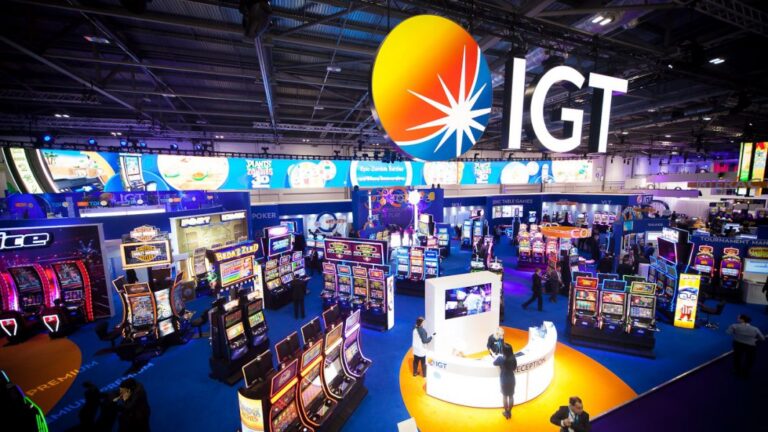
International Game Technology (IGT) has announced the achievement of an environmental, social and governance (“ESG”) Score of 4.3 out of 5.0 from FTSE Russell, positioning IGT in the 97th percentile within the Travel and Leisure sector of FTSE Russell’s ESG Scores.
This was an improvement from IGT’s previous ESG Score of 4.2 out of 5.0 in 2023, demonstrating its ongoing commitment to enhancing ESG performance.
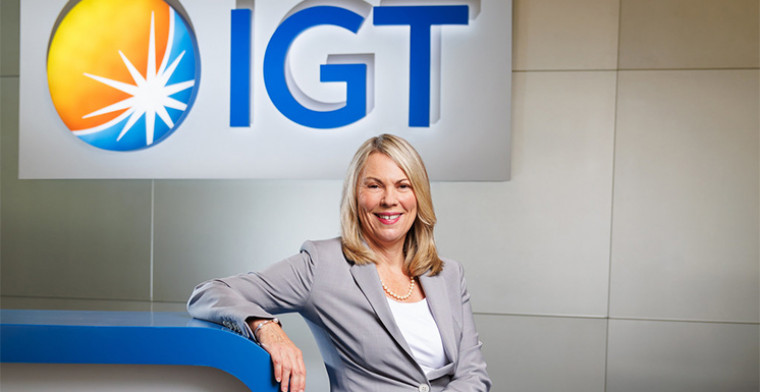
“As a company committed to continually elevating our sustainability practices and leadership, IGT is proud to once again achieve an improved ESG score from FTSE Russell,” said Wendy Montgomery, IGT SVP, Marketing, Communications and Sustainability. “Through our global Sustainable Play program, we execute sustainable practices and policies throughout our company and this improved score validates our ongoing efforts.”
Wendy Montgomery, SVP of Marketing, Communications & Sustainability at IGT
FTSE Russell’s ESG Scores and data model allows investors to understand a company’s exposure to, and management of, ESG issues in multiple dimensions. The ESG Scores are comprised of an overall rating that breaks down into underlying pillar and theme exposures.
Scores built on over 300 individual indicator assessments are applied to each company’s unique circumstances. The ESG Scores align with the UN Sustainable Development Goals (SDGs), all of which are reflected in FTSE Russell’s ESG framework.
BETBY, a leading sportsbook provider, has announced that it will unveil an upgraded version of its Bet Builder at the upcoming SBC Summit Rio. The latest version of this feature delivers unparalleled flexibility, expanded market options, and cross-sport customization to elevate the sports betting experience.
BETBY’s Bet Builder now covers 100% of football matches, offering dozens—or even hundreds—of statistical markets beyond traditional outcomes. Bettors can seamlessly combine a vast array of unique selections, including corners, throw-ins, goal kicks, VAR decisions, and even advanced, innovative metrics such as expected goals (xG). Moreover, the new Bet Builder allows players to mix and match player-specific markets, such as striker goals and midfielder assists, to craft fully personalized bets tailored to their strategy.
A standout addition is the ability to combine Bet Builder wagers not only with single bets but also with combo bets from other matches or even different sports. This groundbreaking feature unlocks limitless customization possibilities, providing players with unmatched flexibility and deeper engagement.
BETBY’s state-of-the-art technology ensures real-time odds recalculations, delivering instant, accurate pricing even on complex bet combinations. The Bet Builder feature is available across 9 sports, including 4 esports disciplines.
Kirill Nekrasov, Head of Sportsbook Product at BETBY, commented: “Our latest Bet Builder update redefines the way players engage with sports betting. The ability to combine advanced performance metrics and mix selections across different matches and sports provides an unprecedented level of entertainment, flexibility, and creativity. This enhancement not only strengthens the player experience but also opens new revenue opportunities for operators by attracting a wider, more engaged audience. It’s another step forward in our commitment to pushing the boundaries of sportsbook innovation.”
BETBY will showcase the capabilities of its enhanced Bet Builder at the upcoming SBC Summit Rio 2025. Attendees are invited to visit stand B730 to connect with the supplier’s team of sportsbook experts and explore its cutting-edge betting solutions.
Capital Economics, an independent economic research firm, forecasts that Thailand’s economic growth will accelerate in 2025, driven by an expansionary fiscal policy and a continued recovery in tourism spending.
While Thailand’s economy showed signs of a slowdown in 4Q24, with GDP rising by 3.2 percent year-on-year—below the consensus of 3.9 percent—the firm remains optimistic about the nation’s future prospects.
The 4Q24 growth of 3.2 percent aligned closely with Capital Economics’ forecast of 3.3 percent. Quarter-on-quarter, growth slowed to 0.4 percent, down from 1.2 percent in 3Q24. Despite this, the economy remained 5 percent above pre-pandemic levels, although it trailed the pre-pandemic growth trajectory. For 2025, GDP growth is projected at 2.5 percent, up from 2 percent in 2023.
The 4Q24 slowdown was driven by various factors, including a slight dip in private consumption and a sharp decline in fixed investment, reflecting weaknesses in both public and private sector spending.
Thailand plans to adopt a looser fiscal policy compared to many other Asian nations, with the government forecasting a wider budget deficit for the fiscal year (October 2024 – September 2025), expected to reach 4.4 percent of GDP, up from 3.6 percent the previous year.
This policy shift is part of a broader strategy to revitalize Thailand’s tourism sector, which was heavily impacted by the pandemic. The government aims to attract 39 million international tourists and increase tourism revenue by 7.5 percent in 2025, with a focus on sustainable tourism practices and improving the overall visitor experience.
In line with this recovery strategy, Thailand’s Cabinet has approved a draft bill to legalize casinos within designated entertainment complexes, modeled after successful frameworks in Singapore. The bill still needs to pass through future stages before full approval and implementation.
This initiative is expected to boost tourism by 5 to 10 percent and create up to 15,000 jobs. Additionally, the legalization of casinos aims to curb illegal gambling and attract foreign investment into the country.
DigiPlus Interactive Corp., a digital entertainment company, clarified that its capital expenditure allocation of up to PHP3 billion ($52 million) for 2025—intended for expansion plans—does not include funding for potential new investments in other markets at this stage.
The clarification was issued on the Philippine Stock Exchange on Monday.
Previously, DigiPlus disclosed plans to allocate between PHP2.5 billion ($43 million) and PHP3 billion ($52 million) to support both its domestic and international growth initiatives in the short-term.
The company highlighted that a portion of the budget would be dedicated to its expansion into Brazil, where operations are expected to begin in the fourth quarter of 2025.
DigiPlus’ subsidiary, DigiPlus Brazil Interactive Ltda., recently obtained a gaming license from the Brazilian Ministry of Finance’s Secretariat of Awards and Bets. This license permits DigiPlus to operate land-based and online sports betting, electronic games, live game studios, and other fixed-odds betting activities.
As reported by AGB, DigiPlus anticipates launching its Brazilian gaming operations with sports betting. Meanwhile, DigiPlus has already allocated PHP660 million ($11.4 million) to cover initial costs, including license fees, capitalization, financial reserves, and other operational expenses for the first three months of its operations in Brazil.
Recent industry checks have confirmed that Macau’s gross gaming revenue (GGR) performance in February has profited from a prolonged visitation tail following the Chinese New Year (CNY) this year.
According to an investment memo from Bank of America, several operators have observed that more visitors staggered their trips to the region, opting to travel after the public holidays concluded on February 5th. This trend was particularly noticeable among premium gamblers, who preferred to visit in the second week of February to avoid the crowds typically associated with the peak of the CNY festivities.
Analysts Karl Choi, Ronald Leung, Eric Du, and Candice Zhang note that between February 10th and 16th—corresponding to the 13th to 19th day of CNY—average daily revenue (ADR) was estimated at MOP642 million ($80.1 million). In contrast, the same period in 2024 saw ADR dip to below MOP600 million ($74.8 million).
The extended CNY visitation tail this year is expected to alleviate concerns among investors over weaker GGR performance during the first week of CNY. As a result, February’s GGR is on track to be largely flat year-on-year, with a slight month-on-month increase.
Consequently, a 2-3 percent year-on-year drop for the combined January-February period is forecast. VIP performance showed slight outperformance compared to the mass market in February’s month-to-date (MTD) data, suggesting a modest recovery in high-roller activity.
Sands and Melco gain market share
In January 2025, Sands China saw a recovery in its market share, up 1.5 percentage point month-on-month to 22.5 percent. Melco also performed well, increasing its share by 2 percentage points month-on-month to 17.5 percent, reaching its highest level since the post-COVID reopening.
Meanwhile, Wynn Macau and MGM experienced a decline in their market shares. Wynn’s share dropped by 1.5 percentage point to 11.5 percent, its lowest since reopening, likely due to a choppy win rate despite an improvement in premium mass performance. MGM saw a 2 percentage point decrease to 15 percent.
Galaxy Entertainment and SJM remained steady in terms of market share, with no significant changes reported month-on-month.
Despite fluctuations in market share, GGR for both VIP and mass markets showed mixed results in January. VIP GGR grew 7.7 percent month-on-month but still fell short by 1.4 percent year-on-year. In contrast, mass market GGR saw a 2.3 percent monthly decline, with a more substantial 7.1 percent year-on-year drop.
President Xi’s suggestions on gaming to Thai PM
Analysts also commented on the recent meeting between Thailand’s Prime Minister Paetongtarn Shinawatra and Chinese President Xi Jinping, where President Xi offered his insights regarding the potential legalization of gaming in Thailand.
President Xi cautioned that legalizing gaming could create social problems, a concern echoed by the Thai Prime Minister, who assured that further studies were underway to mitigate such risks. It’s important to note that China has, on occasion, reminded its citizens that gambling abroad—such as in destinations like Singapore—is illegal under Chinese law.
In this context, the brokerage notes that President Xi’s comments could indicate that any potential impact on Macau’s GGR from the legalization of casinos in Thailand may be limited, as China remains keen on controlling the flow of its citizens to foreign gambling destinations.
Smooth succession at Galaxy Entertainment
The investment memo also mentioned that Galaxy Entertainment‘s management succession appears to be progressing ‘smoothly’. Following the passing of patriarch Lui Che Woo in November 2024, his eldest son, Francis Lui, recently increased his stake in the company by another 8.3 percent, bringing his total ownership to 50.6 percent.
Francis Lui was appointed Chairman of Galaxy in December 2024, marking a seamless transition in leadership that aligns with market expectations.
The Sri Lankan government has announced significant changes in its 2025 budget, including a substantial increase in casino fees and various taxes aimed at boosting revenue.
Under the new budget provisions, casinos will be subject to an 18 percent levy on their gross collections, a move intended to enhance fiscal contributions from the gaming sector. Additionally, the entrance fee to casinos will rise from $50 to $100 per person, effectively doubling the cost for patrons.
Sri Lanka has seen a growing interest in the gaming industry over the past decade, with several large-scale casino resorts opening in Colombo and other urban areas.
A joint venture between Macau gaming operator Melco Resorts & Entertainment and John Keells Holdings announced an investment of over $1.2 billion in an IR project in the country’s capital (City of Dreams Sri Lanka), making it the largest private investment in the nation. The project is expected to be fully operational in 3Q25.
The government has been keen to regulate and tax this burgeoning sector, which is seen as a potential driver for tourism and economic growth.
The budget also proposes a hike in corporate taxes for the tobacco and alcohol industries, with corporate tax rates potentially reaching 45 percent.
In an effort to further increase revenue, the stand duty on lease contracts will be raised from 1 percent to 2 percent, effective March 1st, 2025. This change will apply to all lease agreements, excluding hire purchase contracts.
A new digital services tax will also be introduced as part of the Value Added Tax (VAT) framework, requiring businesses liable for VAT to operate point-of-sale machines.
The capital gains tax for individuals on investment assets will increase from 10 percent to 15 percent, although exemptions will remain in place for listed shares and residential properties.
The Council of State, Thailand’s legal advisory body, has wrapped up its review of the Entertainment Complex Business Act, paving the way for an online public hearing that will continue until March 1st.
This process allows stakeholders to voice their opinions before the bill is presented to parliament.
According to The Bangkok Post, Atavit Suwanpakdee, the chairman of the advisory board to the Minister of Industry, noted that while some amendments were made, including a stipulation that casinos can only occupy 10 percent of an entertainment venue, uncertainties remain regarding the number and locations of these complexes.
He emphasized the need for clear definitions of size and proportion and stressed the importance of measures to mitigate issues like gambling addiction.
The bill proposes that an entertainment complex could host various businesses, such as hotels, shopping centers, theaters, and casinos. It also mandates that the casino area must be physically separated from other establishments, with identity checks at entrances.
Thanakorn Khomkrit, secretary-general of the Stop Gambling Foundation, expressed concerns over the bill’s governance, likening the legislative process to “writing a blank check.” He questioned the balance of strictness in the proposed law.
Chittawan Chanagul, an economics lecturer at Kasetsart University, warned that legalizing casinos in developing nations can lead to social and economic challenges, including increased crime rates. She referenced studies indicating that countries like the Philippines have faced significant issues, including robberies and extortion, following the legalization of casinos.
Additionally, concerns about human trafficking and forced labor associated with casino operations were raised. Chittawan cautioned that corruption and ineffective law enforcement could exacerbate these problems, hindering economic growth.
In response, various groups, including the Network of Students and People for Reform of Thailand, have submitted a petition against the bill to the Council of State.
The country’s opposition is set to file a no-confidence motion against the government on February 27th, with the Thai Sang Thai Party (TST) vowing to target the administration’s controversial entertainment complex policy, which it claims is a disguised effort to legalize casinos.
The number of individuals affected by gambling addiction disorders in Macau reached a record high of 208 last year, a significant 23 percent increase from the previous year, according to data published by the city’s Social Welfare Bureau (IAS).
The 208 cases of gambling addiction disorder reported surpassed the previous year’s total and set a new all-time high since records began in 2011.
Despite this rise, the percentage of residents seeking help for gambling issues fell to 58.65 percent of the total cases, along with a decrease in the proportion of croupiers among registered cases, which dropped to 2.2 percent.
Nearly a quarter of the cases cited financial difficulties as a primary reason for gambling, and data from the IAS reveal that 72.12 percent of these individuals continue to struggle with debt.
This figure is up from 169 cases the year before, while the lowest recorded number was in 2020 (77 cases), largely due to the pandemic’s effects on the gambling industry.
The IAS provided these statistics in a report detailing the central registry of individuals affected by gambling addiction. The report states that over the last 14 years, authorities received a total of 1,871 cases, with the majority being male (72.63 percent).
Non-resident cases on the rise
Among the 208 cases recorded in 2024, 58.65 percent were Macau residents, reflecting a notable decline of 10.58 percentage points from the previous year. This is the lowest percentage of residents ever recorded, with the historical average being 81.93 percent.
The IAS also highlighted that 41.3 percent of the cases involved non-residents: 22.6 percent held travel permits for Hong Kong and Macau from mainland China, 10.1 percent had Chinese passports, and 4.3 percent were non-resident workers.
Residents of Hong Kong constituted 1.9 percent, while foreign passport holders accounted for 1.4 percent, alongside 0.96 percent from “other identities.”
The age group most represented among the cases was those aged 30 to 39, which accounted for 23.56 percent. Additionally, 34 percent of individuals did not have their ages recorded. The youngest person seeking assistance from the IAS was just 16 years old.
The report also noted a decline in the percentage of croupiers and gambling industry workers among the affected individuals. Only 2.2 percent of those struggling with gambling addiction were croupiers, while 4.4 percent worked in the industry, representing decreases of 1.13 and 0.93 percentage point, respectively.
Most individuals were employed, with 15.87 percent identified as students, homemakers, or retirees. Additionally, 7.69 percent were entrepreneurs, and 1.65 percent were public administration employees.
Almost half of those registered with the IAS for gambling addiction play baccarat, while 7 percent bet on football and basketball, and 4 percent use poker machines. About 20 percent reported spending between MOP10,000 and MOP50,000 monthly on gambling, but 47 percent were unsure of their total expenditures.
The report indicated that 23.99 percent of the cases cited “resolving financial difficulties” as their primary reason for gambling, followed by “entertainment” (19.71 percent) and “relaxation” (18.76 percent). Other motivations included “seeking fun” (17.34 percent) and “passing time” (9.5 percent), with 4.99 percent viewing gambling as a “social activity.”
Despite nearly a quarter of the cases attempting to address financial problems through gambling, IAS data suggests this strategy is ineffective.
The agency reports that 72 percent of registered gambling addicts face debt issues, with 19.33 percent owing between MOP100,000 and MOP250,000; 10.67 percent having debts between MOP250,000 and MOP500,000; and 8.67 percent carrying debts of MOP50,000 to MOP100,000.
According to the IAS, assessments reveal that 46.62 percent of cases represent moderate gambling addiction disorders, 34.46 percent are severe, and 12.84 percent are mild.
SOFTSWISS, a leading global provider of innovative iGaming software, is celebrating the 12th anniversary of its flagship product – the SOFTSWISS Casino Platform.
With a staggering 576% increase in registrations in Q4 2024 compared to Q3, the platform’s Referral System highlighted its growing appeal and effectiveness in driving player engagement.
Announced in 2013 during the ICE Totally Gaming in London, the platform pioneered crypto casino technology. In 2024, the SOFTSWISS Casino Platformrecorded a 44% year-on-year increase in GGR while the number of brands operating on the platform grew by 23.7%. Mobile gaming remained dominant, with 77.6% of players accessing casinos via mobile devices.
The platform also strengthened its global presence, securing certification in South Africa, and adding to its existing accreditations in Malta, Estonia, Bulgaria, Serbia, Romania, and Greece.
To support this growth, the platform expanded its team, now comprising over 400 professionals across 19 countries. From its beginnings with five specialists, it has developed into 16 dedicated teams.
Ivan Montik, Founder of SOFTSWISS, said: “I want to express my sincere gratitude to our teams for their dedication and innovation. Over the past 12 years, we have built a product that stands out for its 99.9% uptime, industry-leading stability, and expert recognition. Very few companies can claim such a consistent track record. You are doing an outstanding job!”
“We began as crypto pioneers, but we were smart enough to leverage our strengths beyond one-time innovation. Today, our partners trust us not only for our cutting-edge technology but also for our exceptional service quality, which we continue to enhance.”
The industry has recognised this success, with the SOFTSWISS Casino Platform securing seven prestigious awards in 2024, including Best Platform Provider at the SiGMA EuropeGaming Awards and Platform Provider of the Year at the Global Gaming Awards EMEA.
According to the latest Kantar survey, a leading global analytics agency, the platform achieved a 7.4 out of 10 satisfaction score, with customer support rated even higher at 7.8, reflecting a 0.5-point increase from 2022.
SOFTSWISS continues to push boundaries with product innovations that elevate player engagement and operator revenue. In 2024, the Casino Platform introduced:
Product Store – An in-game marketplace where players can purchase bonuses using real money, creating a new monetisation channel for casinos while enhancing engagement.
Player Chat – A real-time communication tool fostering social interaction and allowing operators to promote features and campaigns directly to players.
Scratch Cards – A gamification feature based on the popular Lootbox Bonus concept, offering a new way for players to win rewards.
Casino Stories – A CMS-integrated tool enabling operators to share dynamic promotions, updates, and events through interactive visual content.
As the SOFTSWISS Casino Platform enters its 13th year, the company continues to focus on innovation, scalability, and excellence, ensuring long-term success for its partners in the ever-evolving iGaming landscape.
Australia’s Foreign Affairs Minister Penny Wong has warned against crypto scams which are falsely using her image, as the nation further increases its efforts to eliminate scam operations.
In a post to social media platform X (formerly Twitter), the minister noted ‘if you see posts like these, don’t click the link – they’re scams’. The official included screenshots of reports claiming to be by media outlet news.com.au which had been shared by netizens.
This isn’t the first time influential public figures have been the focus of such attack ads, and the government is reportedly on high alert to identify and pull down the misleading content.
Just last week, the Australian Competition and Consumer Commission (ACCC) welcomed the passage of the Scams Prevention Framework Bill by Parliament.
The ACCC labels the new bill ‘world-first legislation’ that ‘enhances protections across the economy’.
The new bill allows the ACCC to ‘closely monitor regulated entities’ compliance with principles to prevent, detect, disrupt, respond to and report scams’. It also empowers the ACC to investigate possible breaches and take enforcement action.
Businesses that fail to meet their obligations under the framework face potential fines of up to AU$50 million ($31.7 million).
The first sectors being examined are banks, digital platforms – including social media, and telecommunications providers.
According to reports, there were nearly 1,900 reports linked to investment-related scams on social media in 2024 in Australia. Losses are estimated to top AU$45.5 million ($28.9 million).
Within her post decrying the recent unauthorized use of her image, Minister Wong noted that ‘our recently legislated Scams Prevention Framework will make Australia the toughest target in the world for scammers’.